Youth Basketball Coaching Kids: What a Sports Scientist and Coach Wants Every Parent and Coach to Hear
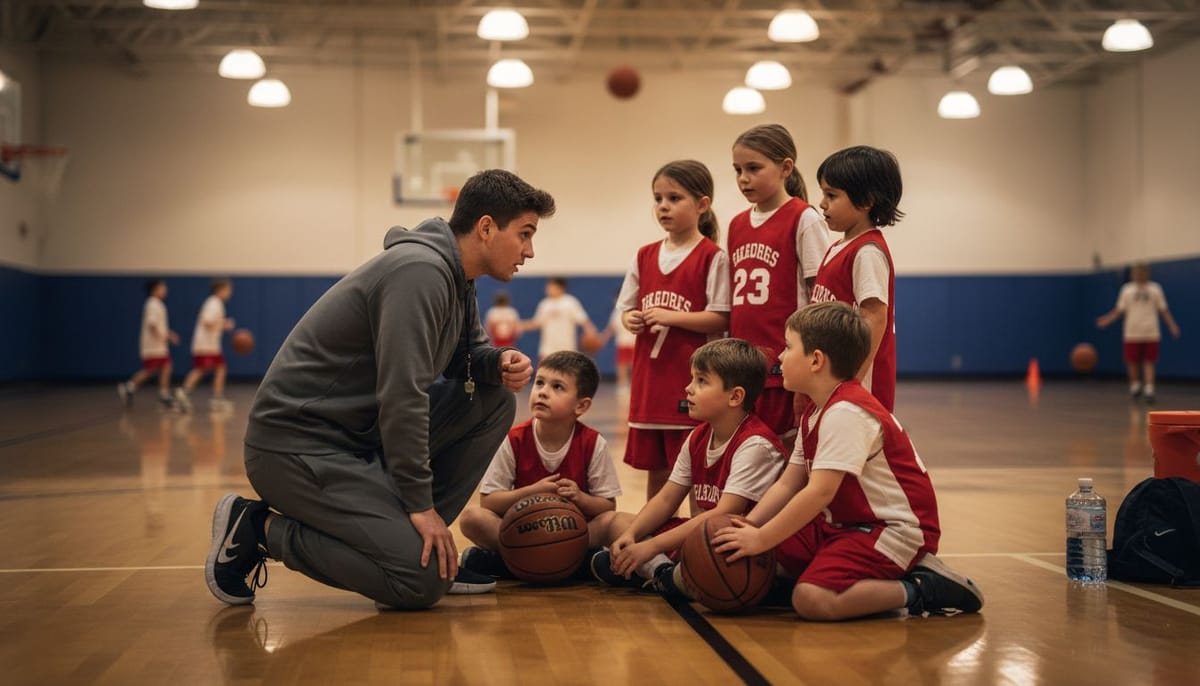
Nearly 70% of kids quit organized sports by age 13. Let that number sink in for a second. I came across this stat a while back and it never really left me — and when I heard Sergio Lara-Buel unpacking the mission behind his nonprofit movement on this podcast episode, it all started making sense. This conversation about youth basketball coaching kids hit differently than most coaching discussions I've listened to. Sergio isn't just an academic theorizing from a lectern. He's a professor of sports coaching at Leeds Beckett University, a practicing coach of 28 years, and the founder of a global nonprofit called I Coach Kids. He's living the research in real time, on the court, multiple nights a week. And what he had to say genuinely made me stop and think.
The Mission Statement That Stopped Me in My Tracks
The host read Sergio's mission statement out loud during the episode, and honestly, I think that was the right call — because it deserves to be heard properly. Here it is: "I Coach Kids is a nonprofit, global movement. Our mission is to help kids get the most out of sport by helping coaches create the best environments and motivation to stay in sport longer. Kids who move can move the world."
When I heard this, I immediately thought — why doesn't every youth sports organization lead with something like this? Most clubs lead with win-loss records. Most marketing for youth leagues is about elite pathways and college prospects. And here's this guy quietly building a movement around something far more foundational: keeping kids in sport in the first place.
What struck me most was the phrase "motivation to stay in sport longer." Not "how to win more." Not "how to develop elite players faster." The north star is retention. Joy. Belonging. And I think that's a radically underrated priority in most basketball programs I've seen or been around.
Sergio's shorthand for the whole mission is just four words: putting kids first in sport. Simple. But the gap between saying that and actually doing it? That's enormous. He made a point I think is deeply important — that youth sport has drifted into something too utilitarian, too much like adult sport, too focused on commoditizing children rather than serving them. And I think anyone who's spent time around competitive youth basketball leagues knows exactly what he's talking about.
Are We Actually Coaching Kids — or Just Coaching Mini Adults?
This is something I think about a lot. Sergio made the distinction clearly: the reasons children play sport are fundamentally different from why professionals play sport. And yet we keep designing youth environments as if the two are interchangeable.
His research points to three things kids actually want from sport. Fun. Friends. And to learn something. That's it. That's the list. Winning? Becoming a professional? That stuff barely registers — especially in the early years. And even as kids get older and some of them develop genuine elite aspirations, Sergio said something I found really compelling: even when he's working with Under-18 Premier League-level players with real professional dreams, his session planning still starts with those same three priorities. Fun. Friends. Learning. Everything else builds on that foundation.
I've seen this play out personally. The kids who burn out, who disappear from the game by 14 or 15 — they were usually in environments that skipped straight past enjoyment and went all-in on performance. The kids who stick around, who develop real love for the game, almost always have some memory of early experiences that felt good. That felt safe. That felt like theirs.
Sergio also pushed back on a common objection, and I'm glad he did — because I've heard it too. People say: "Sure, putting kids first sounds nice, but what about developing elite athletes?" His answer is straightforward. Putting kids first is not incompatible with developing elite players. There's evidence to support both. You don't have to train a 10-year-old like a professional to produce a great player later. In fact, there's a strong case that doing so actively damages long-term development. If you want to dig deeper into that tension between early specialization and real player growth, the conversation around developing the whole player in basketball is one I keep coming back to — it connects directly to what Sergio is describing here.
Seeing the World Through a Child's Eyes — Literally
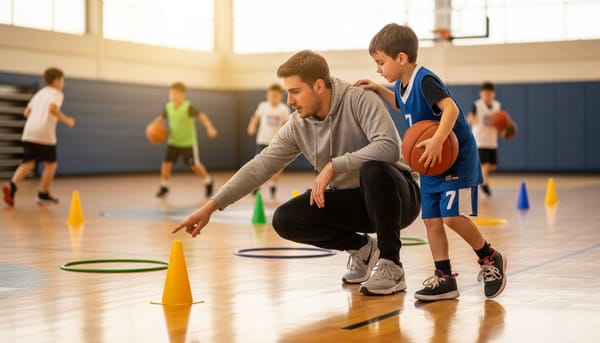
One of the moments in this podcast that I found oddly moving was when Sergio described what he does in workshops to make this point land. He gets down on his knees. Physically. To show coaches what the world looks like from a child's height. And I don't think that's a gimmick. I think it's one of the most effective teaching tools I've ever heard described in a coaching context.
Because the point isn't just metaphorical — see the game from their perspective, understand their emotions, etc. The point is that we genuinely, structurally forget how different the experience of childhood is. A gym full of shouting adults, competitive pressure, a coach who's frustrated because a nine-year-old can't execute a play properly — that environment looks and feels completely different to the child living it than it does to the adult running it.
And this connects to something I find really interesting in the broader coaching research world — the idea that accepting reality rather than projecting adult expectations onto young athletes is one of the core shifts that separates good youth coaches from great ones. Sergio's "eyes of the child" framework is essentially the same principle. Stop imposing your adult frame. Start from where they actually are.
What I find fascinating about Sergio's position is that he's not choosing between being a rigorous academic and a real practitioner. He's doing both, three or four nights a week, year after year, at a club in Manchester. That dual credibility — boots on the floor, data in hand — is rare. And it shows in how grounded his ideas feel. There's no abstract idealism here. He's tested these ideas on actual kids in actual gyms, and the approach holds up.
I don't fully agree with everything implied by the "kids first" framing, at least not without some nuance — and I'll get into that. Because I think there are real tensions when you're working with older teenagers who have genuine elite ambitions, and I'm curious how Sergio navigates those moments where a child's immediate wants and a coach's long-term vision for them diverge. But the foundation he's laying here? I'm fully on board. Most youth sports environments are built for adults. And the research — and honestly, just common sense — says that has to change.
This also made me think about how coaching environments are designed at a systemic level. It's not just about individual coaches making better choices in isolation. Sergio touched on this when he said organizations have to be on board too — that a single coach can't shift much without structural support. That's a point worth sitting with, especially for anyone thinking about what actually makes a basketball environment transformational versus one that just talks about development without really living it.
When I Heard "Know Less Basketball, Know More Children," Everything Clicked
There's a line in this conversation that I haven't been able to stop thinking about. The guest said something along the lines of — when you're doing youth basketball coaching with kids, you need to know a little bit about basketball, but you need to know a lot more about coaching and a lot more about children. And if you get those two right, the basketball takes care of itself. I mean. Wow. That's not a throwaway line. That's a philosophy.
When I heard this, I immediately thought about how backwards most coach development actually is. We obsess over systems, plays, drills, footwork — and we spend almost no time understanding child psychology, motivation, or what actually makes a kid want to keep showing up. The dropout rates in youth sport aren't a mystery. Kids leave because they stop enjoying it. And that's almost always a coaching problem, not a basketball problem.
I've seen this play out personally. The coaches who had the biggest impact on kids I know weren't the ones with the most basketball knowledge. They were the ones who understood people. They knew when to push and when to back off. They noticed when something was off with a player before the player said a word. That's not tactical intelligence — that's human intelligence.
What struck me most was the honesty here. He admitted, openly, that he's a "very selfish researcher" — meaning he constantly asks himself how the research can make him a better coach. I actually love that framing. There's no pretense of pure academic objectivity. It's applied curiosity. And that combination of practitioner and researcher is genuinely rare. Most researchers don't coach. Most coaches don't research. The ones who do both? That's where the interesting thinking lives. You can see a similar appetite for real-world application in this high school coach's honest journey into the constraints-led approach, where the gap between theory and practice gets examined in genuinely useful ways.
Game Models, Principles of Play, and Why Drilling Backwards Is Killing Development
This is something I think about a lot — the idea that we teach skills first and hope they eventually show up in a game. He called it out directly. Coming from the Spanish school, drill-oriented, skills before game. And then spending the last decade essentially dismantling that and rebuilding around something more coherent.

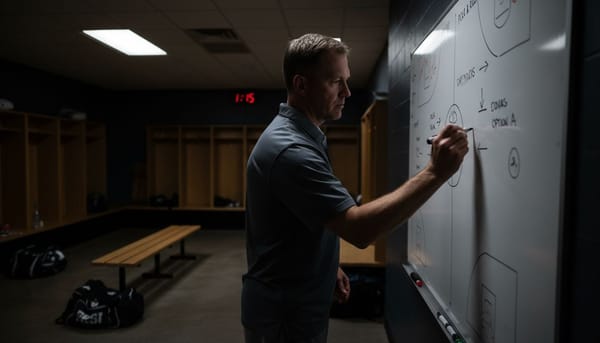
The model he described is elegant in its logic. Four phases of the game. Each phase has a performance problem — for offense, that problem is generating a good scoring opportunity. From that problem, you derive principles. From principles, you identify tools. Technical skills become tools in service of principles, not standalone achievements. That's a fundamentally different way of thinking about development.
And the number that hit me — 27 principles across four phases. That's not a small thing. That's a real framework. It means when you're designing a session, you're not just asking "what drill should we do?" You're asking "which principle are we working on, and does this activity actually address that principle?" He even said his students know not to come to their practical exam without being able to answer that question clearly. I respect that standard enormously.
What I don't fully agree with is the implied suggestion that this kind of systematic thinking is accessible to most coaches in most environments. Building a comprehensive game model takes serious time, knowledge, and collaborative effort. Not every volunteer youth coach has that runway. But — and this is important — the principle behind the principle still applies at any level. Know why you're doing what you're doing. That's the minimum viable version of this thinking. It's the difference between running a drill because you've always run it and running a drill because it solves a specific problem your team actually has. For coaches thinking about how skills emerge rather than get acquired, this game-model approach fits naturally into that wider picture.
He also made a point I think gets overlooked constantly — we try to teach too much in one year. We want to cover the entire game, and in doing so, we cover nothing deeply. A long-term framework lets you say "not this year" without guilt. That's actually a form of discipline most coaches never develop.
Shared Language Is More Powerful Than I Ever Gave It Credit For
The conversation shifted into something that sounds almost administrative — shared language, shared mental models across a club — but I think this is one of the most underrated ideas in all of basketball development. Genuinely.
Think about what it actually means when a whole club is using the same language. A player moves from the under-12s to the under-14s and the coach says something in a timeout that makes immediate sense — because they've been hearing those exact words for two years. No adjustment period. No confusion. Just continuity. That's enormous for development.
And it's not just player-to-coach. It's coach-to-coach. When two coaches can talk about what happened in a game without needing to spend five minutes establishing context, those conversations become genuinely productive. He said "meaningful conversations" and that phrase stuck with me. How many coaching conversations are actually meaningful versus just... habitual? We talk after games. We talk at practice. But are we actually exchanging something valuable, or are we just filling silence?
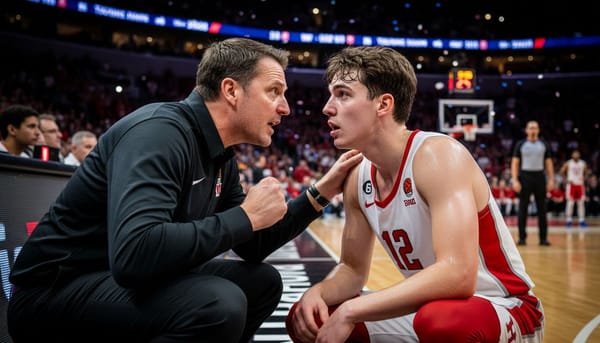
I've seen timeout communication go badly wrong when language isn't shared — coaches using terms players have never heard, players nodding along understanding nothing, nothing changing on the court. There's something worth reading on exactly this tension around why coaches should actually listen to players during timeouts, which connects to this same idea that communication has to flow both ways and be genuinely understood by everyone in the room.
The experiment-heavy approach he described — constantly designing new things, some working brilliantly, some falling completely flat — that's also something I find refreshing. He laughed about it. "I'm here to tell you in an hour the things that have worked for me. If I had to tell you everything I tried, we'd be here three days." That's real. That's honest. And it's the kind of thing coaches who throw out the practice script understand intuitively — you only find what works by being genuinely willing to fail at what doesn't.
How to Develop Other Coaches Without Swinging the Hammer
Something in this conversation stopped me cold. The host admitted he's sometimes "too hammer-like" when sharing evidence-based ideas with other coaches. And honestly? I felt called out by that. I've been that person in a staff meeting — so convinced I was right that I bulldozed the room instead of opening a door. What struck me most was how the guest reframed the whole thing. It's not about convincing. It's about helping people explore. That's a completely different posture, and it takes a lot more patience to pull off.
The practical advice here was deceptively simple: ask questions first. Not surface-level questions, either. Real ones. What does your day-to-day look like? What constraints are you working within? What are you genuinely proud of? I've seen this play out personally — the moment you give someone real space to talk about their own work, they become ten times more open to new ideas. It's almost counterintuitive. You think you need to lead with your knowledge. But leading with curiosity is what actually builds trust. When I heard this, I immediately thought about how many coaching workshops I've sat in where someone just fired slides at me for ninety minutes and expected transformation. It doesn't work like that. It never has.
What I really appreciated was the honesty about personal growth here. The guest admitted he used to love the hammer. That vulnerability matters. It signals that this isn't a personality trait you're born with — it's something you develop over time, usually by noticing the hammer isn't working. He also made a point I think gets overlooked constantly: people don't do things for no reason. When a coach is running drills that look outdated or ineffective, there's usually a context behind it — limited time, difficult parents, resource constraints, whatever. Judging them immediately without understanding that context is lazy. And it kills any chance of real growth. This connects directly to something I read about accepting reality rather than projecting expectations onto athletes and coaches — the same principle applies whether you're working with players or colleagues.
The idea of calling frameworks "thinking tools" instead of theories or models is clever too. It lowers the stakes immediately. You're not telling someone their whole coaching philosophy is wrong. You're just handing them a lens and asking, does any of this resonate? That's a much easier conversation to have. And when you're working with a group, collecting themes from different coaches before you go in gives you a natural way into the conversation. You're not imposing ideas — you're reflecting their own experiences back at them through a new frame. That's genuinely sophisticated facilitation, and it's something I don't think enough coach developers think about deliberately.
Holding Standards High Without Killing the Joy
This is the part of the conversation I've thought about the most since listening. Can you develop elite players and have fun doing it? The answer should be obvious — of course you can — but somewhere along the way, a lot of coaches decided that seriousness and high standards were the same thing. They're not. Not even close.
The host made an observation I think is huge: he's coached in Italy, he's worked with professional teams in Paris, and in every setting, elite development and genuine enjoyment were never incompatible. The incompatibility is a myth we've absorbed from watching intense coaches on TV and assuming that must be the formula. It isn't. The question is — how do you actually do it? How do you hold players to real standards without defaulting to drill-based instruction and a scowl?
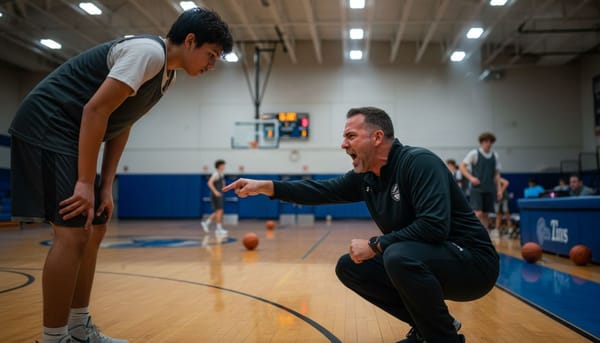
For me, a big part of the answer lives in autonomy. When players have genuine ownership over decisions — not just freedom to mess around, but real responsibility within the game — they care more. Full stop. They're more invested, more focused, and honestly more accountable to each other than they would ever be to a coach barking corrections from the sideline. This is something I think about a lot, especially in youth basketball coaching kids where the instinct is often to over-control everything rather than let the game do the teaching. The guest's point about tone and language is real too — you can set sky-high expectations in a warm voice. You can demand excellence and still make players feel safe to try things and fail. Those aren't opposites.
I don't fully agree that it's as simple as tone, though. Tone matters enormously, but structure matters too. If your practice design is built around passive repetition and constant instruction stops, the environment itself sends a message — that the coach's knowledge is what matters most, not the player's read of the situation. That's a structural problem, not a communication one. Changing the language while keeping the same top-down structure doesn't actually give players more autonomy. It just wraps the same dynamic in friendlier words. Real accountability to high standards has to be built into how you design the environment — what the game demands, what decisions players are forced to make, what consequences emerge naturally from their choices on the court. That's where the ecological learning approach has genuinely changed how I think about this. The environment teaches. The coach doesn't have to carry all of that alone.
What I took from this whole conversation is something that sounds simple but is actually hard to live: meet people — players, coaches, anyone — where they are. Don't assume. Don't judge before you understand. Ask better questions, give people room to talk, and trust that real learning happens when someone feels seen rather than managed. Whether you're developing a twelve-year-old who's just figuring out the game or a veteran coach who's been running the same practice for fifteen years, that principle doesn't change. The context changes. The tools change. But the approach — curious, humble, collaborative — stays exactly the same.