What Really Makes a Basketball Environment Transformational? Coaches From 4 Countries Break It Down
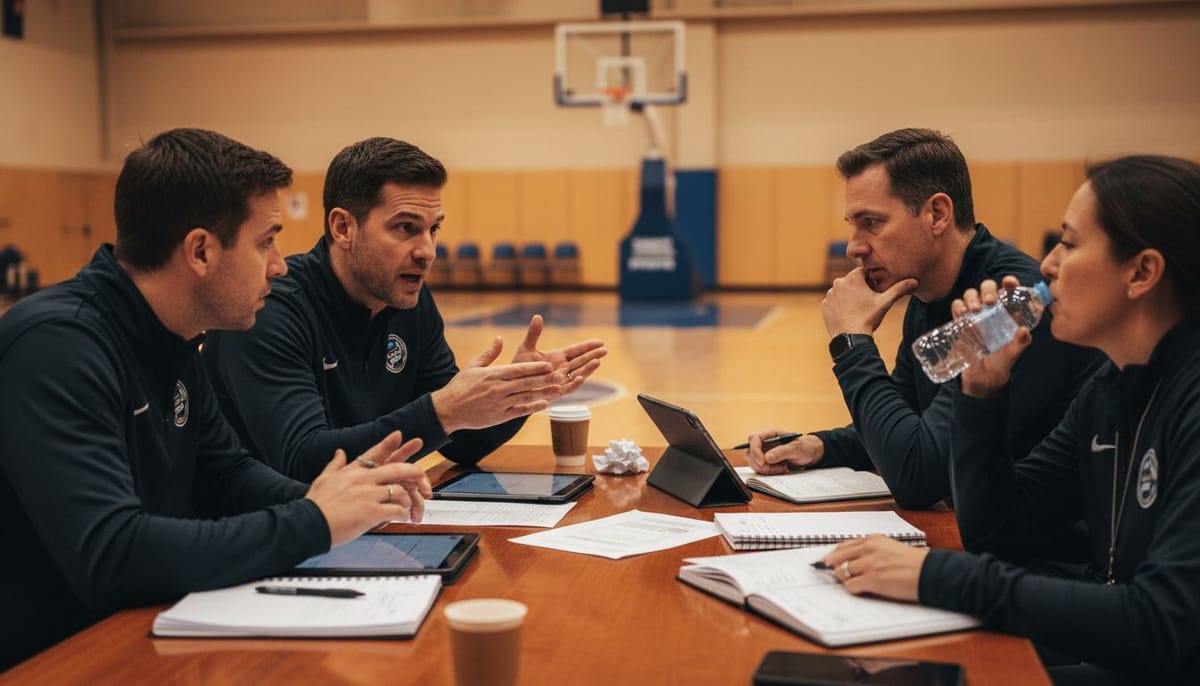
Most coaches obsess over X's and O's. Drills, sets, schemes, rotations. And look — all of that matters. But I've become increasingly convinced that the thing separating good teams from truly great ones isn't tactical at all. It's the environment. It's what happens between the lines that nobody writes on a whiteboard. When I came across this episode of the Transforming Basketball podcast, where four coaches from Belgium, Spain, New York, and Canada sat down to unpack what they built together at College Prep Italy, I couldn't stop listening. Because what they described wasn't just a basketball program. It was something closer to a philosophy of human development wrapped inside a sport.
Evidence-Based Coaching Isn't Just About Data — It's About People
The first thing that struck me was how Danny defined the mission. He said it was about using research — on learning, on team management, on development — to create a better environment. Not just a better team. A better environment. That distinction matters more than people realize.
I think a lot of coaches hear "evidence-based" and immediately picture spreadsheets, shot charts, or some analytics software. And while that stuff has its place, Danny was pointing at something deeper. He was talking about using what we actually know about how humans learn — how they build trust, how they internalize skills, how they grow — and applying it deliberately to everything happening inside a program. When I heard this, I immediately thought about how rarely that happens at the youth and amateur level. Most coaches inherit a system, run the same drills their coach ran, and call it a day. The idea of genuinely interrogating your methods against real research? That's rare. And honestly, it's where I think modern basketball demands a completely new approach — one built around the player first, the system second.
Yonas added something that resonated with me personally. He talked about cutting the fluff. Getting straight into meaningful, high-quality reps. Time on task. That's something I think about a lot, because I've watched so many practices drift — coaches spending twenty minutes on a warm-up routine that doesn't transfer to anything, then wondering why players seem disengaged by the time real work starts. The Constraints-Led Approach he referenced is essentially a framework for eliminating exactly that kind of waste. Less isolation. Less robot repetition. More game-representative learning where the decisions are real and the environment is alive.
The Bond Between Coach and Player Is the Foundation of Everything
Here's something you don't hear enough in coaching circles: the relationship is the method. Not a supplement to it. Not a nice-to-have. The actual method.
Yonas gave the simplest, most powerful example. He mentioned getting a message from one of his former players — still practicing concepts they worked on together at College Prep, months after the program ended. That's it. That's the whole thing right there. When a player keeps working on your ideas after you're no longer in the room, you haven't just taught basketball. You've planted something that grows on its own. That's what transformational coaching actually looks like in practice.
They talked about eating with players. Taking boat trips. Visiting nearby towns together. And I know what some coaches are thinking — "That's nice but it's not coaching." I'd push back hard on that. The relationships you build off the court directly shape what's possible on it. Players who trust their coaches take more risks. They're honest about what they're struggling with. They stay engaged when things get hard. I've seen this play out personally — the teams I've been around that had genuine human connection between coaches and players were almost always the ones who competed hardest when it mattered. Not because of a motivational speech. Because the relationships gave them something real to play for.
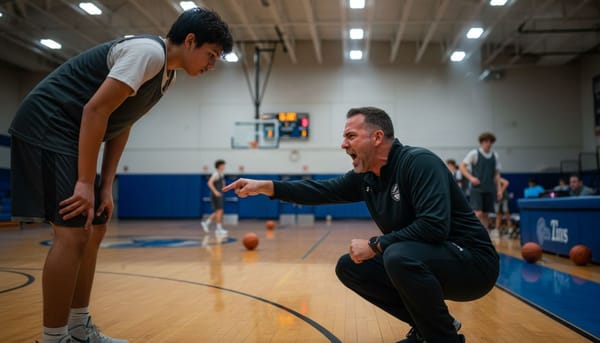
This connects directly to something I've thought about ever since reading about the problems that come from punishing players — which is that fear-based environments don't build resilient athletes. They build compliant ones. And compliant players fall apart the moment the coach isn't watching. Transformational environments do the opposite. They build players who are internally motivated, which is the only kind of motivation that actually lasts.
What Happens When Players Actually Want to Be There
John's perspective was fascinating to me, partly because he came into the program later than everyone else — in January, after the group had already spent months together. So he was essentially an outside observer stepping into something already formed. And what he noticed immediately was the energy. Players coming back from Christmas break genuinely excited to see each other. Excited to get back to work. Inviting coaches to mini golf. Opening the door to everyone.
That detail — players inviting coaches to hang out voluntarily — sounds small. It isn't. It signals that the boundary between "us" (players) and "them" (coaches) had dissolved into something collaborative. That's not accidental. It's the result of consistent, intentional effort over months. The coaches at College Prep made it a point to use players' names before every practice, to check in on their lives, to make practices something players actually looked forward to. Not just tolerated. Looked forward to.
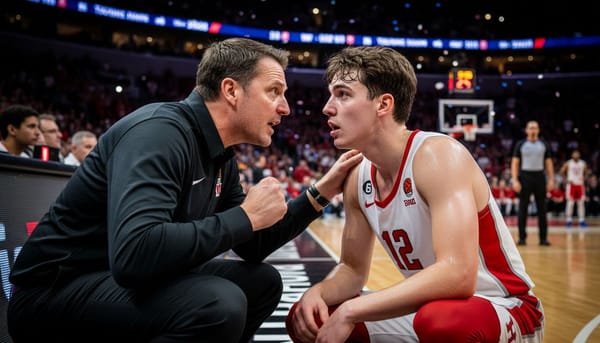
Yonas made an important point about subgroups too. With 13 nationalities in one program, you're going to have natural clustering. People gravitate toward familiar cultures and languages — that's human. But what matters is whether there's a baseline of genuine respect underneath those subgroups. If there is, the whole thing functions. If there isn't, you've got a fragmented roster pretending to be a team. The work they did — socially, emotionally, culturally — was what held 20 players from wildly different backgrounds together in a way that actually translated on the court. And that's the kind of thing you only build by treating the humans in your program like actual humans. Coaches who genuinely listen to their players in the moments that matter — timeouts, film sessions, casual conversations — are building exactly this kind of culture, even if they don't have a name for it yet.
What I keep coming back to is the idea of making practice the best part of their day. That was something one of the coaches said almost in passing, but I don't think it's a throwaway line at all. When practice is genuinely the best part of a player's day — not because everything is easy, but because the environment is joyful, competitive, purposeful, and human — you've created something most programs never even come close to. And the ripple effects of that go way beyond basketball. That's what the coaches who've truly transformed their approach seem to understand at a level that others just haven't arrived at yet.
The Idea That Practice Should Look Like "Organized Mess" Completely Changed How I See Coaching
When I heard one of the players describe their practices as "organized mess," I immediately thought — that's the most honest description of great coaching I've ever heard. Not structured chaos. Not controlled scrimmaging. Organized mess. There's something almost poetic about that.
Because here's the thing: most coaches I've watched are obsessed with order. Every drill is pristine. Every rep looks the same. Players move like they're following a script. And then the game starts and the whole thing falls apart — because basketball is never pristine. It's unpredictable and fast and full of problems nobody rehearsed for.
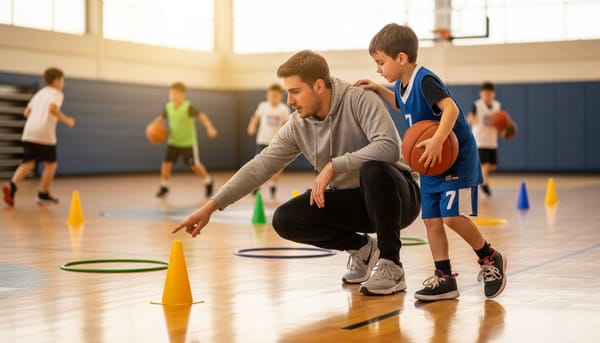
What this staff built at College Prep was something different. They were using tag games as warmups — not for the sake of being quirky, but because footwork happens naturally when you're actually trying to tag someone. Competition is baked in. Fun is baked in. And nobody's standing in a line waiting for their turn. When I've seen this play out personally, even in recreational settings, the players who are engaged in a game-like environment are always moving better, reacting quicker, and learning faster than the ones doing isolated reps on a cone. It's not even close. If you want to know why those cone-based drills are being questioned at the highest levels, an NCAA head coach broke it down in a way that's hard to argue with.
The deeper point Danny made really stuck with me too. He said the goal wasn't to create behaviors — it was to influence them. That's such a fine but important distinction. You're not programming a robot. You're designing situations where good decisions become the natural outcome. Players find solutions. Some are textbook, some are weird, some are somewhere in between. And all of it is real learning.
Player Autonomy Isn't Soft Coaching — It's Actually the Hard Part
I'll be honest. When I first started thinking about player autonomy in practice design, I kind of dismissed it. It sounded like letting players do whatever they want and calling it a philosophy. I don't fully agree with how some people frame it, because there is structure — there's always intent behind the activity. But what this podcast made me rethink is how often coaches mistake control for coaching.
Adam made a point that really landed for me: the autonomy wasn't something they bolted onto practice as a concept. It emerged naturally because they were always designing with specific individuals in mind. They were watching behaviors, asking questions mid-activity, giving players options before things even started. Sometimes they'd just say "go make your own game" — and the players did. Without hesitation. Because they'd been trusted with that kind of agency all year long.
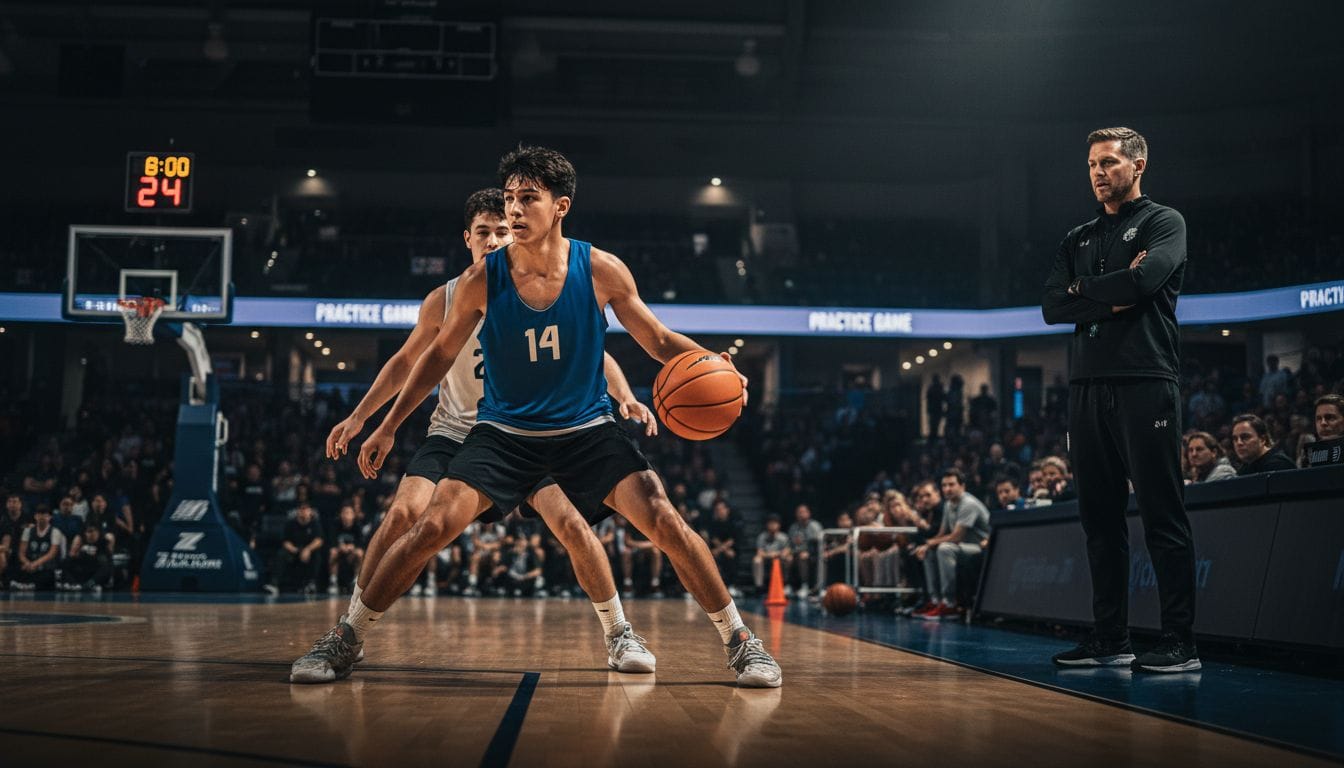
That trust doesn't happen overnight. It builds. And it only builds if coaches are consistent in how they approach it. This is something I think about a lot — how decision-making on the court is directly connected to how much freedom players are given to actually make decisions in practice. If every rep is dictated, every read is pre-scripted, why would anyone expect players to think fast in a real game?
What struck me most was the moment Adam described giving players a broad task and watching them run with it. No hesitation. That's not luck. That's the result of months of being coached in an environment where their input actually mattered. Where asking "hey, do you want to try it this way?" wasn't a sign of weakness — it was the method.
The "Team Pulse" system they ran blew me away too. Every week, every player — color coded green, yellow, red — not based on basketball performance, but on how they were doing as people. Are they struggling? Are they checked out? What do we do about it? That's a level of intentionality most programs don't come close to. And I genuinely believe it's why the players were so open to trying new things. When you feel seen as a human being, you're far more willing to be vulnerable on the court. The connection between that kind of environment and how punishment-based coaching can destroy exactly that trust is something more coaches need to sit with.
Why Staff Unity Might Be the Most Underrated Factor in Player Development
Here's something that doesn't get talked about enough: it doesn't matter how good your philosophy is if your staff isn't speaking the same language.
One of the things that came through so clearly in this conversation was that regardless of who was running a session — Danny, Adam, Yonas, John — you could always tell it was a College Prep practice. Same language. Same philosophy. Same intent behind every task. That consistency is massive. Players don't get mixed signals. They don't have to recalibrate every time a different coach steps on the court.
And what I found fascinating was how they got there. It wasn't just shared theory — it was a shared growth mindset. Yonas put it plainly: the coaches had to be willing to improve themselves if they expected the same from their players. That's not a revolutionary idea on paper, but in practice? Most coaches I've seen are defensive about their methods. They've been doing things a certain way for years and they're not looking for feedback. These guys were actively chipping in on each other's session designs, questioning things, building something together in real time.
There's also something to be said about confidence. Adam made a point I keep coming back to — if you're working with players who were trained traditionally and you're not confident in your approach, they feel it. But when you know your stuff, when you deliver it well, they don't want to go back. That confidence isn't arrogance. It's competence. And it's the difference between players tolerating a new method and actually buying into it. That shift in training philosophy — the kind that fundamentally changes how a coach operates — is rarely about one drill or one tactic. It's about the whole environment you build around your players.
This staff built something real. And the fact that they're all now in different environments missing each other? That tells you everything.
Confidence Is the Secret Ingredient Nobody Talks About
What struck me most about this entire conversation was something that almost slipped past me the first time I heard it. It wasn't about drills or constraints or any specific on-court activity. It was one word: confidence. The idea that coaches who actually invest time in understanding the theory — skill acquisition, perception-action coupling, representative learning design — show up differently. They carry themselves differently. And kids feel that immediately.
I've seen this play out personally. You can walk into a gym and know within about 30 seconds whether a coach actually believes in what they're doing or whether they're just running through a program they half-remember from their own playing days. Players, especially teenagers, are extraordinarily good at detecting that. John said it perfectly — if you're not confident, they see right through you. Every single time.
When I heard this, I immediately thought about how much of coaching culture is actually built on performing authority rather than earning belief. Coaches raise their voices. They run set plays. They fill practice with cone drills and scripted reps. But if the underlying why isn't there, none of it lands the way it should. The players at College Prep weren't buying into the activities — they were buying into coaches who clearly knew why those activities existed. That's a completely different thing. And it's why this kind of training philosophy shift can change a coach's entire career once they actually commit to understanding the science behind what they're doing.
There's also something I really appreciated in what was said about the more you learn, the less you know. I don't think that's a discouraging idea. I think it's genuinely exciting. The moment a coach stops feeling like a rookie is probably the moment they stop growing. Staying in that uncomfortable, curious, slightly-humbled place — that's where real development actually happens. For coaches and players alike.
The On-Court Activities That Actually Stuck
The second half of this conversation is where things got really practical. And honestly? I could have listened to these coaches describe their favorite activities for another hour.
The 2-on-2 pick and roll with variable constraints is something I find fascinating. Not because the pick and roll is some revolutionary concept — it isn't — but because of how they approached it. Variable shot clocks. Imaginary walls. Coaches acting as stunt defenders. Switching between drop and show coverages based on what they wanted to stress that day. The beauty of it is that the solutions on offense emerged naturally from the constraints rather than being taught explicitly. If you've ever wondered what it actually takes to develop elite pick and roll players, this kind of constraint-led approach is a big part of the answer.
Chain tag as a warm-up game is the kind of thing that sounds almost too simple. But I get it completely. Getting players emotionally switched on before you get into the real work — that's not wasted time. That's smart time. The coaches were even monitoring the group's energy before practice and choosing warm-ups accordingly. That level of attentiveness to the emotional state of a team is something most coaches I've watched never even consider.
The Hot Potato game described by Hos is one I want to try immediately. Defense shading left or right as the trigger for live 1-on-1 — that's a beautiful example of training players to make faster, better decisions in the exact kind of perceptual moment that actually happens in a game. It's not a drill simulating the game. It IS the game, just isolated and repeated with intent.
And the jungle shooting concept — 4v3 with triggers, pick and roll, off-ball screens, a running clock — that one opened something up for me. We talk constantly about shooting in context, and making shots under real pressure is something most isolation shooting drills simply don't prepare players for. This activity does. It demands everything at once — read the defense, use the advantage, execute the trigger, get the shot off fast. That's basketball. Full stop.
Final Thoughts
What I take away from this whole conversation is something that's been quietly nagging at me for a while: coaching development is often treated as an afterthought. We pour enormous energy into player development and almost none into actually developing the people who develop the players. What this group of coaches built at College Prep — the shared language, the research, the activities book, the culture of continuous learning — that's rare. And it produced something rare. Players who didn't want to go back to traditional training once they'd experienced something better. That tells you everything. The theory isn't abstract. The theory is what makes the practice real. And if you're a coach who's been doing things a certain way for years without ever asking why, this conversation is a pretty good place to start asking.