Transformational Coaching in Basketball: What It Really Means to Develop the Whole Player
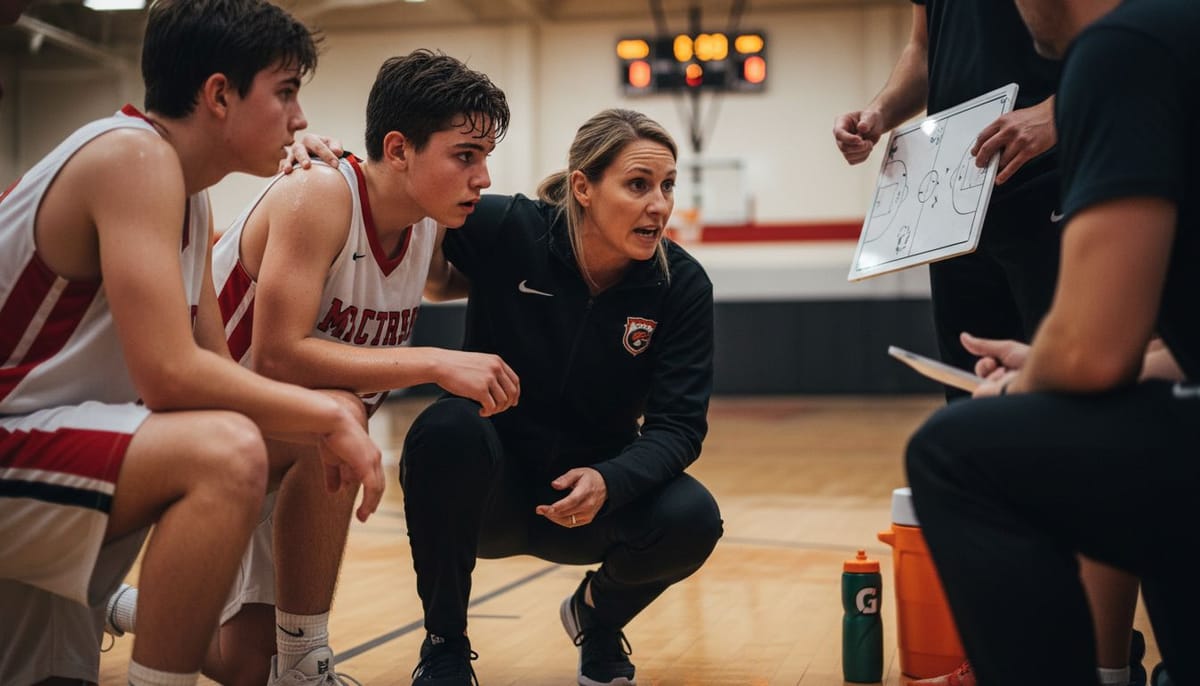
Most coaches think their job is to develop basketball players. But what if that framing is already the problem? I listened to a conversation between Alex and Kareem Khil on the Transforming Basketball podcast recently, and one line hit me harder than I expected. Kareem said something like — if you're only coaching basketball skills, you're not getting to the root of what makes a player who they are. I had to pause on that. Because honestly? That's the quiet failure of so much coaching I've witnessed over the years.
This episode is framed around transformational leadership, and I'll be upfront — when I first heard that phrase applied to basketball coaching, I rolled my eyes a little. It sounds like corporate seminar language. Empowerment. Full potential. Enabling followers. I've seen those words plastered on motivational posters in gyms that were actually running some of the most fear-based, controlling programs imaginable. So I came in skeptical. But the more I listened, the more I realized Kareem and Alex weren't talking about buzzwords. They were talking about something genuinely different in how we think about the coach-player relationship.
From Math Class to the Gym Floor — Why Kareem's Background Changes Everything
What I found so compelling about Kareem's story is where he started. He was a Division III college basketball player who went into education through Teach for America, teaching math. And he noticed something that I think every teacher secretly knows but rarely says out loud — you can't really change kids in subjects they didn't choose to be in. They're sitting in your math class because they have to be. The power dynamic is baked in from day one.
Coaching is different. Players choose the sport. They showed up because something about the game already moved them. And Kareem recognised that this voluntary relationship, built around something they genuinely love, is where real human development can happen. That shift — from classroom authority to coach as developer — is what pulled him deeper into coaching than teaching.
When I heard this, I immediately thought about how many coaches never fully appreciate that distinction. They treat the gym like a classroom with a scoreboard. Rules, compliance, hierarchy. The players are there to receive instruction, not to grow as people. And I think that's where so many programs quietly lose their players, not in games, not in losses, but in that slow erosion of trust when a kid realises their coach only sees them as a body executing a system. This is something I think about a lot — especially when I see coaches double down on control precisely when their team is struggling, as if tightening the grip is ever the answer.
What Human Development in Basketball Actually Means
Kareem is now enrolled in a PhD program at the University of Colorado, studying human development in coaching. And he was refreshingly honest that it's a somewhat understudied area. There isn't a massive body of research that coaches can just pull off a shelf. That transparency actually made me trust what he was saying more.
The definition of transformational leadership they used in the episode came from Bass and Rio — "behaviors designed to empower, inspire, and challenge followers to enable them to reach their full potential." And look, I get why that sounds vague. Kareem even acknowledged it. What does full potential actually mean in practice? What does a great relationship with a player look like beyond the surface-level stuff?
His answer was interesting. He said it means treating players as people who have a fundamental human desire to contribute — to push forward the lives of the people around them. Not just to win games. Not just to improve their jump shot. But to matter. To be part of something larger than themselves. That framing genuinely shifted something for me. Because when you coach with that in mind, every interaction changes. You're not just correcting footwork. You're either reinforcing or undermining someone's sense of purpose.
I've seen this play out personally. The coaches who had the most lasting impact on players I know weren't necessarily the most tactically brilliant. They were the ones who made players feel seen. Who checked in after a bad week. Who created an environment where a kid could admit they were struggling without fear of being benched for it. That's not soft coaching. That's actually the hardest kind, because it requires you to be genuinely present and curious about another human being, not just their on-court performance. It reminds me of how one coach walked away from the NBA entirely just to rebuild his understanding of basketball from the ground up — sometimes the most growth happens when you step back from the system and reconnect with the person.
Transformational vs. Transactional — The Real Divide in Coaching Culture
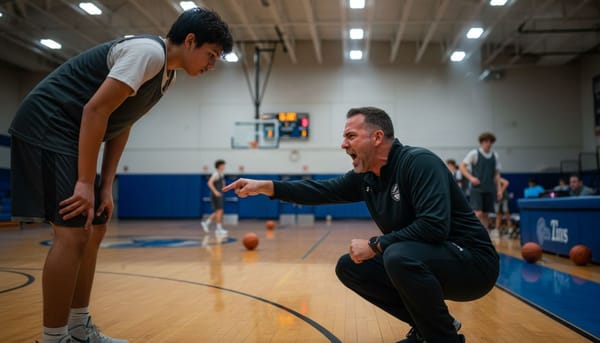
This is the section of the conversation I found most clarifying. Alex laid out the distinction between transformational and transactional coaching, and it's blunt but accurate. Transactional coaching is essentially: do what I say, perform well, and I'll reward you with playing time, praise, or approval. Step out of line — lose minutes, run laps, get humiliated in front of your teammates. It's a hierarchy. Coach at the top, players below.
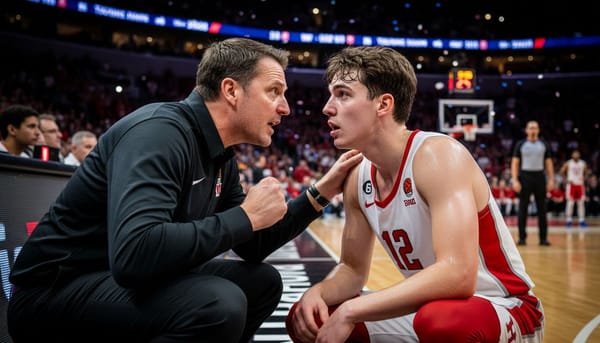
Transformational coaching flips that. It's not about the coach being right, being in charge, or being feared. It's about inspiring players to want to be better — not for the coach's approval, but because they've genuinely bought into something meaningful. Alex used the word autonomy, and that stuck with me. Not just tactical autonomy, like letting players make reads on the court, but personal autonomy. Freedom of choice. Treating players as equals, not subordinates.
I don't fully agree with framing all traditional coaching as bad — there are situations where structure and clear authority genuinely serve a team. But I do think the default setting for a lot of coaches skews way too far toward control. And the research on this isn't ambiguous. Fear-based motivation produces short-term compliance and long-term disengagement. Every time. The problem behind punishing players is exactly this — you might get the behavior you want in the moment, but you're slowly dismantling the intrinsic motivation that makes players actually develop.
What struck me most was Alex's description of what he called the "paradigm shift" — this idea that effective coaching has always been associated with a certain kind of toughness, control, and authority, and that transformational coaching requires you to genuinely unlearn that. Not just modify it. Unlearn it. That's hard. Especially if you were coached that way yourself and it worked, or at least seemed to. Because when that's your entire frame of reference, loosening control feels like losing the plot. It can feel like weakness when it's actually the opposite. And if coaches listened to their players during timeouts more often, they'd probably discover that the players already know what the team needs — they just haven't been given permission to say it.
Players Are Products of Their Environment — Not Just Athletes With a "Motor"
Something hit me hard when I heard this part of the conversation. The point about phrases like "that player has a dog in them" or "high motor" — I've used those exact words before. And hearing it broken down like this made me genuinely uncomfortable, in the best way possible.
Because when you really think about it, what are we actually saying when we describe a player that way? We're reducing them to a single observable trait and treating it like it's fixed. Like it's just who they are. But that's not how human beings work.
What struck me most was the framing that players are products of their environment. That's not a soft, feel-good idea — it's actually a more rigorous way of thinking. Instead of labeling a kid as "low motor" and moving on, you ask: what's happening in their environment right now, and what's happened in their past, that's producing this behavior? And more importantly, what can we change about the environment to shift that outcome?
I've seen this play out personally. I've watched coaches write off a player in October and then be genuinely shocked when that same player transforms under someone else's system a year later. The player didn't change. The environment did. That's the whole point. And it connects to something I think about a lot — the way we use punishment in basketball often treats behavior as a character flaw rather than a response to circumstance, which almost never produces the transformation coaches are actually looking for.
The language we use to describe players matters more than we give it credit for. It shapes how we coach them, how we design training for them, and ultimately what we believe they're capable of becoming.
Values That Actually Stick — Because They Were Co-Created
I'll be honest. When I first heard them start talking about team values, I braced myself. Because nine times out of ten, this conversation in basketball goes exactly how you'd expect — a coach presents a laminated poster, players nod politely, and by week three nobody remembers what was on it.
But what they described at College Prep was genuinely different.
Four values: growth, creativity, joy, and fight. Simple enough to remember. But the way they were built and communicated is what made them land. Every coach shared personally why a specific value mattered to them. And then the captain — Lenus — actually chose the final value himself, grounding it in a real experience from the previous season. That's not top-down culture-building. That's co-creation. And there's a massive difference.
When I heard that detail about Lenus choosing "fight" and tying it to a specific moment against Eastern European teams where the group didn't respond well — I immediately thought, that's the kind of thing players actually remember two years later. Not because someone told them to, but because it came from one of their own.
There's also something important about constantly referring back to those values in practice. Alex mentioned it almost as a confession — that he sometimes needed to remind himself to do it more. I respect that honesty. Because it's easy to set values in September and then get so deep into X's and O's that you forget the whole framework you built. Tying a value like "fight" back to something as specific as navigating a wall pick-and-roll? That's how abstract culture language becomes something players actually feel in their body during a game. It also reminds me of the idea of coaches genuinely listening to players — when players have real ownership over the culture, they start speaking up in ways that move the whole program forward.
Inspirational Motivation Is Just Consistent Expectation — Said Out Loud, Repeatedly
The second tenant of transformational coaching they unpacked — inspirational motivation — sounds complicated when you read the academic definition. Clarifying expectations and fostering perceptions of team unity, meaning, and challenge. But when Kareem broke it down, it became really simple.
It's not a speech. It's repetition.
Values on a wall are decoration. Values that get referenced in the middle of a defensive breakdown drill, values that a coach invokes in the moment when something real just happened — those become expectations. And expectations, reinforced consistently over time, eventually become culture. That's the progression. And honestly, most programs never get past step one.
What I find interesting here is how this ties directly into player development in a way that doesn't get talked about enough. When players know exactly what's expected of them — and those expectations go beyond just basketball — they actually make better decisions on the floor too. There's less hesitation. Less looking over their shoulder. I don't fully agree with coaches who think culture-building is separate from skill development, because the mental clarity that comes from a stable, values-driven environment absolutely affects how quickly and confidently players make decisions in live situations.
And that's the thing about transformational coaching that doesn't get enough credit. It's not softer than traditional coaching. In some ways, it's actually harder — because it demands more consistency from the coach than it does from the players.
Culture Is What You Repeatedly Do — And Most Programs Get This Backwards
That statistic hit me like a punch to the gut. 261 out of 285 coach development programs focused almost entirely on technical and tactical skills. That's over 90%. When I heard this, I immediately thought — no wonder so many players feel like cogs in a machine rather than human beings who happen to play basketball. We've built an entire coaching education system around the least important part of coaching.
And look, I'm not dismissing technical knowledge. Of course it matters. But if you can't reach a player as a person first, your X's and O's are worthless. I've seen this play out personally — the coaches who had the most influence on me weren't necessarily the ones with the most sophisticated systems. They were the ones who knew me. Who noticed when something was off. That's the thing about the way coaches treat players — it leaves a mark that lasts way longer than any play you ever ran.
The Team Pulse concept they described is something I genuinely wish I'd seen more of growing up. Color-coding players as red, yellow, or green based on how they're doing as human beings — not as basketball players — and then building actual action steps around that? That's not soft. That's smart. If a kid just lost someone close to them and they're showing up to practice with that weight on their chest, you think they're going to absorb your spacing principles? Not a chance. Coaches who genuinely listen to their players already understand this instinctively. The best ones always have.
What struck me most was the coach Gates example — physically making contact with every single player before practice just to take their temperature emotionally. Division one college basketball. At that level, with that pressure, and he's still prioritizing individual human connection. That's not accidental. That's a philosophy. And it completely destroys the excuse that "there's no time for that stuff at the elite level."
Intellectual Stimulation, Creative Freedom, and Why We Can't Keep Restricting Players
The other piece of this conversation that I keep turning over in my mind is the idea of intellectual stimulation — actually giving players the cognitive freedom to find solutions. This is something I think about a lot. So many coaches, especially at the youth level, are terrified of letting players make mistakes. So they over-instruct. They restrict. They say "you can't shoot from there" or "you must stay in the paint." And in doing so, they're essentially robbing players of the very skill set they'll need most: the ability to problem-solve under pressure when no one can help them.
This directly connects to the creativity discussion. When the coaching staff itself models creative thinking — when no one shows up to a player development session with a stale activity — players absorb that. They start playing creatively because creativity is normalized. It's cultural. And the ability to make quick decisions in the flow of the game doesn't come from being told what to do all the time. It comes from being trusted to figure things out.
I don't fully agree with every constraint-led approach I've come across, but the underlying argument here — that players need shared ownership over what happens on the court — is one I find genuinely compelling. Co-designing activities with players, letting them shape the offense and defense conceptually, trusting their instincts? That's not chaos. That's development. And if you're building a player development philosophy for the modern game, you simply cannot ignore how much the interpersonal and intrapersonal dimensions of coaching drive everything else.