The Complete Guide to the Ecological Learning Approach in Basketball Coaching
I've sat through a lot of coaching education in my time. Clinics, certifications, podcasts, textbooks — the full spectrum. And for a long time, I kept feeling like something was missing. The drills made sense. The systems were logical. But there was always this nagging gap between what we practiced and what actually showed up in games. Players who looked polished in isolation falling apart the moment a real defender appeared. Decision-making that froze at exactly the wrong moment. Vision that never seemed to develop no matter how many reps we put in.
Then I started going deep on the ecological approach to basketball coaching — and honestly, it reframed almost everything I thought I understood about player development. Not because it threw out everything traditional coaching does right, but because it finally gave language to what was wrong. This guide is my attempt to synthesize everything I've learned, heard, and wrestled with across conversations involving researchers, coaches, and practitioners who are genuinely changing how this game gets taught.
What Is the Ecological Approach to Basketball Coaching?
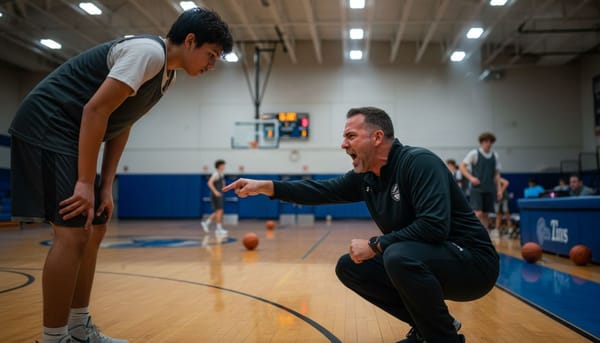
When most coaches hear "ecological approach," they picture someone rolling a ball out onto the court and stepping back. No instruction. No structure. Just chaos with a whistle nearby. I've heard that dismissal more times than I can count — and I understand where it comes from. But it fundamentally misrepresents what this framework actually is.
The ecological approach is a way of understanding how human performance actually emerges. Not how we wish it emerged. Not how it looks on a whiteboard. How it actually happens in a living, breathing, unpredictable environment like a basketball court.
At its core, the framework draws from ecological psychology — particularly the work of James Gibson, whose concept of affordances sits at the heart of everything. An affordance is simply an opportunity for action. A gap between two defenders affords a drive. A defender caught flat-footed affords a pull-up. A cutting teammate affords a skip pass. These aren't just tactical reads — they're the environment literally offering possibilities to a player in real time. Whether that player sees those possibilities, and acts on them intelligently, is the whole game.
What struck me when I first encountered this framing was how obvious it felt in hindsight. We've been spending decades trying to pre-program players with the right answers, when the real challenge is building players who can read the right questions as they appear — live, under pressure, with consequences.
The ecological approach also draws heavily on what's called the Constraints-Led Approach, or CLA — a practical framework that identifies three categories of constraints constantly shaping player behavior: individual constraints (the player's own physical and cognitive makeup), task constraints (the rules and demands of what's being asked), and environmental constraints (the space, context, and conditions surrounding them). Every decision, movement, hesitation, and breakthrough on a basketball court emerges from the interaction of all three.
This isn't a collection of drills. It's a lens for understanding why players do what they do — and how to design environments that develop them more honestly.
Why Traditional Coaching Methods Have a Fundamental Blind Spot
I want to be careful here, because I don't think traditional basketball coaching is worthless. There are coaches who've built extraordinary players using methods that look nothing like what I'm about to describe. But I think a lot of that success happened despite certain methods, not because of them. And that distinction matters enormously.
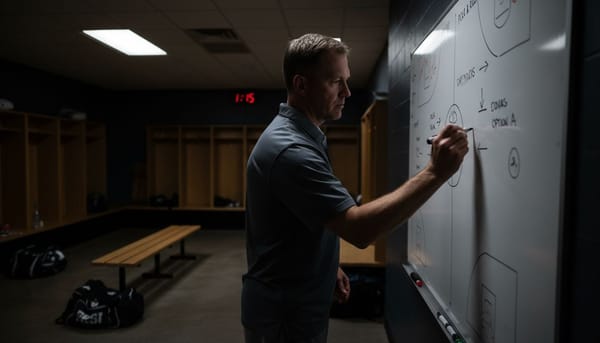
The traditional coaching model — the one built on set plays, isolated technical drills, five-on-zero walk-throughs, and repetitive mechanical instruction — operates on a specific assumption. It assumes that if you get the individual skill right in isolation, it will transfer to the chaotic, dynamic environment of real basketball. You drill the Euro Step until it looks clean. Then you put it in a game and expect it to appear.
But here's the problem I keep running into, and that I've heard coaches from high school gyms in Kentucky to professional academies in Germany wrestle with openly: the transfer doesn't happen the way we expect. Players who look sharp in isolated drills freeze when a real defender shows up. Offenses that run flawlessly in five-on-zero fall apart the second a defense applies pressure.
When I heard one coach describe watching his flex offense dissolve completely the moment live defenders entered the picture — after it had looked perfect in isolation — I thought: that's not a player problem. That's a design problem. The players learned to execute a pattern. They never learned to solve a problem.
What traditional coaching often misses is the perceptual side of performance. It trains the action without training the perception that should trigger the action. A player practicing a pull-up jumper off a cone isn't learning to read a closing defender — they're just learning the motor pattern. The cone never changes its angle. It never overplays. It never gambles on a steal. The player builds a skill that only works when the environment behaves exactly like a cone.
This is something I think about a lot. The game is a stream of constantly shifting affordances. If players are never trained to read those affordances under realistic conditions, we're essentially preparing them for a game that doesn't exist.
The Science of How Players Actually See the Game
One of the most striking ideas I've come across in this whole body of work comes from research into elite athlete visual behavior — specifically, something called the quiet eye. And I'll be honest: when I first heard it described, I thought it was going to be one of those vaguely interesting academic concepts with no real practical application. I was wrong.
The quiet eye refers to a final, stable fixation a player makes on a target before executing a skill — most notably in shooting. Elite performers consistently hold this gaze longer and more deliberately than non-elite performers. Under pressure, that fixation gets disrupted — it shortens, it wobbles — and performance drops. What's remarkable is that this isn't just a byproduct of skill. It's trainable. Players can be taught to extend and stabilize that final fixation, and when they do, their performance under pressure improves measurably.
But the quiet eye is just one piece of a much bigger picture about how players actually process visual information during a game. Elite players don't see the court the way beginners do. They move through a kind of scanning rhythm — broad, rapid, sweeping — and then, at a specific tipping point, they narrow their focus onto the most critical piece of information right before a decision has to be made.
When I heard this described, I immediately thought about every young player I've watched freeze on the catch. They're not necessarily slower or less skilled. They're just trying to process everything at once, right at the moment of decision — which is already too late. The window has closed. The help defender has rotated. The opportunity is gone.
The best players in the world aren't deciding in the moment. They decided before the moment. The catch is just execution of a read that was already made.
This has enormous implications for how we train players. If decision-making depends on earlier, more accurate visual scanning, then practice environments need to give players real visual information to scan. That means defenders. That means movement. That means unpredictability. A cone doesn't give you any of that. A passive defender gives you some of it. A live, engaged, contested environment gives you all of it.
There's a concept that captures what we're really trying to develop here — something researchers call representative learning design. The idea is that practice should contain the same perceptual information that the real game contains. If your drills strip out defenders, remove decision-making, and eliminate game-like pressure, you're not just simplifying the task — you're removing the very information players need to learn from.
I've seen coaches defend simplified drills by saying players need to master the basics before adding complexity. And I understand that instinct. But if the "basics" are motor patterns disconnected from the perceptual context in which they'll actually be used, then those basics aren't really the basics at all. They're fragments. And fragments don't automatically assemble into fluid, intelligent basketball when the lights come on.
What the science is telling us — slowly, accumulating across disciplines — is that the environment isn't just a backdrop for skill execution. It's an active participant in how skill develops. Players don't just get better by repeating movements. They get better by repeatedly encountering meaningful problems and finding solutions within real constraints.
That, at its core, is what the ecological approach is trying to honor.
How Constraints Actually Shape What Players See and Do
When I first heard the three-category breakdown of constraints — individual, task, and environment — I almost dismissed it as academic scaffolding. Another taxonomy. Another framework to memorize and file away. But the more I sat with it, the more I realized this isn't just a classification system. It's a lens that completely changes how you look at every single thing happening on a basketball court.
Individual constraints are what the player brings to the situation. Their height, their physical strength, their experience, their emotional state on that particular day. Task constraints are the rules and objectives shaping what's being asked of them — the scoring system, the court dimensions, the number of players involved. Environmental constraints are everything surrounding the action — the noise level, the lighting, the crowd, the pressure of the moment.
What struck me most when I finally understood this properly was the word interaction. These three categories don't operate independently. They're always pushing and pulling against each other simultaneously. Change one, and the other two respond. Shrink the court and suddenly individual constraints matter more — a slower player becomes more exposed, a creative player finds more options. Change the scoring system and the task itself reframes what counts as a good decision.
This is something I think about a lot now when I watch coaches tinker with their practice design. Most are only ever adjusting one variable at a time, usually the task, and wondering why player behavior doesn't change significantly. The real leverage comes from understanding how all three are converging at once and deliberately tilting that interaction toward the specific behavior you actually want to emerge.
The drill isn't the point. The interaction is the point. And until you see it that way, you're only ever changing the surface of practice, never the substance underneath it.
Affordances — The Invisible Currency of Every Basketball Possession
I'll be honest — before I came across the concept of affordances properly explained, I thought it was one of those words that academics use to make simple ideas sound more impressive. What changed my mind was a single, clean explanation. An affordance is an opportunity for action. Three words. That's it. And the implications of those three words for how we actually coach perception and decision-making are enormous.
A gap between two defenders affords a drive. A defender's weight shifted onto their heels affords a shot. A teammate cutting hard to the rim affords a skip pass to the corner. These aren't just tactical reads that a coach diagrams on a whiteboard — they're opportunities the environment is literally offering to the player in real time. The question isn't whether those opportunities exist. They exist on almost every possession. The question is whether the player has developed the perceptual sensitivity to detect them before they disappear.
When I heard this framed through Gibson's ecological psychology — the idea that perception and action are fundamentally coupled — something clicked about why isolated skill work so often fails to transfer. When you practice dribbling stationary against no defender in a quiet gym, you're not training perception at all. You're training movement patterns in an environment stripped of the very information those patterns need to connect to. The affordance never appears. So the player never learns to see it.
What this means practically is that practice design has to constantly be asking: what opportunities am I making visible? A well-constructed constraint doesn't just put players in a game-like situation. It makes specific affordances more prominent, more pressured, more unavoidable — until reading them becomes second nature rather than conscious calculation. That's the whole mechanism. That's what we're actually building toward.
The Quiet Eye, Visual Scanning, and Why Elite Players Decide Before the Moment
There's a rhythm to how the best basketball players gather information, and once someone describes it clearly, you see it everywhere. It happens in two phases that seem almost contradictory. First, a rapid, wide, open sweep of the court — taking in movement, spacing, defensive positioning, teammate timing. Then, at a precise tipping point, a sudden narrowing of focus. A lock-in. A commitment to the most relevant piece of information available right before action is required.
When I heard this described through the research on visual search patterns and what's called the quiet eye — that brief, remarkably stable moment of gaze fixation elite performers demonstrate just before executing a skill — I immediately thought about every young player I've watched freeze on the catch. They're not frozen because they lack athleticism. They're frozen because they never learned to scan early. They're trying to gather information at exactly the moment they're supposed to be acting on it. The window closes before the decision forms.
What this tells us about practice design is something most coaches have completely backwards. We spend enormous energy teaching players what to do. We spend almost no time teaching players when to look and what to look for before the moment of decision arrives. The decision, in elite players, has already been shaped by information gathered two or three seconds earlier. They're not thinking faster. They're seeing earlier.
I've seen this play out personally watching players at different levels run the same action. The advanced player looks before the screen comes. The developing player looks after they've already caught the ball. Same drill. Completely different information timeline. The quiet eye research suggests this isn't just experience — it's trainable. But only if we design environments that actually force players to search, scan, and fixate under realistic pressure rather than executing in isolation against nothing.
What Coaches Get Wrong About Designing Constraints
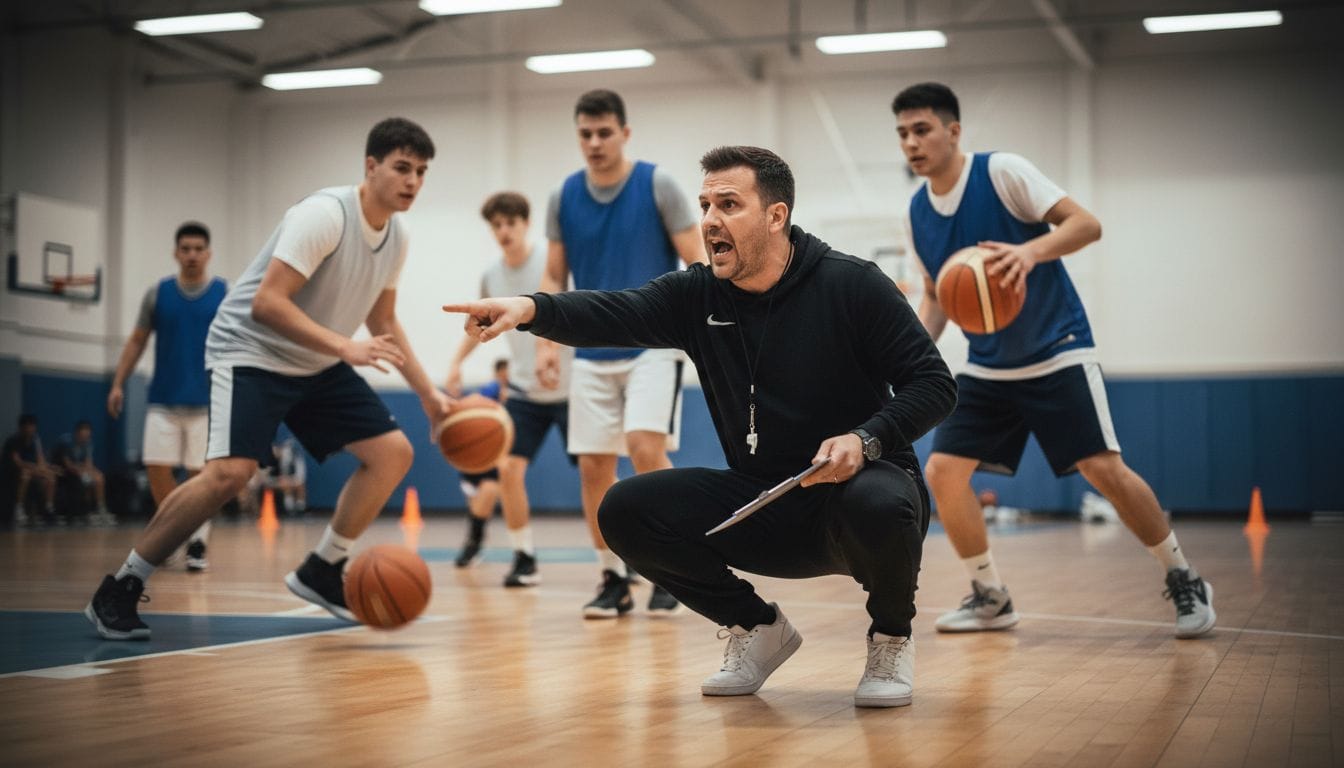
I want to be direct about something because I think it causes real damage to how this approach gets implemented. When most coaches hear "constraints-led," they immediately think it just means running small-sided games and stepping back. Roll the ball out. Let them figure it out. Glorified recess with a whistle. I've heard this criticism dozens of times, and honestly, I understand where it comes from — because poorly implemented ecological coaching actually does look like that.
What struck me most when listening to Liam Jefferson describe his early mistakes was how easy it is to confuse freedom with absence of design. The constraints-led approach demands more intentional preparation from the coach, not less. You're not removing structure — you're replacing the wrong kind of structure with a smarter one. The difference is enormous.
The most common mistake I've seen is coaches manipulating constraints randomly, without a clear functional intention behind the change. They add a shot clock because it sounds challenging. They reduce the court size because it sounds ecological. But if you can't articulate what specific perception-action coupling you're trying to surface, you're just creating chaos and calling it development.
Ty Keck's story hit me hard here. He watched his flex offense run perfectly in five-on-zero and fall apart the second a defender appeared. That's not a player execution problem. That's a design problem. The practice environment never included the information that actually matters — a live, reacting, unpredictable defender. Without that information present, the skill being practiced was never really basketball. It was a performance of basketball, staged under conditions that don't exist in games.
Good constraint design starts with a question: what does the game actually require the player to perceive and respond to? Build backwards from there.
The Perceptual Side Nobody Talks About Enough
Most coaching conversations about development focus on movement. Footwork. Shooting mechanics. Ball handling. And look — those things matter. But when I heard Derek Panchuk break down how elite players actually process visual information before making decisions, I realized we've been coaching maybe thirty percent of the real picture.
The scanning rhythm he described — wide, rapid, open sweeping of the environment followed by a sharp, committed lock-in right before decision time — is something I've never once seen explicitly coached at any level I've been involved in. And yet it separates players who always seem to be a step ahead from players who perpetually look reactive and late.
This is something I think about a lot now. When a young player freezes on the catch, we typically assume they don't know what to do. But often the real problem is earlier — they never gathered the right information before the ball arrived. They're trying to process the entire scene at the moment of highest pressure, which is exactly the wrong moment. The decision should already be forming before the catch happens.
The concept of affordances connects directly to this. John Murray's story about his sixth-grade player who taught herself a Euro Step and an In-and-Out move without being explicitly instructed is one of the clearest examples I've come across. The environment offered her the opportunity — a closing defender, a gap, a moment — and her perceptual system recognized it and found a solution. That's not an accident. That's what happens when practice environments are rich with the kind of information that actually appears in games.
When practice consistently strips that information out — when defenders are removed, when decision-making is pre-scripted — players never develop the perceptual sensitivity to see what the game is offering them in real time.
Advanced Application — Rehab, Identity, and Overlooked Contexts
One of the things I find most exciting about where this framework is going is how far beyond skill development it actually reaches. When I first encountered Yuji Suzuki's work applying ecological principles to return-to-play rehab, I genuinely hadn't thought about it from that angle before — and it shifted something for me.
The standard rehabilitation model treats the injured athlete as a collection of broken parts. Restore the tissue. Rebuild the strength. Practice the isolated mechanics. Then send them back into live basketball and wonder why they look hesitant, perceptually behind, emotionally flat. What that model misses is that the player has spent weeks or months completely disconnected from the perceptual environment that basketball actually demands. They haven't been reading defenses. They haven't been tracking cutting teammates. They haven't been feeling the relational rhythm of the game. And no amount of single-leg squats closes that gap.
Suzuki's argument — and I find it completely compelling — is that ecological rehab should progressively reintroduce those perceptual-environmental demands long before the player is cleared for full contact. Constrained game situations. Reduced intensity scrimmages. Decision-making under partial pressure. This isn't just physical. It's perceptual. It's psychological. It respects the whole athlete, not just the injured joint.
What struck me equally was how the same principle applies to coach education. Alex Lascu's story about rearranging chairs in a classroom before a workshop — just to observe whether people would adapt or default — is one of the most elegant demonstrations of environmental influence I've ever heard described. We shape environments. Environments shape behavior. That's true for players on a court and coaches in a room. The framework doesn't stop at the sideline.
Designing Practice That Mirrors the Demands of the Game
One of the things that keeps coming back to me after absorbing all of these conversations is how consistently the same failure mode appears across every level of basketball. A coach runs a drill that looks great in isolation. Players execute it cleanly. The coach feels good. And then the moment a real defense shows up, the whole thing evaporates. Ty Keck described this with his flex offense. Mitch Kirsch described it with five-on-zero sessions that produced wins in spite of their method, not because of it. Claire Murphy described spending an hour and a half on stationary dribbling that never once asked her to read a defender.
What struck me most, pulling all of this together, is that the issue isn't effort. These coaches were putting in the time. The players were putting in the time. The issue is representativeness. The practice environment wasn't representing the actual demands of the game.
When I heard Derek Panchuk talk about the quiet eye and the importance of perceptual training, I immediately thought about how most drills actively remove the perceptual challenge. There's no defender. There's no decision. There's no affordance to detect. The player is just executing a motor pattern in a vacuum — and then we're surprised when that pattern doesn't survive contact with a real game.
The ecological approach asks a fundamentally different design question. Instead of asking what skill do I want to see improved?, it asks what environment will force the player to discover and refine that skill themselves? Those two questions sound similar. They're actually miles apart. The first one puts the coach at the center of the learning process. The second one puts the environment at the center — and positions the coach as its architect.
Here's what that looks like in practice, synthesizing across everything I've read and heard:
- Task constraints shape behavior without verbal instruction. Change the scoring rule — reward skip passes, for instance — and players will start scanning for them. You didn't have to say a word. The constraint did the work.
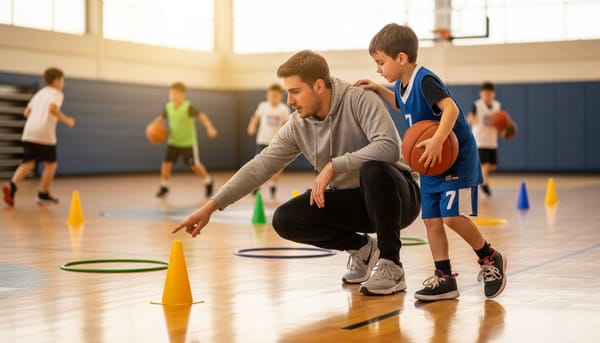
- Environmental constraints create new problems to solve. Shrink the court, add a zone defender, require a dribble limit. Every modification forces players to encounter a new set of affordances and figure out how to exploit them.
- Individual constraints acknowledge that one size never fits all. A player coming off an ankle sprain needs a different environment than a fully healthy starter. A sixth grader encountering the game for the first time needs different scaffolding than a junior who's been playing for eight years.
- Novelty is not chaos. One of the misconceptions I keep seeing is that constraints-led practice means unpredictable randomness where nothing gets reinforced. Liam Jefferson addressed this directly — the science is deliberate, even when the expression feels free. You are designing toward specific emergent behaviors. You're just not dictating the exact path players take to get there.
John Murray's story about the sixth-grade girl who developed a Euro step and an in-and-out move without ever being explicitly taught either one is the purest expression of this I've come across. The environment gave her a problem. Her body and mind solved it. And the solution she found was real — functional, her own, transferable to game situations — precisely because she discovered it rather than copied it.
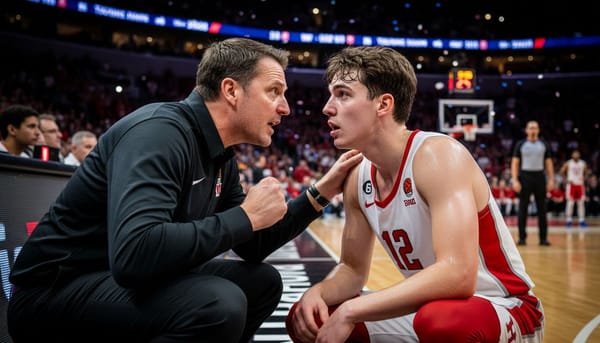
I don't fully agree with the idea that explicit instruction has no place in this process. I think there are moments where direct coaching matters. But those moments are far fewer than most coaches assume, and they land better when they come after a player has already encountered the problem in a real context. The instruction becomes a clarification of something they've already felt, rather than a directive about something they've never experienced.
The other thing I keep coming back to is what Tyler said about the coach who just duplicated what they experienced as a player. Stationary ball handling. Shell drill. Three-man weave. Walk through the offense. Repeat. That's not malice. That's just what happens when nobody ever asks the design question differently. When I heard that, I thought about how many current players are being shaped by practices that were designed for a game that doesn't quite exist anymore. The game has evolved. The science of learning has evolved. But the template gets passed down unchanged, and the players are the ones absorbing the cost.
Designing practice that mirrors game demands isn't about being trendy. It's about honesty. It's about asking whether what happens in your gym on Tuesday actually prepares someone for what they'll face on Friday. If the answer is "I'm not sure," that's a starting point, not a failure. But it does require the willingness to look clearly at what you're actually building.
What This Actually Asks of Coaches
I want to end this section with the part that doesn't get talked about enough, because most writing on the ecological approach focuses on the framework itself. What it is. How it works. Why the science supports it. All of that matters. But the part I find most interesting — and honestly most challenging — is what adopting this approach actually requires of the person holding the clipboard.
Alex Lascu's story about the rearranged chairs has stayed with me. He set the room up differently before a session with exercise physiologists, just to observe what people would do when their environment didn't match their expectations. Would they adapt? Would they resist? Would they not even notice? And then he admitted, with genuine honesty, that he personally wouldn't have moved the chairs. That even he — someone who teaches this stuff — would have defaulted to fitting into the environment rather than reshaping it.
That's not hypocrisy. That's the real texture of change. It's uncomfortable. It requires psychological safety that most coaching environments don't naturally provide. It requires the confidence to say "I'm trying something different" to an assistant who learned basketball thirty years ago and can't see why you'd mess with what works. It requires, as Simon Bertram pointed out about his work in Germany, finding the right entry point for each individual coach rather than demanding wholesale transformation overnight.
What struck me about every coach in these conversations — Ty Keck going all in and blowing up his traditional system, Liam Jefferson questioning five national championships' worth of assumptions, Mitch Kirsch rebuilding his entire training philosophy after playing professionally — is that none of them did it cleanly or quickly. They all described a messy, uncomfortable, sometimes embarrassing process of unlearning. Of running a session that fell apart. Of having players look confused. Of doubting whether they were doing the right thing.
That discomfort isn't a sign that the approach is wrong. It's a sign that real learning is happening — for the coach. And if Derek Panchuk is right that the most common struggle coaches bring to him is confidence in applying learning science to their specific context, then the solution isn't more theoretical knowledge. It's more honest experimentation. More tolerance for sessions that don't go perfectly. More willingness to observe what actually happens rather than measuring success by how controlled and predictable the practice felt.
I've been thinking about what Alex and Gray Thomas described after presenting to the ecological psychology department at UConn — that feeling of genuine intellectual humility in a room full of people who have spent their entire careers trying to understand perception and action at the deepest level. Alex said he was more nervous presenting there than in front of NBA front offices. I think that tells you everything about what this approach really asks of you. Not arrogance. Not certainty. Not a polished system you've branded and packaged. Just a genuine, ongoing commitment to understanding how human beings actually learn — and being honest when your current practices don't match that understanding.
The coaches who are doing this well aren't doing it perfectly. They're just asking better questions than they used to. That, I think, is the whole point.
Bringing It All Together: What the Ecological Approach Really Means for How You Coach
I've spent a long time sitting with everything from these conversations, and if I had to distill it down to what I actually believe — not just what the research says, but what I genuinely think is true about developing basketball players — it comes down to this: the environment is always teaching. The only question is whether it's teaching what you intend, or something else entirely.
Traditional coaching often assumes that the player is the variable and the environment is neutral. The ecological approach flips that completely. The environment is the primary teaching tool. The coach's job is to design it with precision, patience, and a deep understanding of what problems need to be solved — and then get out of the way long enough for real learning to happen.
That doesn't mean becoming passive. It means becoming more intentional. It means understanding affordances — those opportunities for action that the environment either offers or withholds. It means thinking about what your players are actually perceiving before they make decisions, and whether your practice structure gives them any real perceptual challenges at all. It means designing for transfer, not just performance on the day.
It means applying these principles even to rehab and return-to-play, not just skill development. It means recognizing that a player who freezes on the catch isn't slow — they never learned to scan early. It means understanding that the coach who rolls the ball out and observes is sometimes doing more sophisticated work than the coach delivering a 40-minute technical monologue.
And it means having the honesty and the courage to look at your current practices and ask the question that Ty Keck, Liam Jefferson, John Murray, Claire Murphy, and every other coach in these conversations eventually asked themselves: Is this actually working, or does it just look like it's working?
The gap between those two things is where better coaching lives. Start there. Design your environments with genuine intention. Give your players real problems to solve. Trust the process enough to let them solve them. And keep questioning everything — including, and especially, the approaches you're most comfortable with. That discomfort isn't a detour. That's the road.