A High School Coach's Honest Journey Into Constraints-Led Approach: Breaking Down the Language Barrier and the Real Aha Moments
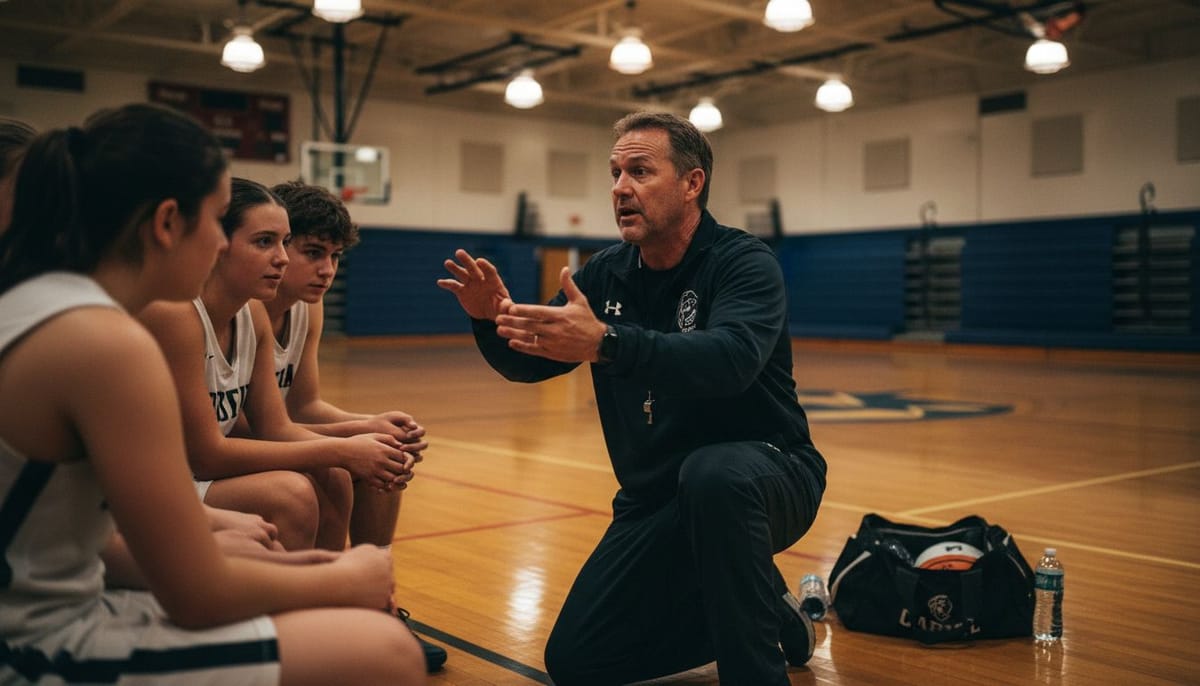
A sixth-grade girl with zero basketball experience walks into a high school practice. No one teaches her a Euro Step. No one diagrams an In-and-Out move on a whiteboard. And yet — by the end of the season, she's doing both. On her own. Because the environment gave her a problem, and she found a solution. When I heard that story, I immediately thought: this is what we should be talking about more in coaching circles. Not drills. Not systems. The environment. That single example from Coach John Murray on the Transforming Basketball podcast stopped me mid-listen. I had to rewind it.
Who Is John Murray and Why His Story Matters
John Murray is a high school coach at North Harden Christian — a small school in a small county in Kentucky. He's not coaching in a big program with resources and a deep roster. He's working with eight players, a gifted-but-inexperienced sixth grader, and an assistant coach whose entire basketball philosophy was formed during his own high school career thirty years ago. Real constraints. Real challenges. No shortcuts.
What struck me most was how grounded John is about where he came from. He talked openly about a period in his life where, in his own words, he was "a plague to society." Basketball pulled him out of that. Then faith reshaped him entirely. I'm not going to skip past that because it's not directly about X's and O's — it is directly about coaching. The best coaches I've ever come across carry something deeper than tactics. They've lived something. John clearly has.
He mentioned coaches like Chris Oliver, Brian McCormick, and Mike McKay as early influences — people who shaped how he thinks about the game. That's a genuinely thoughtful list. These aren't names you just stumble onto. You find those coaches when you're actively searching for a better way. And that searching, I think, is exactly what makes John's perspective worth listening to.
The First Barrier: Open-Mindedness (And Why It's Harder Than It Sounds)
When the host asked John what the biggest barrier is for a coach discovering the constraints-led approach for the first time, he didn't hesitate. Open-mindedness. And honestly? I think he's right, but I also think that answer deserves more unpacking than it usually gets.
It's easy to say "just be open-minded." It's another thing entirely to sit across from an assistant coach who's been playing and coaching a certain way for three decades and convince him — respectfully, patiently — that there might be a better path. John described that exact situation. His assistant had a deeply ingrained picture of what fundamentals should look like, what practice should feel like, what basketball is. Changing that picture isn't a conversation. It's a process. A long one.
I've seen this play out personally. The coaches who resist new ideas aren't usually lazy or arrogant. They're often just protecting something that worked for them once. The problem is that what worked for them — maybe twenty or thirty years ago — was designed for a different kind of player, a different era, a different understanding of skill acquisition. The game has evolved. Our understanding of how people actually learn has evolved dramatically. If you're still running the same practice structure you inherited from your own coach in 1994, something's off. That's not an attack — it's just honest.
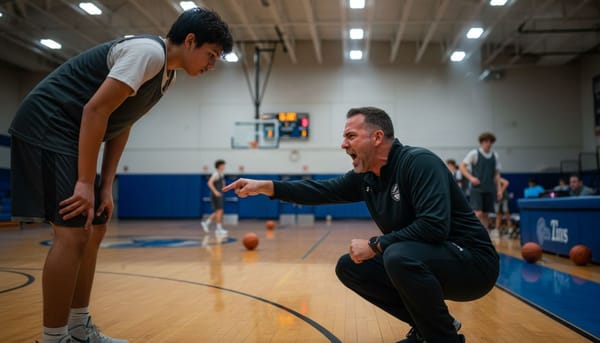
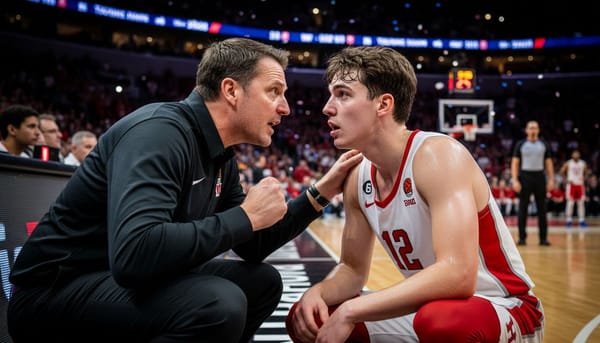
The second barrier John named was language. And this one is fascinating to me because it cuts in two directions. On one side, you've got coaches who hear terms like "affordance" or "constraints-led approach" and immediately shut down — it sounds academic, it sounds nerdy, it sounds like it doesn't belong in a gym. On the other side, you've got coaches who embrace the language but struggle to translate it into something their players actually understand. John admitted he landed in that second camp. His players told him midseason: we don't understand how the terminology fits together. That kind of honesty from players is rare. That kind of willingness to actually ask and listen from a coach? Rarer still. It reminded me of something I think about a lot — why coaches should listen to players during timeouts — because the feedback loop between player confusion and coach communication is often where everything breaks down.
The Kenzie Story: What Emergence Actually Looks Like in Real Life
Let me come back to Kenzie, because I think her story is the most important thing in this entire episode so far. She came in as a sixth grader. No experience. Thrown into high school practices. She struggled for two or three months — which, by the way, takes real courage on her part and real patience on John's part. Then she started figuring things out. Then she came back the next season and was starting.
Here's what gets me. John never taught her a Euro Step. He never broke down the In-and-Out dribble in isolation and made her do it fifty times. She discovered those moves because the environment created problems that demanded solutions, and her body and brain found the answers. That's not a coaching accident. That's intentional design. John built an environment where emergence could happen.
This is the core argument of the constraints-led approach, and it's one I find completely compelling — with one caveat I'll get to in a moment. The idea is that when you give players real problems in realistic contexts, they develop real solutions. Solutions that belong to them. Not solutions they're performing because a coach demonstrated it and drilled it until it became mechanical. This directly connects to something I've read about before — the whole debate around why obsessing over perfect shooting form can actually make players worse — because the same principle applies. Over-prescription steals ownership from the athlete.
My one pushback — and I say this as someone who largely agrees with this philosophy — is that emergence doesn't mean abandonment. John actually touched on this himself. Once Kenzie discovered the Euro Step, he could coach her on her solution. He could refine the technique behind the move she already owned. That distinction matters enormously. This isn't about letting players figure everything out in a vacuum with zero input. It's about sequencing. Let the discovery happen first. Then coach the refinement. That's a very different workflow than most programs use, and it's one I think more coaches need to understand.
What also resonates with me here is how directly this connects to the bigger question of how players develop genuine decision-making ability — because the decisions Kenzie is making in those moments aren't scripted. They're real. She's reading the defense, feeling her body, choosing a solution under pressure. That's the skill. That's the whole skill. And you can't drill it out of a cone.
When "Trimming the Fat" Actually Means Something
One phrase in this conversation stopped me cold. Trimming the fat. It sounds like a cliché, but the way it was used here hit differently. The idea that even successful coaches — coaches winning games, coaches operating at high levels — can still be overwhelming their players with too much information. That's humbling to sit with.
When I heard the part about reducing the offense down to essentially three pick-and-roll spacings, I immediately thought — wait, that's it? And then the follow-up point landed hard: the players were clearer. They performed better. Not despite the simplicity. Because of it. There's something almost counterintuitive about that when you're a coach who's spent years accumulating knowledge. You want to pour all of it in. But the players don't need a 32-ounce steak. They need something they can actually digest.
I've seen this play out personally. The coaches who try to install everything in the first two weeks of a season always seem to end up with the most hesitant players by game five. Decision speed drops. Confidence drops. And the coach is standing on the sideline wondering why nobody's executing. The answer is usually buried in their own practice plan. If you're genuinely trying to help your players make quicker decisions in basketball, throwing five different triggers at them isn't the path — it's the obstacle.
What struck me most was the honesty here. This wasn't someone theorizing from the outside. This was a coach reflecting on their own season, admitting they did too much, and owning it. That kind of self-awareness is rare. Most coaches will blame the players before they question the system they built.
Constraints as the Real Coaching Tool
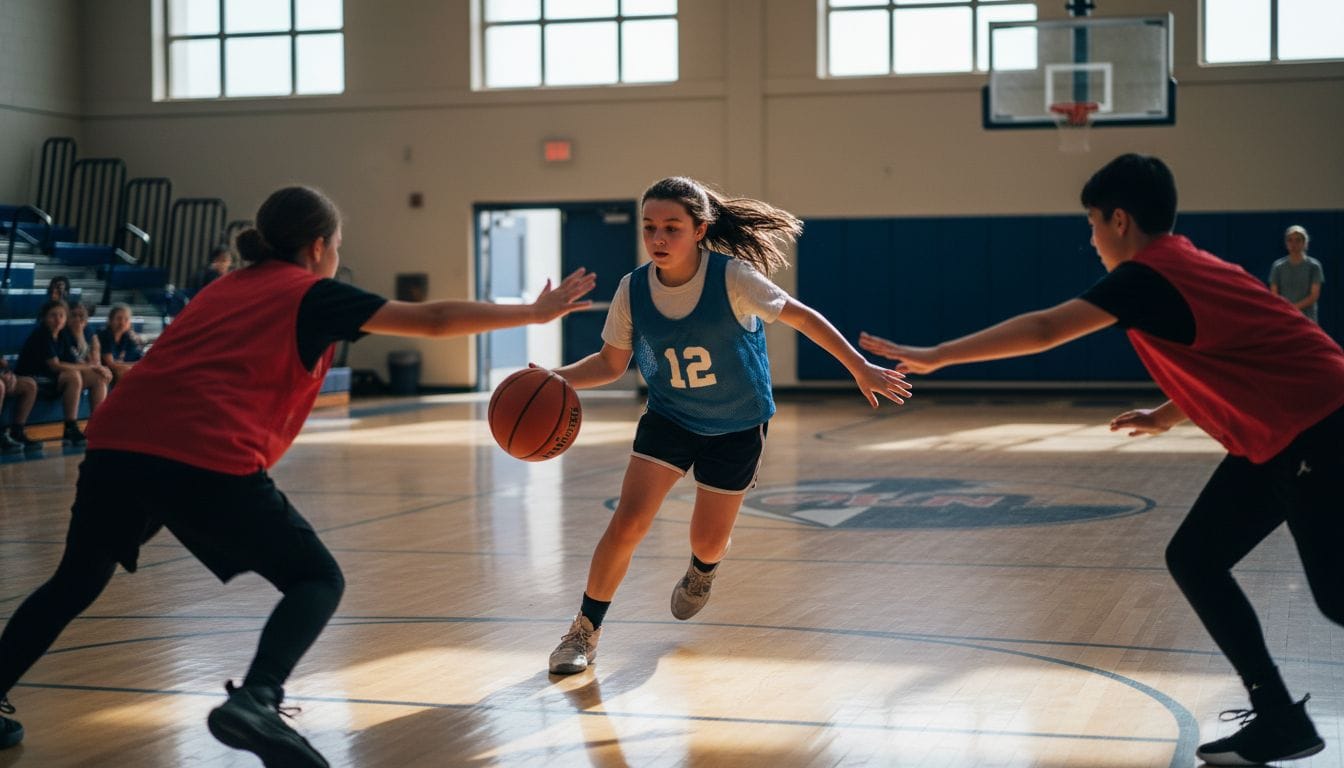
This is something I think about a lot. The idea that you can change a player's behavior not by telling them what to do differently — but by changing the rules of the environment they're playing in. The example of the wing player hoisting threes constantly? Brilliant fix. You don't lecture her about shot selection. You make the three worth less points. You make the layup worth five. Suddenly her brain starts solving a different problem.
That's constraint-led coaching in its purest form. And it works because it's not top-down instruction — it's the player discovering the solution themselves. The coach just designed the conditions. I don't fully agree with the idea that this approach works universally without any direct feedback, because some players genuinely need a cue or a conversation to bridge the gap. But as a primary tool? It's powerful.
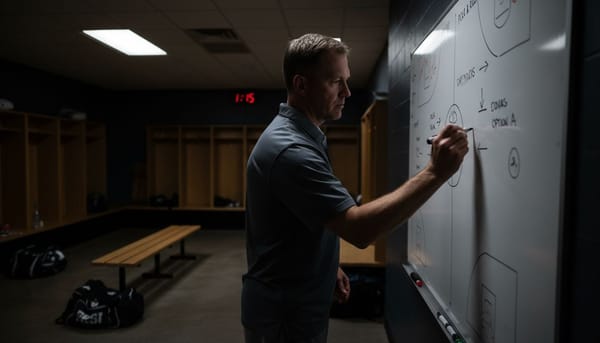
The zone offense section was a perfect example too. Rather than drawing up a dozen zone sets and making players memorize actions, they ran small-sided games. Pieces of the zone. Three offensive players against two defenders. A seven-second shot clock. Catch-and-shoot threes or rim finishes only — gold or silver medal scoring. And in two practices, the solutions emerged organically. That blew me away. Honestly, if you're still running complicated zone sets that your players can barely recall in warmups, consider what improving your team's shot selection through game-based constraints might actually look like instead.
The under-12 example hit close to home too. Kids launching off-the-dribble threes left and right. One rule change — no off-the-dribble threes — and suddenly creativity explodes. They start driving, cutting, passing into better positions. The behavior you wanted all along appears, not because you demanded it, but because you removed the easy escape route. Simple. Brilliant. And transferable to any age group.
Knowing Your Player Well Enough to Constrain Them Right
Here's where it gets genuinely complex though. Because constraints only work if you actually know your player. And that's not a small thing. The conversation about the prep player who could shoot but wanted to handle and trigger — that's a real tension coaches face constantly. Do you develop toward the player's dream or toward their most realistic path?
There's no clean answer. And I respect that they didn't pretend there was one. Some players, one well-designed constraint changes everything. Other players, you can constrain all season and the deeper issue is still there — skill ceiling, athleticism, or just an honest mismatch between aspiration and ability. The relationship between coach and player has to carry enough trust to have that conversation directly. That's not a tactical skill. That's a human one.
This is also why I keep coming back to the idea that the best coaches aren't just X-and-O thinkers — they're relationship builders first. The language piece mentioned earlier ties into this too. When a 10-year-old is talking about ghost cuts and dominoes, that's not just vocabulary. That's the coach building a shared understanding, a connection, a culture. I think about what it actually takes to shift from set plays toward genuine player development — and it almost always starts with how well you actually know the people you're coaching.
The final point here really stuck with me. There's no copy-paste answer. There's no overnight transformation. If you're hunting for a five-step system that works for every player in every context, you're going to be disappointed — and probably frustrated with your team in the process. This is a long-term approach. And honestly, the coaches who are willing to sit in that discomfort, make the hard training switch and experiment without guarantees? Those are the ones whose players actually grow.
The Practice That Has No Filler Is the Practice That Actually Teaches
What struck me most was this idea of leaving space in practice deliberately. Not laziness. Not poor planning. Actually, intentional emptiness. When I heard the conversation shift toward coaches planning every single minute — filling two hours with random drills because they feel like they have to — I immediately thought about how backwards that really is. We've somehow confused busyness with productivity. A packed practice plan isn't the same as an effective one. Not even close.
The "cushion" concept they talked about is something I don't think enough coaches take seriously. If you've scheduled every second, you've already decided you won't adapt. You've decided that whatever you planned at home on Tuesday night is more important than what your players are showing you live on the court Wednesday morning. That's a problem. And it's honestly one of the reasons making quicker decisions in basketball is so hard to teach — coaches don't model adaptability themselves, so why would players develop it?
The "tree finishing" drill idea was pure gold to me. A coach watches an NCAA playoff game, sees a player surrounded by three defenders in the paint, and turns that single moment into a constraint-based activity. That's creative coaching. That's real problem-solving. And it came from paying attention differently — not from a coaching manual, not from a clipboard, but from watching the game through a new lens. I've seen this play out personally when coaches who start designing from what they observe rather than what they've always done suddenly start building practices that feel alive. Their players feel it too.
Ugly Paintings, Kias, and Why the Messy Middle Is Worth It
Here's the thing that got me. Both coaches in this conversation were willing to admit that their early practices were chaotic. Messy. Sometimes demoralizing. And yet neither of them quit on the approach. That kind of honesty is rare. Most coaches won't tell you about the bad days — they'll share the highlight reel. But the bad practice where nothing clicked? That's where the real learning lives. For the coach just as much as the players.
The Kia and Mercedes-Benz analogy landed perfectly. Some drill ideas you come up with are terrible. Some are brilliant. But you only find the brilliant ones if you're willing to experiment freely enough to produce the bad ones too. This is something I think about a lot when I hear coaches say they "tried something new and it didn't work." One failed experiment isn't a verdict. It's just data. And this kind of willingness to change your entire training approach is what actually separates coaches who plateau from coaches who keep growing year after year.
I don't fully agree with the idea that you need years of experience before you can start adapting mid-practice. I think that's learned faster than people assume — if you're actually paying attention. The coach in this conversation said he wasn't adaptive enough early in his career, and I get that. But I also think watching your players with real curiosity, rather than just checking whether they're executing your plan, accelerates that skill enormously. You don't need a decade. You need the right mindset from day one. And if you're still leaning on things like the three-man weave because it fills time, it's worth exploring a better alternative that actually transfers to the game before another season slips by.
What I'll take away from this whole conversation is simple but uncomfortable: most of us have been filling time and calling it coaching. The practices that feel controlled, polished, and perfectly timed are often the ones doing the least. The messy ones — where the seeds get planted, where a coach scribbles something down from a playoff game, where ten minutes get left deliberately open — those are the ones that actually change players. It's not a pretty painting yet. But keep going. It becomes a Picasso.
Want the complete picture? Read our full guide: The Complete Guide to Ecological Learning Approach in Basketball Coaching