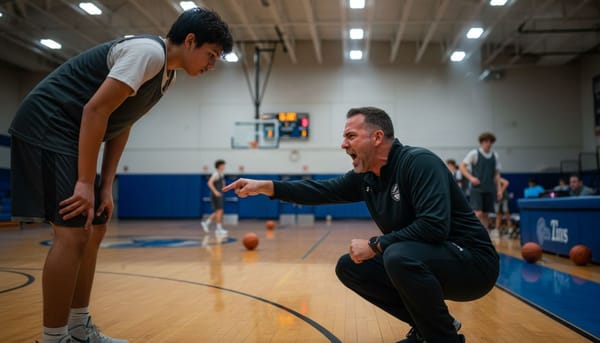
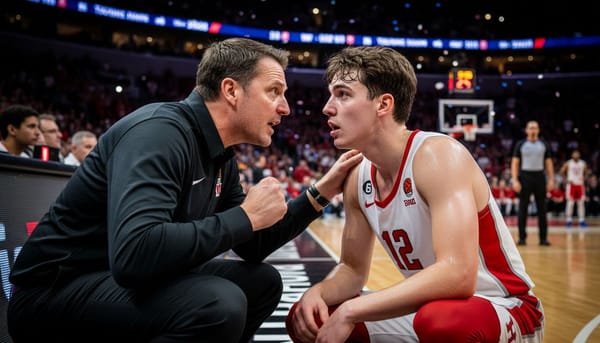
This is why coaches should listen to players during timeouts!🧠

Here's something that'll blow your mind: Chris Paul has averaged more assists per game than points in seven different seasons. Seven! That's not a point guard playing second fiddle — that's a maestro who sees the game three moves ahead while the rest of us are still processing what just happened.
We obsess over vertical leap. We drool over shooting percentages. We debate who's got the quickest first step. But court vision? Man, it's the secret sauce that separates the good from the truly elite, and we barely talk about it. It's the difference between having five players on the court and having a legitimate team.
And here's the kicker — it's not some mystical gift you're born with. Court vision can be developed, trained, and sharpened just like any other skill. It just takes the right approach, and honestly, most coaches are teaching it all wrong.
What Actually Is Court Vision? (It's Not What You Think)
Let's clear something up right away. Court vision isn't about having eagle eyes or some supernatural peripheral vision. I've watched plenty of players with perfect eyesight make the dumbest passes imaginable.
Real court vision is about processing speed and pattern recognition. It's knowing where your teammates will be before they get there. It's understanding defensive rotations so well that you can exploit them before they even happen. When we watch Magic Johnson or Nikola Jokić thread a needle pass through three defenders, they're not reacting to what they see — they're executing what they already anticipated two seconds earlier.
Think about it like chess. Grandmasters don't stare at the board calculating every possible move in real-time. They recognize patterns they've seen thousands of times before and instantly know the best play. Basketball's the same way. The players with elite court vision have built up such a massive library of game situations in their heads that they're basically playing on autopilot while everyone else is stuck in first gear.
But here's where it gets interesting: that library isn't just built from playing games. It's built from how you practice, what you focus on during film sessions, and whether your coach is creating situations that force you to actually think instead of just running scripted plays. The truth is, modern basketball demands a new approach that prioritizes reading and reacting over memorizing set pieces.
The Three Levels of Court Vision (And Where Most Players Get Stuck)
Not all court vision is created equal. There's a hierarchy here, and understanding where you or your players sit on this ladder is crucial for development.
Level One: The Tunnel Vision Player
This is where everyone starts. You get the ball, you see the rim, and that's about it. Teammates are basically obstacles. Defenders are challenges to overcome through sheer force of will or athleticism. We've all been there — I definitely was for way too long in my playing days. The game feels fast, chaotic, overwhelming.
These players aren't bad. They're just operating in survival mode. Their processing power is maxed out just handling the ball and not turning it over. There's nothing left over for reading the defense or anticipating rotations. If your team struggles with aggressive contact, they're probably stuck at this level because they can't see help coming.
Level Two: The Reactive Passer
This is where most decent players land and stay forever. They can see open teammates. They'll make the right pass when it's obvious. They're solid, reliable, won't kill you with turnovers.
But they're always one beat behind. They see the opening after it appears, which means by the time the ball gets there, the defense has already rotated. Their passes are accurate but predictable. They're reading the current state of the defense instead of anticipating the next state.
Reading the Game Through Real Competition
Here's the thing about basketball IQ — you can't teach it in a vacuum. You just can't.
Yan's teams don't run through endless film sessions where kids zone out staring at screens. They play. They compete. They make mistakes in real time and immediately feel the consequences. That's when the learning actually sticks, you know?
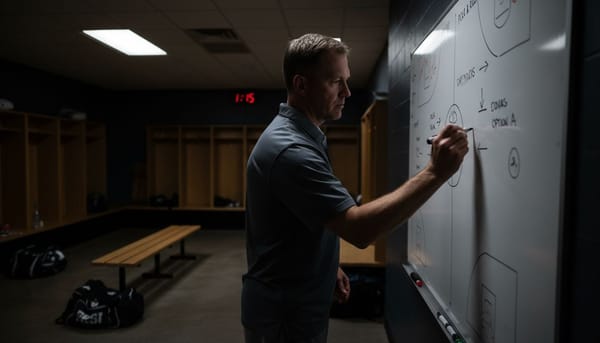
Think about how we all learned the game growing up. Was it from someone drawing Xs and Os on a whiteboard for an hour? Or was it from getting absolutely torched by that one kid who always knew where you were going, forcing you to adapt or get embarrassed? Yeah, thought so.
The games Yan designs put players in constant decision-making scenarios. Should I attack now or swing it? Can I get to the rim or do I need to pull up? Where's the help coming from? These aren't theoretical questions — they're happening at game speed with real defenders in your face.
And here's what's brilliant: the constraints in these games naturally teach spacing and movement without coaches having to stop practice every thirty seconds to correct positioning. When you design the game right, players discover the solutions themselves. They feel why spacing matters instead of just being told it matters.
This approach echoes what we're seeing across modern basketball's shift toward player development over rigid set plays. The game is too fast, too creative, too spontaneous to be reduced to memorized patterns.
Building Confidence Through Controlled Chaos
Let's talk about something we don't discuss enough: confidence.
Not fake confidence. Not the kind that comes from dominating weaker competition or hitting open shots in practice. Real, battle-tested confidence that holds up when the game gets physical and the pressure mounts.
Yan's competitive games create this kind of confidence because they expose players to adversity in manageable doses. The games are hard — sometimes brutally hard — but they're designed so players experience small wins even while struggling. You might lose the game, but you made that one great read. You got beat off the dribble, but you recovered and contested the shot. Progress becomes tangible.
This matters so much for young players who are still figuring out where they fit. Some kids shut down when they face aggressive contact or intense defensive pressure. Yan's games normalize that physicality, that intensity, until it doesn't feel overwhelming anymore. It just feels like basketball.
I've watched timid players transform into aggressive attackers through this method. Why? Because they got comfortable being uncomfortable. They learned that getting scored on isn't the end of the world — it's just information. It tells you what to adjust, what to work on, where to focus your attention next.
The Repetition That Actually Transfers
We talk a lot about getting reps in basketball. Ten thousand shots. A thousand ball-handling drills. Hours and hours of work.
But what kind of reps are we getting?
Yan structures his competitive games so players get hundreds of reps per session — but they're game-like reps. You're not just shooting. You're creating separation, reading the defense, finishing through contact, making the extra pass when help comes. Every action happens within the context of competition, which means the skills you're developing actually transfer to real games.
That's the secret sauce right there. Transfer. So many players look incredible in drills and then struggle in games because the skills were developed in sterile environments. Yan eliminates that gap by making the training environment mirror the game environment from day one.
The Back Door Never Gets Old
Here's the thing about back door cuts — they've been around forever, and defenses still fall for them. It's honestly wild when you think about it.
Watch that perfectly timed pass. The defender's overplaying the passing lane, thinking they're being aggressive, thinking they're making the right play. And boom. Their player's gone. Just slipped right behind them for an easy bucket.
This is basketball IQ at its finest. No complex play calling needed. Just two players reading the defense and making the right decision at the right time. The passer sees the overplay. The cutter feels the pressure and explodes to the rim. Poetry in motion.
You know what's crazy? We spend so much time working on complex offensive systems when sometimes the simplest reads are the most effective. That's why modern basketball demands a new approach that emphasizes reading and reacting over memorizing plays.
Building These Reads Into Your Team
So how do we actually teach this stuff? It starts with creating the right environment in practice.
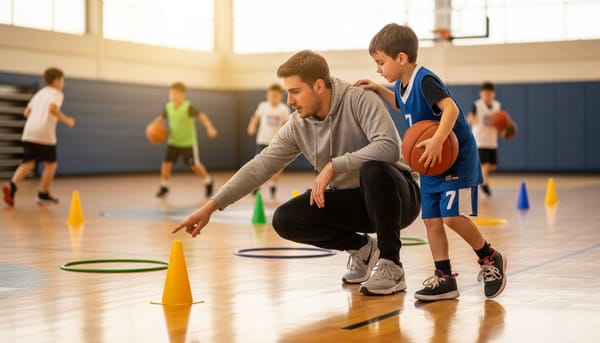
Don't just run set plays over and over. Put your players in live situations where they have to read defenders. Use constraints that force certain actions — like defensive overplays — so players learn to recognize them in games. When your players learn to handle aggressive contact and pressure, these opportunities start appearing everywhere.
The back door cut works because it punishes overly aggressive defense. The slip screen works because it punishes defenders who help too early. These aren't trick plays. They're fundamental basketball principles that will never go out of style.
And honestly? That's what makes our game so beautiful. The same concepts that worked fifty years ago still work today. They just look a little different based on how the game has evolved.
The Bottom Line
Look, we could break down film all day long. But the real magic happens when your players start seeing these opportunities themselves. When they don't need you to call a play because they already know what to do. When the game slows down for them and they can read what the defense is giving them.
That's player development. That's how we build basketball players who can think, not just execute.
So next time you're watching film with your team, don't just show them what happened. Help them understand why it happened. What was the defender doing? What did the offensive player see? How can we create that same situation again?
Because at the end of the day, basketball is still a game of reads and reactions. The teams that do it best are the ones that win. Simple as that.