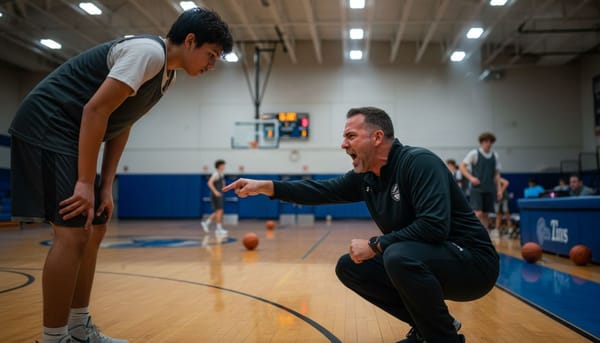
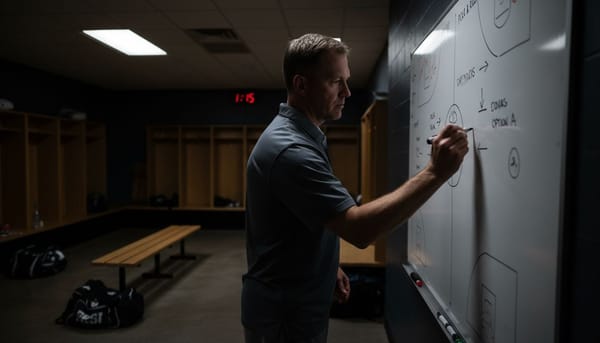
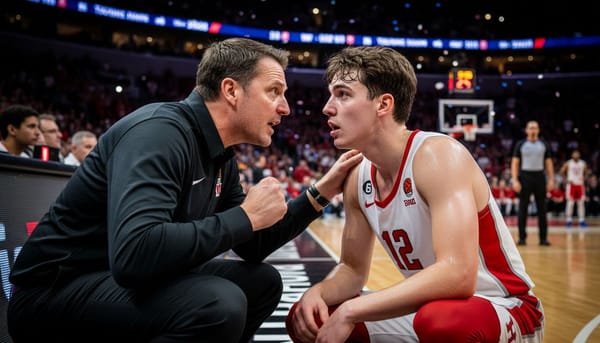
Why Pass and Cut Is Harming Youth Basketball (And What to Teach Instead)
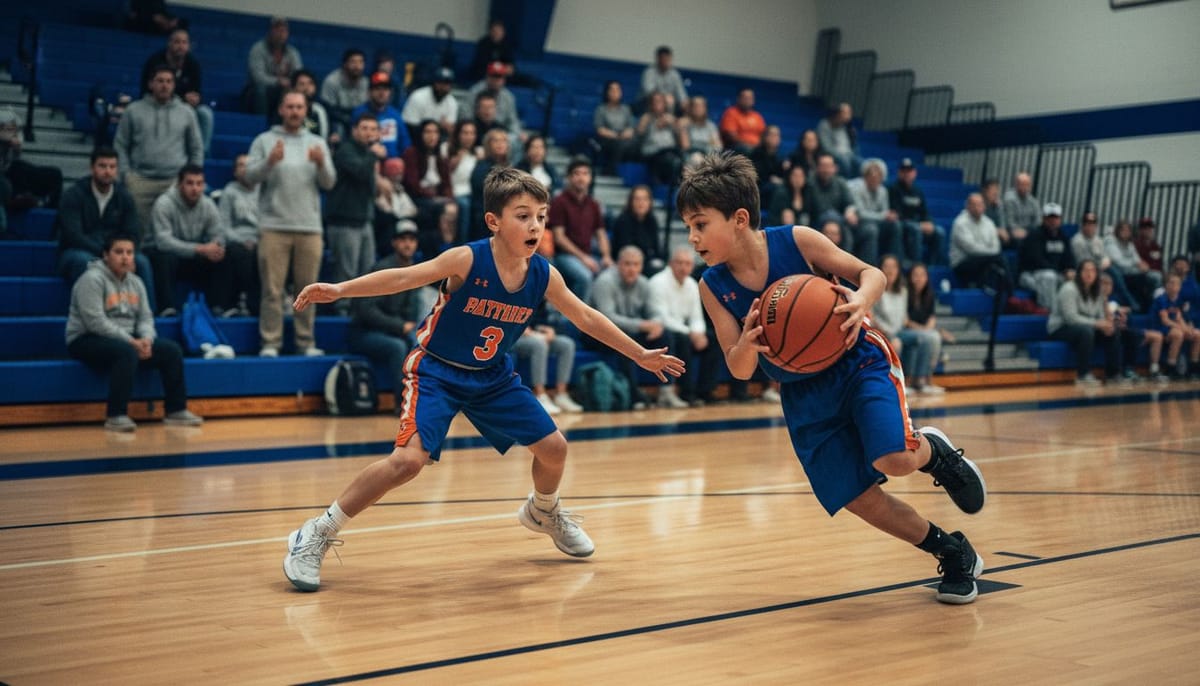
Here's a stat that should stop every youth basketball coach cold: the most widely taught offense in youth basketball might be the single biggest obstacle standing between your players and real development. Not a lack of talent. Not poor athleticism. The offense itself. Pass-and-cut motion is everywhere — gyms across the country, youth leagues, rec centers, travel programs. It looks clean. It looks organized. Coaches love it because it creates movement, it fills gaps, it keeps players from standing around like traffic cones. But what if all that structure is actually teaching players the exact opposite of what basketball demands?
That's the uncomfortable question coaches at Transforming Basketball have been asking — and the answers are genuinely alarming.
The Illusion of Development
Here's what scripted pass-and-cut looks like on paper. Player passes. Player cuts. Next player fills. Repeat. Forever. It moves. It flows. Parents in the bleachers nod approvingly. Coaches feel like they've installed something meaningful. But strip away the aesthetics and ask yourself — what decision did any player just make? None. Zero. The pattern made the decision for them.
That's the illusion. Movement without purpose isn't development. It's choreography. And basketball, real basketball, is not a choreographed performance. It's a problem-solving competition happening at full speed, with defenders who are actively trying to take every option away from you. The moment a player hesitates — waiting for their cue in the pattern instead of reading what's in front of them — the defense wins.
This is the core issue. Scripted pass-and-cut doesn't teach players to perceive the game. It teaches them to follow the game's pre-written script. And there's a massive difference. We know from research into athletic skill development that the best players in the world aren't running systems in their heads — they're reading affordances. Opportunities to act based on what they actually see. A short closeout? Attack it. A late help defender? Skip it. An open cutter? Hit them. But if your players are wired to look for the next step in the pattern instead of the next opening in the defense, those affordances become invisible. And that's a coaching problem, not a talent problem. It's worth asking whether this is part of a deeper issue — the shift away from set plays toward genuine player development is something modern basketball is demanding right now, whether youth coaches are ready for it or not.
When the Offense Erases Its Own Advantages
Now we get to the part that genuinely makes me frustrated as someone who watches a lot of youth basketball. It's not just that pass-and-cut fails to create advantages. It actively destroys them.
Picture this scene. A player catches on the wing. Their defender is in a scramble — short closeout, off-balance, completely vulnerable. The driver instinctively attacks the paint. Lane looks open. This should be a layup, or at minimum a broken defense that kicks off a chain reaction of advantages. But wait. Their teammate is cutting through that exact lane right now — because the pattern says cut after the pass. Another defender trails the cutter. Suddenly the driver has nowhere to go. Two offensive players, one lane, two defenders involved. The opportunity? Gone. Evaporated. Not because of anything the defense did brilliantly. Because the offense ate itself.
This is what Transforming Basketball calls killing the dominoes. Once an advantage is created — whether off a closeout, a mismatch, a blown rotation — it should trigger a chain reaction. One advantage leads to another leads to another until someone gets a clean look. But you can't have a chain reaction if players are cutting on cue rather than cutting on read. The domino effect requires everyone on the floor to understand what just happened and respond accordingly. Scripted cutting short-circuits that entire process.
And here's where I'll be clear about something: this isn't an argument against cutting entirely. Back door cuts, ghost cuts, weak side flashes — when a player reads the defense and makes an unscripted cut because the game is handing them that opportunity? That's elite basketball intelligence. That's exactly what we want to develop. Learning to space the floor intelligently is a completely different skill from running a preset loop, and the distinction matters enormously for long-term player growth.
Obedience Versus Intelligence — The Real Cost
Let's talk about what's really being trained here. Because this is where I think the damage runs deepest. When you install a scripted pass-and-cut system, you're not just teaching an offense. You're teaching a mindset. You're telling players, implicitly, that what matters most is executing the pattern correctly. That compliance is the goal. And players — especially young ones who desperately want to do the right thing — internalize that. Fast.
They stop trusting their eyes. They stop trusting their instincts. They start playing with one part of their brain focused on what comes next in the sequence instead of what's unfolding right in front of them. Does the defense look vulnerable? Doesn't matter — someone might be cutting through. Is the corner wide open? Hold on — it's not my time to fill yet. Is there a clear drive? Better wait. The pattern is the pattern.
In competitive basketball, that hesitation is lethal. Defenses recover in fractions of seconds. The window to make quicker decisions is narrow, and players who've been trained to look for their cue in a system rather than their read in the game are going to be a half-beat slow — every single time. Those half-beats add up. Games are decided by them.
And what happens when those players age up? When they move into more competitive environments where defenses actually take away the patterns? They're lost. Because they never learned to solve the problem — they only learned to run the play. That's not development. That's conditioning. There's a reason the argument against running set plays has been gaining serious traction in coaching circles, and the pass-and-cut loop is just a more disguised version of the same problem — predictability masquerading as structure.
The question every coach needs to sit with isn't "does my offense create movement?" Movement is easy. The question is: does my offense create thinkers? Players who see the game, read the defense, and act on what's actually there — not what the pattern told them to expect. Because the game will never run the same script twice. Not ever.
The Invisible Gorilla Problem: Why Pattern-Based Offense Blinds Your Players
Here's something that should shake every youth coach to their core. Harvard researchers ran an experiment — ask people to count basketball passes, and they completely miss a person in a gorilla suit walking right across the screen. They're looking, but they're not seeing. That's pass and cut in a nutshell.
When you drill a pattern into players hard enough, they stop reading the game. They start executing the script. And the moment something unexpected happens — a late rotation, an overplaying defender, a scramble situation — they freeze. Because nobody taught them to look for the gorilla. They were too busy counting passes.
This is the real cost. Not the missed bucket. Not the stalled possession. It's the player who reaches 16U, 18U, or college level and suddenly the pattern is gone — and they have absolutely no idea how to play without it. They've rehearsed. They haven't learned. There's a massive difference between those two things, and most coaches never stop to recognize it.
Decision-making isn't built through repetition of a predetermined sequence. It's built through recognition — seeing situations, reading defenders, processing space in real time. If you want to understand how that actually develops, the research on making quicker decisions in basketball breaks down exactly why perception-based training outperforms pattern-based training every single time.
Players in rigid systems defer instead of drive. They wait instead of scan. It looks like discipline from the sideline. But it's dependency. And dependency has an expiration date.
The "Basics First" Defense — And Why It Doesn't Hold Up
You've heard it. "They need the basics first." It's the go-to justification for keeping pass and cut alive in youth programs. And honestly? It sounds reasonable. Until you ask the question nobody wants to ask.
Who decided pass and cut is a basic?
Seriously. Who made that call? Because if we're defining basics as the foundational skills that actually transfer to every level of the game, then pass and cut doesn't even make the list. It's not foundational. It's a framework. A specific system with specific rules that breaks down the moment you step outside it.
The real basics — the ones that never expire — look completely different. Recognizing help defenders and rotations. Creating and maintaining spacing dynamically. Reading the floor and identifying dominoes. Converting advantages before the defense resets. These aren't advanced concepts reserved for elite players. They're the actual foundation of basketball intelligence, and they're fully accessible to young players when you teach them the right way.
The floor is lava constraint is a perfect example. Players can't catch the ball in the mid-range — do it and it's a turnover. What happens? They widen naturally. They start reading double gaps. They space the floor better not because they were told where to stand, but because the constraint forced them to feel why spacing matters. That's perception-based learning. That's a real basic.
Compare that to a player who's spent three seasons running the same cut to the same spot. They look disciplined. But put them in a broken play situation and watch what happens. Nothing. Because the pattern is gone and the skill was never there.
It's the same reason top coaches are moving away from artificial drills that don't mirror real game pressure — like the ongoing conversation about why players should stop doing cone drills and start training in environments that actually replicate the chaos of live basketball.
What Real Foundational Offense Actually Looks Like
Let's build this from scratch. Forget the system for a second. What does a basketball play actually require? Someone creates an advantage. A defender makes a decision. That decision creates a new advantage somewhere else. Dominoes. The entire game is just a sequence of reads and reactions.
Great offenses don't manufacture advantages through choreography. They create them through pressure — on the ball, off the ball, in the paint, at the three-point line — and then they exploit the defense's response. Fast, decisive, relentless. That's why teams that dominate opponents on fast breaks are so dangerous. They're converting advantages at full speed before the defense even has a chance to communicate, let alone reset.
The same principle applies in the half court. The moment a help defender commits, there's an open player. The moment an on-ball defender overplays, there's a drive lane. Pass and cut doesn't teach players to see those moments. It teaches them to ignore them — to reset to structure instead of attack the crack.
Think about the coaches and programs that have genuinely transformed how their players read the game. The ones winning at the youth and developmental level aren't running tighter systems. They're creating better problems for their players to solve. Constraint-based drills. Competitive small-sided games. Environments where the read is the rep. And if you want to see what that philosophy looks like inside a real program, the story of shifting from set plays to genuine player development is one of the most important reads in modern coaching.
Here's the bottom line on basics. A basic skill is one that compounds. It gets more valuable as the game speeds up, the stakes rise, and the opposition gets smarter. Pass and cut doesn't compound. It caps. And when players hit that ceiling — and they will — the damage is already done.
The Three Principles Every Youth Offense Actually Needs
Let's cut straight to it. If you're still scripting your offense top to bottom, you're not coaching basketball — you're choreographing a dance recital. Real offense starts with three non-negotiables: create an advantage and convert it, use spacing constraints to shape intelligent movement, and get your players decision-making reps in live situations. That's it. That's the whole framework.
One-on-one. Two-on-two. Rules like no passes unless you've tried to beat your defender first. Rules like you must move when the ball enters the paint. These aren't gimmicks — they're the environments that force players to scan, react, and solve problems in real time. And that's exactly what the game demands at every level above youth basketball. The one rule that transforms how your players space the floor isn't found in a playbook — it's discovered through constraint-based repetition that teaches players why they're moving, not just where.
Think about what pass-and-cut actually asks of your players. Move here. Cut there. Replace this spot. Nobody's reading a defense. Nobody's reacting to live information. They're running a loop. And when that loop breaks down — because it always breaks down — they freeze. They've never had to think for themselves. Making quicker decisions in basketball isn't a talent some kids are born with. It's a skill that has to be trained, deliberately, under pressure, with a real defender in the way.
Ball movement matters. Absolutely it does. But only when it comes from pressure. When passes collapse help defenders, shift rotations, punish mistakes — that's purposeful offense. Passing just to keep the cycle spinning? That's possession with extra steps. There's a difference. A big one.
Stop Keeping It Tidy — Development Is Messy
Here's the uncomfortable truth coaches don't want to hear. Pass-and-cut makes the coach feel in control. The movement looks clean. The gym looks organized. Parents nod approvingly. The score looks respectable. But that comfort comes at a devastating cost — your players aren't learning to think. They're not learning to manipulate defenders. They're not learning to solve anything. They're learning compliance.
And compliance doesn't transfer.
Great coaching isn't about keeping things tidy. It's about embracing the chaos and giving players the tools to thrive inside it. Consider why modern basketball demands a completely new approach to player development — because the game has evolved, defenses have evolved, and the players who succeed at the highest levels are the ones who can read and react in real time, not recite a set play from memory.
The goal of youth basketball isn't to win under-12 tournaments. Let's be brutally clear about that. The goal is to prepare players for the highest level they can reach. That means building decision-makers, not direction-followers. It means developing players with genuine vision — not just pattern compliance. Pass-and-cut may look neat on a Tuesday night practice, but development isn't neat. It's messy. It's adaptive. It's unpredictable. And if you're designing your offense to avoid that messiness, you're optimizing for the wrong thing entirely.
Design environments that demand awareness. Reward aggression. Foster adaptability. Training with a real defender changes everything — because those are the exact conditions your players will face when the play breaks down in a tight fourth quarter. And in modern basketball? The play always breaks down. Every single time