Why Coach Development Workshops Fail — And What Actually Makes Learning Stick
Most coaching courses end with a standing ovation and a room full of inspired people who change absolutely nothing. I've been in those rooms. I've been that inspired person. And then Monday rolls around, someone sends a text asking why you're not running practice the usual way, and just like that — you fold. You go back to the familiar. Back to safe. This podcast conversation stopped me in my tracks because it named exactly that feeling, and it made me realize how widespread this problem actually is.
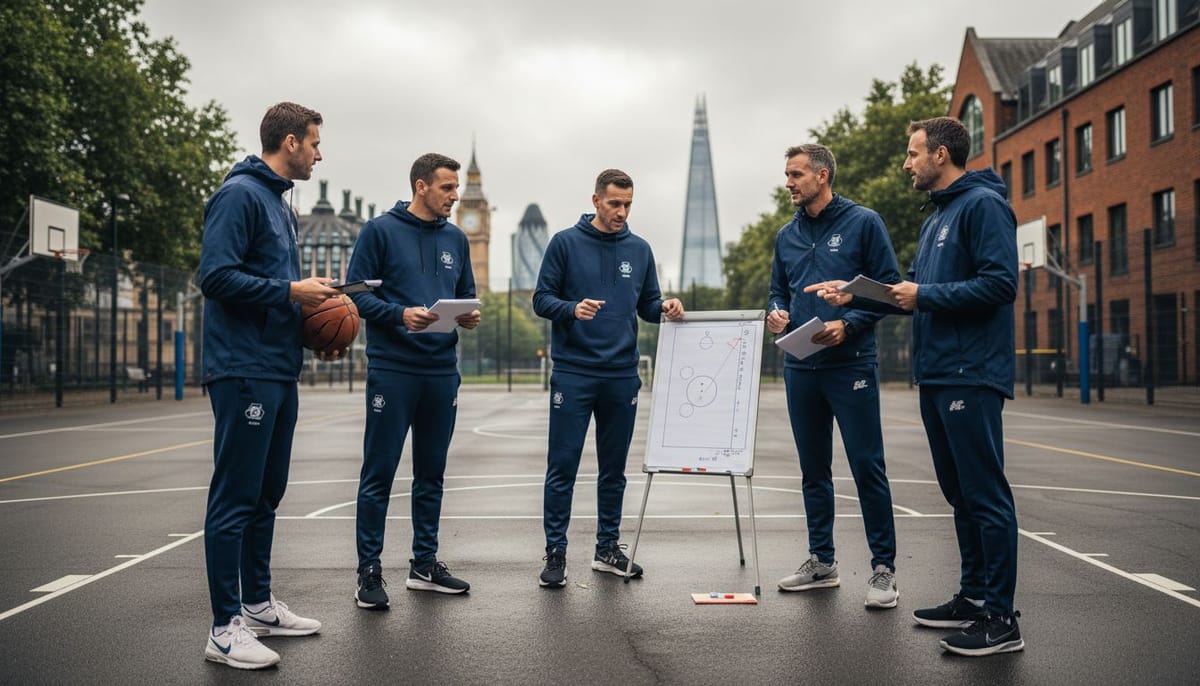
The episode features Alex Asu returning as a guest — he's a coach developer originally from Australia, and he and the host are planning a live, in-person Constraints-Led Approach (CLA) workshop for coaches in London. What unfolds is one of the most honest conversations about coach education I've come across. They're not talking about drills or schemes. They're talking about why coaches learn something, feel genuinely excited about it, and then do absolutely nothing with it when they get home. That gap — between inspiration and implementation — is the whole problem.
The Environment Shapes the Behavior Before You Even Open Your Mouth
One of the first things Alex shares is a story I genuinely loved. Before he ever worked as a coach developer, he was trying to explain the constraints-led approach to a group of exercise physiologists. So he rearranged the chairs in the classroom — on purpose — just to see what they'd do. Would they move them back into the traditional rows? Sit awkwardly facing the wrong direction? Or just adapt?
What struck me most was his own honest admission. He said he personally wouldn't have moved the chairs. If a room was set up a certain way, he'd just fit into it — especially if he didn't feel psychologically safe enough to change the space himself. That's not weakness. That's real. Most people are exactly like that.
When I heard this, I immediately thought about how often we overlook environmental design entirely when we're building learning experiences. We obsess over content — the slides, the drills, the frameworks — and we ignore the fact that the physical and psychological setup of the room is already communicating something to the people inside it. Alex used that single chair-rearranging moment to blow his audience's mind, and it cost him nothing except a willingness to be a little unconventional. That's the kind of thinking that separates people who understand learning from people who just deliver information.
It also connects to something much bigger in basketball coaching generally — the idea that the conditions you create drive the behavior you get. This is something I think about a lot, especially when I see coaches running drills that are essentially just performers going through choreography because the environment leaves them no other option. If there's no decision to make, players just execute movement patterns. Same thing happens with coaches in a lecture room — if the setup says "sit down and absorb," that's exactly what they'll do.
Getting Real Players in the Room Changes Everything
Here's something both Alex and the host circle back to multiple times, and I think it's the most practically important idea in the whole conversation: if you want coaches to actually transfer what they learn, you need to give them the real thing to practice on. Not a simulation. Not a role-play. Actual players, actual chaos, actual unpredictability.
Alex talks about how much effort they've put into bringing real players into coach development sessions — not just having coaches drill each other or talk through hypotheticals. Because the feedback they kept getting was consistent: coaches loved the courses, thought the content was great, thought the delivery was excellent. And then went home and did none of it.
That's brutal feedback when you think about it. You can have a perfect course and still fail completely at the thing that actually matters — transfer.
The host shares something I found really relatable. He talks about giving coaches a simple constraint — maybe a principle of play — and asking them to design an activity around it. And what comes out is usually a drill. Something static, predictable, defender-free. But then you just nudge them: okay, now find a way to put a decision in there. And that single prompt starts to unlock something. You can build decision-making into almost any practice activity once you start thinking about it that way — but coaches need to experience that process themselves, not just hear about it in a seminar.
I've seen this play out personally. There's a huge difference between understanding a concept intellectually and having genuinely wrestled with it in a live environment. The second version sticks. The first one fades the moment real-world friction shows up.
The Real Problem Is What Happens After the Workshop Ends
This is where the conversation gets really interesting to me, and honestly a little uncomfortable. Because both Alex and the host are describing a problem that the coaching world has largely ignored: the support gap.
Coaches finish a development course. They're fired up. They want to try new things. And then they go back to their actual environment — where the culture hasn't changed, where colleagues are doing things the old way, where any deviation from the norm feels like a risk. All it takes is one skeptical text message and the whole thing collapses.
Alex is refreshingly honest about this. He admits that in his first season as a coach developer, he and his team were too far away to provide real, ongoing support. And then he says something that I think is genuinely countercultural for anyone in an expertise-based field: I don't have any knowledge that the coach training next door doesn't have.
That's a hard thing to say when you're the one who ran the course. But it's true. And it matters enormously, because it reframes what post-workshop support should actually look like. It's not about getting more access to the expert. It's about finding your experienced other — someone who gets what you're going through, who can feel what you're feeling, and will push you to keep going. The credential at the start of their name is irrelevant. This is something I think about a lot when I read about coaches who walk away from elite environments just to understand the game from the ground up — sometimes the most valuable learning comes from the person right next to you, not the one at the top of the hierarchy.
The host makes a sharp point about Europe specifically. Many federations are now starting to integrate the CLA into their licensing programs — which is genuinely exciting progress. But inspiration without infrastructure is just a nice memory. The licensing course happens, coaches feel the shift, and then the support structure disappears. Nothing connects them to each other. Nothing helps them navigate the friction of actually changing how they coach in a real club environment. And so the cycle continues.
What Alex is trying to build — and what they're hoping to model with the London workshop — is something closer to a seamless transition. Not a field on the other side of the country that you visit once a year. Something that feels like the field next door, metaphorically speaking. Close enough that the jump from learning environment to coaching environment doesn't feel like a leap of faith.
It's a compelling idea. And honestly, the fact that Alex and the host haven't even met in person yet — they're building this whole thing across time zones and continents — feels like a live demonstration of exactly the kind of connection they're trying to foster. You don't need to be in the same room to have a genuine collaborative relationship. You just need a shared belief in what you're trying to do. If you're curious about how a single shift in training philosophy can completely change a coach's trajectory, this conversation is pointing at exactly that kind of inflection point.
The Snowboard Analogy That Perfectly Describes Coaching Growth
There's a moment in this conversation that I haven't been able to stop thinking about. Alex describes learning the constraints-led approach like learning to snowboard — just when you think you've found your balance, you catch an edge and face-plant into the snow. And rather than treating that as failure, the whole point is to sit there with snow in your face and ask: what went wrong, and how do I get better?
When I heard this, I immediately thought about how rarely we frame coaching development that way. We tend to celebrate the polished, confident coach who always has the answer. The one who stands up and delivers clean slides and tidy frameworks. But that's not growth. That's performance.
Real growth looks messier. It looks like asking a question you'd cringe at years later. It looks like running a session and walking away genuinely unsure whether it landed. The host even admits he still thinks back to the first time he encountered the constraints-led approach — and how he'd cringe at the questions he asked. Honestly? That kind of self-awareness is rare. And it's exactly the thing that separates coaches who keep improving from those who plateau.
What struck me most was the idea that you shouldn't have to sit in that uncomfortable moment alone. Alex says it plainly: "I never want someone to sit there and be like, damn, there's nobody in this world who could help me right now." That's not just a nice sentiment. It's the whole reason coach development communities exist. Because vulnerability in isolation rarely produces growth — but vulnerability in the right room, with the right people around you, can change everything. This is something I've seen play out personally in coaching circles, and it's why I think one intentional shift in how a coach approaches their own learning can completely rewire the trajectory of their career.
Why Peer-to-Peer Learning Might Be the Most Underrated Part of Coach Development
Here's something they said that I don't think gets talked about enough: the value of building a support circle with coaches outside your sport.
Think about that for a second. We spend so much time looking inward — watching game film, studying schemes, reading basketball-specific content. And that matters. But Alex makes the point that if you only learn from people who already see the game the way you do, you become lopsided. You get deep in one direction and shallow everywhere else.
The idea of a "radial graph" that keeps growing in all directions every time you have a new conversation — I love that framing. It's not about hoarding information. It's about building a map with more and more reference points. A soccer coach might help you understand spacing in a way a basketball coach never could. A gymnastics coach might teach you something profound about physical cues and body awareness. What basketball coaches can learn from soccer's evolution is a perfect example of exactly this kind of cross-sport thinking in action.
This is something I think about a lot. We talk endlessly about developing players, but the development of coaches themselves is treated almost like an afterthought. You attend a clinic, you get a certificate, you're good. But that's not how it works. The best coaches I've ever been around are always absorbing something — from other sports, other thinkers, other environments. They're genuinely curious. And that curiosity keeps showing up in how they design practice, how they talk to players, how they handle the hard moments.
The conversation also touches on something that I think is underappreciated in formal coach education: the difference between being told something and being drawn into something. The host describes a shift in his own approach to coach development — moving away from lecturing and toward asking the right questions. Instead of pushing information at coaches, you create the conditions for them to pull understanding out of themselves. Sound familiar? It's essentially the same philosophy they're applying to player development, just aimed at coaches instead. And honestly, if you're the kind of coach genuinely wrestling with how to position yourself and your philosophy when it matters most, understanding how you learn might be just as important as what you know.
Redesigning Coach Licensing From the Ground Up — What Would That Even Look Like?
The final stretch of this section is where things get genuinely ambitious. The host asks: if you were responsible for redesigning a national coach licensing system using an ecological approach, how would you actually do it?
It's a big question. And Alex's answer doesn't disappoint.
The concept he introduces — legitimate peripheral participation — is borrowed from education theory, and it's fascinating when applied to coaching certification. The basic idea is that lower-level courses shouldn't be treated as lesser. They're entry points. They're where curious, unconfident coaches start coming off the sidelines and getting drawn into the real conversation. Rather than throwing a Level 1 coach into the deep end or treating their early experience as somehow not counting, you build a system that credits that observational learning. You recognise that watching, reflecting, and forming questions is a legitimate part of the development journey.
I don't fully agree with how most licensing systems handle this — and I think this conversation exposes exactly why. Most certification structures treat a three-day course like a content delivery event. You sit, you absorb, you pass a test, you leave. There's no tracking of what you observed. No structured reflection. No mechanism to connect what you experienced in that room to what happens in your gym six months later.
The Norway, Sweden, and Austria examples mentioned here are worth paying attention to. These federations are apparently trying to go full constraints-led in their coach education. That's not a small tweak — that's a philosophical overhaul. And the fact that it's happening at a national level suggests this isn't a fringe idea anymore. What's happening in Norway's basketball scene right now is a real signal of where progressive coaching education is heading.
What I keep coming back to is this: if we want coaches to create environments where players can genuinely learn to read the game and make decisions under pressure, then the coach education system itself needs to model that exact experience. You can't teach ecological learning through a lecture. You have to live it. And that, right there, is the hardest and most exciting challenge in all of basketball development.
The Goosebumps Curriculum — Why Coach Education Needs to Stop Being Linear
When I heard the Goosebumps analogy, I immediately thought — that's exactly it. That's the thing nobody has been able to articulate clearly until now. You still have a book. There are still things you need to learn. But you get to choose which page you turn to next based on where you actually are in your journey. That's not a radical idea. That's just good teaching. And yet somehow, most coaching licenses are built like instruction manuals — page one, page two, page three, no skipping ahead, no going back.
What struck me most was the point about linearity being the problem, not the curriculum itself. I don't think structure is the enemy here. Structure matters. You can't just hand someone a blank page and call it education. But there's a massive difference between a framework that says "here's everything you could possibly need, now find what fits your world right now" versus one that says "here's what we've decided you need, in this order, whether it's relevant to you or not." One of those builds coaches. The other builds compliance.
I've seen this play out personally. I've sat in coaching sessions where the content was genuinely good — smart, well-researched — but it had nothing to do with what I was dealing with at that moment. My players weren't struggling with the thing being taught. So I checked out. Not because I didn't care, but because the timing was completely off. That's a curriculum design failure, not a coach engagement failure. And I think we spend too much time blaming the coach for being disengaged instead of asking whether the system is actually meeting them where they are.
The idea of coaches choosing their learning path based on genuine need — I need better positioning so my shooters get clean looks, not another session on shooting mechanics because my shooters are already fine — that kind of just-in-time learning is something I think about a lot. It's also something that directly connects to how we think about improving shot selection on the floor. The decisions players make in games are shaped by what coaches understand about spacing, timing, and reads. If the coach never got to that module because they were stuck doing prerequisite work they didn't need, everyone loses.
And the compliance point hit hard. You can't meditate somebody into genuine curiosity. You can't drag someone into caring. That's not inspiration, that's performance. What you can do is build a system that rewards the coaches who are already hungry — amplify them, give them visibility, let their results speak — and let that pull others toward the work rather than pushing everyone through it with a stick.
Feed the Hungry — And Build the Pipeline From There
This is something I think about a lot when it comes to coach development at the grassroots level. There are always a few people in the room who are nodding at everything. Their eyes are lit up. They're the ones staying after the clinic to ask one more question. Those people exist in every community, at every level. And most federations are so focused on getting the whole group across a baseline that they completely under-invest in those individuals.
That's a mistake. Those are your future course leaders. Those are your future mentors. Sometimes it only takes one shift in how a coach approaches their development to completely transform the direction of their career — and the impact they have on every player they ever coach after that. The ripple effect of identifying and investing in those people is enormous. And yet so many programs treat coach development like a one-size event rather than an ongoing relationship.
The action research cycle framing resonated with me deeply. Try something. See how it goes. Reflect. Try again. That's it. That's the whole thing. And yet how many coaches were ever explicitly taught to do that? Most of us learned by copying what we saw, hoping it worked, and then doubling down when it didn't because we didn't have a framework for honest reflection. If the first thing we taught every new coach was how to run that loop — notice, hypothesize, experiment, reflect — I genuinely believe we'd see a completely different standard of coaching within a generation.
The point about the first workshop being a starting point, not an endpoint, is one I don't fully agree with being universally applied yet — not because the idea is wrong, but because the infrastructure to support it doesn't exist in most places. Federation budgets are tight. Volunteer coaches have limited time. The ongoing support mechanism idea is beautiful in theory, but it needs serious structural commitment to work in practice. I'd love to see it. I'm just honest about how rarely it actually happens. That said, I think even small moves in that direction — an online community, a monthly question thread, peer coaching check-ins — matter more than we give them credit for. The best learning often happens in real-time moments of reflection, not scheduled training days.
What this conversation ultimately came back to for me was identity. Are we developing coaches who know what to do, or coaches who know how to think? Because the first type needs a new manual every time the game changes. The second type adapts, builds, and keeps finding that next one percent. I know which one I'd rather be. And I know which one I'd rather my players had standing on the sideline.
The system won't change overnight. But conversations like this one are exactly how it starts — someone asking whether the way we've always done it is actually the best we can do. Spoiler: it never is. And the coaches willing to sit with that question, without needing a clean answer right away, are exactly the ones the game needs more of right now.
Want the complete picture? Read our full guide: The Complete Guide to Ecological Learning Approach in Basketball Coaching