Developing a Youth Basketball Program in Vietnam: Real Challenges, Retention, and What Actually Matters
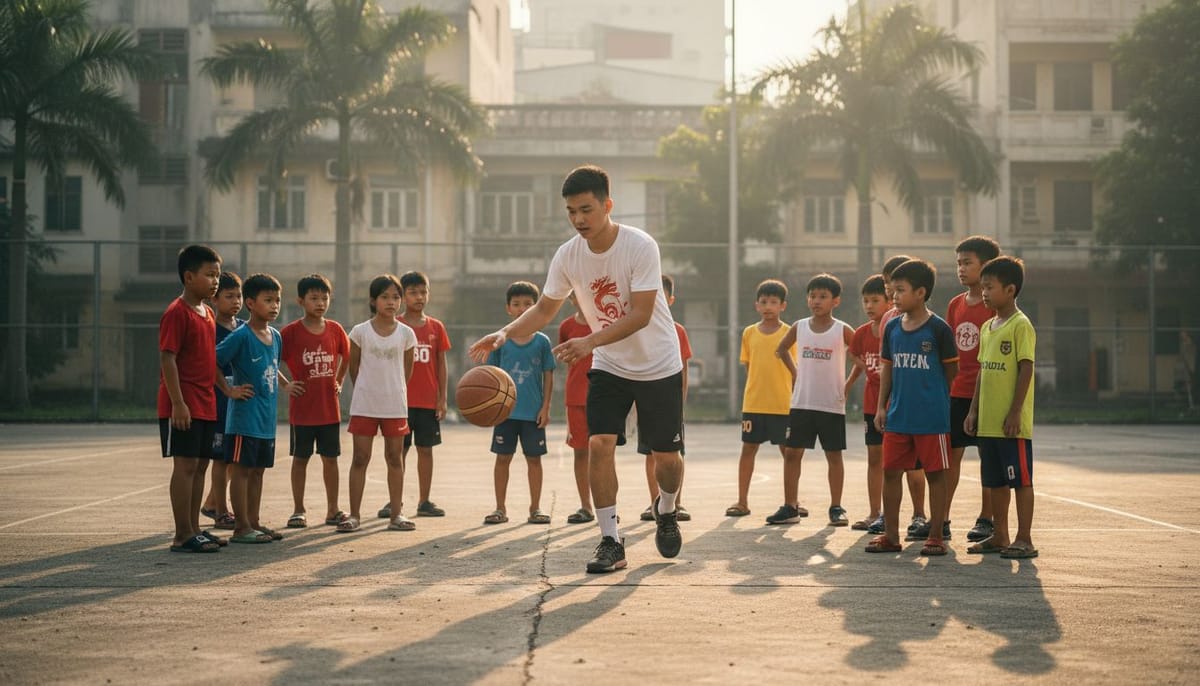
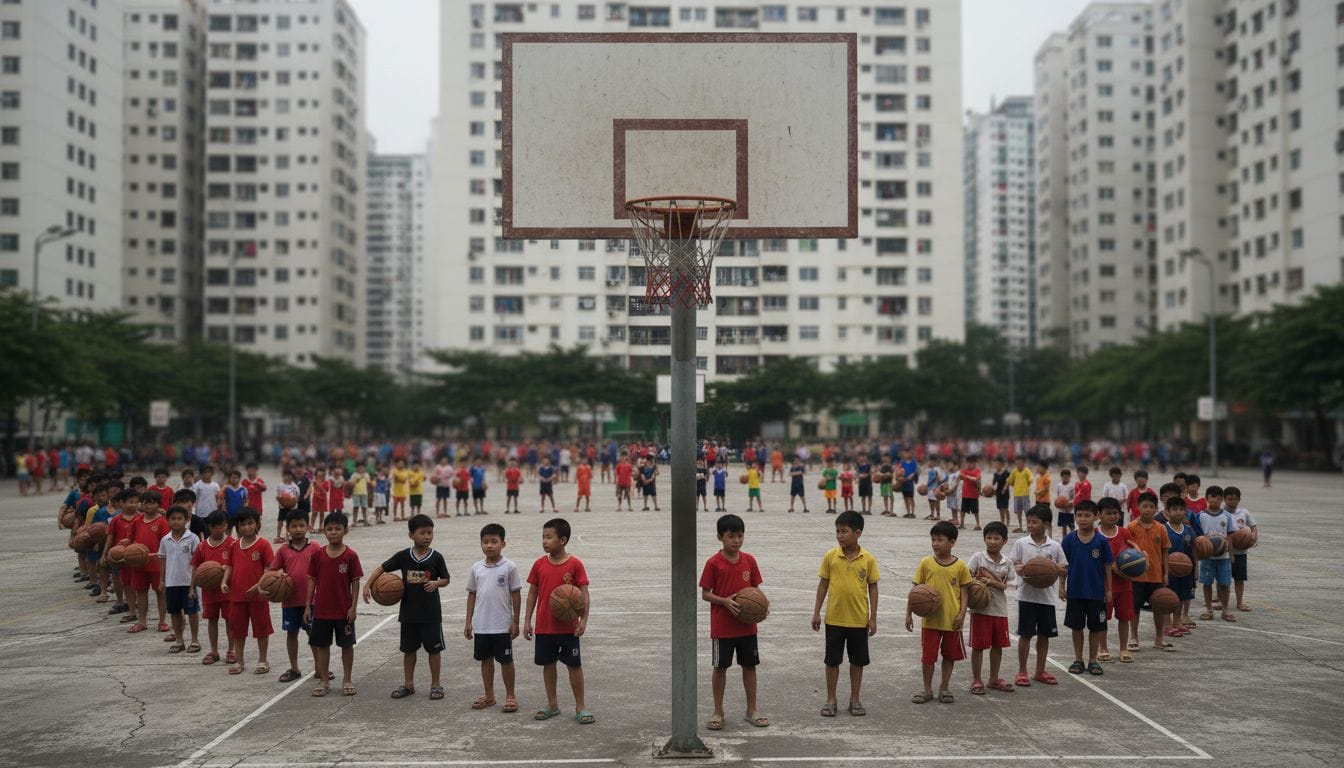
Somewhere in Ho Chi Minh City, there are 400 kids sharing two basketball courts, dribbling on patches of concrete, and never getting a chance to shoot on an actual basket after practice ends. When I heard that, I had to stop and sit with it for a second. That image alone tells you everything about what developing a youth basketball program looks like outside of North America — and honestly, it reframed how I think about infrastructure, retention, and what "success" even means in grassroots basketball. This conversation I came across recently pulled me in immediately, because it wasn't theoretical. It was one coach trying to figure out, in real time, how to build something meaningful inside a system that wasn't built for it.
Two Very Different Programs Under the Same Roof
What struck me most was the distinction the coach was drawing between his two groups. On one side, you've got the NextG Heat — a feeder and academy-style program connected to the Saigon Heat pro team, where the best players get extra training days, better coaching, and a real pathway toward professional or university ball. On the other side, you've got roughly 400 kids in what is essentially a recreational club. Same organization. Completely different goals.
I think this matters more than people realize. When you're trying to build a coherent program, lumping these two groups together — even conceptually — leads to confused priorities. The question one of the other coaches asked in the conversation was sharp: is the top group more of an academy than a club? And once you frame it that way, everything shifts. An academy has performance KPIs. A recreational club has retention and enjoyment KPIs. Treating them the same way is how you end up failing both.
I've seen this play out personally in a much smaller context — a local rec league where the competitive travel kids and the "just here to have fun" kids were being coached with the same intensity and the same expectations. The travel kids were bored. The rec kids were stressed. Nobody was thriving. It's the same problem, just scaled up by about 400 players.
What I found interesting is that this kind of structural clarity — knowing what each group actually needs — is something coaches talk about a lot in the context of developing the whole player, but rarely apply at the organizational level. It's not just about individual athlete development. It's about whether your program's architecture reflects the actual humans inside it.
The Retention Problem Nobody Wants to Talk About
The coach mentioned almost in passing that when he met with leadership, one of the first things they flagged was a low retention rate. Basketball is niche in Vietnam. Soccer dominates. And so kids come in, try it, and leave. That's a brutal situation to coach inside of.
But here's what I keep coming back to: retention isn't a marketing problem. It's an experience problem. If kids aren't staying, it's usually because they're not having enough fun, not feeling competent, or not feeling connected. And when you're running practice with 15 or 16 players sharing one basket on a half court, with beat-up balls that have been dribbled through puddles in an open-air gym — the experience is already fighting against you before you've even started coaching.
This is something I think about a lot. In resource-rich environments, we often confuse good facilities with good programs. But some of the most player-centered coaching I've come across comes from contexts exactly like this one, where coaches had to get creative because they had nothing else to work with. The constraints actually forced better thinking. And there's real research-backed support for this idea — the notion that skills emerge through constraints rather than being mechanically installed has serious implications for how you design sessions when you can't even guarantee a basket to shoot on.
Does that mean the infrastructure limitations don't matter? No. They clearly do. A kid who can't shoot after practice because there's no basket available is missing hundreds of reps over a season. That compounds. But I'd argue the coaching environment — the culture, the feeling in the gym, whether kids want to come back — matters even more at the grassroots level. If they don't come back, the facility question becomes irrelevant.
What Timeframes Actually Mean When You're Building From Scratch
One of the more interesting threads in the conversation was around commitment length — 3 months versus 6 months versus a year. The coach wasn't sure whether to push for longer commitments to build continuity or keep things shorter to lower the barrier to entry. And I don't think there's one right answer here. But I appreciated that someone else in the conversation reframed it smartly: instead of asking "how long should the commitment be," ask "what does success look like at each of those timepoints?"
That's a genuinely better question. Because a 3-month KPI for the NextG academy group might be something like: did we identify two more players with a realistic development trajectory toward the pro team? Whereas a 3-month KPI for the recreational club might simply be: are more kids showing up at week 12 than were showing up at week 2?
There's also a cultural layer here that I don't want to gloss over. The coach was navigating Vietnam's federation system, where city or province federations can essentially sign homegrown players to youth contracts — which then restricts where those players can train or compete. So you might have one of your better kids showing up only once a week because the federation has them on a schedule. Or suddenly unavailable because the federation needs them for a tournament date. That's not a planning failure on the coach's part. That's just the reality of coaching in an environment that looks nothing like what most Western coaches were trained to expect.
When I heard him describe navigating all of this — the federation contracts, the shared courts, the mixed-ability groups, the retention pressure from leadership — my immediate thought was: this is exactly why cookie-cutter program models fail. You can't import a North American club model into Ho Chi Minh City and expect it to function. The language barrier alone — literal and metaphorical — changes everything about how you communicate expectations, build buy-in, and define progress.
What I respect about this coach's approach is that he wasn't pretending to have it figured out. He was asking real questions, thinking out loud, and trying to build something genuine inside a genuinely complicated situation. That's the only honest way to do it.
The "Class" Problem: Why Language Shapes Everything in Youth Development
One moment in this conversation genuinely stopped me. John mentioned that his players call him "teacher" and refer to sessions as "class." And I don't think people realize how much that framing poisons the whole thing before a single dribble is taken. When I heard this, I immediately thought — of course retention is suffering. You've already told kids, subconsciously, that this is school. And nobody's sprinting to school on a Saturday morning.
The language we use to describe an environment shapes how people feel inside it. That's not a soft, philosophical point — it's practical. If a kid tells their parent "I can't make it to class today," that's a signal. They've mentally categorized basketball alongside homework and tests and everything else they're obligated to do. John clearly understood this intuitively. He doesn't dress up. He goes by John, not Coach, not Teacher. He wants the environment to feel like let's just go play, not take your seats. That distinction matters enormously when you're developing youth basketball program culture from scratch in a country where the sport is still finding its identity.
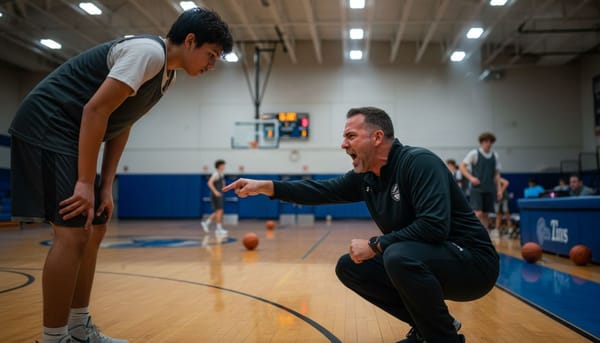
This is something I think about a lot. The formality creep in youth sports is real. Coaches show up with clipboards and lanyards and whiteboards, and kids are standing in lines being talked at, and somehow we're surprised when they drift toward other activities. The antidote isn't chaos — it's intentional informality. Structure that feels like freedom. That's genuinely hard to build, but it starts with something as simple as what you call the session and what you call yourself.
Touches, Decisions, and the Real Metric Nobody Talks About
Adam's point about increasing the number of touches as a KPI hit me harder than almost anything else in this conversation. It sounds obvious when you say it out loud. But watch any youth practice — anywhere, not just Southeast Asia — and you'll see 20 kids standing around while two of them work through a drill. That's not a developing basketball player. That's a spectator waiting for their turn.
What struck me most was how clearly this connects to retention. Kids at the youth level aren't staying for the strategy or the competitive ladder. They're staying because they want to feel the game. They want the ball in their hands. They want to make decisions, mess up, try again. The moment you remove that feeling — through lines, through long explanations, through formal drills that serve the coach's plan more than the player's experience — you've started losing them. And in a country where basketball is competing against volleyball and football for attention, you can't afford to lose them in the first place.
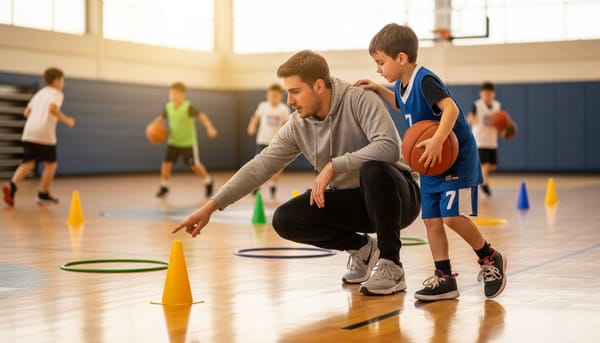
This is exactly why small-sided games aren't just a trendy coaching methodology — they're a retention tool. Three-on-three, four-on-four, scramble formats where every player is constantly involved. More touches. More decisions. More of the actual feeling that made someone want to play in the first place. I've seen this play out personally in recreational league settings where the moment you reduce numbers and increase involvement, the energy in the gym completely shifts. There's a reason the structure of how you teach the game matters just as much as what you're teaching.
And I love that Adam tied touches directly to decisions. Because it's not just about handling the ball more — it's about being forced to read, react, and problem-solve more often. That's where real learning happens. Not in isolated repetition, but in messy, contested, decision-rich environments. The research on this is pretty clear, and it aligns with what skill acquisition science tells us about how players actually develop — skills emerge through interaction with the game, not through perfect technique rehearsed in a vacuum.
Fast and Free: A Philosophy That Could Change Everything in Southeast Asia
John described the current style of basketball in his region as playing like the 90s. Slow. Mid-range heavy. Bigs who aren't really bigs. And I don't say this as a criticism of the players — they play what they've been taught, and they've been taught what the coaches knew. But if the goal is to grow the game, to make it exciting enough that a kid chooses basketball over volleyball on a Tuesday afternoon, then slow and predictable is probably the worst brand you can put on the sport.
"Fast and free" is how John described his vision. I don't fully agree that speed alone is the answer — there's a version of fast basketball that's just chaotic and demoralizing for young players — but I think what he's really pointing at is something deeper. He wants the game to feel alive. Spontaneous. Creative. Players making plays rather than executing assignments. And that's a philosophy shift, not just a tactical one.
What I found genuinely compelling was the conversation around KPIs for tournaments and play days. John admitted he has no experience running events, but he knows more game opportunities equals more of everything good — more excitement, more exposure, more chances for kids to fall in love with the sport. The problem is that the few events that do get organized apparently turn into formal ceremonies with speeches and presentations. Which, again, brings us back to the "class" problem. Even the games feel like school. If you're trying to build a genuinely transformational basketball environment, the culture of every single touchpoint matters — practice, games, tournaments, even how you talk about the session afterward. And if you're leaning into the ecological approach to learning, then play days and informal competitions aren't extras — they're essential parts of the development environment itself.
The framework the group landed on — enjoyment, inspiration, difference — is deceptively simple. But honestly? I think it's exactly right. If you can make the experience more enjoyable than what came before, inspire players to imagine a future in the game, and make the whole thing feel genuinely different from what they expected, you've got something. That's not just a youth basketball strategy. That's how you grow a sport.
Keeping Kids Moving: What This Conversation Taught Me About Tournament Design
One thing that hit me hard in this final stretch of the conversation was how simple the answer actually is. Keep kids moving. Cut the dead time. Get to the next game fast. When I heard Adam talk about minimizing lag between games — five minutes of warmup, max — I immediately thought about every youth tournament I've ever watched where kids spend forty minutes standing around waiting for an opening ceremony that nobody asked for. Nobody. Not the kids, not the coaches, not the parents who drove two hours to get there. The kids just want to run.
What I found genuinely exciting was the breakdown of different game formats across different courts — full-court press on one, four-on-three transitioning into three-on-two on another, restricted defense inside the arc on a third. That's not chaos. That's actually brilliant design. You're creating an environment where every single possession is a learning rep, and the kids never have a reason to switch off mentally. Simple structural choices like this can completely change how youth players develop their feel for the game, and nobody has to stand at a whiteboard explaining anything.
The four-on-three, three-on-two format Sean Kading described is something I want to see everywhere at the youth level. The advantage is already built in. Kids don't have to manufacture an opportunity — the opportunity is just there. They get to practice decision-making in a context where success is actually achievable, and they get touch after touch after touch. That's the whole point. Volume of meaningful repetitions in a game-like environment. Skill doesn't come from drilling in isolation — it emerges through exactly this kind of structured play.
And the rule about no reaching? That stuck with me. It's such a small constraint but the logic behind it is so clean. At that age, a defender who reaches has an almost unfair advantage over a kid still figuring out how to pivot. So you just take it away. You protect the learning environment. That's coaching intelligence right there — not yelling at a kid to protect the ball better, but redesigning the situation so the right outcomes are more likely to happen naturally.
John's Question Was the Real Heart of This Episode
I'll be honest — John coming in with genuine, unpolished questions about building his first youth tournament was my favorite part of this whole conversation. There's something refreshing about hearing someone say "I don't know, I've never done this before, what mistakes did you make?" That kind of openness is rare. Most people perform confidence they don't have. John just asked. And what came back from Adam and Andra was practical, experience-based knowledge that no coaching textbook gives you.
The Victorian Primary School Championship example Andra shared — hundreds of schools filtered down to twenty finalists, two seven-minute halves, two-minute warmup, next game thirty minutes later — that's a format built entirely around keeping kids engaged and active. Seven or eight players per team. Constant activity. No room to zone out or get bored. The best youth formats are designed around what kids actually need, not what's easiest to administer. That distinction matters enormously.
John's instinct to ban zone defense and make every team full-court press? I don't fully agree with it as a hard rule, but I love the thinking behind it. He wants kids to learn to guard. He wants defensive effort baked into the structure, not left to the mercy of a coach who might just drop into a 2-3 zone to protect a lead. That instinct — protect the developmental environment before you protect the scoreboard — is exactly the right instinct for anyone serious about developing youth basketball program culture that actually produces players who can think and compete.
What struck me most was how this whole conversation looped back to something bigger than scheduling logistics. It's about buy-in. John said it himself — if the format is fun, fast, full of touches, and kids feel like they're constantly in action, you don't have to convince anyone. The format sells itself. When you build an environment around what players actually experience rather than what coaches expect them to endure, everything changes. That's not a small insight. That's the whole job.
I can't wait to see what John actually builds. Keep us in the loop — because this conversation deserved a part two the moment it ended.