The Get Trigger: Why This Simple Two-Person Action Is Transforming Youth Basketball

Here's something that'll blow your mind: most youth basketball offenses fail not because kids can't shoot or dribble, but because they have no idea how to create advantages together. They just stand around. Pass the ball. Hope someone does something cool. It's painful to watch, honestly. But there's this brilliantly simple concept called the "get trigger" that's changing everything — and if you're coaching youth hoops or running a league, you need to know about it.
The get trigger isn't some complicated NBA-level scheme. It's not a full offensive system that requires hours of whiteboard time. It's a two-person action — what coach Alex Sarama calls a "duet" — that teaches young players the fundamental truth of basketball: advantages are created through intentional movement and collaboration. Not isolation. Not standing still waiting for the hero ball to save you.
And honestly? Once you see it in action, you'll wonder why we ever taught kids anything else first.
What Exactly Is a Get Trigger?
Let's break this down. A get trigger is a two-person action where one player passes and then immediately goes to "get" the ball back through purposeful movement. Pass, run, get. That's the core concept. Simple, right?
But here's where it gets beautiful: there are tons of different solutions within this framework. Maybe you pass and cut hard to the nail looking for a return pass. Maybe you pass and relocate to the wing for a catch-and-shoot opportunity. Maybe you fake like you're coming to get it but instead you cut backdoor because your defender's overplaying. The possibilities expand naturally once players understand the principle.
What I love about this approach is that it's not rigid. We're not telling kids "run here, then there, then shoot from this exact spot." That's not basketball — that's choreography. Instead, the get trigger is a constraint that forces creative problem-solving. You must pass. You must move with purpose. You must try to get the ball back. Everything after that? You figure it out based on what the defense gives you.
This is constraint-based coaching at its finest. We're setting boundaries that promote exploration rather than memorization. And trust me, kids learn faster this way because they're actually reading the defense instead of just running predetermined patterns.
Why Two-Person Actions Matter More Than You Think
We spend so much time in youth basketball working on individual skills. And look, I get it — kids need to learn how to dribble, pass, and shoot. Those fundamentals matter. But you know what we don't spend enough time on? Teaching players how to play together in small groups.
Two-person actions are the building blocks of good offense. They're where chemistry develops. They're where players learn to read each other and the defense simultaneously. Before you can run effective team offense, your players need to master these duets.
Think about it this way: if I can't create an advantage with one teammate, how am I ever going to orchestrate a five-person offensive possession? The get trigger teaches players to think in terms of actions and reactions. I do this, my teammate does that, and now we've got the defense scrambling. That's how dominoes start falling.
The three-on-three continuous format that Alex uses in his clinics is genius for this exact reason. You're playing real basketball — both ends, competitive, consequences for failure — but you're requiring teams to run a get action before they can score. This constraint forces players to practice the trigger in live situations where defenders are trying to stop them. No standing around in line waiting for your turn in some sterile drill. Just hoops. Real hoops.
The Progression: From Exploration to Advantage Creation
Here's where the coaching gets really smart. You don't just teach the get trigger once and move on. You layer constraints progressively to deepen understanding and expand the players' coverage solutions.
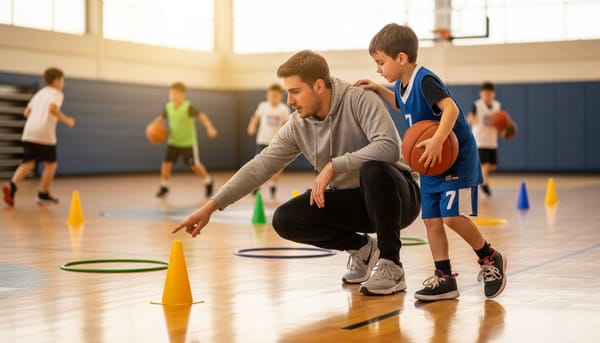
First, you let them explore. Three-on-three, run any get you want, first to eight points wins. Players will naturally discover different options. Some will cut. Some will relocate. Some will screen. The exploration phase is crucial because players need to develop a feel for what works against different defensive coverages.
Then you add the next constraint: you only get one opportunity to create an advantage with the get. If you run the action and don't score, don't drive, don't do something aggressive that breaks down the defense? You lose possession. This changes everything. Now players can't just go through the motions. The get has to be purposeful. Aggressive. Advantage-seeking.
This progression mirrors how we should teach everything in basketball, honestly. Start with freedom within structure, let players explore solutions, then tighten the constraints to demand higher-level execution. It's the opposite of "let me show you exactly how to do this and then you repeat it 50 times." That approach creates robots. We want players who can think.
The Position Before the Catch Changes Everything
Here's something most players don't think about: the get happens before you catch the ball.
Wait, what?
I'm serious. Your positioning in that split second before the pass arrives determines everything that comes next. Are you squared up to the basket? Are your feet positioned to attack immediately? Can you see the whole floor?
This is where so many players lose their advantage without even realizing it. They're thinking about what they'll do after they catch it, but by then it's too late. The defense has already read your body language. They've already closed the gap.
The best players we've watched — the ones who make it look effortless — they're setting up their gets two steps earlier than everyone else. They're reading the defense before the ball even leaves their teammate's hands. They know if they're going to drive, shoot, or swing it before their fingers touch the leather.
That's not instinct. That's preparation.
And here's the beautiful part: you can practice this. In fact, you should be drilling it constantly. Have your team focus on their positioning during every catch in practice. Where are their feet? What's their stance? Can they explode in any direction, or are they already compromised?
The Two-Dribble Constraint That Forces Better Decision-Making
Let's talk about constraints for a second.
When you limit what players can do, something magical happens. They start seeing the game differently. Their court vision expands. They make quicker decisions because they have to.
That two-dribble rule? It's genius.
Most players dribble way too much anyway. We've all seen it — the guard who pounds the ball for fifteen seconds while everyone stands around watching. That's not basketball. That's not even fun to watch. And it's definitely not creating advantages.
When you give players only two dribbles per catch, they can't waste time. They can't over-dribble themselves into trouble. They have to make something happen right now.
Cut hard. Screen away. Relocate. Attack the gap immediately.
The offense starts flowing because players are forced to think one step ahead. They're reading and reacting instead of pounding and hoping. And honestly? That's when basketball becomes beautiful. That's when our team starts looking like a team instead of five individuals taking turns.
Try running this constraint in your next practice. Every catch, maximum two dribbles, then you've got to make a decision. You'll be amazed at how quickly players adapt and how much better the ball movement becomes.
Quick Timeouts: The Teaching Moments Everyone Overlooks
Don't sleep on those quick huddles.
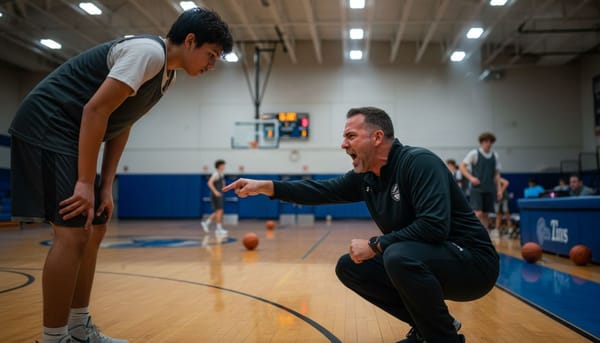
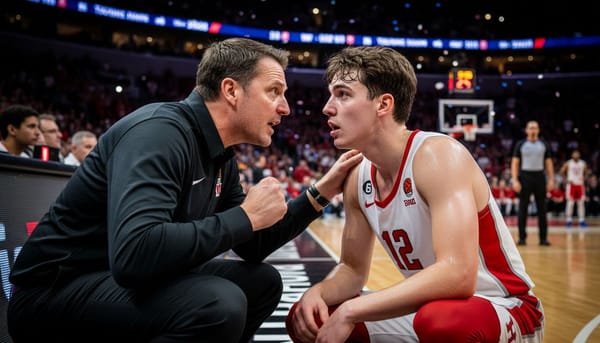
Seriously. Some of the best coaching happens in those fifteen-second timeouts during practice. Not the long chalk-talk sessions. Not the film room breakdowns (though those matter too). But those quick, targeted interventions when the concept is fresh and the mistake is still burning in their minds.
"What's one thing you need to do better with your gets?"
That's it. One thing. Not a lecture about spacing and timing and footwork and decision-making. Just one specific adjustment they can make right now.
Players actually retain that. They can process it immediately and apply it on the very next possession. And when they successfully make that adjustment? Man, you can see the confidence building in real-time.
Here's how we like to structure it: quick whistle, tight huddle, one focused question, maybe 30 seconds of discussion, then right back to playing. Keep the energy high. Keep it specific. Keep it actionable.
And here's the move that really works — after the huddle, ask one player from each team to share what they discussed. Not to embarrass anyone, but to reinforce the learning and hold them accountable. You'd be surprised how much more seriously players take those huddle discussions when they know they might need to report out.
This isn't revolutionary stuff. But it works. And we've seen it transform practices from monotonous drill sessions into engaged, competitive learning environments where players are actually thinking about the game.
Mastering the Get: Footwork and Spacing
Here's where it gets real technical, and honestly? This is the stuff that separates good teams from great ones.
When you're executing a get on the three-point line, you've got to have just one foot outside. Two feet outside? That's a turnover. Simple as that. So when you're running these gets, you need to straddle that line and make yourself as big as possible. Be wide. Be strong. That's your only constraint at this stage, and trust me, it matters.
Why does this work so well? Because when your players are big and spread out, it's way easier to create advantages. You're scoring from better locations. The math just works in your favor.
One chance. One opportunity. That's all you get in these drills, which forces your players to be decisive and intentional with every cut.
Support Triggers vs. Star Triggers
Okay, this concept is brilliant.
Think about going to a concert. You're waiting for the headliner — the star — but before they come out, there's usually a warm-up act, right? That's exactly how we should think about our offense. The get is our star trigger. It's what we're building toward. But before we run that get, we can use support triggers to set everything up.
What does that look like in practice? Before your get, you can run any off-ball screen you want. Flare screen. Screen away. Back screen. Whatever creates an advantage. You've got options here — you can score off the screen away, or you can use it to flow directly into your get.
The beauty of this system? It's not rigid. It's not robotic. Your players have the freedom to read the defense and make decisions, but within a structure that makes sense. Screen into a get. Create flow. Keep the defense guessing.
And yeah, you're still only getting one opportunity off these triggers. Keep it competitive. Keep it real.
Bringing It All Together
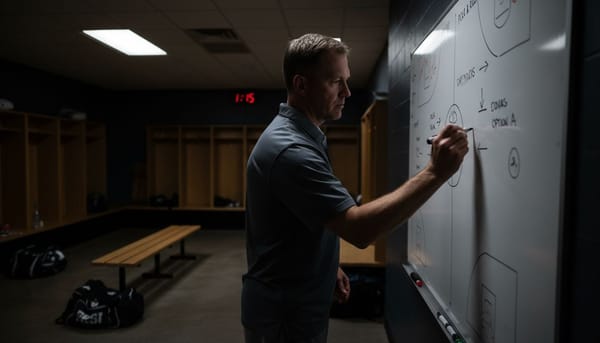
Look, designing effective offense isn't about having the fanciest plays or the most complicated diagrams. It's about understanding principles — how to create advantages, how to use spacing, how to give your players a framework that empowers them to make great decisions.
The duet system we've broken down here gives you exactly that. It's simple enough that your players can learn it quickly, but sophisticated enough that it'll create real scoring opportunities against quality competition. And honestly? That's what we're all looking for.
Whether you're coaching youth basketball or running a competitive league, these concepts scale. The gets, the triggers, the spacing principles — they all translate. Now it's time to take what you've learned and bring it to your own gym. Your players are going to love the freedom and structure this system provides. We've seen it transform offenses at every level, and with CourtClok helping you manage your games and track your team's progress, you'll have everything you need to build something special. So get out there, start teaching these concepts, and watch your offense come alive. Your team's going to thank you for it.