U14 Basketball Player Development Through Constraints: What Coaching at London Lions Academy Actually Looks Like
Only about 10% of youth basketball coaches can explain the difference between using small-sided games and coaching through constraints. I know that sounds harsh. But after listening to this conversation between Alex and Will Twigg about their work with an under-14 group at the London Lions Academy, I'm more convinced than ever that the gap between those two things is where real U14 basketball player development either happens — or gets completely wasted. This episode hit me hard. Not because it was flashy or full of highlight moments, but because it was two coaches being genuinely honest about what it actually takes to change the way young players learn the game.
The Moment Will Admitted He Was Being Arrogant
This is what got me first. Will describes going into the constraints-led approach (CLA) thinking he already knew enough. His word, not mine — arrogant. And I respect that enormously. Because how many coaches would say that out loud?
When I heard this, I immediately thought about how common that feeling is. You build up a philosophy, you refine it over years, you get results — and then someone asks you to question the whole foundation. That's uncomfortable. Most people don't lean into that discomfort. Will did.
His actual aha moment wasn't some tactical epiphany. It was simpler. It was the realization that failing as a coach — genuinely not knowing what you're doing for a stretch — is where the real learning lives. Not just for the players. For you. That idea keeps coming up in the best coaching conversations I encounter, and it connects deeply to what other coaches navigating the constraints-led approach have described — that initial phase where everything feels broken before it starts clicking.
Will came into CLA through an academic lens at university, which is actually a pretty rare entry point. Most coaches encounter it through practice first and theory second. He had the opposite experience. I think that gave him a useful perspective — he could see both the theoretical underpinning and the messy, real-world implementation at the same time. But it also meant the translation from concept to court took longer. He owned that too.
Eight Coverage Solutions Out of One Trigger — With Under-14s
This is where my jaw dropped a little.
Alex runs through what their U14 boys group was producing in a single practice session — out of one action, the "get." And the list is staggering. Rejects. Backdoor cuts. Keeps. Pitch and slip. Twists. Curls. Pick-and-roll variations. At least eight distinct solutions, all emerging from kids reading the defense and responding — not from being told which option to run.
I've seen this play out personally with younger age groups when constraints are applied well. The creativity that surfaces is genuinely surprising. But eight coverage solutions from a U14 group is a different level. That's not a lucky practice. That's what happens when players have been consistently put in situations where they have to solve problems, not just execute instructions.
The specific constraint that stuck with me was the space restriction on drives. Will describes players taking these loopy, indirect drives — losing the whole point of the advantage they'd created. So instead of lecturing them about being direct, the coaches constrained the available space. Force the direct line. Suddenly the players aren't being told to drive hard, they're just... doing it. Because the environment demands it. That's the difference between a games-based approach and a constraints-led one, and it's exactly the distinction this conversation unpacks so clearly. If you want to go deeper on the theory behind why this works, the research on how skills actually emerge rather than get acquired is genuinely eye-opening.
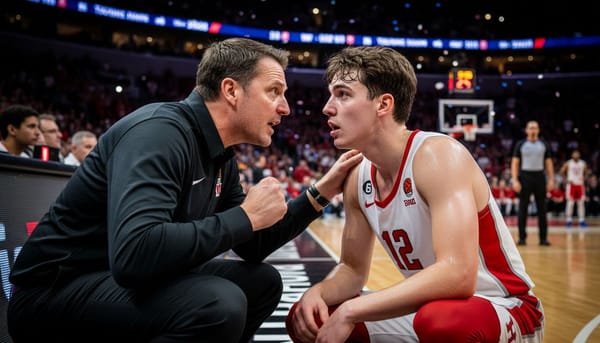
What I also found compelling was the accountability piece. Will talks about holding players to the constraint — not loosening it the moment things get difficult, but trusting that the difficulty is the point. That's a hard thing to do in a live practice when players are frustrated and parents might be watching. It takes real conviction.
Why "Force Weak" Changed Everything on Defense
The defensive section of this conversation is something I don't think gets talked about enough in youth basketball circles.
Alex raises something that surprised me — in England, kids had been sagging so far off the ball that intense on-ball pressure was almost foreign to them. The reason? Most young players in that environment couldn't shoot well enough to punish it. So coaches let their players sag, and everyone got comfortable with a style of defense that didn't actually develop anything useful.
I don't fully agree with the idea that this is purely a cultural or regional thing — I've seen the same lazy sagging habits in plenty of American youth leagues too. But the underlying problem Alex and Will identified is real: if you never demand that your players guard the ball with intensity, you're not developing defenders. You're developing spectators who happen to be wearing jerseys.
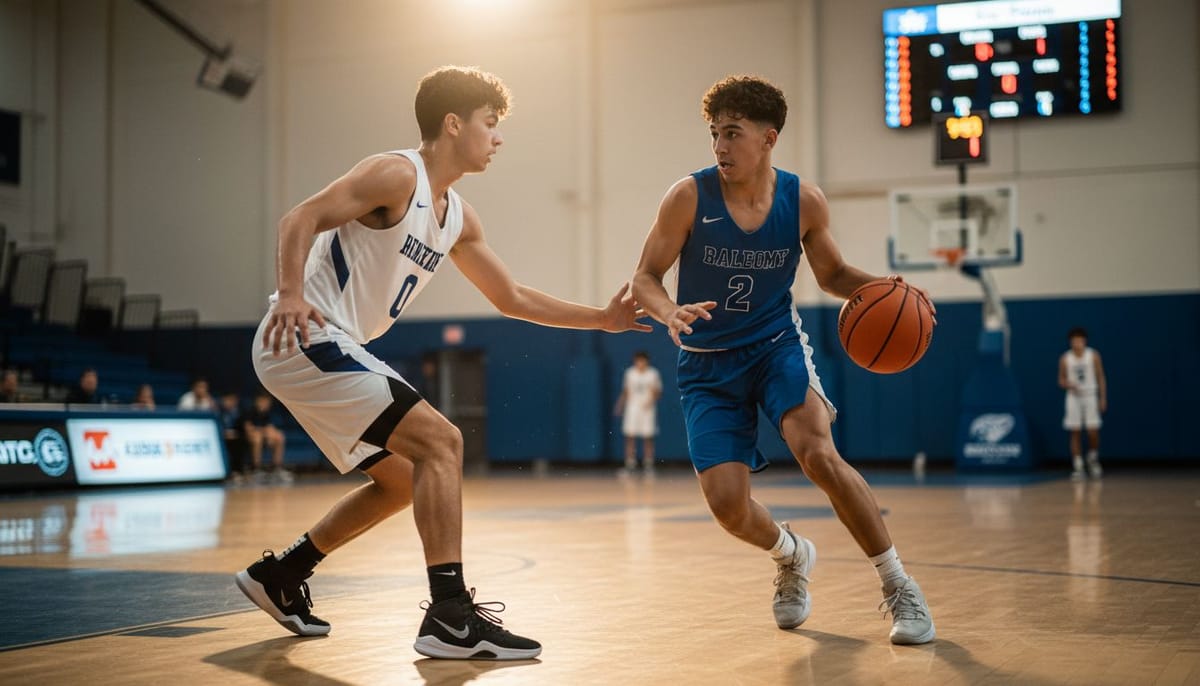
Their solution? Constraints again. Full-court one-on-one situations off a rebound, with changing starting positions each time. No sag. No help to hide behind. Just you, the ball handler, and the task of applying force-weak pressure from the moment the possession starts. This connects to a broader point about what actually transfers to game situations versus what just looks productive in practice — and on-ball defensive pressure absolutely has to be built through live reps, not drills run in a vacuum.
What strikes me about the force-weak emphasis specifically is the compounding effect it has. If you're consistently disrupting the ball handler's strong hand, you're not just making defense harder for the offense — you're developing ball handlers on your own team who've been forced to operate under real pressure every single practice. Both sides are getting better simultaneously. That's efficient. That's smart design.
And then there's the transition piece. Their color-coded offensive system — green meaning push immediately, even off a made basket — is built around that same principle of creating advantages as early as possible. The quarterback on the rebound, the quick inbound, the relentless pressure to get ahead of the defense before it sets. I've always believed that transition is where you see a team's actual habits, not their set plays. If your principles only show up in the half court, they're not really principles — they're just instructions that players remember when they have time to think.
What a 12-Year-Old Calling Post Coverages Taught Me About Trusting Young Players
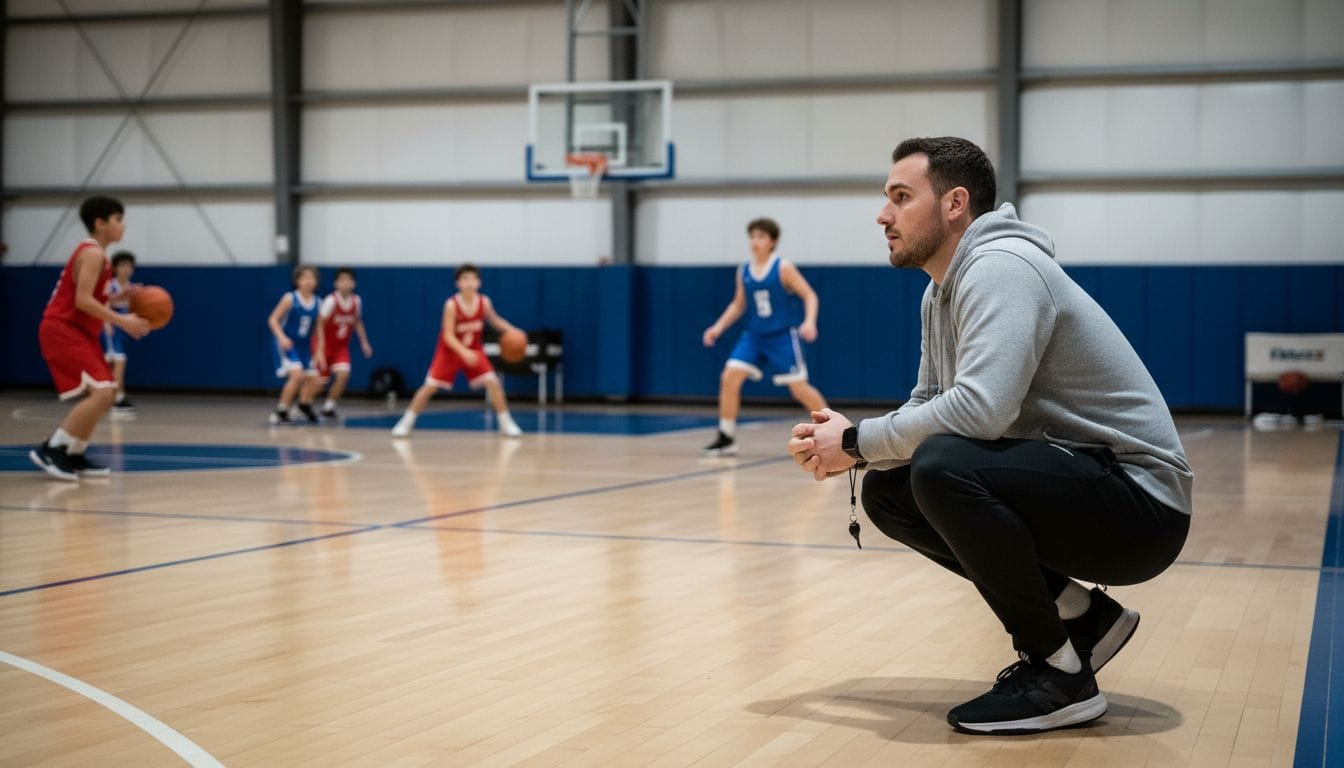
Here's a moment from this episode that completely stopped me. A 12-year-old — not a U14, a 12-year-old — recognized a mismatch in a live game, called the red coverage, executed a double team on the post, and forced a turnover. On his own. No timeout. No coach prompting him. Just a kid reading the game and making a decision that most adult recreational players couldn't make on their best day.
When I heard this, I immediately thought about how low we set the ceiling for young players. We talk about player IQ like it's something that only develops after years of playing organized ball, but this kid proves otherwise. Give them the framework. Teach the concepts. Then trust them to apply it. That's it. The coaches here weren't standing on the sideline barking coverage calls — they'd already done the work in practice. And this is exactly what developing the whole player actually looks like in practice, not just in theory.
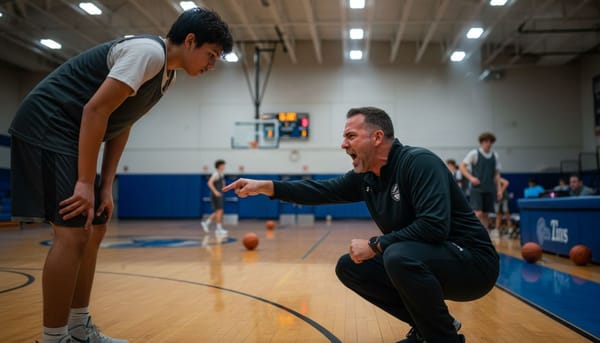
What struck me most was the constraint they used on defense — if a player switched off or got beat on their strong hand, they were subbed off immediately. No lecture. No long explanation. Just consequences that mirrored the game. And it worked. Players figured it out faster because the feedback was instant and unmistakable. I've seen coaches spend fifteen minutes explaining a defensive concept that a two-minute small-sided game with the right constraint could communicate in a fraction of the time.
The Weak Side Dunker and Why Spacing at U14 Basketball Player Development Level Is Criminally Underrated
I'll be honest — when they started talking about spacing, I expected the usual stuff. Corners, wings, ball movement. But this was different. The weak side dunker position they described, and the wheel under and wheel over reads coming out of it, felt like something you'd see broken down in an NBA film session. At the U14 basketball player development level. That's not an exaggeration. That's what I heard.
And the thing is, it makes complete sense when you think about it. If a 13-year-old like Gio can start to understand that his action off the dunker position changes based on where the drive is coming from — strong side versus weak side — then he's not just learning a movement pattern. He's learning to read the environment. He's building a mental model of how basketball actually works. That's the kind of skill that doesn't get acquired through repetition drills — it emerges through exposure to real decision-making scenarios with real consequences.
What I love most about the dunker detail is that they rotated every player through that position. It wasn't just reserved for the big kid or the best cutter. Everyone sealed. Everyone wheeled. Everyone had to learn to read it. That's such a simple structural choice, but the development implications are enormous. And then there's the fact that Gio — the tall kid who was expected to play the dunker — asked to play as a ball-handler and target for a game. And the coaches said yes. Immediately. That kind of responsiveness to what players are curious about is rare. It's also exactly why that kid is developing faster than his peers.
I don't fully agree with coaches who say you can't teach sophisticated concepts to young players. What you can't do is teach sophistication through rigid instruction. But present it as a problem to solve — give them a trigger, a constraint, a situation — and kids figure it out. Fast. This connects directly to ideas I've been thinking about around what we're actually teaching when we run oversimplified youth offense, and whether the patterns we default to are really serving player growth or just making practices easier to manage.
Doing Less — But Doing It Really Well
This is something I think about a lot. The temptation in coaching, especially with younger teams, is to keep adding. New play. New concept. New set. New defense. It feels like progress. It rarely is.
What this coaching staff did was the opposite. From August through December — four or five months — they ran one trigger. Gets. That's it. No pick and roll. No coverages. Just gets, spacing, and reading dominoes. And by the time Christmas came around, their shot selection was so good they weren't taking mid-ranges or catch-and-shoot threes. At 14. Think about that for a second. Most adult rec league players can't make that claim.
The restraint here is what impresses me most. Because adding stuff is easy. Every coach knows twenty drills, fifteen sets, ten defensive coverages. The hard part is deciding what not to teach yet. It requires knowing your players, tracking what's actually being understood versus what's being performed on autopilot, and having the patience to let a concept fully settle before layering on the next one. I've seen this same discipline described in a completely different context — when coaches throw out the script entirely and let what's actually happening in front of them guide the session. It's uncomfortable. It's also usually more effective.
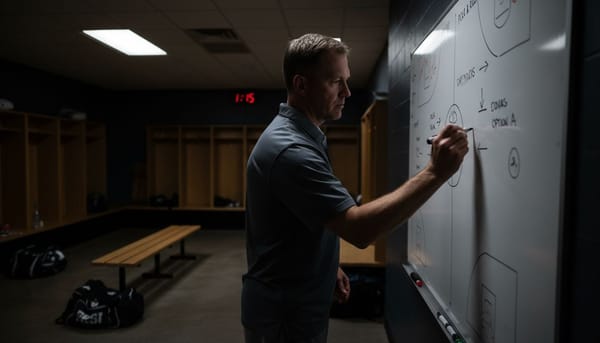
The crack angle constraint they described is a perfect example of this philosophy in action. If you don't have a crack angle, you're out of the game. Simple. Non-negotiable. That single rule forced every player to understand spacing at a level that no whiteboard explanation ever could. And when Tyler started reading and creating that 2v1 off the crack angle naturally — that's not a player who was taught a rule. That's a player who internalized a principle. There's a massive difference between those two things, and this coaching staff clearly understands which one actually matters.
Teaching Pick and Roll at U14 — Why Starting Early Isn't Crazy, It's Essential
One of the moments in this conversation that genuinely stopped me mid-listen was when they talked about running full pick and roll concepts — crack angles, slip coverage, short roll cut and slide, reading tags — with under-14 players. And not just introducing the idea. Actually building fluency in it. When I heard this, I immediately thought about how many coaches I've seen wave this off entirely, saying "they're not ready for that yet." But the argument here flipped that logic completely on its head. The point isn't that U14s are ready for the complexity — it's that because it's complex, you have to start early. If they're not building those reads and habits at 12 or 13, when exactly are they supposed to become good at it? At 19? Good luck. That's the honest truth and I think a lot of youth coaches aren't comfortable admitting it. The crack angle alone — how a screener positions to actually create the advantage — is a skill that takes hundreds of repetitions to internalize. That's not something you bolt on late. It has to grow. And if you're curious about how basketball players can become elite in the pick and roll, the answer almost always traces back to how early they started developing those instincts.
The Turtle spacing piece was something else entirely. What struck me most was the bit about the players scouting each other — actually building mini portfolios on their teammates, identifying mismatches, and then calling out "turtle, turtle, turtle" in live play without being prompted. A 12-year-old reading a size mismatch in real time and communicating it to his teammates? That's not a drill result. That's genuine basketball intelligence developing in a real environment. I've seen this play out personally with older players who still can't do that, because nobody ever gave them the language or the freedom to make those reads independently. The constraints-led approach clearly created the conditions for that to emerge naturally, and that distinction matters enormously. It's why what I've read about skills emerging rather than being acquired keeps resonating with me — you can't drill your way to that kind of awareness.
The What-If That's Going to Linger — And Why It Should
The part of this conversation I keep coming back to is the ending. The academy isn't continuing due to funding. And you can hear the weight of that. Not bitterness — just genuine grief over an unfinished experiment that was clearly working. The "what if" is real. What if they'd had two or three years with those same kids building on these principles from age 12 upward? What does a 16-year-old look like after four years of this environment? We don't get to find out, and that genuinely stings. I don't fully agree with the idea that this kind of work requires a massive institution to prove itself — I think pockets of coaches doing this well can shift culture over time — but I understand the frustration. Systemic change is slower than individual belief. What gives me some hope is hearing that Will is already applying the same principles with the Welsh national team, seeing growth within five hours of contact time a month. That's not nothing. That's actually remarkable. And the conversation around a European club considering going all-in with this approach — while some coaches worried about losing games — hit close to home. That fear is real but it's also the wrong question. Accelerated learning compounds. The short-term scoreboard doesn't capture what's actually being built. This is something I think about a lot when I hear coaches resist approaches like this, and it connects directly to why modern basketball development demands a fundamentally different approach than what most programs are still running.
What this entire conversation reinforced for me is that U14 basketball player development isn't just about reps and fundamentals in the traditional sense — it's about building thinkers, communicators, and problem-solvers inside a system that trusts them enough to let those qualities emerge. The London Lions academy may not be continuing, but the coaches who lived through it are carrying something forward. That kind of knowledge doesn't disappear. It spreads. And if even a fraction of the UK coaching community starts asking the questions this podcast raised, that's not a small thing. That's how change actually starts — not from the top, but from coaches who've seen it work and refuse to go back to the way things were. The 150 hours of internal coach development, the shared terminology, the unified principles — that investment in the coaching environment, not just the player environment, is something I think gets overlooked far too often. Building a coaching culture that cohesive is its own kind of achievement, and you can feel in this conversation just how much it mattered to everyone involved. If you want to understand what that kind of environment actually looks like when it's built intentionally, the post on what makes a basketball environment truly transformational is worth your time.