Coleman Ayers on Why Basketball Skill Training Gets It Wrong — And How to Actually Develop Players
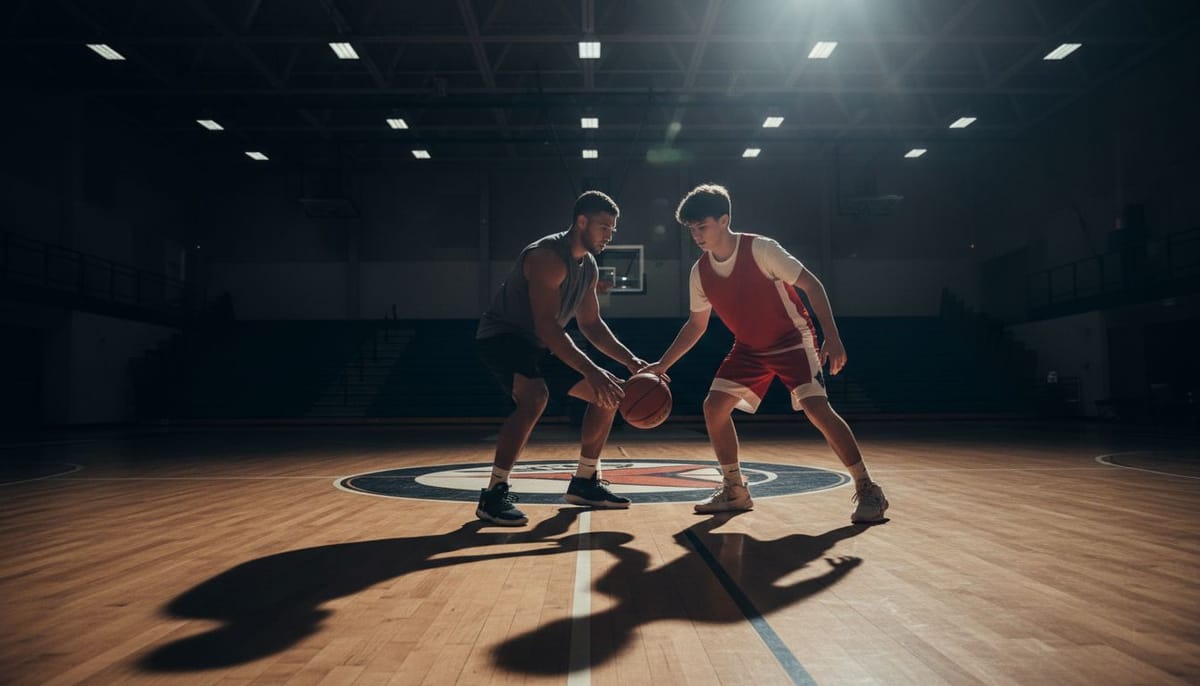
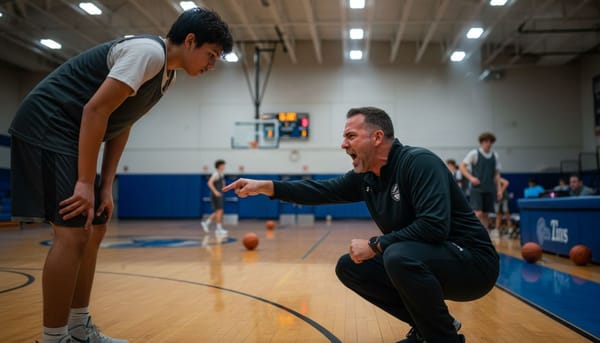
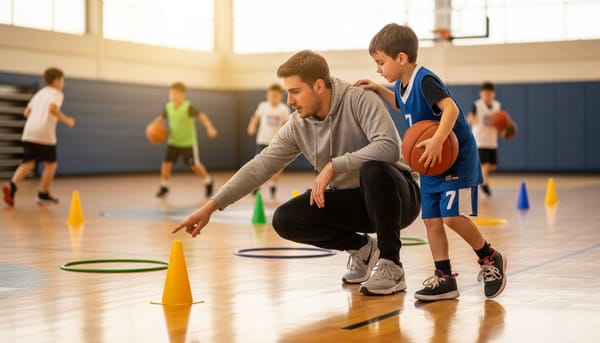
Most basketball trainers are just recycling the same cone drills, ball-handling sequences, and scripted footwork patterns that have been passed down for decades. Nobody questions it. Nobody asks whether any of it actually transfers to a real game. They just keep doing it because that's what everyone else is doing. When I heard Coleman Ayers break down exactly how he stepped away from all of that — independently, in a new city, with no mentor to copy — I immediately thought: this is the conversation the basketball development world desperately needs to have out loud.
Coleman is the founder of By Any Means Basketball, and his approach to player development is genuinely different. Not different in a marketing-spin kind of way. Different in a he-actually-read-the-research-and-then-threw-himself-into-application-for-years kind of way. Listening to him talk through his journey, I found myself nodding constantly — and occasionally feeling a little uncomfortable about some of my own assumptions.
Let me walk through the parts of this conversation that hit hardest for me.
Going Independent Was His Greatest Advantage
Here's something that surprised me. Coleman openly admits he never had one dominant mentor. No single coach he just "copy-pasted" from. And at first, he says, he wanted that. He was hungry for it. But looking back, he now sees the absence of that figure as the best thing that could've happened to his development as a trainer.
I don't fully agree with this as a universal rule — I think great mentors can accelerate your growth enormously — but I understand exactly what he means in this specific context. When you copy someone else's system wholesale, you stop questioning it. You stop asking why this drill exists, whether it actually works, or whether there's a better way. You just run the system and trust the brand behind it.
Coleman didn't have that safety net. So instead, he watched basketball. Obsessively. He reverse-engineered what he saw on the court. He read skill acquisition books and studies. He started asking what the research actually said about how humans learn motor skills — and then compared that to what he saw trainers doing in gyms across North America. The gap was enormous.
What struck me most was how he described the dominant approach in North American skills training as "entrenched." That word is doing a lot of work. It implies not just that the approach is popular, but that it's resistant to change — that there's an entire ecosystem of content, reputation, and revenue built around doing things a certain way, even if that way doesn't hold up under scrutiny. I've seen this play out personally at camps and clinics where the flashiest drill gets the most applause, even when it has zero game relevance.
How to Actually Read the Research Without Getting Overwhelmed
One of the most practical moments in this conversation came when Coleman was asked how coaches should approach skill acquisition research for the first time. His answer was refreshingly honest: you're not going to understand everything, and that's fine. You're not trying to become a scientist. You're trying to leverage science to do your job better.
This is something I think about a lot. There's a version of engaging with research that becomes its own kind of paralysis — you read endlessly, debate terminology, and never actually get on the court and try anything. Coleman's advice cuts right through that. Read enough to glean a few key concepts. Then go apply them. Experiment. Use willing players as collaborative lab partners. And crucially — talk to other coaches about it.
He mentioned hopping on phone calls regularly with a small group of coaches who share the same curiosity, just to dissect concepts together and figure out how to make them practical. That kind of peer-learning environment, where everyone's pushing each other's thinking, is honestly underrated. It reminds me of the broader shift in coaching innovations happening across the sport — the best coaches aren't just consuming information in isolation, they're building networks that help them stress-test ideas in real time.
What I found most useful in Coleman's framework is the ratio shift he described over time. Early on, it was heavy research, lighter application. But after a few years of building that base, he flipped it — roughly 90% application, 10% staying current with new research. That progression makes complete sense to me. You can't apply what you don't understand, but you also can't grow just by reading. At some point you have to make the switch to a training approach that actually shows up in real performance — and that only happens through sustained, deliberate experimentation on the court.
Forms of Life — The Coaching Variable Nobody Talks About
This is where the conversation went somewhere I genuinely wasn't expecting, and honestly it might be the most important section of the whole episode.
The host asked Coleman about "forms of life" — basically the idea that a player's cultural background, social environment, and lived experience shape not just who they are off the court, but how they play and how they learn. Coleman's response was immediate and emphatic: yes, this matters enormously, and most coaches have no framework for it whatsoever.
He's traveled extensively with By Any Means — the Caribbean, Asia, across Europe — and what he described was fascinating. It's not just about basketball culture in different regions. It's about everything. The music people grow up listening to. The other sports they play. How they dance. The pace at which they live daily life. The values embedded in their communities. All of it bleeds into how an athlete moves, makes decisions, and responds to coaching.
And then he made a point that I thought was brilliant — and that a lot of American coaches specifically might find uncomfortable. Even within Europe, which is often talked about as a single basketball culture, every country has its own distinct flavor. Serbia is not Barcelona is not the UK. The values, the learning styles, the relationship to authority and instruction — it all differs. The lessons basketball can draw from how soccer has evolved globally feel especially relevant here, because soccer has been grappling with this cultural dimension in coaching for much longer than basketball has.
I've seen this play out personally. I've watched coaches apply the exact same instruction style to players from wildly different backgrounds and then wonder why one group responds and another shuts down. The assumption is always that the player is the problem. Coleman's point is that the coach might simply be working without any awareness of the context shaping that player's relationship to the game.
He mentioned he could write an entire book on this topic. I'd read it immediately. Because this isn't a soft, feel-good idea about cultural sensitivity — it's a genuinely practical coaching variable. If you don't understand the forms of life your players are bringing to the court, you're missing information that directly affects how you should be teaching. And right now, almost nobody in the skill training space is talking about it.
Where Your Players Come From Changes Everything About How You Coach Them
Here's something that hit me hard when I heard this conversation: we spend so much time debating what to teach, and almost no time thinking about who we're teaching. The guest made this point about coaching players from completely different environments — DC, California, the Philippines, South America — and how each of those backgrounds produces a fundamentally different athlete with a fundamentally different relationship to the game. When I heard this, I immediately thought about how many coaches I've watched apply the exact same approach to every single player in the gym and then wonder why some kids just "don't get it."
The Philippines example stopped me cold. Players growing up barefoot on small, crowded courts naturally develop a lower center of mass, elite shiftiness, and a tolerance for physical play. Not because anyone taught them those things. Because the environment demanded it. That's not a coaching philosophy. That's the environment doing the coaching.
And this connects to something much bigger — the whole ecological learning approach in basketball coaching, which argues that the constraints you train in shape the player you become. I've seen this play out personally. Kids who grew up playing pickup on tight half-courts make decisions faster. Kids who only ever trained in structured, clean environments sometimes freeze when the game gets messy. The environment is always teaching. The question is whether you're aware of it or not.
What struck me most was when he admitted he wasn't getting to know his players' backgrounds well enough — and this was only two years ago. That kind of honest self-reflection is rare. Most coaches never revisit that assumption at all. They just keep running the same system and blaming the players when it doesn't land.
How the Best Drills Get Created — And It's Not What You Think
This section of the conversation is probably what I'll think about longest. Because every coach eventually asks the same question: where do good drills come from? And the answer here is genuinely unexpected.
The guest broke it down into three sources. First — reverse engineering. You watch your players struggle in a specific situation during a real game, and you build backwards from that moment. He described watching his athletes get rattled by longer, faster defenders coming at them in a tournament, then literally ordering blocking pads overnight and constructing a 2v2 drill that recreated that exact pressure. Simple. Direct. Purposeful.
That's a completely different mindset than scrolling through drill databases looking for something that feels useful. And it reminded me of something I've thought about a lot — the idea that one shift in how you approach training can reframe your entire coaching philosophy. The shift here is moving from "what drill should I run today" to "what problem did I see yesterday that I need to solve right now."
Second — watching the world outside basketball. And I mean really outside basketball. He literally watched two kids playing soccer in the UK, saw them do a shoulder bump and land in a weird position, and turned it into a landing mechanics warm-up drill two days later in Germany. I don't fully agree that everyone can develop that kind of observational instinct just by trying — I think some people are wired for it and some aren't. But the point stands: if you're only watching basketball to get ideas about basketball, you're limiting yourself unnecessarily.
Third — breaking big skills into their underlying qualities. Not chopping skills into isolated fragments and drilling them out of context. But identifying the specific physical or cognitive quality that's creating the breakdown. A player struggling with a lateral three-pointer off the dribble doesn't just need to "rep it more." They might need work on body control while moving sideways, or on how fast they pop off that second foot. Those are trainable qualities — and once you name them, you can build something specific around them.
This is something I think about a lot in relation to shooting. There's a real difference between drilling a shot and training the qualities that make the shot work under pressure. If you're interested in that distinction, the conversation around why teaching perfect shooting form might actually be hurting your players pushes this idea even further — and it's worth sitting with, even if it makes you uncomfortable.
The Gap Between US Youth Basketball and the Rest of the World Is Real — And It's Structural
The conversation shifted toward Adapt Academy and the youth basketball scene in the US, and honestly, this part was uncomfortable to hear. Because what was described wasn't a minor difference in coaching style. It was a systemic absence of principles.
No integration between team concepts and individual development. No coherent philosophy connecting what players do in practice to what they're expected to execute in games. Just disconnected reps, disconnected drills, disconnected ideas. The guest said it was "pretty shocking" after spending real time in the US youth scene. I believe it. I've been to enough gyms to know that shock is warranted.
And here's the thing — this isn't about talent. American youth basketball produces incredible athletes. The raw material is there. But talent without a framework to develop inside is like having great ingredients and no recipe. You might occasionally stumble into something good, but you can't replicate it, can't teach it, can't build on it.
What Adapt Academy seems to be doing is creating that framework — building a consistent set of principles that players internalize over time, so that when chaos hits in a real game, they're not guessing. They've already felt it in practice. This is exactly why the broader conversation around coaching innovations and where the game is heading matters so much right now. The coaches who are winning this argument aren't just running better drills. They're building better systems — and starting with a clearer understanding of why the old way isn't enough anymore.
FIBA and international programs didn't catch the US by accident. They caught up because they were more intentional. Earlier. With younger players. And they never stopped asking why.
The Myth of Separating Skill Work From Team Play
What struck me most in this final stretch of the conversation was something so simple it almost sounds obvious — but clearly isn't, because almost nobody is doing it. The idea that skill sessions and team practices don't have to be two completely different worlds. They can — and probably should — bleed into each other constantly.
When I heard this, I immediately thought about how many times I've watched a player look absolutely filthy in a solo workout. Crossovers, finishes, pull-up jumpers. Then you put a defender on them and the whole thing falls apart. That's not skill. That's rehearsal. And there's a massive difference. The argument being made here is that if you're teaching players how to create an advantage individually, the very next step has to be teaching them when not to use it — how to read a teammate, how to trust a concept, how to let the game come to them. I don't fully agree that traditional skill training is worthless, but I do think it becomes almost meaningless without that context layered in.
The bit about parents looking up from their phones and thinking practice and skill sessions look the same? I found that genuinely funny. And also kind of perfect. Because that confusion from the outside probably means something is going right on the inside. If your training environment looks like actual basketball, you're probably doing something right. This connects directly to the ecological learning approach in basketball coaching, which argues that the environment itself is the teacher — and that when the training environment mirrors the game, learning sticks in a way that isolated reps simply can't replicate.
I've seen this play out personally. Players who come up through systems heavy on conceptual offense — who understand triggers, coverages, spacing rules — they just see the game differently. It's not magic. It's context. They've been trained in situations that actually happen in games, so when those situations arrive, they're not guessing. They've lived it.
Building Something Different — Culture, Commitment, and the Long Game
This is something I think about a lot. We spend so much energy talking about systems and methods and drills, and we completely gloss over the thing that makes any of it actually work: whether players want to show up.
The model being described here — locking players in for six months minimum, building a family culture, checking in on school, going to the beach together before an intense session — that's not soft. That's smart. You can have the most sophisticated coaching system built around the latest tools and frameworks and it will completely collapse if players don't trust you, don't feel seen, and don't actually want to be there. Culture is the container everything else lives inside.
What really got me was the comment about players whose spark had gone out — kids who came off a season with a coach who discouraged them, and now they're back, playing better than ever. I don't think that's a coincidence. I think environment and emotional safety are massively underrated performance variables. The research on punishing players points to the same thing — fear-based environments don't produce confident, creative basketball players. They produce timid ones.
And I love the honesty in saying: we're not chasing the top-50 recruit. We're looking for the kid who just needs somewhere real to develop. That's a harder sell to the outside world, maybe. But it's a more meaningful mission. Not everyone coaching youth basketball is doing it to build a brand or scout future pros. Some people are doing it because they remember being that kid who just needed someone to believe in them.
The reverse-engineering of European basketball culture while keeping the American individual skill identity — that's the tension worth sitting with. Not choosing one or the other, but asking what each does well and building something that takes the best of both. That's the kind of nuanced thinking that the broader conversation around coaching innovations has been pushing toward for years now, and it's exciting to see someone actually building it from the ground up rather than just talking about it on a podcast.
Two months in and they're already seeing results. Players re-engaged. Buy-in building. A culture taking shape. I'll be watching this one closely — because if it works the way they're describing, it's not just a better AAU model. It might be a blueprint for what youth basketball development should actually look like everywhere.