Coaching Tools — The Complete Guide to Building a Smarter, More Effective Coaching System
I've spent a lot of time around coaches. Good ones, great ones, and some who worked incredibly hard and still couldn't figure out why their players weren't growing. And the more I've watched and listened, the more I've come to believe that the gap between a coach who transforms players and one who just manages them comes down to one thing: the tools they're actually using to teach. Not plays. Not schemes. Teaching tools. The frameworks, habits, and mindsets that shape how a coach communicates, prepares, measures, and leads. What I want to do in this guide is pull together everything I've absorbed from some genuinely sharp coaching conversations — ideas that challenged me, some that made me uncomfortable, and a few that I think should be required thinking for anyone who takes this work seriously. Whether you're running an elite program or coaching rec league on Saturday mornings, these ideas apply. Let's get into it.
What Are Coaching Tools — and Why Most Coaches Never Think to Define Them
Here's a question I heard posed to a room full of coaches recently, and it stopped me cold: What is your best teaching tool? Not your favorite drill. Not your go-to play in a tight game. The actual tool you reach for when a player genuinely isn't getting it. When I sat with that question, I realized most coaches — myself included — have never consciously answered it. We accumulate habits, borrow drills, copy structures from coaches we admire, and call that a system. But it's not really a system. It's a collection.
Coaching tools, properly understood, are the deliberate methods a coach uses to transfer understanding, build skill, shape culture, and develop people. They live in how you give feedback, how you structure time, how you measure progress, how you prepare mentally, and how you define your own identity as a leader. The coaches I've seen make the biggest impact aren't always the ones with the most basketball knowledge. They're the ones who've thought carefully about how they teach — and built intentional tools around that thinking.
This guide is about those tools. All of them. From the granular — how long should a coaching cue actually be? — to the philosophical: what happens to your players when your sense of self-worth is tied to the scoreboard? I'll share what's resonated with me, where I've pushed back, and what I think the real implications are for coaches trying to build something that lasts.
The Feedback Problem — Why Coaches Talk Too Much and Players Hear Too Little
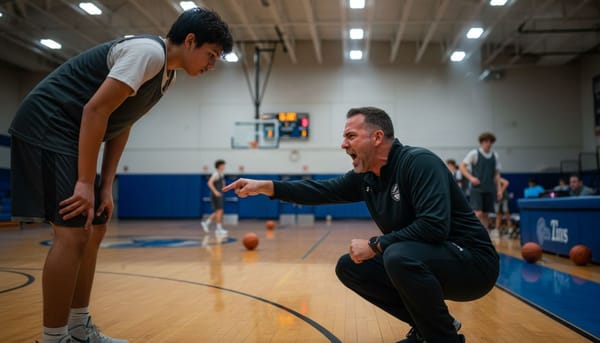
Let me be blunt about something: most coaches talk way too much during practice, and the research on attention spans backs that up. Players stop meaningfully processing verbal instruction after roughly twenty seconds. I've watched coaches speak for three uninterrupted minutes mid-drill while players stand there nodding — and then immediately do the exact same thing they were just corrected on. It's not disrespect. It's neuroscience.
What struck me when I came across the 7-11-21 framework was how elegantly it solves this problem. The concept is simple: not all coaching moments are the same, and they shouldn't be treated the same.
- Seven seconds — a sharp, individual cue delivered while the action is still live. Quick, specific, and targeted to one player in one moment.
- Eleven seconds — a brief group-wide pause. A reset. A refocus on the objective without breaking the flow of practice for long.
- Twenty-one seconds or more — a genuine teaching moment that earns the full stop. New concept, deep correction, something worth gathering players in for.
When I heard one coach describe breaking down a two-hour practice using this structure — the majority of his coaching interactions happening in seven-second bursts, with only five full twenty-one-second teaching moments in the whole session — I honestly had to recalibrate. That's radically less talking than what most coaches think is necessary. And it produced more retention, more engagement, more reps. I've seen this play out personally. The coaches who command the most attention are often the ones who speak the least — because when they do speak, players know it matters.
Measuring What Actually Matters — The Gap Between What Coaches Feel and What's Real
Here's a stat that changed the way I think about practice design: in one coaching analysis, only five out of thirty-four observed drives included a stride stop. Five. The rest? Players were finishing in ways that compromised their body control, their balance, and ultimately their efficiency. But before that moment of measurement, the coach working with those players had no idea the problem was that pervasive. It felt like it was being addressed. The numbers said otherwise.
This is something I think about a lot — the distance between a coach's perception of what's happening and the reality of what's actually happening on the court. Effort is not the issue. Most coaches I know are pouring everything into their work. The issue is that effort without measurement creates a loop where you're correcting the same things repeatedly without ever knowing if you're making progress.
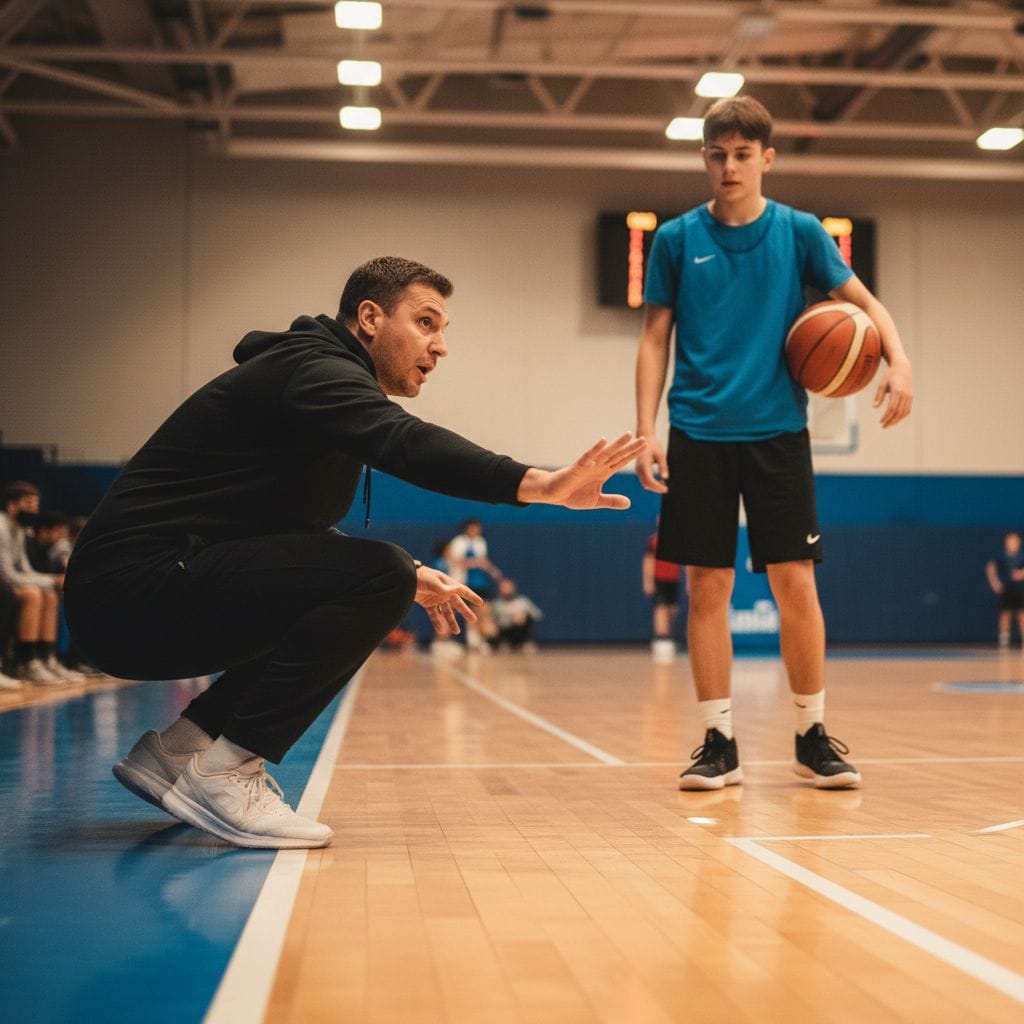
The principle I keep coming back to is this: if it matters, you must measure it. And the inverse is equally true — if you're not measuring it, it will quietly stop mattering, no matter how much you talk about it. This applies to individual skills, to team habits, to practice objectives, even to culture indicators. The coaches building real programs at the grassroots level aren't just working harder than everyone else. They're watching more carefully, tracking more deliberately, and letting the data shape what they do next.
What I find most compelling about this idea is that it doesn't require expensive technology or sophisticated analytics. It requires intentionality. Someone — a coach, an assistant, even a player — who's willing to count. To observe. To bring actual numbers into a conversation that's too often driven by gut feeling alone.
The Measurement Problem Most Coaches Never Solve
When I heard the stat about only five drives using a stride stop out of thirty-four total, I had to stop and replay it. That single number represents something enormous — a coaching blind spot that no amount of hustle or passion can fix. Because here's the thing: the coach watching those drives probably felt like the technique was improving. Players were working hard. Effort looked good. But the actual behavior? Almost entirely unchanged.
This is something I think about a lot. We talk about accountability in coaching like it's a mindset shift, like if coaches just care more or communicate better, things will click. But what I've come to believe is that accountability without measurement is just wishful thinking. If you're not counting, you genuinely don't know what's happening on your court. You're operating on impression, and impressions lie.
What struck me most about the framework presented around this idea was how blunt it was: if it matters to you as a coach, you have to measure it. Full stop. Not occasionally. Not when it's convenient. Systematically, every session.
I've seen this play out personally watching programs that tracked everything versus programs that tracked nothing. The tracking programs weren't necessarily smarter or more talented — they just had an honest picture of reality to work from. When something wasn't improving, they could see it clearly instead of arguing about it based on gut feeling.
The deeper implication is this: measurement isn't just an evaluation tool. It's a teaching tool. Showing a player that they executed a skill correctly twice out of twenty attempts is more powerful than any verbal correction you could ever deliver. The number does the coaching for you.
How You Structure Feedback Changes Everything Players Absorb
Most coaches I've observed do their best teaching at the worst possible moment — mid-drill, while players are still physically engaged, while their working memory is completely maxed out trying to execute a skill. And then they wonder why the same mistakes keep happening.
When I heard the 7-11-21 framework broken down, I immediately thought: this isn't a revolutionary idea, it's just a disciplined one. Seven seconds of individual feedback while play is live. Eleven seconds for a group-wide refocus. Twenty-one seconds or more only when a genuine teaching moment justifies pulling everyone in. That's the whole framework. Simple on paper. Almost nobody actually does it.
What made this land for me was the real practice data behind it. Two coaches running a two-hour session, and the vast majority of their interactions were seven-second bursts. Five total 21-second teaching moments across the entire practice. Five. That's radical restraint. And the argument is that this restraint is actually what makes the longer teaching moments land when they finally happen — because players aren't already tuned out from information overload.
I don't fully agree that every coaching situation fits neatly into these time boxes, but I think the underlying principle is completely sound. Athletes stop processing verbal instruction shockingly fast. Their brains are busy doing something else. Talking past the point of attention isn't coaching — it's noise.
What I keep coming back to is how much this demands from the coach emotionally. Staying concise when you're frustrated, when a player keeps making the same mistake, when the clock is running — that takes real self-regulation. The framework is easy to understand. The discipline to actually use it under pressure is something you have to build deliberately.
The Victory Framework and Why Most Coaches Are Zoomed In Too Far
There's a particular kind of coach I've watched my whole life who is absolutely brilliant in the moment — reads the defense perfectly, calls the right timeout, makes the adjustment that changes a game — but whose program never quite builds into something bigger than individual moments. When I heard the Sun Tzu quote that anchored this coaching session, I finally had language for what I was observing. Those coaches go to war and then seek to win. They never won first.
The Victory framework as I understand it is fundamentally about zooming out — stepping back from the drill, the play, the game, and asking what the whole picture is supposed to look like. What are you actually building? Not this season. Over time. What does winning mean in the context of the program you want to run, not just the next opponent you're preparing for?
This is something I think about a lot because the pull toward zoom-in coaching is so strong. Players are in front of you, problems are immediate, and the satisfaction of fixing something right now is real and tangible. Pulling back to think structurally requires sitting with discomfort that doesn't resolve quickly.
What genuinely struck me about the art-versus-science framing was how honest the facilitator was about what your answer reveals. I lean art instinctively, and hearing that named as a potential blind spot felt like being caught. Because systems, progressions, and deliberate design aren't the boring parts of coaching — they're the parts that make everything else sustainable. The instinct and creativity are what make great coaching feel alive. But without structural thinking underneath it, that creativity has no foundation to build on.
The best coaches I've seen personally combine both without apologizing for either. They have the vision to zoom out and the feel to zoom back in at exactly the right moment.
The Identity Trap: When Coaches Need the Win More Than Their Players Do
There is a question I keep coming back to that I first encountered in one of these coaching cohort sessions, and I think every coach reading this needs to genuinely sit with it before moving on: Is your identity rooted in your performance or your purpose?
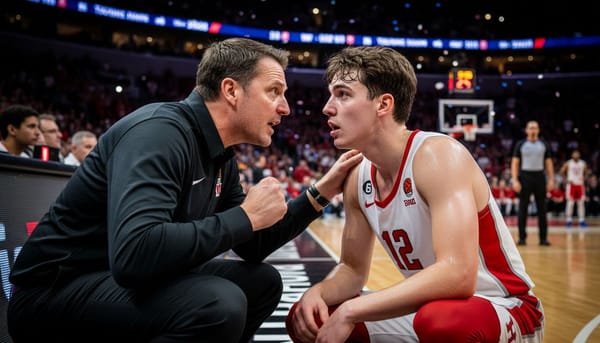
When I heard this framed so directly, I immediately thought about every coach I've watched get visibly tight in a close game. Not because they lacked knowledge. They knew the plays, they knew the matchups, they understood the moment tactically. But you could feel them needing the outcome for themselves. Players feel that too — kids especially. And it poisons the atmosphere in ways that no timeout or substitution can fix.
This is something I think about a lot, especially in youth and recreational leagues where coaches are genuinely passionate and genuinely invested, but quietly tying their sense of self-worth to every result. The argument made in the SAVVY framework's identity week is one I find hard to argue against: when your emotional stability fluctuates with wins and losses, you become genuinely harder to follow as a leader. Not because you're a bad person, but because your players can sense the fragility underneath the confidence.
What struck me most was how this isn't just a mental health observation — it's a tactical coaching problem. A coach whose identity is performance-based will make fear-driven decisions in big moments. They'll pull players too quickly, over-coach during live sequences, and unconsciously communicate that results matter more than growth. That filters down to your roster faster than any drill or play call ever could.
I've seen this play out personally in programs that looked great on paper and fell apart under pressure — not because of talent gaps, but because the coach's anxiety became contagious. Separating who you are from what your team scores is not weakness. It is, honestly, one of the most advanced coaching tools in existence.
The Measurement Gap: What Coaches Feel Versus What Is Actually Happening
Here is a number that genuinely stopped me cold when I first heard it: five drives using a stride stop out of thirty-four total. Twenty-nine without. That is not a minor technical detail. That is a program-wide habit that nobody caught because nobody was counting.
This gets at what I think is one of the most underappreciated failures in coaching at every level — the gap between what a coach perceives is happening on the court and what is actually happening. Most coaches are working hard. Most coaches care deeply. But caring and counting are two completely different things, and I don't think we say that clearly enough.
The framing I heard in one of these sessions was blunt in a way I respected: if it matters, you must measure it. If you don't measure it, it will not matter. That sounds almost too simple. But the implications are enormous, particularly for coaches operating at the grassroots level without analytical staff or video systems. Because without measurement, you are essentially coaching on vibes — reacting to what felt like a problem rather than what the data confirms as a pattern.
What I find most compelling about this idea is that measurement doesn't require expensive technology. It requires intentional observation and honest recording. Counting how many times a specific skill is executed correctly in a drill. Tracking whether your defensive rotations are actually happening at the rate you believe they are. Noting which players are touching the ball and which ones disappear for five-minute stretches.
I don't fully agree that every coaching decision needs to be data-driven — there is genuine art in reading a room, a player, a moment. But I've come around to believing that the coaches who measure what matters create a feedback loop that purely instinct-based coaches simply cannot access. The scoreboard at the end of the game is the least useful measurement you have. Everything that led to it is where the real information lives.
Common Coaching Mistakes That Look Like Good Coaching in the Moment
One of the most unsettling ideas I encountered across all of this material is the notion that some of the most common coaching behaviors — the ones that look engaged, thorough, and professional from the outside — are actively working against player development. And the reason they persist is precisely because they feel like coaching.
The clearest example is over-talking. Research cited in one of these sessions suggests athletes stop meaningfully processing verbal instruction after roughly twenty seconds. And yet the default coaching behavior across almost every gym I've ever been in is to speak in paragraphs. Long corrections mid-drill. Extended monologues during water breaks. Stopping live sequences repeatedly to address the same issue. Players nod. Players glaze. Players do the exact same thing thirty seconds later. And then coaches wonder why the message isn't landing.
When I heard the 7-11-21 framework broken down — seven-second in-the-moment feedback, eleven-second group redirects, twenty-one-second full teaching moments used sparingly — I immediately thought about how radical that constraint would feel to most coaches. Because it demands discipline. It forces you to identify what is actually most important in any given moment rather than unloading every observation you have.
The other mistake I think is underdiagnosed is confusing preparation with planning. These are not the same thing. A coach can have a meticulously written practice plan and still be completely unprepared — unprepared to adapt, unprepared to read the energy in the gym, unprepared to abandon the plan when players need something different. What Alex Sarama described running in Italy — no written plan, pure principled improvisation — sounds terrifying until you realize that his preparation was deeper than any document. The mistake is assuming the document is the preparation.
I've made both of these errors myself. The over-talking one especially. It is remarkably hard to coach less when you know more, but that tension is exactly where real teaching lives.
Measuring What Actually Matters — And Stopping What Doesn't
One of the sharpest moments across all of this material came from a deceptively simple stat: only five drives with a stride stop. Twenty-nine without. When I heard that number, I immediately thought about how many coaches are grinding through practice after practice, correcting the same mistakes in the same ways, and wondering why nothing is sticking. The answer, more often than not, is that nobody is actually counting.
This is something I think about a lot — the gap between what a coach feels is happening on the court and what is actually happening. Those two things are often completely different realities. And the uncomfortable truth is that feelings are not a coaching tool. Data is.
If it matters, you have to measure it. That principle sounds obvious until you sit down and ask yourself: what am I actually tracking right now? Not vaguely noticing. Not getting a feel for. Actually counting, recording, and reviewing with intention.
I've seen this play out personally with coaches who swore their players were working hard on a particular skill for weeks — and then someone pulled out a simple tally sheet and showed that the skill was being practiced maybe a dozen times per session when it needed to be practiced hundreds of times. The coach wasn't wrong about effort. They were wrong about volume. And without measurement, that distinction is invisible.
What struck me most about how this idea was framed was the connection between measurement and celebration. The Frederick High School example — sixty players, twelve coaches, two full days of engaged, structured development — wasn't just a feel-good story. It was evidence of a system working. You can only know a system is working if you defined what working looks like before you started. That's measurement culture. And it is genuinely rare.
The practical shift here isn't complicated, but it does require discipline. Pick two or three things that actually move the needle for your players — not the metrics that look impressive in a parent email, but the ones that translate directly to growth on the court. Count them. Track them over time. Share them with your players. Watch what happens when athletes can see their own progress in a number that means something to them. The buy-in changes completely.
I don't fully agree with the idea that everything measurable is worth measuring, though. There's a version of data obsession that becomes its own distraction — coaches drowning in spreadsheets while their players are starving for genuine connection and real-time feedback. The goal isn't to turn practice into a lab experiment. It's to use selective, intentional measurement to make your instincts sharper, not to replace them.
The 7-11-21 rule fits here beautifully. Seven-second bursts of individual feedback during live action. Eleven-second group resets when focus drifts. Twenty-one seconds or more only when a full teaching moment is genuinely earned. That structure is itself a form of measurement — time as a tool for self-regulation. When I heard that a two-hour practice produced maybe five full teaching moments and dozens of seven-second corrections, I honestly had to reckon with how differently I had imagined good coaching looking. It is leaner than we think. Quieter than we assume. And far more precise than most coaches ever allow themselves to be.
Identity, Purpose, and the Coach Behind the Clipboard
Here is the part that I think gets skipped most often in coaching conversations, and the part I want to end on — because without it, none of the other tools fully work.
Every framework, every measurement system, every feedback structure we have talked about across this entire guide gets filtered through one thing: who the coach is when things go wrong. And that comes down to a question I could not shake after hearing it posed in a teaching cohort: is your identity rooted in your performance or your purpose?
When I first heard this, I immediately thought about the coaches I've watched unravel in high-pressure moments. Not because they lacked knowledge. Not because their players weren't prepared. But because you could see on their faces — in their body language, in the way they called timeouts, in the sharpness of their voice — that they needed the win. Not their team. Them. And players feel that instantly. Kids especially feel that. It changes the entire atmosphere of a team in ways that no practice plan can fix.
The argument being made in the SAVVY framework's identity week is that performance-based identity doesn't just damage the coach emotionally — it makes the coach genuinely harder to follow. Because when your self-worth fluctuates with the scoreboard, your players absorb that instability. They stop taking risks. They start playing not to lose instead of playing to grow. They look to the sideline for emotional permission before they make decisions on the court. That is not a team. That is a group of people waiting to see how the coach is feeling.
Purpose-rooted coaching looks different. It looks like the head coach who celebrated a four-point loss because earlier in the summer his team lost to the same opponent by thirty-three. He understood that a twenty-nine point improvement was the real result, regardless of what the scoreboard said. That is a coach who knows why he is in the gym — and it has nothing to do with his own reputation.
I've seen this play out personally enough times to believe it completely. The coaches whose players remember them a decade later are almost never the ones who ran the tightest offensive system or had the cleverest in-bounds plays. They are the ones who made players feel like their growth was the point. That distinction lives entirely in the coach's identity, not in their playbook.
The Sun Tzu quote from the Victory tools framework hits hard here too: victorious warriors win first and then go to war. Defeated warriors go to war first and then seek to win. Preparation without identity is just logistics. Real preparation — the kind that holds up when the moment is genuinely difficult — requires knowing what you are coaching toward and why that matters to you at a level deeper than a final score.
Art or science? That question about coaching philosophy isn't meant to have a clean answer. It's meant to expose your blind spot. The coaches who lean heavily on art tend to undervalue structure and measurement. The coaches who lean heavily on science tend to undervalue intuition, connection, and the messy humanity of working with real people. The honest answer is that it is both — always both — and the best coaching tools in the world are only as good as the self-awareness of the person reaching for them.
Bringing It All Together
What I keep coming back to, after sitting with all of these ideas, is how deeply interconnected the best coaching tools actually are. Communication only works when a coach understands attention spans. Measurement only works when a coach knows what actually matters. Adversity training only works when players trust that difficulty is intentional. Identity only anchors a coach when purpose is genuinely clear.
None of these tools exist in isolation. They compound. A coach who simplifies feedback, designs discomfort deliberately, tracks what matters, and leads from purpose does not just run better practices — they build the kind of culture that produces a twenty-nine point swing in a single summer and leaves players better equipped for everything that comes after basketball.
If you take one thing from this guide, let it be this: the question is not what tools you have. It is whether you are honest enough, disciplined enough, and purposeful enough to actually use them. Start there. The rest follows.