This one training switch, changed this coaches career forever

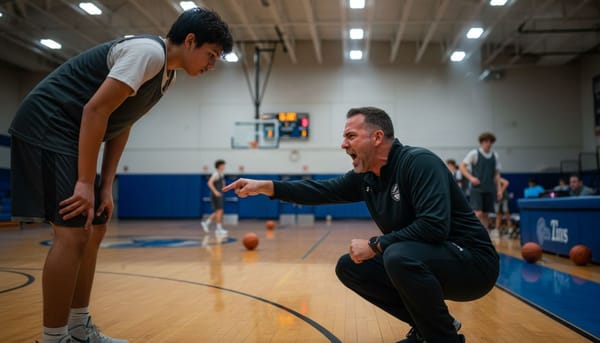
Picture this: You're warming up your team military-style. Structured drills. Tight formations. Your voice echoing across the gym with corrections and commands. Then you look across the court and see... nobody. The opposing team has no coaches. Just kids playing.
And here's the kicker: those kids are having more fun than yours.
We heard this story recently and it absolutely stopped us in our tracks. A coach describing his own transformation from a "really traditional coach, shouting at kids" to something completely different. The moment that changed everything? Watching an opponent warm up without any adult supervision while his own team executed drills like they were preparing for military inspection.
This isn't just a feel-good story about coaching philosophy. It's about something we see every single day at CourtClok—the tension between control and development, between winning today and building players for tomorrow.
The Military Approach We All Recognize
Let's be honest. Most of us have either been that coach or played for one.
The sideline shouter. The perfectionist who can't let a defensive rotation mistake slide without a whistle and a lecture. The coach who runs practice like boot camp because, well, that's how we learned the game. Structure. Discipline. Repetition. It works, right?
It does work. Sort of.
You get compliance. You get kids who know exactly where to stand in your zone defense. You get teams that execute your carefully scripted inbounds plays. But here's what we've noticed managing thousands of games through our platform: those perfectly drilled teams often struggle the moment something unexpected happens. The moment the script breaks down.
This coach admitted he was "even mean on the sideline." And we appreciate that honesty because it's more common than anyone wants to admit. The pressure to win—especially in competitive leagues—creates this environment where coaches feel like they need to control everything. Every possession. Every decision. Every movement.
But control isn't the same as development. Not even close.
The Team With No Coaches
So what happened when this traditional, military-style coach looked across the court?
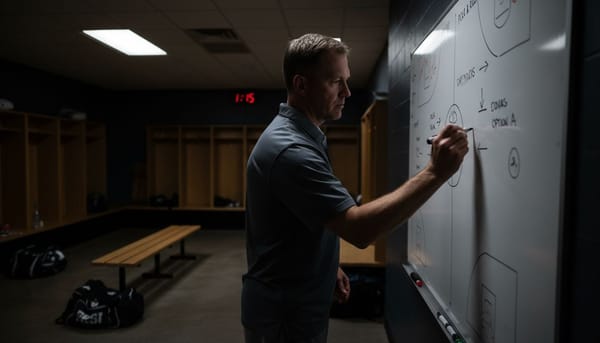
He saw kids just playing. No adult barking instructions. No clipboard with carefully diagrammed plays. No whistle stopping the action every fifteen seconds. Just basketball. Messy, chaotic, joyful basketball.
And something clicked.
The contrast was jarring. His team was executing warmup drills with precision—probably looking pretty impressive to any parent in the stands. But those kids on the other side? They were talking to each other. Making decisions. Laughing. Actually engaged with the game instead of just following orders.
We see this dynamic play out differently across the leagues using CourtClok. Some organizations are incredibly structured, with detailed rules about practice formats and coaching requirements. Others take a more developmental approach, giving coaches flexibility to experiment with player development over set plays. And you know what? The data doesn't show that one approach consistently produces better win-loss records.
But it definitely produces different types of players.
What Players Actually Learn From Autonomy
Here's a question worth sitting with: What are we actually teaching when we control everything?
When a coach makes every decision, calls every play, corrects every mistake in real-time—what's the player learning? They're learning to wait for instructions. To defer to authority. To execute rather than think.
Those aren't bad skills necessarily. But they're not the skills that create great basketball players.
Great players see the game. They recognize patterns, exploit advantages, communicate with teammates, and adjust on the fly. You can't learn those things when someone else is doing all the thinking for you. It's like learning to swim by being dragged through a pool—you're moving through the water, but you're not actually swimming.
The team with no coaches that day? Those kids had to figure everything out themselves. Who guards who. When to switch. Whether to press or fall back. What adjustments to make during breaks. All of it.
Were they perfect? Absolutely not. Did they make mistakes that would make any traditional coach's eye twitch? Definitely. But they were learning decision-making in real-time, under pressure, with actual consequences. That's not something you can teach with a whistle and a clipboard.
The Chaos That Actually Teaches
We heard something recently that stopped us in our tracks. A coach admitting that traditional practice felt limiting compared to the beautiful chaos of players just... playing. One-on-one battles on the side. Kids shooting wherever they could find space. Real basketball.
And you know what? They won.
That's the paradox we see all the time with leagues using CourtClok. Coaches spend hours drawing up perfect drills with cones and lines and rotations. Then game day hits and none of it translates because the game itself is chaos. Controlled chaos, sure, but chaos nonetheless.
The traditional approach isn't wrong. It's just incomplete. Structure matters — we're not saying throw out your practice plan and let everyone shoot half-court shots for an hour. But there's something powerful about recognizing that players develop their basketball instincts when they're forced to problem-solve in real time, not just execute a predetermined pattern.
Think about it. When was the last time a play unfolded exactly as you drew it up?
Knowing When to Ask for Help
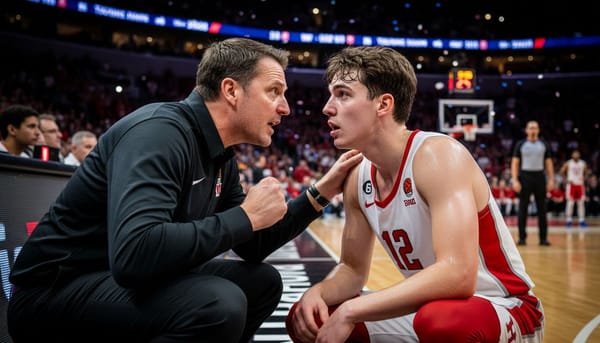
Here's where it gets really interesting. This coach recognized something was missing and went looking for help. That's not weakness. That's wisdom.
We've built CourtClok specifically for this kind of moment — when organizers and coaches realize they need better systems but don't know where to start. Sometimes the chaos isn't productive. Sometimes it's just... chaos. Games running late. Teams showing up confused about court assignments. Standings that nobody trusts because the math doesn't add up.
The question isn't whether you need structure or freedom. It's knowing which problems need systematic solutions and which ones need you to step back and let the game teach. You can't systematize player creativity, but you absolutely should systematize your schedule, your scoring, and your standings.
Traditional doesn't always mean effective. But neither does chaos for chaos's sake. The real breakthrough happens when coaches can focus their energy on actual player development instead of wrestling with administrative nightmares that modern tools already solve.
Building Something Bigger Than Basketball
What strikes us most about Oleg's story isn't just the tactical improvements or the wins his team is racking up. It's the vision.
He's not just coaching a team. He's building an academy. And that shift in thinking — from managing what's in front of you today to creating something sustainable for the future — is what separates good programs from transformational ones.
This is exactly what we see with leagues and academies using CourtClok. When you have the right systems in place, you're not constantly scrambling. You're not spending hours manually updating schedules or chasing down scores. You're freed up to focus on what actually matters: player development and building culture.
Oleg mentioned that he's looking forward to applying the Transforming Basketball methodology 100% at his academy. We love that forward-thinking mindset. It's not about immediate perfection — it's about consistent progress toward a clear vision.
And here's the thing: the methodology only works if you can actually implement it. That requires organization. Structure. The ability to track progress, manage multiple teams, and keep everyone — players, parents, coaches — on the same page.
Why We Built CourtClok for Coaches Like Oleg
We hear stories like this all the time from coaches and league organizers. They're passionate about the game. They want to implement better training methods. They dream about building something lasting.
But they're drowning in administrative work.
Scheduling conflicts. Lost score sheets. Parents asking "What time is the game?" for the hundredth time. Manual bracket updates. It's exhausting. And it steals time away from actual coaching.
That's exactly why we built CourtClok. Not just as a scoreboard app, but as a complete league management system that handles all the operational headaches so coaches can focus on coaching.
Real-time scoring that parents can follow from anywhere. Automatic standings updates. Tournament bracket management that doesn't require a spreadsheet degree. Schedule creation that actually makes sense. All in one place.
When Oleg talks about applying a new methodology at his academy, we know he'll need systems that support that vision rather than fight against it. The administrative side shouldn't be the hard part. The basketball should be what you think about.
From Norway to Your Gym
Whether you're running a youth rec league in Texas or building an academy in Norway like Oleg, the challenges are remarkably similar. How do you stay organized? How do you communicate effectively? How do you create an experience that keeps players coming back and parents engaged?
The answer isn't working harder. It's working smarter.
Oleg's partnership with Transforming Basketball is helping him revolutionize how he develops players. But development only flourishes in well-organized environments. When chaos rules, even the best coaching methods struggle to take root.
Here at CourtClok, we've built tools specifically for this challenge. We've watched leagues transform not because they suddenly got better coaches, but because they removed the friction that was preventing good coaching from happening. They stopped spending three hours a week updating brackets manually. They stopped fielding the same scheduling questions over and over.
They got their time back. And they used it to coach.
That's what excites us about stories like Oleg's journey with Transforming Basketball. It's proof that when coaches invest in better methods and better systems, incredible things happen. Teams improve faster. Players develop skills they didn't know they could master. Programs grow beyond what anyone thought possible.
So here's our challenge to you: What would you do with an extra five hours a week?