Stop Teaching Perfect Shooting Form — You're Making Your Players Worse

Here's the truth that'll make most shooting coaches furious: there is no perfect shooting form. None. Zero. And every minute you spend coaching players toward some idealized technique — standing five feet from the basket, correcting elbow angles, obsessing over hand placement — you're actually fighting against their body's natural ability to solve the problem of putting the ball in the hoop.
Look at Steph Curry, Ray Allen, Reggie Miller, and James Harden. Four of the greatest shooters in basketball history. Now watch how they shoot. Completely different. Their hand placement? Different. Elbow angles? Different. Follow-throughs? You guessed it — different. If there was one "correct" way to shoot a basketball, wouldn't at least some of these elite shooters have stumbled upon it?
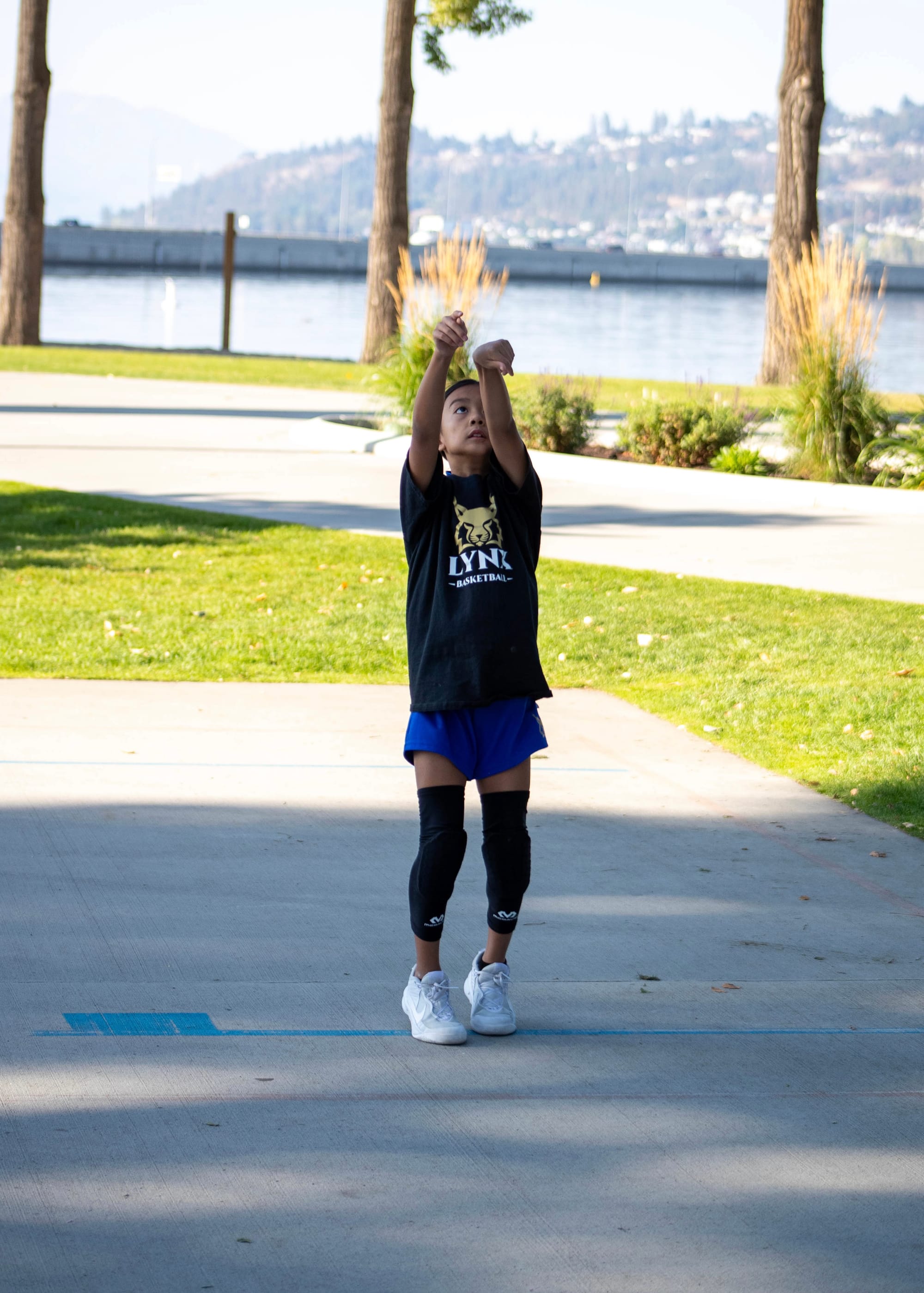
Most people get this wrong because they're operating from an outdated model of skill development. They see a successful player's technique and think "That's the template." Then they try to force every player into that mold, regardless of body type, coordination patterns, or natural movement tendencies. It's backwards. And contemporary skill acquisition research proves it.
The Myth of Optimal Technique
We need to talk about something uncomfortable: you don't know what it feels like to be inside your player's body. Neither do I. Neither does any coach, no matter how experienced.
When you look at the top ten shooters in the NBA or WNBA, you won't find a single consistent technical element that they all share. Not one. Some don't place their shooting hand directly under the center of the ball. Balance hand positioning varies wildly. Follow-throughs look completely different from player to player.
So why do we keep coaching as if there's some universal blueprint?
Because it's comfortable. It gives us something concrete to teach. It makes us feel like experts. But here's what's actually happening: when you impose specific techniques on players, you're often working against their natural self-organizational tendencies. You're disrupting the coordination patterns that their unique body — with its specific constraints, strengths, and movement capabilities — is trying to develop.
Every player will arrive at a shooting coordination that complements their body. That's not philosophy. That's biomechanics. That's motor learning. That's reality.
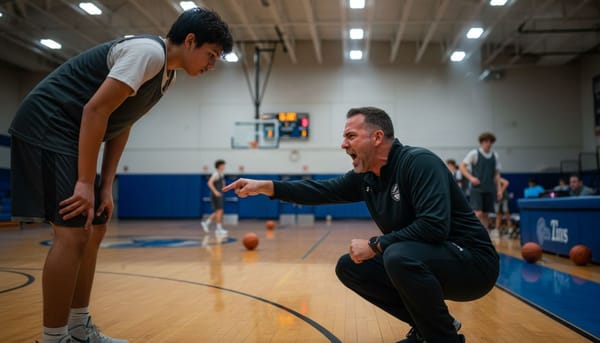
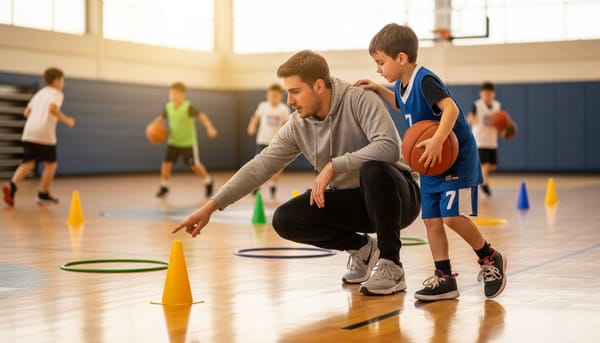
The role of a coach isn't to mold every player into a carbon copy of Ray Allen's form. It's to create environments where each player can discover and refine the coordination pattern that works for their body, in game-realistic situations.
Why Form Shooting Doesn't Work (And Never Will)
I'm going to say something controversial: form shooting has no place in modern basketball training. Not modified form shooting. Not "variable" form shooting. None of it.
Can form shooting exist within a constraints-led approach? No. Categorically, no.
Let's be specific about why, because this matters. Form shooting violates nearly every principle we know about effective skill acquisition. It's not just suboptimal — it's actively counterproductive.
First, it's not representative. Players never shoot from form shooting distance in games. Never. You're practicing a completely different biomechanical movement solution when you're five feet from the basket versus shooting an actual jump shot during gameplay. The motor pattern is fundamentally different. So what exactly are you getting better at? Shooting from distances you'll never use in competition?
Second, there's no relevant information to couple movement to. No defender. No game context. No decision-making. Players are just responding to coach instructions about elbow position and foot placement. That's not basketball. That's performance art.
Third, it forces internal focus of attention. This one's huge. The research on this is overwhelming and unambiguous: internal focus of attention is detrimental to skill performance. When players think about how their elbow looks or where their feet are positioned, they perform worse. Not a little worse — significantly worse. External focus of attention consistently produces better outcomes. But form shooting, by its very nature, demands internal focus. You're asking players to monitor and adjust body positions based on some idealized model.
Fourth, even "variable" form shooting is still form shooting. Some coaches have tried to salvage form shooting by adding variability — changing locations, distances, whatever. But here's the thing: if you're still correcting based on an idealized technical model, you're still doing form shooting. You're still imposing external templates onto individual bodies. Adding variables doesn't fix the fundamental problem.
Look, I get it. Form shooting feels productive. It gives you something to do with players. It creates the appearance of technical precision and coaching expertise. But feelings aren't facts. And the facts say form shooting doesn't transfer to game performance in the way we've been told it does.
Traditional vs. Contemporary: What Actually Works
The gap between traditional shooting instruction and contemporary skill acquisition approaches isn't just about philosophy. It's about fundamentally different assumptions about how humans learn complex motor skills.
Traditional approach? Drills and correction. Break the shot down into components. Perfect each piece. Put it back together. Repeat until "perfect." The coach is the expert who knows the right way, and players are vessels to be filled with proper technique.
Contemporary approach? Small-sided games, variability, and differential learning. Players shoot differently every time, exploring movement solutions within game-realistic constraints. The coach creates environments and practice conditions that allow shooting to develop naturally within each player's unique coordination patterns.
See the difference? It's not teaching shooting. It's facilitating shooting development.
Traditional coaching relies heavily on opinion and experience. "This is how I learned." "This worked for players I coached before." "This looks right to me." That's not nothing — experience matters. But it's insufficient. Contemporary approaches pair coaching experience with empirical research. And yes, there's actual research conducted specifically on basketball jump shots that supports these methods.
In traditional training, you see repetition seeking perfection. Minimal variability. Drills designed to eliminate errors based on how shooting "should" look. Player autonomy is minimal — the coach knows best, and players execute instructions.
In contemporary training? Repetition without repetition. The player shoots repeatedly, but never exactly the same way twice, because the constraints constantly change. Variability from day one, even with beginners. Instead of eliminating errors, you might amplify them — deliberately exaggerating a perceived problem so players can feel the contrast and self-organize toward more functional solutions.
Here's a concrete example: if you suspect a self-organizational problem is making a shooter ineffective, you don't just correct it. You might incorporate that "flaw" into differential learning tasks. Amplify the error. Let the player experience how that solution feels compared to other movement options. Through contrast and exploration, not correction and repetition, players discover what works.
Full autonomy. Not just in practice task selection, but in how players are allowed to shoot. Because shooting in games requires constant adaptation to everchanging constraints — defender positioning, fatigue, shot clock, game situation. You can't adapt what you've only practiced one way.
Why Traditional Shooting Drills Actually Limit Your Players
Here's the truth that most basketball coaches refuse to accept: those repetitive spot shooting drills you're running? They're making your players worse shooters in games.
I know that sounds crazy. But stay with me.
When you have your players standing in the corner taking 100 three-pointers with no defender, perfect spacing, and unlimited time, you're teaching them to shoot in conditions that never exist in actual games. You're training them to be robots. And robots can't adapt.
The research from Bernstein—a guy who studied this over a century ago—proves it. Expert performers don't have less variability in their movements. They have more. They've explored more movement solutions. They've opened up their "degrees of freedom," which is just a fancy way of saying they've figured out how to make their body work in multiple ways to achieve the same outcome.
Think about Steph Curry for a second. Does he shoot the same way every time? Absolutely not. Watch him closely. Sometimes he's fading. Sometimes he's rising straight up. Sometimes his release point is higher or lower depending on the closeout. He's adapted his shooting to work within constantly changing constraints.
But how did he develop that adaptability?
Not by standing in one spot doing form shooting for hours. He developed it by shooting in representative practice environments—situations that actually mirrored game conditions with defenders, movement, fatigue, and pressure.
Most coaches get this completely backwards. They think variability is the enemy. They think if a player's shot looks slightly different each time, something's wrong. But that's exactly what we want. We want players who can solve the shooting problem in multiple ways because the game demands it.
When I stopped using traditional shooting drills and started designing constraint-based shooting tasks—lots of purposeful one-on-one situations with specific shooting focuses—the results spoke for themselves. Players who couldn't shoot became legitimate three-point threats. Not in three years. In one season.
The key? They practiced shooting the way they'd actually shoot in games. With pressure. With movement. With unpredictability. Their bodies learned to self-organize and find shooting solutions across a wide range of situations instead of just one sterile, static position.
The "Freezing to Freeing" Problem Nobody Talks About
Let me paint you a picture: Shaquille O'Neal at the free-throw line.
You can see it, right? That rigid, mechanical motion. It looks uncomfortable. Forced. Like his body is fighting itself. That's what Bernstein called "frozen degrees of freedom"—when a player's movement coordination is so rigid and limited that they can't adapt or flow naturally.
And here's what nobody wants to admit: traditional shooting instruction creates more Shaq free-throw shooters.
When we obsessively focus on "proper form" and demand that every player shoots with their elbow in, feet shoulder-width apart, follow-through held for two seconds—all that prescriptive coaching—we're literally freezing their degrees of freedom. We're taking away their body's natural ability to self-organize and find fluid, functional shooting solutions.
Think about how you picked up your phone today. Did you consciously think about every joint angle? Every finger placement? No. Your body solved that problem automatically based on where the phone was, how you were sitting, what else you were doing. That's what freed degrees of freedom look like.
Now imagine if I told you there's only ONE correct way to pick up your phone. Same grip every time. Same wrist angle. Same approach. You'd probably become worse at picking up your phone, not better. It would feel mechanical and weird. That's exactly what we do to shooters.
The real question is: how do we help players move from frozen to free?
It's not complicated, but it does require letting go of control. We need to design practice tasks with natural variability built in. Tasks where the constraints are constantly changing so players have to explore different movement solutions. Different release points. Different body angles. Different timing.
This is why I emphasize purposeful one-on-one situations with a shooting focus. Yes, I use two-on-two and three-on-three as well, but if we really want to impact a player's shooting coordination, we need sufficient repetition within variable contexts. Not 100 shots from the same spot. But 100 shots from different angles, with different defensive pressure, after different movements, with different levels of fatigue.
That's how you free up the system. That's how you develop fluid, adaptive shooters who can perform when the game demands it.
Can every player become a 40%+ three-point shooter? I genuinely believe they can if we practice differently from a young age. But it requires abandoning the comfortable myth that shooting is about perfect, repeatable form. It's not. It's about adaptable, functional coordination that works across an infinite range of game situations.
And that changes everything about how we should practice.
What This Actually Looks Like in Practice
Here's the truth: most shooting drills you see in gyms right now are wasting time.
Let me show you what works. Games like one-on-one mosquito completely change how players develop their shot. The concept is simple. You've got a defender whose entire job is to be as annoying as possible. They can't block the shot, but they can push a little, wave hands in the shooter's face, clap, make noise. The shooter has to find their shot anyway.
It's chaos. It's beautiful.
Now, here's where it gets interesting. We can't only do mosquito-style activities because the shooter must have the threat of their shot being blocked. Otherwise they're responding to irrelevant information. So we add variations where the defender can contest fully, where the shooter has to create separation and release before a heavy contest arrives. You want two-on-two with two mosquitoes? Add it. Want a pick and roll component? Throw it in.
One of my absolute favorites is the shooting ladder. Same premise, but now the shooter has to complete a ladder—score a short (mid-range), a medium (three-pointer), and a long (deep NBA three)—all with defense coming from different angles. Here's what most people get wrong about this: they make every contest the same intensity. That's not the game. Sometimes it's a long closeout. Sometimes it's medium. Sometimes it's short and aggressive. Sometimes it's actually neutral and the shooter has wide-open space.
The shooter has to read and adapt to all of it.
Want to maximize time on task? Steal this constraint from Tyler Lashbrook at the Celtics: kill confirm. After the first shooter takes their shot, the coach has a second ball ready. The defender relocates and shoots their shot based on what they need for their ladder. Now the first shooter plays defense. Both players are constantly engaged. No standing around. No wasted reps.
This is how you trick players into getting better—they think they're just competing, but they're actually accumulating the varied, representative repetitions that actually transfer to games.
The Research Backs This Up (And It's Not Even Close)
Look, I'm not just making this stuff up based on vibes. There's actual research supporting everything I've been saying.
A 2016 study by Gorman and Maloney asked a simple question: does adding a defender change how a basketball shot is executed? The answer was a resounding yes. When defenders were added, researchers found faster shot execution times, longer jump times, increased ball flight time—and here's the kicker—an overall decline in shooting accuracy of over 20%.
Defended shots also showed greater movement variability, suggesting that players were actively adapting their movements to accommodate the changing demands of the environment.
This is exactly what we want.
When I introduce the Constraints-Led Approach to coaches for the first time and show them alternatives to spot shooting, you know what they immediately say? "But they're not making as many shots!" Yeah. That's the entire point. By applying representative design to practice, we're providing opportunities for players to adapt in practice instead of only in games. If we're not doing this, we're leaving player development up to chance—players only get to adapt during scrimmages or actual games.
Think about the math here. In one well-designed practice session with effectively constrained small-sided games, players could receive more adaptive opportunities than they'd get in an entire year of traditional training. The sheer volume of quality repetitions we can create in 60 minutes is staggering if we plan it right.
Building Better Shooters: The Complete Picture
So how do we actually manipulate constraints for shooting development?
I typically focus on one-on-one, one-on-one plus one, two-on-one, two-on-two, and sometimes even three-on-three with two balls (more shooters, more time on task). The key consideration is this: can we encourage players to shoot more versus driving and finishing? But—and this is critical—we don't want