The Problem Behind Punishing Players

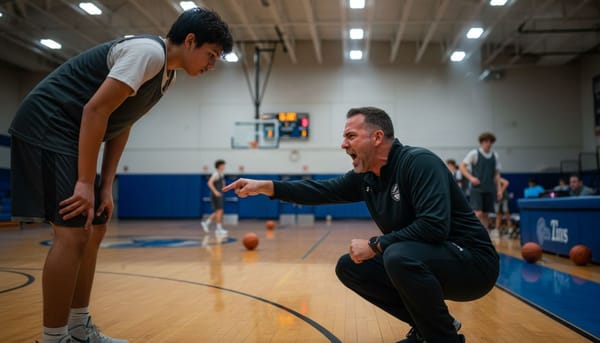
A coach blows the whistle sharply. Practice stops cold. The gym goes silent. A player who just missed a rotation gets pulled aside—again—for a lecture on effort and attention to detail. Sound familiar? We heard this pattern discussed recently and it really resonated with us, because honestly, we see the fallout from this approach constantly in leagues using CourtClok.
Here's the uncomfortable truth: Most coaches are accidentally destroying player development by treating mistakes as moral failures instead of learning opportunities. And it's costing their teams more than they realize.
The Hidden Cost of Frustration in Practice
When we stop practice to berate a player for a defensive rotation error or a missed assignment, what exactly are we accomplishing? We think we're teaching accountability. Reinforcing standards. Showing that details matter.
But what's actually happening?
The player who made the mistake shuts down mentally. Their teammates watch and learn to play it safe rather than take risks. And most critically—we've just burned 3-5 minutes of precious practice time on frustration instead of instruction.
This is exactly what we see with leagues using CourtClok to track practice efficiency. Coaches who interrupt constantly for emotional reactions average 18-22 fewer quality repetitions per hour than coaches who address mistakes systematically. That's not a small difference. Over a season, that's thousands of lost touches, reads, and decision-making opportunities.
Think about your last practice. How many times did you stop everything because a player made a mental error? Now multiply that by the number of practices in your season. The math is brutal.
Why Frustration Reveals a Transactional Mindset
Getting frustrated with players for mistakes reveals something deeper—a fundamentally transactional approach to coaching. We give players information. They're supposed to execute it. When they don't, we feel cheated. Disrespected, even.
But player development doesn't work like a transaction.
Learning is messy. It's non-linear. A player might grasp a concept intellectually but need dozens of repetitions before they can execute it under pressure. They might execute it perfectly on Tuesday and completely forget it by Thursday. That's not defiance—that's how skill acquisition actually works, especially when players struggle to retain complex information during the chaos of competition.
Here at CourtClok, we've built tools specifically for tracking player progression over time because we understand this reality. Development isn't about one perfect practice. It's about sustained improvement across weeks and months. But when coaches operate from a transactional mindset, they miss the forest for the trees.
What Players Actually Learn When We Punish Mistakes
Let's be blunt about what happens when we respond to mistakes with visible frustration, extra conditioning, or public call-outs.
Players learn to hide. They learn to play conservatively. They learn that taking initiative isn't worth the risk of getting embarrassed in front of teammates. We've inadvertently created an environment where self-preservation matters more than aggressive development.
Is that really what we want?
The irony is painful. We claim we want players who are aggressive, creative, and confident. Players who push themselves in training with game-like intensity. But then we punish exactly the kind of aggressive mistakes that come from pushing boundaries and taking risks.
We can't have it both ways. Either mistakes are part of the growth process, or we're coaching robots who execute predetermined patterns without thinking. And honestly? If you want robots, basketball probably isn't your sport.
The Problem With Traditional Consequences
We heard this discussed recently and it really resonated with us. Running extra sprints or doing push-ups doesn't help players solve the real problems they're facing. Think about it — if a player keeps losing their defensive assignment on screens, how does a lap around the gym fix that?
It doesn't.
This is exactly what we see with leagues using CourtClok. The most effective coaches aren't the ones who punish mistakes. They're the ones who address them immediately, in the moment, when the lesson actually sticks. Players need to understand what went wrong and why, not just feel the burn in their legs.
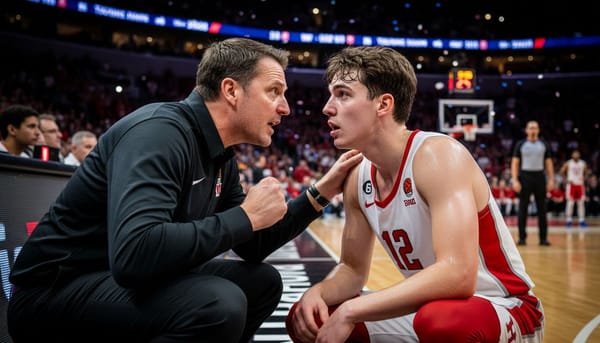
Instead of defaulting to physical punishment, smart coaches use timeouts or quick breakdown conversations to actually teach. They pull players aside right after a mistake happens. The context is fresh. The emotions are real. That's when learning happens.
Here at CourtClok, we've built tools specifically for this approach. Our timeout management features let coaches track when they're calling timeouts and why — which helps them recognize patterns in what their team struggles with most. Are you constantly calling timeouts for defensive breakdowns? Maybe that's what practice should focus on this week.
Real-Time Coaching Beats Delayed Punishment Every Time
The difference between consequence-based coaching and teaching-based coaching is timing. Physical punishment is always delayed — it happens after practice, after the game, whenever you have time. But real player development demands immediate feedback.
When a player makes a mental mistake, the absolute best moment to correct it is right then. Not tomorrow. Not at the end of practice. Now.
That's why we're so passionate about tools that support in-game coaching. Yes, CourtClok handles your scoreboard and league standings brilliantly. But it also gives coaches the space to focus on what matters — teaching players during the moments that count. You're not fumbling with paper or trying to remember who was on the court when that defensive breakdown happened. You've got clean, simple data that lets you coach.
The coaches who get this? Their players improve faster. They retain more. And honestly, they enjoy the game more because they're actually learning instead of just being punished for not knowing something yet.
The Balance Between Accountability and Creative Freedom
Here's where most coaches get it wrong. They think accountability means consequences. Punishment. Sprints for missed assignments.
But we've noticed something fascinating with leagues using CourtClok — the coaches who track the right metrics create accountability without killing creativity. They're measuring decision-making quality, not just outcomes. Did the player read the defense correctly? Did they make the high-percentage play available to them?
When you over-rely on punishments, players stop experimenting. They become robotic. Risk-averse. And honestly? That's exactly the opposite of what modern basketball demands. Player development requires freedom to fail within structure, not fear-based compliance.
Think about it: if a player gets benched every time they attempt a difficult pass that gets deflected, what will they do next time? They'll make the safe pass. The boring pass. The pass that doesn't challenge the defense or create advantages.
Real accountability looks different. It's reviewing film together and asking, "What did you see there?" It's tracking improvement over time, not perfection in the moment. It's creating an environment where players feel safe communicating what they're seeing on the court without fear of immediate punishment.
Building Systems That Support Growth
So how do you actually implement this in your league or program?
First, you need better data. Not just points and rebounds — though those matter — but situational metrics that tell the real story. At CourtClok, we've built tools specifically for this challenge. Our platform lets coaches track custom stats that matter to their system, whether that's ball reversals, paint touches, or quality shot attempts.
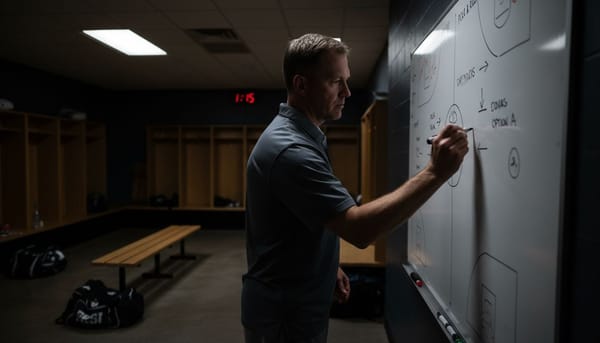
Second, you need consistent documentation. When was the last time you could pull up exactly what happened in the third quarter of a game from two weeks ago? Most coaches are operating on memory and scattered notes. That's not a system. That's hoping you remember correctly.
Third — and this is crucial — you need to make your standards visible to everyone. Players can't hit targets they can't see. When your entire team understands what constitutes a "good decision" versus a "bad decision," they can self-correct in real time. They become their own accountability partners.
The beauty of having proper league management infrastructure isn't just convenience. It's that it frees you up to focus on what actually matters: developing players who think, adapt, and grow. The coaches who embrace this shift are the ones whose players keep improving year after year.
The Path Forward
Look, we're not saying punishment never has a place. Sometimes players need clear consequences for lack of effort or violation of team standards. But when punishment becomes your primary tool for teaching? You've already lost.
The future of basketball coaching is about creating environments where players are empowered to make decisions, supported when they fail, and held accountable to clear, consistent standards. It's about using technology and systems to remove administrative burden so you can focus on what you actually love: coaching basketball.
We see it every day with the leagues and coaches using CourtClok. When you have the right infrastructure supporting your vision, everything else becomes easier. Scheduling, scoring, standings, statistics, communication — all of it just works, so you can spend your energy on player development instead of spreadsheets.
That's the kind of basketball future we're building toward. One where creativity is celebrated, accountability is clear, and coaches have the tools they need to do their jobs effectively. Because at the end of the day? Your players deserve that. And so do you.