Why Youth Spacing Assistant Coach Roles Are Getting This Fundamental Question All Wrong
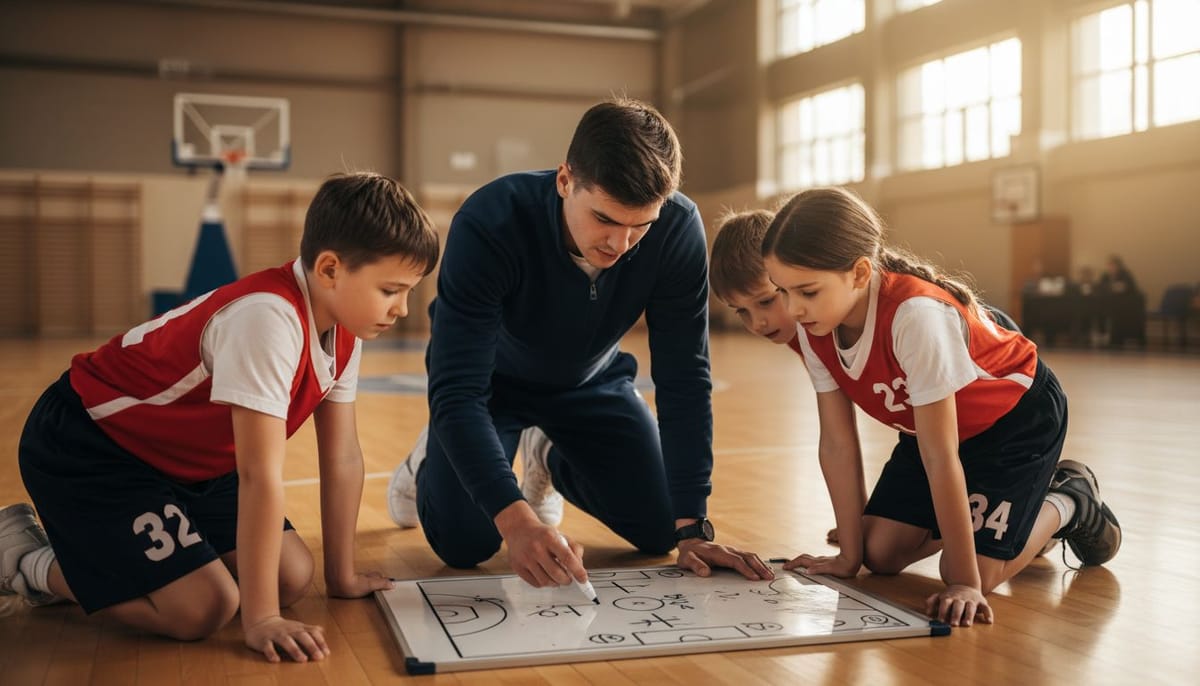
Only about 10% of youth basketball coaches played the game at a competitive level. Think about that for a second. The vast majority of people coaching third and fourth graders are volunteer parents doing their absolute best with what they know — which is usually whatever they were taught two decades ago. I stumbled across a podcast episode recently where Mark and Tyler from the SAVI basketball community were doing a mailbag episode for their 600-plus members, and one question about youth spacing assistant coach roles and player positioning genuinely stopped me in my tracks. A youth coach asked something simple: my third graders can't shoot from the three-point line, so why should they even stand there? And the answer they gave was one of the most clarifying things I've heard about youth basketball development in a long time.
The Question That Reveals Everything About How We Think About Youth Coaching
What struck me most was how Tyler framed what he called a "smart question." His definition was sharp: a smart question shows prior effort, uses language from previous learning, and arrives at a specific obstacle after genuine attempts at application. Not just "what do I do?" but "I tried this, ran into this wall, how do I get past it?"
That framing alone hit me hard. Because honestly? Most coaching questions I hear — and I've been around gyms long enough to hear a lot of them — skip that step entirely. People want the answer before they've wrestled with the problem. And there's something important in the wrestling.
The youth coach asking this question had clearly done some thinking. They understood spacing as a concept. They'd tried to implement it. They just couldn't reconcile the gap between where the system wanted players to stand and what those players could actually do physically. That's a real, legitimate tension. And it's one that I think a lot of coaches at every level quietly struggle with but never ask out loud.
This is something I think about a lot when it comes to youth development — the gap between what we know is theoretically correct and what we can actually execute with eight-year-olds who've been playing for six weeks. The instinct is to adjust the system to fit the players' current limitations. Lower the standard. Move them closer. Make it easier. I've seen coaches do this constantly, and I get it. But I'm not sure it's right.
Space Is for Passing — Not for Shooting
This is the line that I immediately wanted to write on a whiteboard somewhere: spacing is for passing, not for shooting.
When I heard this, I immediately thought about every youth game I've ever watched where five kids cluster around the ball like moths around a light. Nobody's open. Nobody can move. The defense barely has to do anything because the offense is collapsing on itself. And the coach on the sideline is yelling "spread out!" but nobody actually knows why they should or where exactly to go.
Mark's point was elegant. You don't station a third grader at the three-point line because you expect them to drain threes. You put them there so the ball can move. So a pass can happen quickly. So a driver has a lane. The shooter's location creates the geometry that makes everything else work. Remove them from that spot because they can't shoot, and you haven't solved a problem — you've created a bigger one.
I've seen this play out personally. When young players crowd the paint, ball movement slows to a crawl, driving lanes disappear, and the whole offensive system becomes a one-on-one scramble in a phone booth. The spacing isn't about the shot. It's about the pressure it puts on the defense just by existing. A defender has to account for a player at the three-point line even if that player has never made a three in their life.
What Mark called "small spacing" — having players bunch up near the key — is essentially spacing designed for passing convenience, not defensive pressure. And that trade-off is catastrophic for long-term development. There's a really interesting parallel here to how pass and cut as a default youth basketball concept can actually harm development when it's taught without the spatial awareness component baked in. Same root problem: we're optimizing for what's easy to execute right now rather than what builds the right habits.
The Real Question Hiding Beneath the Surface
Mark asked something that I think every youth coach needs to hear at least once a season: Are you trying to win a third-grade rec game, or are you trying to teach these kids how to play basketball in a way that serves them for life?
Blunt. Maybe a little uncomfortable. But completely fair.
Because the two goals produce very different decisions. If you're optimizing to win on Saturday, you move your players closer, you run plays that work within their current limitations, and you celebrate the W. If you're optimizing for long-term development, you teach them to stand where varsity players stand, pass like varsity players pass, and understand why spacing matters even before they can consistently execute it.
This connects to something I've been reading about in the constraints-led coaching world — the idea that the real breakthroughs in player development often come from adjusting the constraints of a drill rather than lowering the standard of the skill. Instead of moving the player closer, you change the game so the skill can emerge naturally. That's a completely different coaching instinct, and it takes time to build.
I don't fully agree with the idea that you can never make any tactical concessions at the youth level. There's a version of developmental idealism that loses kids entirely because the gap between where they are and where you're asking them to be is just too demoralizing. If a child can't get the ball to the rim in any reasonable way, telling them to shoot from the three-point line every possession isn't development — it's frustration. So there has to be some bridge.
But the bridge Mark pointed to was smart: redefine what a "good shot" means for that team, at that level, right now. A seven doesn't have to be a catch-and-shoot three for a third grader. It can be a catch-and-shoot mid-range shot. The principle stays intact — open shots after ball movement from good spacing — even if the specific geography shifts slightly. That feels like a real, honest answer rather than just telling coaches to ignore their players' physical reality. And it connects directly to a broader idea about how floor spacing rules can be adapted to help players internalize the concept before they've fully mastered the execution.
Letting Your Assistants Write Their Own Job Descriptions
Roughly 70% of coaching staffs never have a real conversation about roles. The head coach just assigns responsibilities and everyone falls in line. When I heard this section of the podcast, I immediately thought — how much wasted potential is sitting in assistant coaches who never got to say what they actually wanted to do?
The question came from a head coach who's genuinely lucky. Two assistants, both capable of running their own program. That's not a problem. That's a gift. But I get the struggle — having talented people around you doesn't automatically mean you know how to use them well. And the answer the podcast gave here was honestly one of the most refreshing things I've heard in a long time: just ask them.
Don't assign. Ask. Tell them to fill out their own job description and shoot for the moon.
I've seen this play out personally in coaching environments where the head coach assumed they knew what each assistant brought to the table. They were wrong half the time. One assistant quietly wanted to own the defensive system for years and never said a word because nobody asked. This is something I think about a lot when it comes to how coaches position themselves and communicate their value — it matters at every level, not just when you're chasing a head coaching job.
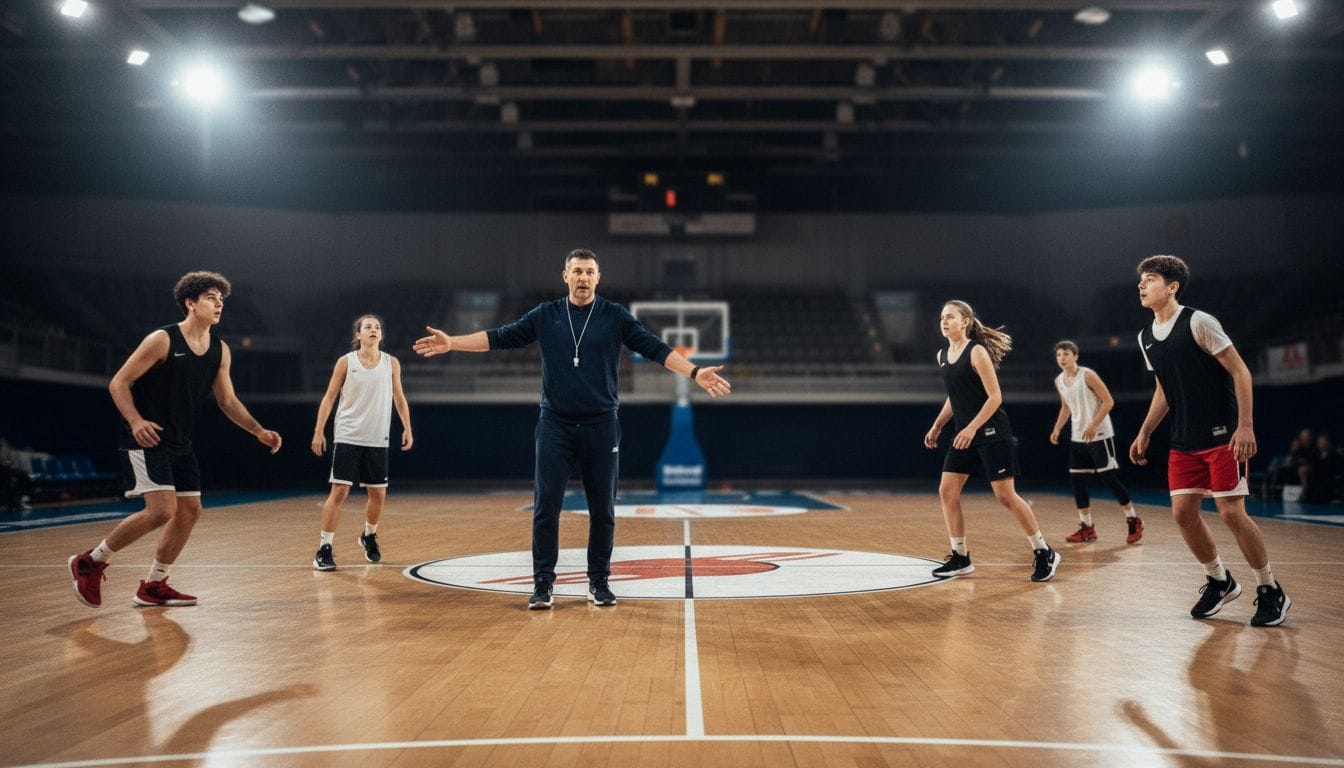
What struck me most was the specific examples from the podcast. One assistant wanted to run the scouting reports and control substitutions during games. Another said his biggest strength right now is that he's still a really good player — so put him on the scout team. That's self-awareness. That's actually rare. And a third said he'd never told anyone he wanted to be the defensive coordinator. Never. His head coach had no idea. That detail stopped me cold.
How many programs are running a watered-down defense because nobody ever had that five-minute conversation?
The framework here is dead simple. Find out where their genius lives. Give them ownership there. Let them run. You don't have to honor every request — but you start the puzzle with real pieces instead of guessing. And honestly, when assistants feel like they have actual ownership over something meaningful, the entire staff dynamic shifts. You get buy-in you can't manufacture any other way.
This connects directly to the broader idea of accepting reality rather than projecting expectations onto people — whether that's your players or your staff. You can't build around who you wish someone was. You build around who they actually are and what they genuinely want to contribute.
If You're Guarding Stagger Screens, You're Already Playing Their Game
This part of the conversation is where things got tactically sharp really fast. Someone asked how to guard stagger screens within a lock-left defensive scheme. And the answer was essentially — you don't. Because if you're actually running lock-left correctly, you shouldn't be getting to stagger screens in the first place.
That's a brilliant reframe. And it's one I don't think enough coaches sit with long enough.
The whole point of a system like lock-left is to take away the offense's ability to execute. You're not reacting to what they run — you're making them play in an environment where their actions fall apart before they develop. Stagger screens need timing. They need the ball to be patient. They need the defense to be a half-step behind. So if your on-ball pressure is forcing the ball handler to move, to hurry, to make uncomfortable decisions, the stagger never materializes cleanly. You've broken it before it starts.
The Sun Tzu reference landed hard here. If you're reacting, you've already lost. I love that framing applied to basketball defense. Most coaches spend enormous energy preparing their players to respond to specific actions — what do we do when they run this? What's our call when they set that? But the most dangerous defenses make the offense react to them. That's a completely different posture.
This is something I think about a lot when watching youth and high school teams. So much defensive prep at those levels is purely reactive. We're going to see a ball screen — here's what you do. We're going to see a DHO — here's your call. But if you've built the right principles into how your players read and respond to the game, many of those specific scenarios never reach full execution anyway.
The deeper principle here is about making the ball go. Force it. Speed it up. Disrupt the timing at the source. If the ball is uncomfortable, almost every off-ball action that requires coordination and patience falls apart. Stagger screens. Flare screens. Pin-downs. They all need time to breathe. Take away the breath.
I don't fully agree with the idea that reacting is always losing — there's situational adjustment that's smart and necessary. But at the level of defensive philosophy? At the level of what you're building your entire scheme around? Yeah, if your system forces your players to constantly identify and respond to what the offense is doing, you're handing them the initiative. You're always one step behind.
The film breakdown piece at the end of this section is something I want to come back to. The coach who sent specific possessions where the opponent was successful — not just a general game clip — that level of intentionality is what separates coaches who are genuinely trying to learn from coaches who just want validation. And the idea of what separates a truly developmental environment from one that just looks like one is exactly that kind of honest self-assessment. It's uncomfortable. It's necessary.
The Five-Question Framework That Changed How I Think About Defensive Preparation
Here's something I wasn't expecting from this conversation: a complete dismantling of how most coaches approach scouting. Tyler walks through this five-question process live, using Mark as the role-play subject, and honestly — it's one of the most clarifying frameworks I've heard for defensive game planning. The first question alone is devastating in the best way. Why do you care about guarding stagger screens? That's it. That's the whole thing. And when I heard this, I immediately thought about every defensive prep session I've ever seen where coaches spend forty-five minutes detailing how to fight through a screen action that might show up six times in a game — maybe. The question forces you to check your assumptions before you've even drawn up a single drill.
The math check in question two is equally sharp. Tyler breaks it down into two steps. First, what percentage of possessions does this action actually appear? If it's under ten percent, he's telling you to forget it entirely. That's bold. Most coaches would never say that out loud. But he's right — we have limited practice time, and every minute spent on a rare action is a minute stolen from what actually breaks you down in real games. Second step: even if it's showing up, is it actually hurting you? Those are two completely different things. A team can run stagger screens on a quarter of their possessions and still not be creating any real advantages from them. Perception isn't data. I've seen this play out personally — coaches building entire defensive schemes around actions that, when you actually pull the film, weren't the reason they were losing at all.
What struck me most was Mark's reflection on his own journey with disruptive defense. He described a progression that felt completely honest: years where he was preparing for opponent actions that never came, because when he was truly running his system right, opponents couldn't run their stuff anyway. He said something I've been thinking about ever since — when the game feels like practice, you have a huge advantage. That's not a motivational poster line. That's a real coaching philosophy. If your team has spent more time on the situations that actually emerge from pressure than your opponent has spent running their set actions, you've already won the preparation battle before tip-off. It connects directly to everything discussed around accepting reality rather than projecting expectations onto how the game will unfold.
Going All In — Why Half-Measures Are the Real Problem With Lock Left
This section of the conversation hit harder than I expected. Tyler gets a question from a coach who's running Lock Left but getting broken down late in possessions. His diagnosis is immediate: you're letting the team run offense. You're not dictating terms on every single possession. And that word — dictating — is doing a lot of work here. The whole philosophy of a disruptive defense is that you are never passive. You're attacking with the ball and without it. The moment you ease off that pressure, even slightly, you've essentially handed the opponent permission to run their system. And their system, by definition, has been rehearsed more than your team has rehearsed handling what you're trying to create.
I don't fully agree with the idea that this is simple to execute, because going "all in" on a system like this demands a level of collective buy-in that's genuinely hard to build — especially at youth levels where the habits players already carry into the gym can directly undercut disruptive defensive principles. But the underlying point is correct. A disruptive defense run at seventy percent effort isn't a disruptive defense. It's just confused defense. You either make the ball go, snipe passes, and force small advantages — or you're just running around the court wearing out your own players for no real gain. There's no middle ground that works.
Tyler frames this as a mindset shift, and I think that's exactly right. A coach asking "how do I guard stagger screens?" inside a disruptive system is still thinking traditionally. The better question is: how do I make stagger screens irrelevant? That question opens up a completely different set of answers. It's the same reframe that coaches working through constraints-led approaches often describe — that moment when you stop asking how to defend specific actions and start asking how to control the environment so those actions never fully materialize. I've heard coaches describe that shift as the single biggest unlock in their career. After listening to this episode, I believe them.
The conversation also makes me think about how these ideas ripple down to developing the whole player — because a system that demands constant decision-making, constant alertness, and constant aggression without the ball is actually an extraordinary developmental environment. Players who grow up in that kind of system aren't just better defenders. They're more basketball-intelligent humans. And honestly, that's the whole point. Defense isn't a tactic. It's a culture. And if this episode taught me anything, it's that the coaches who treat it that way — including those stepping into youth spacing assistant coach roles for the first time — are the ones building something that actually lasts.