Why a Strength Coach's Daughter Changed the Way He Trains Young Basketball Players
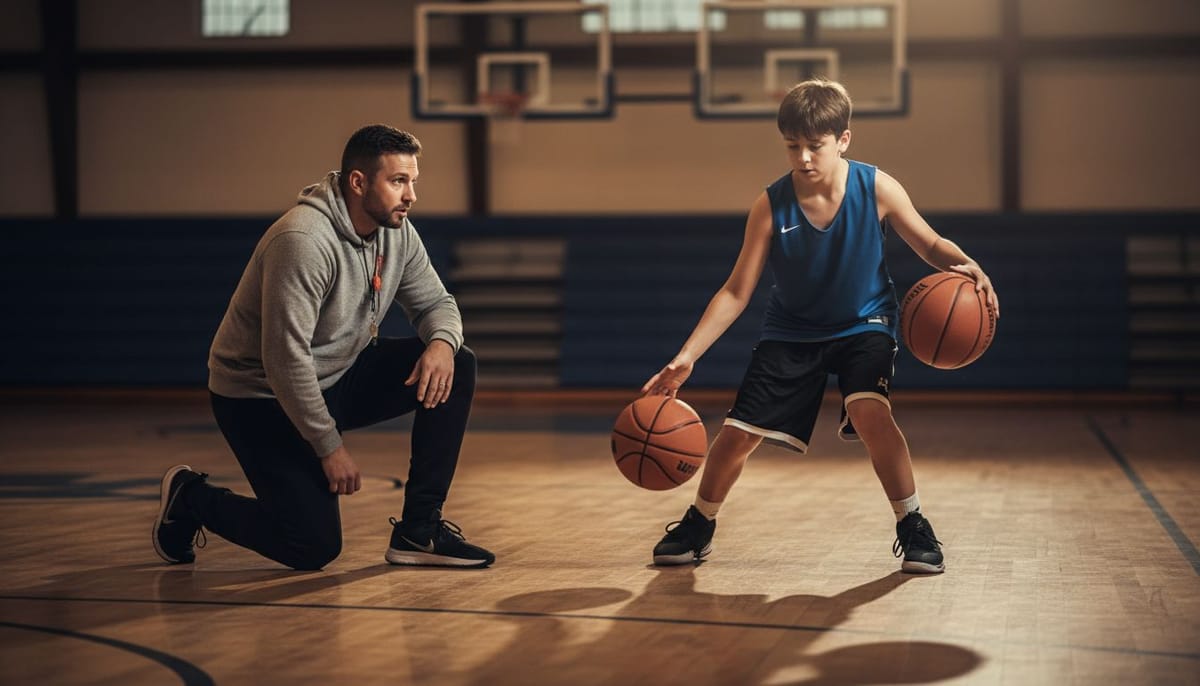
Most strength and conditioning coaches have a moment — a specific turning point where everything they thought they knew gets quietly dismantled. For Jamie, that moment wasn't a seminar, a certification, or a conversation with a mentor. It was watching his daughter figure out how to move through the world. That's what started all of this. And honestly? When I heard that, I immediately thought — of course. Of course that's how it happens. The most profound coaching realizations rarely come from a textbook.
I've been sitting with this podcast episode for a few days now, turning certain ideas over in my head. Jamie comes from what he describes as a "relatively traditional" strength and conditioning background. Sets, reps, barbell technique, 12-week planned progressions, micro and macro cycles. The whole architecture. And then fatherhood happened, and the whole thing cracked open. What followed was nearly nine years of evolution — and listening to him describe it, I found myself nodding along, occasionally pushing back in my head, and more than once just thinking: this is a bigger idea than basketball.
What a Baby Actually Teaches You About Movement
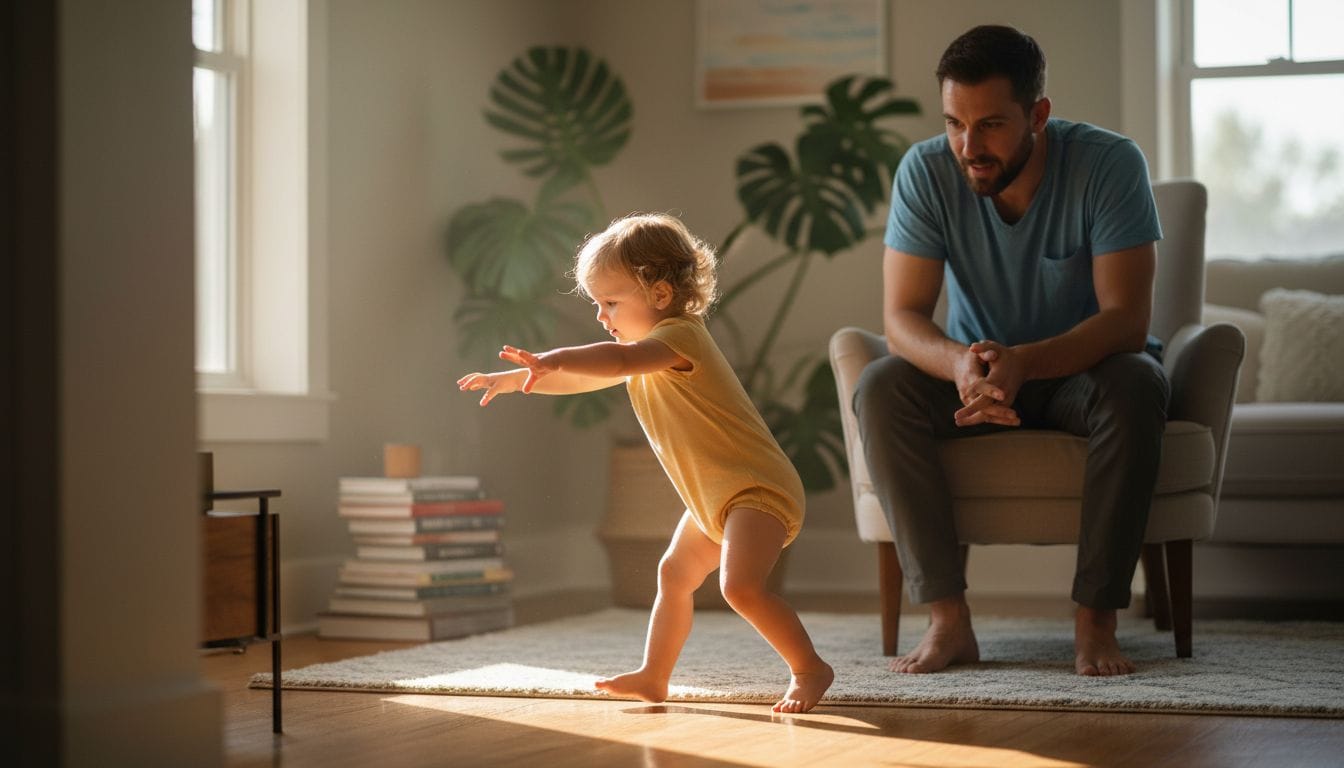
Here's the thing Jamie kept circling back to: he wasn't watching his daughter learn movement through instruction. She wasn't being told how to stand, how to balance, how to reach for things. She was just doing it. Failing, adjusting, exploring. And something clicked for him — this is actually how motor learning works at its most honest level.
When I heard this, I immediately thought about how different that is from the typical youth training environment. You walk into a lot of youth S&C programs and there's an answer for everything. This is the correct squat position. This is the technique. Do it again. Do it right. And Jamie's saying — wait, where did we get the idea that's the best way to develop movement in a 10-year-old going through puberty?
His word for puberty was "chaos." Internally, externally, physically, emotionally, socially, psychologically. Just chaos everywhere. And I think he's completely right about that. So why on earth would you try to impose a rigid, pre-planned technical model on a body that's literally changing week to week? It doesn't make sense when you say it out loud. But that's what a lot of programs do.
This connects to something I find fascinating in the broader coaching conversation — the idea that the environment we design matters more than the instructions we give. If you want to go deeper on that framework, the ecological learning approach in basketball coaching lays out exactly why this philosophy is gaining so much traction across multiple sports, not just S&C.
Safe Uncertainty — The Concept That Stopped Me Mid-Listen
Jamie used a phrase I hadn't heard before: safe uncertainty. And I had to sit with that one.
He's describing a training environment where kids know they're not going to be punished for making mistakes — but they genuinely don't know what's coming next. It's not scripted. It's not "here are the three drills we're doing today in this order." It's exploratory. It's designed unpredictability within a safe container. And he says that's basically the opposite of what traditional S&C culture teaches coaches to build.
I've seen this play out personally. When there are real consequences — social, emotional, physical — attached to failure in training, kids stop trying things. They default to what they know works. They stop experimenting. And ironically, that makes them worse athletes in the long run, because they never develop the capacity to problem-solve in real time. That's not just a strength and conditioning problem. That's showing up in skill development too, and it's part of why punishing players is increasingly being questioned as a coaching tool across all areas of the game.
Jamie's day one speech to new athletes is something I genuinely loved. He tells them straight up: I want you to fail. I want you to make mistakes. And he frames it as a choice — they can interpret those mistakes as something threatening, or as evidence that they're actually learning. That's not soft. That's actually a really sophisticated psychological environment to create with young athletes. It takes intention. Most coaches don't think that carefully about it.
The Four Factors He Says Change Everything
By the time Jamie finished laying out his philosophy, he landed on four core ideas that he believes are the real game changers — especially with youth athletes, but honestly applicable at any level:
- Autonomy — letting athletes make real choices in training, not just executing instructions
- Exploration — designing situations where discovery is the point, not performance of a known skill
- Safe uncertainty — creating environments where failure is expected, welcomed, and learned from
- Enjoyment — building training that actually feels like something worth doing
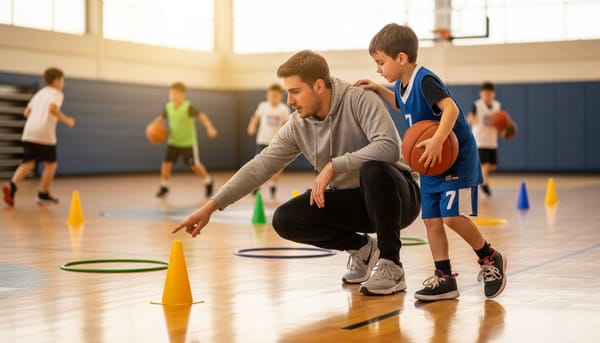
This is something I think about a lot. How much of traditional youth athletic training is actually enjoyable? Not tolerated. Not endured. Actually fun. Jamie talks about bringing in small-sided games — stuff that looks like what kids would invent in a backyard, running home from the bus. And yes, to an outside observer it might look random. But he's very clear: the design process behind those games is intentional. There's a lot of thought going into what constraints are present, what decisions players are being forced to make, what movement patterns emerge organically.
This connects directly to what the best coaches I've seen are doing. The ones who understand basketball athletic performance — the full picture of strength, conditioning, and movement training — aren't just programming lifts. They're designing experiences. There's a difference, and Jamie lives in that difference.
The enjoyment piece is the one I don't think gets talked about enough at the youth level specifically. Jamie's working with athletes as young as six. Six. You are not going to get a six-year-old to buy into your pre-planned 12-week progressive overload model. It's not happening. And if you try to force it, you might get compliance — but you're not getting development. You're not getting the kind of intrinsic motivation that turns a kid into a lifelong athlete. You're just getting a kid who does what they're told until they quit the sport at 14.
Rethinking the Warmup Entirely
Toward the end of this section of the conversation, Jamie started talking about warmups — and this is where I could feel the traditional S&C crowd getting uncomfortable. He said something pretty direct: we need to rethink how we approach the warmup completely.
The conventional model is familiar to anyone who's been through organized sports. Foam rolling. Static stretching. Gradually heating the tissues. It's methodical, it's linear, and Jamie's honest about it — it's boring. He's been in programs where the warmup takes 30 minutes. Thirty minutes. Of a practice that might only be 90 minutes total. And his point is: we're wasting that time on something that isn't actually preparing athletes the way we think it is.
I don't fully agree that the traditional warmup is completely without value — there are physiological reasons some of those components exist. But I do think the rigidity is the problem. The idea that it has to be the same thing, in the same order, every single time. That's where you lose athletes mentally before the actual work even starts. And if you're losing them mentally in the first 20 minutes, you're fighting an uphill battle for the rest of the session. The NCAA head coaches questioning traditional drill structures are pushing back on exactly this kind of institutional inertia — the idea that we do things because we've always done them, not because we have real evidence they work.
Jamie's evolution here started with one change to the warmup. Just one. And then it kept evolving over nine years until what he does now looks almost nothing like where he started. That's actually the part of this conversation I want to dig into more as we go further into the episode.
The Warm-Up Is Not What You Think It Is
Most coaches treat the warm-up like a chore. Get the heart rate up, loosen the hips, run a few lines, done. I used to think the same way. But when I heard this coach break down his "pre-training process," I immediately thought — how many sessions have I wasted in those first 15 minutes?
His point is simple but kind of devastating once it lands: the kid walking through your door is not a blank slate. They've got stress. They had a bad day at school. They fought with a friend. They're exhausted. None of that disappears the second they step inside your gym. And if you're running the same rigid warm-up routine regardless of who shows up and how they show up — you're missing the whole point.
What struck me most was how intentional he is just in those first moments of greeting. Is the kid smiling? Are they quiet? Are they dragging? That read completely shapes what the next 15 minutes look like. That's not soft coaching. That's actually smart coaching. It's the difference between a session that clicks and one where you spend the whole time fighting the energy in the room.
He talks about four pillars — physical, psychological, emotional, and social — and how they're all interconnected. You can't warm up the body without warming up the mind. I've seen this play out personally with younger players especially. You run them through robotic high knees and line drills, and they're physically present but mentally somewhere else entirely. The session goes nowhere. But when you start with something engaging, something that demands their attention and gets them actually in the room? The whole thing shifts.
This connects directly to what the ecological learning approach in basketball coaching keeps coming back to — the environment you create shapes the behavior you get. The warm-up isn't separate from the session. It is the session, just earlier.
And his pushback on the "heat up the tissues" crowd? Brutal but fair. He basically asks — how many of these youth athletes are actually moving fast enough, or loading their bodies hard enough, to genuinely injure themselves without a 12-minute static stretch routine? Most aren't. The ritual exists because it's always existed. That's path dependency, not science.
Strength Training Was Never Just Barbells
This is something I think about a lot. The fitness world has this weird gatekeeping thing where unless you're squatting heavy and deadlifting heavy, you're not really training. I get it — I understand the culture. Barbells work. They've always worked. But this coach basically admitted that he spent years hammering team sport athletes with powerlifting templates because that's who he was. He was a powerlifter. That was his identity.
Letting go of that? He said it was genuinely hard. His whole brand was literally called "the U of Strength." Walking back from "we squat, we bench, we deadlift — no ifs, ands, or buts" takes real intellectual honesty. Most people don't do it. They double down instead.
The reframe he landed on is elegant though. Stop thinking about strength training. Start thinking about force development. Force acceptance. Force transmission. Force production. Force expression. Once you open the lens that wide, the tools available to you become almost unlimited. A jump landing is force development. A reactive drill is force development. A constraint-based 1v1 situation where a player has to absorb contact and stay balanced — that's force development too. This is why an understanding of basketball athletic performance through strength, conditioning, and movement training matters so much for anyone serious about developing players — because the old siloed thinking just doesn't hold up anymore.
I don't fully agree that traditional barbell work is irrelevant for basketball players — I still think there's real value in teaching athletes to produce force from the ground up through a squat pattern. But the obsession with it as the only valid path? Yeah, that's a problem. Especially at the youth level, where variability and exposure to different movement demands probably matters way more than hitting a personal record on a back squat.
The deeper issue he's pointing at is this reductionist approach where coaches and trainers strip everything down to one method, one system, one right answer. It's comfortable. It's easy to sell. But it's not how athletic development actually works — and honestly, it's not how traditional drills like cone work get exposed either once you start asking harder questions about what actually transfers to the game.
What Basketball Coaches Should Actually Ask Their Strength Staff
This part of the conversation is where it got really practical. And honestly, I wish more coaches thought about this — because the relationship between a basketball coach and a strength coach is either a huge asset or a complete disconnect, and it almost never gets talked about.
His answer was disarmingly simple: invite them to practice. Just have them come watch. See what they notice. Are they asking questions? Are they identifying problems? Are they curious about what you're building on the court — or are they mentally already drafting the next week's lifting program with zero context about what just happened in practice?
That curiosity piece is everything. A strength coach who sits in the bleachers during practice and just observes — quietly taking notes, noticing movement patterns, seeing who's limping, seeing who's tentative — that's someone worth keeping around. That's someone who's going to design sessions that actually serve the team. If they show up, go through the motions, and leave early? That tells you something too.
It also made me think about the coaching interview process more broadly. The questions you ask — and the questions someone else asks back — reveal philosophy fast. If you're evaluating a strength coach and they can't explain what they'd look for watching a basketball practice, that's a red flag. The best coaches I've seen, at every level, understand that getting hired and building real relationships starts with genuine curiosity about the environment you're walking into. Same goes for any specialist joining a staff.
The other thing I'd add — and this wasn't directly said in the conversation but I kept thinking it — is that the best strength coaches for basketball probably think a lot like good basketball coaches. They care about decision-making under fatigue. They care about how a player moves when they're tired and pressured and being guarded. They care about the four walls of a gym as a dynamic environment, not a controlled lab. When both sides of a staff share that mindset, something real can happen.
The Strength Coach Who Crosses the Bridge
Most strength coaches are comfortable in one place. The weight room. That's their domain, their identity. You ask them to step onto the court and watch a practice? Suddenly they shrink. I've seen this play out personally — the person who commands a room full of barbells and athletes can look completely lost the moment the environment changes. And honestly? That gap is one of the most underrated problems in athlete development.
What struck me most was the "bridge" analogy used here. Strength and conditioning on one side. Sport coaches on the other. Everyone stays in their lane, protects their turf, and the athlete ends up being the one who loses. The idea isn't just to meet in the middle — it's to actually cross to the other side. To understand the sport deeply enough that your work starts to blend with what's happening on the court. That's a completely different standard than what most performance facilities are held to.
When I heard this, I immediately thought about how rare it is to find an S&C coach who can actually watch a basketball practice and ask intelligent questions about it. Not just "what muscles are they using" but genuinely understanding the decisions, the spacing, the pace — all of it. That's the difference between a coach who produces athletes who test well and one who produces athletes who play well. There's a massive gap between those two things. If you're thinking about basketball athletic performance through the lens of strength, conditioning, and movement training, you already understand that physical preparation only counts when it connects to what the sport actually demands.
The word "stickiness" stuck with me too. Not transfer. Stickiness. I like that better. Transfer sounds clinical, almost passive — like something that either happens or doesn't. Stickiness implies intention. It implies you designed the work to stick to the sport. That's a coaching philosophy, not just a training method.
One Sport, One Tool — And Why That's Failing a Generation
Here's the part of this conversation that I genuinely couldn't stop thinking about. Kids today are coming into training with one tool. One. They've played basketball year-round since they were nine, they've been told that's what it takes to get exposure and improve, and now they can do one thing competently — and almost everything else feels foreign to them.
That's not athleticism. That's optimization for a very narrow task. And the cost is enormous.
I don't fully agree with the culture that created this, obviously, but I understand why it happened. Club programs, showcases, early recruiting — the pressure is real. Parents and players feel like if you're not specializing, you're falling behind. But what does falling behind actually mean if you arrive at 16 with a limited physical vocabulary and no ability to adapt when the environment changes? That's not ahead. That's fragile.
The social piece hit me just as hard. The idea that kids are struggling to communicate, coordinate, and collaborate with athletes from different backgrounds — in a team sport — is genuinely concerning. And it's not just a soft skills problem. It's a performance problem. Think about how decision-making in basketball is deeply tied to reading your teammates, anticipating movement, and trusting what you see. If your social awareness is underdeveloped, your basketball IQ suffers whether you realize it or not.
The small group model — four to six athletes — makes so much sense in this context. It's not just more manageable. It forces interaction. It creates friction between different movers, different personalities, different levels of comfort. Put a fluid, confident athlete next to a less coordinated one in a 2v2 game and watch what happens. The coordination breaks down. Communication disappears. And that's not failure — that's exactly the environment where real development can happen, if someone is paying attention to it.
This connects directly to ideas I've been thinking about a lot lately around the ecological approach to learning in basketball — the idea that the environment itself teaches, that constraints and social dynamics are development tools just as much as any drill. Watching kids navigate discomfort together isn't wasted time. It might be the most productive thing in the gym.
And that's what I took from all of this. The best coaches — whether they're on the court or in the weight room — are the ones who are willing to get uncomfortable themselves. The strength coach who walks onto the court. The basketball coach who rethinks early specialization. The trainer who uses a 2v2 game to develop both movement and social awareness at the same time. Sometimes one shift in how you approach training is all it takes to change the trajectory of every athlete you work with. The bridge metaphor works because it requires movement. You can't develop players from a fixed position. You have to actually walk toward something different.