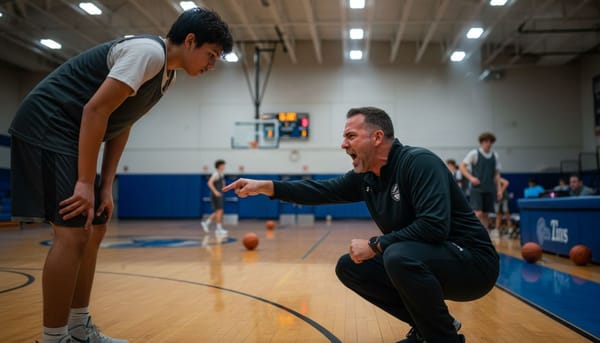
NCAA Head Coach on why players should STOP doing cone drills❌
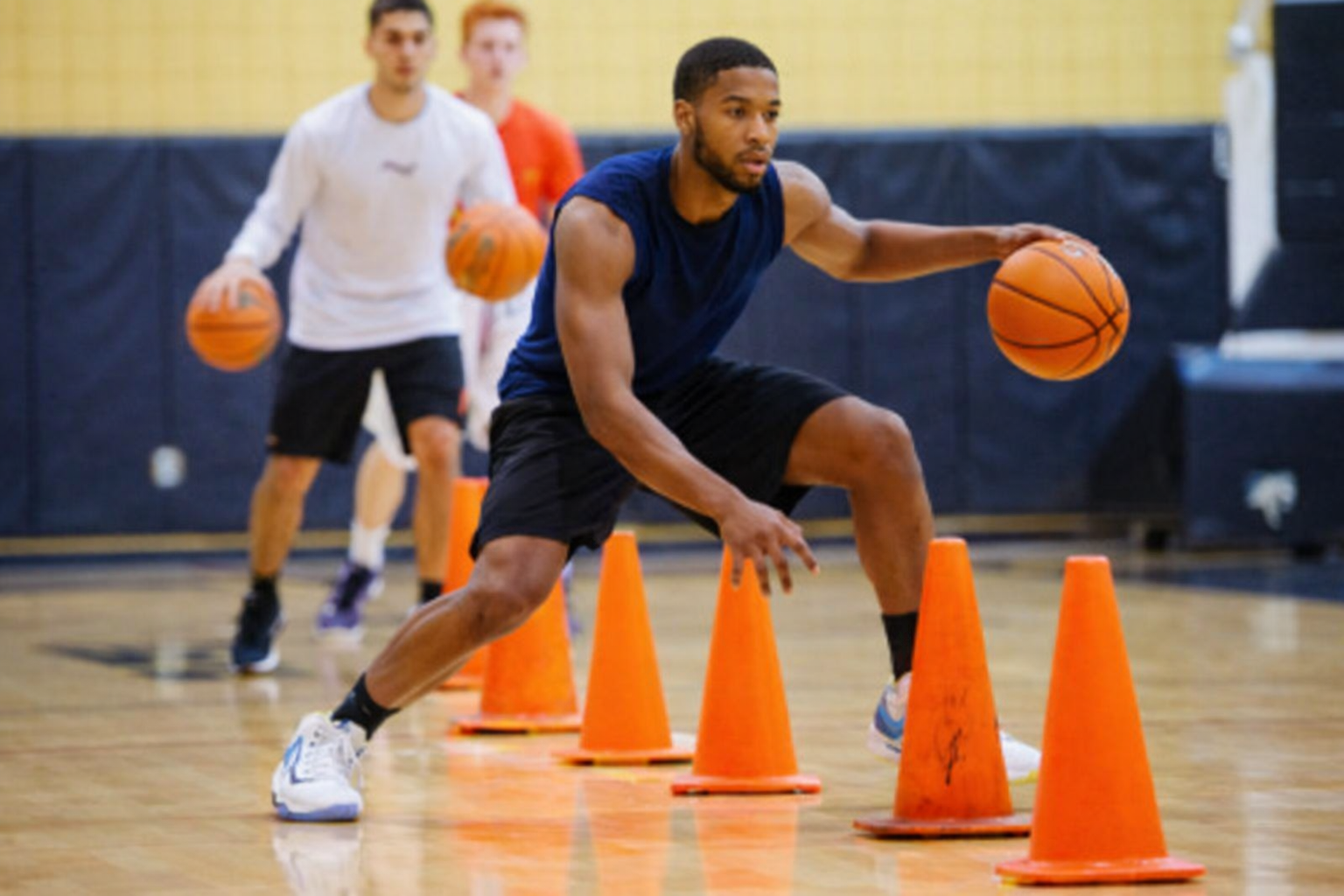
Here's something that's going to make a lot of skills trainers uncomfortable: to be a better basketball player, you have to play basketball. Not just drill basketball. Not just perfect your form in isolation. Actual basketball.
We heard this discussed recently and it really resonated with us because it cuts right to the heart of a debate we see playing out in gyms across the country. Don't get us wrong—skills work matters. Players absolutely need to work on their shooting. They need to develop their ball handling. But that's not where the problem lies.
The problem is what happens when we substitute controlled, perfect-condition drills for the chaos of real competition. When we prioritize technique over timing. When we create players who look phenomenal in warm-ups but freeze when the game gets physical and unpredictable.
The Drill-to-Game Transfer Problem
A kid shows up with beautiful form. Their footwork in station drills is textbook. Their release is smooth when no one's guarding them. Then the game starts, and something breaks down.
Why?
Because basketball isn't played in perfect conditions. It's played with a defender's hand in your face. With fatigue setting in during the fourth quarter. With the shot clock winding down and your team needing a bucket. With physical contact that throws off your carefully rehearsed mechanics.
The skills trainers who focus exclusively on form—they're not wrong about the fundamentals. But they're often solving the wrong problem. Most young players don't struggle because they don't know how to shoot. They struggle because they can't execute under pressure. They haven't developed the decision-making that comes only from live competition.
This is exactly why we see coaches increasingly building their practice plans around competitive situations rather than endless repetition of isolated skills. Modern basketball demands a new approach that prioritizes context over perfection.
What Playing Basketball Actually Means
Let's be specific about what "playing basketball" really entails. We're not just talking about showing up for your weekly game and hoping improvement happens through osmosis.
Playing basketball means:
- Making reads in real time against live defenders
- Adjusting your shot when contact comes
- Learning spacing through consequences, not diagrams
- Developing court awareness that only comes from chaos
- Building the conditioning that mirrors actual game demands
- Experiencing failure in situations that matter
That last one? It's huge. Failure in a controlled drill doesn't teach the same lessons as failure in a competitive moment. Missing a shot with no defender teaches you almost nothing. Missing a shot when you're tired, contested, and your team needed that basket? That teaches you everything.
The Balance Between Skills Work and Competition
Now, before skills trainers start flooding our inbox with angry emails, let's be clear about something. This isn't an either-or situation. Nobody's saying to abandon skills work entirely.
The issue is proportion and priority.
A player working on their jumper for hours in an empty gym? That has value. But if that same player isn't getting regular game reps where they have to execute that jumper against pressure, they're building a skill they can't actually use. It's like learning to swim on dry land. The mechanics matter, but eventually you have to get in the water.
The most effective development programs we see balance both. They use skills work to introduce and refine techniques. Then they immediately put players in competitive games and drills where they have to apply those techniques under duress.
This is where a lot of traditional training breaks down. A trainer might spend 45 minutes perfecting a player's shooting form, then spend five minutes on a competitive shooting game at the end. That ratio is backwards. The form work should be the setup. The competitive application should be the main event.
The Cone Generation Problem
We heard this point made recently and honestly, it stopped us in our tracks. The "cone generation."
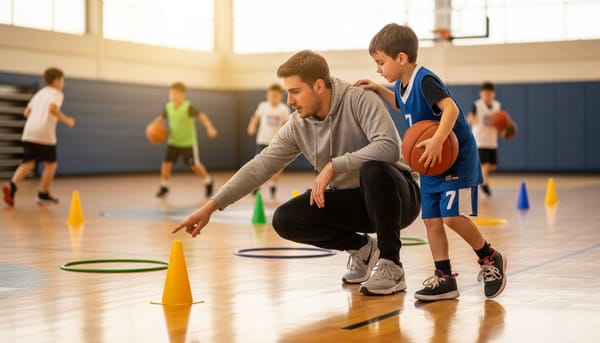
Think about it. How much of youth basketball practice is kids running around plastic cones in patterns they'll never see in an actual game? We're not saying drills have zero value — but when that's the foundation of your program, you're building players who can navigate obstacles that don't fight back.
Real defense doesn't stand still. It reacts. It closes gaps. It makes you uncomfortable.
Teams that prioritize live play over cone drills just move differently. Their players make decisions faster because they've made those decisions hundreds of times before — under pressure, with consequences.
Let Them Get Their Head Knocked Off (Safely)
That phrase might make some parents nervous, but hear us out. Nobody's advocating for dangerous play. What we're talking about is contact. Real, physical, game-speed basketball where players struggle with aggressive contact and learn to handle it.
When a player drives into the gap and sees the help defender rotating over — that's the moment. That split second where they have to decide: finish through contact, kick out, or pull back? You can't simulate that decision around cones. You can't diagram it on a whiteboard and expect it to translate.
The decision-making muscle only develops through repetition in live situations. We see league organizers using CourtClok who've completely restructured their practice philosophy around this idea. Less standing around. More scrimmaging. More small-sided games where every player touches the ball and has to make reads.
Does it get messy? Absolutely. Will players make mistakes? Constantly. But that's exactly the point — modern basketball demands a new approach that embraces the chaos of real game situations.
Building Decision-Makers, Not Drill Executors
This is where the rubber meets the road for player development. Are you building kids who can execute a predetermined pattern perfectly? Or are you building basketball players who can read, react, and adapt?
The latter takes longer. It's harder to measure. Parents might not understand why practice looks like "just playing" instead of organized drills. But the results speak for themselves when game time comes.
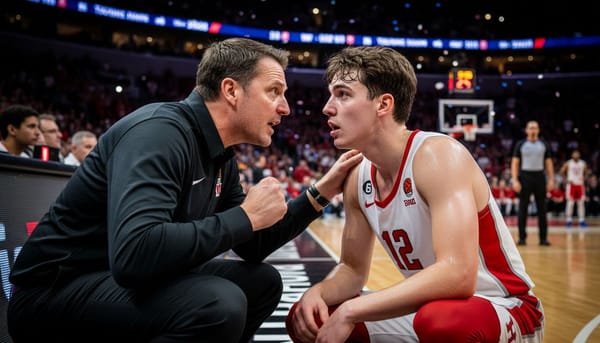
We've built CourtClok specifically to help leagues and coaches focus more energy on what matters — actually playing basketball. Our scoreboard handles the administrative headaches, the scheduling conflicts, the stat tracking that used to eat up hours of volunteer time. That frees up coaches to do what they should be doing: putting players in competitive situations where coaches can listen to players during timeouts and help them process what they're experiencing.
Because that's real coaching. Not setting up cones in a perfect triangle.
When Does the Defense Actually Show Up?
Here's the thing that really hit us: you can't simulate pressure in a sterile environment. When a defender is overplaying the wing and completely denying the catch, when someone's right up in your face as you're trying to initiate offense — that's not something you can replicate in a zero-on-one drill.
We heard this frustration and it mirrors what coaches tell us all the time. They run beautiful offensive sets in practice. Everyone knows their spots. The spacing is perfect. Then game time hits and everything falls apart.
Why?
Because practice didn't include the chaos. The pressure. The decision-making under duress that modern basketball demands.
This is exactly why we've designed CourtClok to handle scrimmages and game-speed scenarios just as easily as it tracks official league games. We want coaches to blur the line between practice and competition. Run scored scrimmages. Track stats in controlled chaos situations. Let players experience real defensive pressure while you're still in teaching mode.
The "black court" question is brilliant. At what point do we bring defenders into the equation? Not at the end of skill development — right in the middle of it. Maybe even at the beginning. Because players who struggle with contact and pressure aren't going to fix it by doing more reps without defenders.
Putting It All Together
Look, we're not saying throw out skill work entirely. We're saying integrate it into game-realistic situations faster. Much faster.
And here's what's interesting: when you approach player development this way, something shifts. Players stop waiting to be told what to do. They start reading the game. They develop instincts. They learn that basketball is a conversation, not a script.
The game has evolved. Training should evolve with it. That means less time in lines, more time in game-speed situations. Less perfect form, more functional adaptation. Less coach-directed choreography, more player-led problem-solving.
Because at the end of the day, that's what this whole conversation is about. Not philosophical debates about training methodology. But actual results on the court. Players who can handle pressure, make reads, and compete at the highest level they're capable of. That's the goal. That's always been the goal. And it's time our training methods caught up with our ambitions.