Effective Youth Basketball Coaching Strategies I Picked Up From This Raw, Unfiltered Coaching Conversation
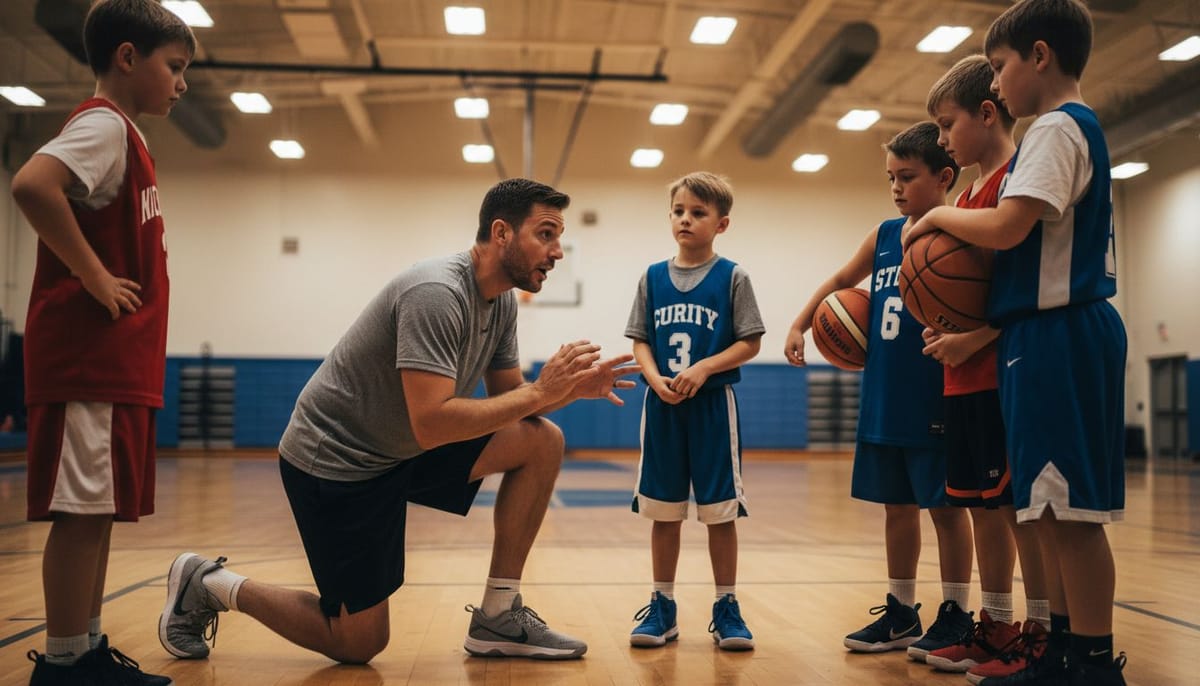
Roughly 70% of kids quit organized sports by age 13. Not because they stop loving the game — but because the experience stops feeling worth it. That stat hit me hard the first time I came across it, and it came rushing back when I sat down with this podcast episode. The whole conversation orbited around something deeper than X's and O's. It was about what actually sticks with players — and what coaches can do to make the environment itself transformational. If you're looking for effective youth basketball coaching strategies that go beyond drills and playbooks, this episode is the kind of thing you'll want to listen to twice. I did.
The Small Moments Are the Ones Players Actually Remember
The podcast opened in this wonderfully unscripted way — the hosts were riffing about catchphrases, family traditions, American Idol, and banging on the doors of a pizza spot at 11:50 on a Sunday. It sounds totally off-topic. But then one of them made a connection that I genuinely wasn't expecting.
He said — and I'm paraphrasing — that as coaches, we tend to think the big moment is winning the championship. Parents think the big moment is the expensive trip or the lavish party. But what you actually remember? It's the weird, repeated, slightly chaotic little things. Banging on that pizza door. That's the anchor.
When I heard this, I immediately thought about my own experience watching teams operate. The players who look back on a season with genuine warmth — it's almost never because they won a trophy. It's the pregame ritual. The inside joke that developed during film sessions. The road trip where the bus broke down. These are the things that forge real team identity.
One of the coaches on the episode talked about a parent practice — where the players actually run the parents through a simulated version of their training. I love this idea so much it's almost annoying. It inverts the usual power dynamic. It gives players ownership. And it gives parents a visceral understanding of what their kids go through — which, honestly, does wonders for buy-in and trust between families and coaching staff.
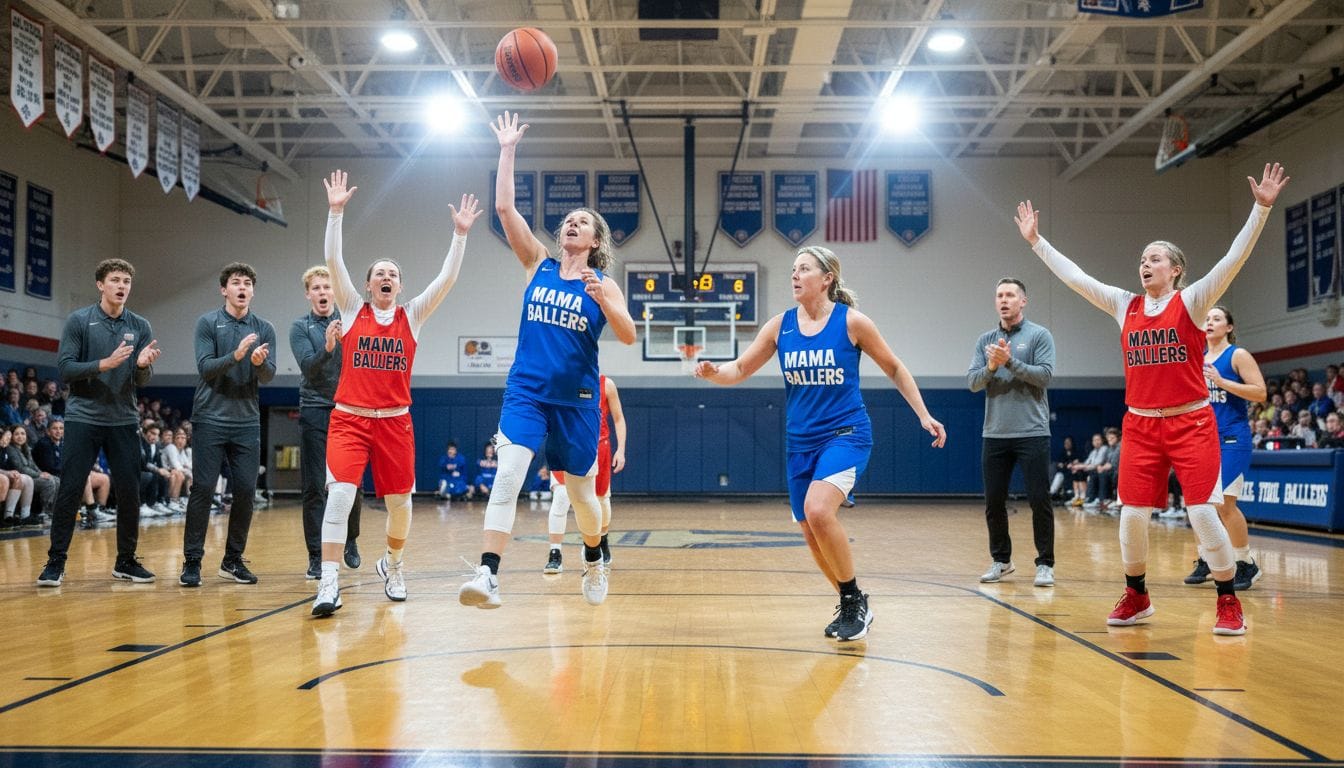
Another program they mentioned does a mom's game — a full-on fundraiser where the moms of the players face off against each other while the stands are packed. The players coach them up beforehand. The gym is sold out. It becomes this anchor event that people talk about for years. That's program-building. That's culture. And it costs almost nothing.
This connects directly to something I've read about in the context of developing the whole player — the idea that what happens off the court, in the margins of the season, shapes the kind of human beings your players become just as much as what happens in practice. If you've never thought about your program through that lens, it's worth sitting with.
What a 30-Minute Job Interview Workout Actually Reveals About a Coach
The episode shifted into a really practical segment when they addressed a question from someone named Raina, who was deep in the interview process for a head coaching position. She described a format I hadn't heard of before — a 30-minute, four-player workout observed by a hiring committee. Essentially, you're being evaluated in real time on how you coach.
This is fascinating to me. And a little nerve-wracking to even think about.
One of the coaches gave advice that I think cuts to the heart of what interviewers — and frankly, players — are actually looking for. He said the committee is probably less focused on what you do and far more focused on how you do it. Your interactions. The quality of your feedback. The engagement level you create in the room.
His specific suggestion? Don't run a generic blocked practice — five minutes of ball-handling, five minutes of finishing, five minutes of shooting. That's what everyone else will do. Instead, focus on decision-making. Play-after-the-play reads. Situations where players have to think, react, and make choices under pressure.
Why? Because those scenarios give you so many natural moments to teach. There's constant feedback opportunity. You're not just putting players through mechanical repetitions — you're having real coaching conversations in real time, which is exactly what an observing committee wants to see.
I don't fully agree with the idea that blocked practice has zero place in a 30-minute showcase — there's an argument that demonstrating you can install a simple skill quickly shows technical competence. But the broader point is hard to argue with. If your coaching philosophy centers on reads and decisions, that should be visible from the first minute someone watches you work. If you're curious about how this philosophy plays out in actual program design, this piece on getting hired and building coaching relationships goes much deeper into the nuance of presenting yourself authentically through the interview process.
What struck me most was this implicit argument underneath everything they said: the best coaches aren't performing for the committee. They're just coaching. The environment they create, the way they communicate, the quality of attention they give to four strangers in a gym — that's not something you can fake for 30 minutes. Either it's natural to who you are, or it isn't.
Why Decision-Making Should Be the Center of Everything
This theme kept coming back throughout the episode, and I think it deserves its own space because it runs counter to how a lot of youth basketball is still being taught.
The coach being interviewed talked about focusing on what he called the "point-five read" — the split-second decision a player makes after receiving the ball. Not the catch. Not the dribble. The instant of reading what's in front of you and acting on it. This is the skill that separates players who look good in drills from players who actually perform in games.
I've seen this play out personally. Players who've been through years of isolated skill training can dribble beautifully in empty gyms and completely freeze when a defender closes out on them. The drill didn't prepare them for that moment. Decision-making has to be trained in context, under constraint, with real reads happening in real time.
This is the whole premise behind the ecological learning approach in basketball — the idea that skills don't transfer from sterile environments to chaotic games the way we assume they do. You have to practice in conditions that resemble the thing you're actually preparing for. And decisions made under defensive pressure, with real consequences, are exactly that kind of condition.
It also connects to something a bit uncomfortable: a lot of what gets called "skill development" at the youth level is really just repetition theater. It looks like work. It feels productive. But if there's no decision being made, no constraint being navigated, no read being processed — then how much of it is actually building the player's ability to perform when it matters?
This is something I think about a lot. And honestly, I don't think there's one clean answer. But the coaches in this episode seem pretty clear on where they land — and their reasoning is hard to dismiss.
The Most Underrated Coaching Skill Nobody Talks About: Being Likable
When I heard this, I immediately thought — how many coaches have I seen who would genuinely bristle at that idea? "I don't care if you like me, I care if we get better." I've heard that exact line. Worn like a badge of honor. And honestly? I used to think there was something respectable about it. This is something I think about a lot, especially when I watch youth coaches who are technically brilliant but can't seem to get their players to actually respond to them in the moment that matters.
But what was said here reframes it completely. Being likable isn't about being soft. It's not about letting things slide or chasing approval. It's about recognizing that the shortest path to real improvement runs directly through trust. No trust, no feedback loop. No feedback loop, no growth. It's that simple. And the research around developing the whole player in transformational coaching backs this up — the emotional environment shapes everything that happens technically and tactically on the court.
What struck me most was this idea that your players' response to you is the actual product being evaluated. Not your clipboard. Not your drills. Not how slick your terminology sounds in front of an interview committee. The players. If they're engaged, energized, smiling, working — that tells the real story. I've seen this play out personally in gyms where a coach with nothing fancy going on just absolutely had the room, and another coach with a perfectly structured session couldn't get a single player to make eye contact.
NIGHT Communication — A Framework I Wish I'd Had Years Ago
The NIGHT acronym laid out here is genuinely practical. I don't say that lightly — most communication frameworks in coaching feel abstract the second you step onto the floor. This one doesn't.
Names first. This is so obvious and yet almost nobody does it consistently. Think about it — how many times have you watched a coach give a correction and just throw the player's name somewhere in the middle or tack it on the end? The player has already mentally checked out. Starting with the name is a pattern interrupt. It says: this is for you, specifically, right now. Pay attention. That's not manipulation. That's just how human attention works.
Information — the why, not just the what. I think this is where a lot of effective youth basketball coaching strategies fall apart in practice. Coaches tell players what to do constantly. They rarely explain why, and when they do, it's an afterthought. What was described here — framing the objective for the players, acknowledging that it's going to be messy, explaining what growth looks like inside the chaos — that's coaching that builds understanding, not just compliance. There's a reason the athlete-centered approach leans so heavily on accepting reality over rigid expectations — players need context to make sense of what they're experiencing.
Touch. High fives, fist bumps, a hand on the shoulder. I don't fully agree with how often this gets dismissed as "not serious coaching." Physical encouragement creates energy. Full stop. You want a high-energy practice environment? You have to generate it. It doesn't just appear because you wrote "high energy" in your practice plan. Energy is contagious and it has to start somewhere — usually with the coach.
Encouragement at a 6-to-1 ratio. This is the one I think most coaches intellectually agree with and then completely ignore the moment they step into a session. It's hard to maintain. Especially when you're under pressure, especially when it's a 30-minute evaluation, especially when your instinct is to fix everything you see wrong. But what are you actually going to fix in 30 minutes through correction? Nothing meaningful. Your only real goal in that window is to create an environment where players want to grow — and that environment is built through encouragement, not critique. This connects to something I read about the real problem with punishing players — overcorrection and punishment-based coaching doesn't build better players, it builds players who are afraid to make mistakes.
Holding a Standard Is More Powerful Than Any Drill You Can Run
This is the part that really landed for me. The point made here — that you could run stationary ball handling for 30 minutes and completely stand out if you run it with NIGHT communication and a clear standard — that's a provocative claim. But I believe it.
Because here's what a hiring committee, or frankly any observer, is actually watching: they're watching whether the players respect you. Whether they're listening. Whether there's a standard being held and whether the players are rising to meet it. The drill is almost irrelevant. I've watched coaches run elaborate, technically impressive sessions where players were clearly just going through the motions. And I've watched coaches run something dead simple where every single player was locked in, communicating, competing. The difference wasn't the content. It was the standard being held.
What I found interesting was the suggestion to fold the standard directly into the communication framework itself. So instead of correcting skill, you're correcting culture — "Can you give your teammate eye contact when they're talking?" or "Can you remind the next player what we're focused on?" That's elegant. You're not just holding a standard, you're teaching players to hold it for each other. That's the kind of thing that scales beyond a 30-minute showcase. It's what makes a program feel different from the inside. If you're thinking about what actually makes a basketball environment transformational, this is it — culture embedded into the smallest moments of practice, not announced at the beginning of the season and then forgotten.
The eye contact standard mentioned at the end is one I've used myself and it makes an immediate difference. It's such a small ask. But when you establish it early and actually hold it, it shifts the entire dynamic of how information moves through a group. Players start listening to each other, not just waiting for the coach to speak. That's the goal, isn't it? A room that's alive. A room that functions even when you step back.
Standards Without Enforcement Are Just Suggestions
One of the sharpest things said in this conversation was something I almost let slide past me. The question: what's the maximum number of standards you should have in your program? The answer: the maximum number you can actually uphold. That hit me. Hard. Because I've watched coaches — good coaches — walk into gyms with laminated acronyms on the wall, t-shirts with program values printed on them, and a list of ten non-negotiables that nobody, including the coach, could remember by week three. More standards don't create a better environment. That's not cynicism. That's just honest. And when I heard the suggestion to pick one thing, hold it, then level up — I immediately thought about how rare that kind of discipline actually is in coaching culture.
The EARN framework — Encouragement, Affirmations, Reminders, Notifications — is genuinely clever. But what I appreciated even more was the honesty that you shouldn't teach both acronyms. Pick one. Or better yet, make your own. Simplicity wins. That phrase kept coming up, and it kept being right. The idea of peer-to-peer feedback without judgment, framed like a notification on your phone — no connotation, no emotional charge — is something I think a lot of coaches could use immediately. "Tyler, I noticed you're not racing the floor right now." That's it. No tone. No drama. Just information. I've seen this play out personally in environments where coaches make everything feel like a verdict, and players just shut down. They stop listening. They play scared. The notification framing removes that weight entirely.
What also stood out was the self-evaluation method for enforcing standards in the moment. Instead of calling players out, you call them in. "Rate yourself one, two, or three — how are we doing on our touches?" That's disarming. Players engage. They think. And as was said, players remember what they think about. That's not a throwaway line. That's a pedagogical principle. Accepting where your players actually are, meeting them there, and using questions instead of commands — that approach keeps showing up in the best coaching conversations I've come across. There's something to it.
Protection Plans Aren't a System — They're a Philosophy
This section of the conversation is where things got really interesting for me. The protection plan discussion could easily have turned into a tactical breakdown, but it didn't. It stayed principle-based, and I think that was the right call. The framing — hunting nines and sevens, and protecting when you can't get there — is elegant in its simplicity. But what I loved most was the example of the ten-year-old daughter playing up two age groups, catching the ball on the wing, and immediately needing a protection plan because she has no realistic path to a nine. She didn't even dribble. And that's okay. Her protection plan might just be catching and making a short, safe pass. Or getting low and wide after a rebound so nobody strips it from her. That's not a lesser version of basketball. That's the right version of basketball for where she is right now.
This is something I think about a lot — how coaches apply one-size-fits-all systems to players at wildly different developmental stages. A stride stop as a protection plan makes total sense for a high school player whose turnovers are coming at the end of uncontrolled dribble penetration. It makes no sense as the only understanding a player walks away with. If they leave your program thinking protection plan equals stride stop, you've narrowed their problem-solving instead of expanding it. That's the tension. Teach the principle, use a specific tool to illustrate it, but don't let the tool become the entire lesson. I think the research on how skills actually emerge supports this completely — players need to internalize the why, not just the what, if they're ever going to transfer learning to a real game situation.
What I also found refreshing was the acknowledgment that protection plans are nearly infinite. That's an honest thing to say. It resists the urge to package everything neatly. Real basketball is messy. Real players have different bodies, different skill levels, different reads. A national-level high school girls team needs a completely different protection plan than a rec league fourth-grader. Obvious, sure. But you'd be surprised how many coaching frameworks don't actually account for that. This one does. And the suggestion to identify where your team is actually turning the ball over before deciding on a protection plan — that's coaching intelligence. That's not guesswork. That's diagnosis before prescription, which, frankly, more coaches should practice. If you want to go deeper on how conventional youth basketball teaching can backfire, this conversation fits right into that broader conversation.
My Final Take
Listening to this whole conversation, what stayed with me wasn't any single drill or acronym or standard. It was the underlying commitment to being intentional. Intentional with communication. Intentional with standards. Intentional with how you assess where your players are before you decide what they need. Effective youth basketball coaching strategies aren't about accumulating more tools — they're about having the self-awareness to know which tool fits this player, this moment, this level. The coaches who get that right are the ones whose players actually grow. Not just in basketball. In how they think, how they communicate, how they handle failure and feedback. That's the whole game. And conversations like this one remind me why it matters so much to keep asking better questions — as a coach, and honestly, as a person.