Every Coach Has a Default Teaching Tool — But Most Don't Know What Theirs Actually Is
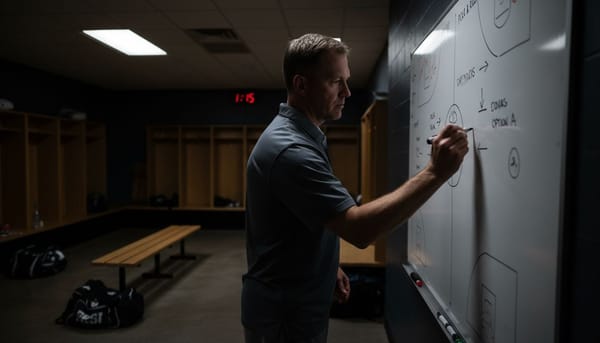
Most coaches have never been asked this question: What is your best teaching tool? Not your best play, not your best drill, not your best defensive scheme. Your best teaching tool. The thing you actually reach for when a player isn't getting it. When I first heard this question posed to a group of coaches on a coaching cohort call, I stopped what I was doing. Because honestly? I don't think I could have answered it immediately either.
What followed was one of the most quietly revealing coaching conversations I've come across in a long time. No big names. No highlight-reel moments. Just a group of coaches being genuinely honest with each other about how they teach, how they grow, and what actually moves the needle for their players. I want to share my honest reaction to what they said — and push back on a few things too.
The Part That Hit Me First: Progress Is Relative
The call opened with gratitude, which already set a different tone than most basketball conversations I encounter. One coach shared that his team had just lost — but lost by four, after losing to the same team by 33 earlier in the summer. That's not a loss. That's a 29-point swing in growth. And he knew it.
When I heard this, I immediately thought about how badly coaches — myself included — can get trapped in scoreboard thinking. We treat wins and losses as the only data point. But this coach had the awareness to step back and say: we defined a win here, even if the scoreboard didn't show it.
What was most striking though was why they improved. It wasn't X's and O's. It wasn't a new play call or a revised defensive scheme. It was getting used to the speed and physicality. Kids coming from middle school who simply hadn't experienced that level of pace before. The head coach on the call said something I think deserves to be repeated out loud: "We do players a disservice if we don't try to get them to play at an uncomfortable speed."
I've seen this play out personally. The jump from middle school to JV, or JV to varsity, almost always comes down to pace — not knowledge. Players who struggle to make quicker decisions in basketball under real game speed aren't usually lacking understanding. They're lacking exposure. And that's a training environment problem, not a basketball IQ problem.
The systems, as the coach pointed out, aren't really X's and O's answers. They're frameworks designed to create situations that demand effort, intensity, focus. The X's and O's are almost a byproduct. That reframe matters more than people give it credit for.
Nobody Actually Knows Their Teaching Tools — And That's the Problem
Here's where the conversation shifted into something I found genuinely fascinating. The lead coach asked every person on the call the same question: What's your best or most comfortable teaching tool?
The answers were honest in the best possible way. Multiple coaches defaulted immediately to demonstrating — jumping in to show the read, hopping into a 2-on situation, physically doing it so players can see it. One coach said it directly: "I get frustrated when they don't do it right, so I just jump in and show them." That's real. That's what most coaches actually do.
Another coach said high repetitions — spending all day in the gym repping something out, and getting better about not over-correcting during that process. The self-awareness there was notable. He wasn't just saying "reps." He was acknowledging a bad habit he'd been working through.
Someone mentioned chunking — breaking things down into smaller parts, using 2-on-2 games, then introducing an extra defender or offensive player once the concept clicks. And someone brought up advantage games — making things easier first, then gradually adding complexity. These are genuinely different tools. Not just variations of the same thing.
But one coach said something that I think should be printed on a wall in every gym: "I've never even thought about this. We just say things."
Yes. That's it exactly. We just say things. We correct verbally by default because it's the fastest option in the moment. And verbal correction is a teaching tool — but it's probably the weakest one on that list. When you understand the full range of what's available to you as a coach, the complete picture of coaching tools and how to use them becomes something you can actually build from intentionally, rather than just defaulting to habit under pressure.
This is something I think about a lot. How many coaches have genuinely sat down and inventoried their own teaching methods the way a craftsman inventories their tools? Not many. And yet we wonder why our communication doesn't land, why the same mistake shows up practice after practice.
Demonstrating Is the Default — But Is It Actually the Best Tool?
Nearly every coach on the call named demonstration as their go-to. And I get it. It's immediate. It's visual. It bypasses the language barrier that comes with trying to describe a basketball read in words. You just do it. Show them.
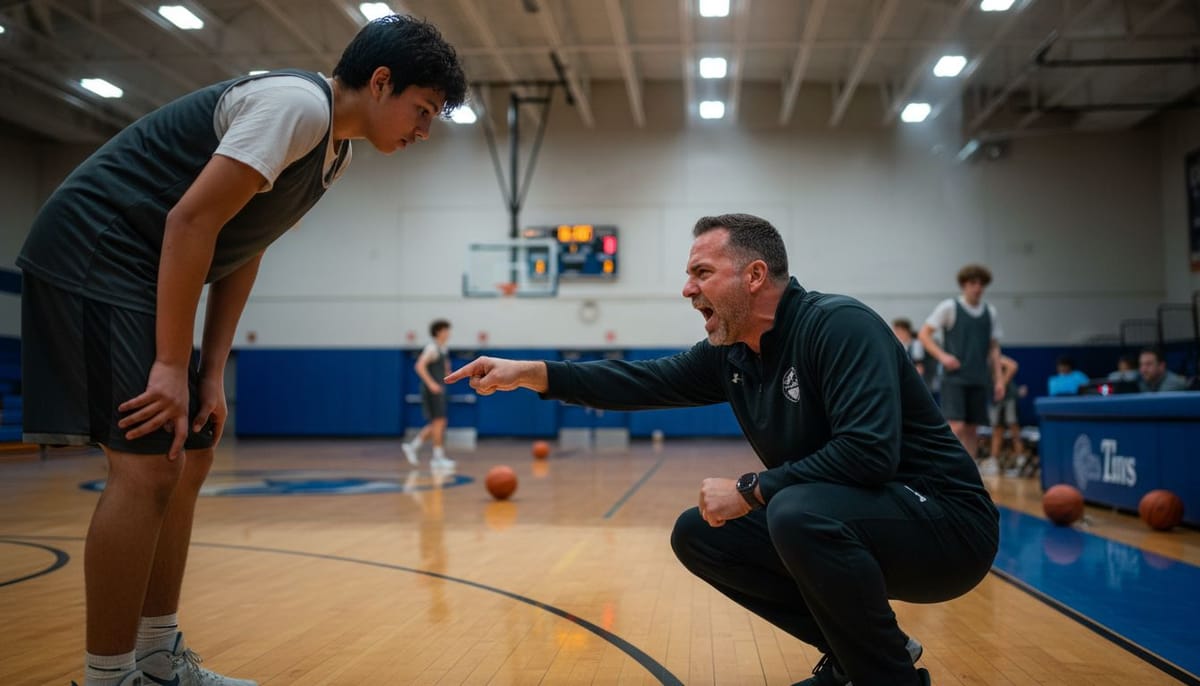
But I don't fully agree that demonstration is always the right first tool — and here's why. When a coach jumps in to show the correct read, they remove the player from the problem. The player watches. They understand what they should have done. But they didn't figure it out. They were shown. And there's a meaningful difference between being shown a solution and discovering it.
This is part of why the ecological learning approach in basketball coaching has been gaining so much traction. The whole idea is that players learn better when they're solving real problems in real environments — not watching a coach demonstrate the answer and then mimicking it. Demonstration has its place, absolutely. But if it's your default, you might be accidentally making your players dependent on being shown, rather than building genuine decision-making capacity.
The coach who mentioned advantage games was, whether he knew it or not, describing something closer to ecological design. Make it easier. Let them succeed. Add complexity. Let them problem-solve within the structure. That's a fundamentally different philosophy from "watch me do it."
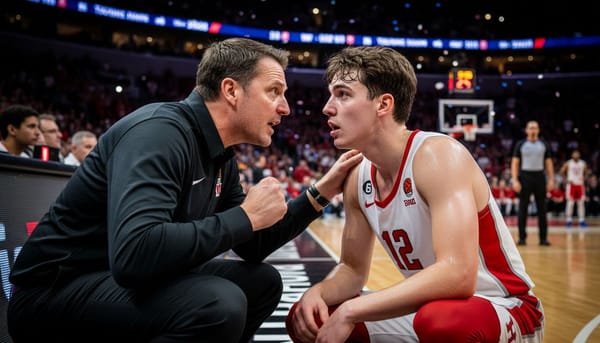
What struck me most was that when coaches were asked to name their tools, almost no one mentioned questions. Asking a player what they saw. What they were thinking. What they would do differently. Guided discovery through questioning is one of the most powerful teaching tools available — and it barely came up. Maybe because it's slower. Maybe because in the middle of practice with 12 players waiting, slowing down to ask one player three questions feels inefficient. But the long-term payoff is enormous. Coaches who actually listen to players during timeouts often get better information than coaches who spend the whole timeout talking — and the same principle applies in practice.
The "Why" Behind Teaching: What This Conversation Made Me Think About Deeply
There's a moment in this conversation that stopped me cold. One of the coaches admits — almost sheepishly — that he talks too much because he's a "why guy." He wants players to understand the reason behind everything. And honestly? I felt that. Because I've been that person on the sideline, over-explaining, convinced that if I just add one more sentence of context, it'll all click for the player.
But here's what hit me differently this time: there's a massive gap between telling a player why and actually getting them to discover it themselves.
The Destiny example is the one I keep coming back to. Instead of saying "you're taking too many dribbles, be more explosive," the coach asked her how many dribbles it actually takes to get to the rim. She didn't know. And that "I don't know" — that's the whole thing right there. That pause, that moment of self-awareness, is worth more than ten minutes of a coach explaining dribble counts. When I heard this, I immediately thought about how rarely we give players the space to not know something out loud. We rush to fill the silence with answers when the silence itself is doing the teaching.
The questioning method isn't new. But hearing it described this specifically — step by step, in real time, with a real player — made it feel new to me. It's one thing to say "ask more questions." It's another to hear exactly how a coach walked a player from confusion to self-correction in under a minute. That's a skill. And like any skill, it has to be practiced deliberately, not just nodded at in a coaching seminar.
This connects to something I think about a lot when it comes to the broader world of coaching tools and how we actually use them in practice — having the tool isn't the same as knowing when and how to deploy it. Most coaches I've seen have a version of questioning in their kit. Very few use it consistently or well.
The Dullest Tool in the Shed — And Why I've Been Guilty of This
The confession about demoing hit differently. One of the coaches — someone who clearly still plays regularly — admits that he wants to demo less. Not because demoing is bad. But because he's so in his own head while doing it that he's completely unaware of whether his players are even watching. And then he tells a story about his old college coach — Hall of Fame, national championships, legendary career — still getting out to demo in his 60s while the whole team quietly exchanged eye rolls.
I've seen this play out personally. There's something almost sad about a coach clinging to a tool that used to work beautifully but now just doesn't land. The players aren't inspired. They're waiting for it to be over. And the coach has no idea.
What strikes me most about this whole section is the metaphor they use: a tool that gets used too often gets dull. Same tool, same players, over and over — they tune it out. I don't fully agree with the idea that you should hold tools "in reserve" strategically, like some kind of coaching poker game. But I do think the underlying point is right: variety in how you teach keeps players alert. It keeps them guessing in a good way. It signals that this isn't just routine.
It also made me think about the kind of training switch that can completely reshape how a coach operates — sometimes the biggest change isn't what you teach, it's how you present it. The demo example is a perfect case. Same information, different delivery, completely different impact on the room.
And there's something humbling about a coach who's genuinely good — still playing, still physically capable of demonstrating — choosing to pull back from their strongest tool because they've identified its blind spot. That's real self-awareness. Most people double down on what they're good at. The best coaches in this conversation are actively asking themselves where they're weak.
Constraints: The Tool Everyone Talks About and Almost Nobody Uses Well
This part of the conversation is where I started nodding so hard I probably looked ridiculous.
One coach says — with real honesty — that he's heard all the arguments for constraints, believes in them philosophically, but blows them up too early. He sees players struggling in a four-on-three drill, the chaos feels unproductive, and he jumps in. He "ambushes it," as he puts it. I laughed out loud at that phrase because I've done exactly this. You set up a constraint, it gets uncomfortable, and your instinct is to rescue the drill instead of letting the discomfort do its job.
But here's the nuance that I think is actually underrated in coaching circles: if the constraint isn't producing the right level of challenge, it's not the constraint philosophy that's broken — it's that specific constraint for that specific group. The response in this conversation is smart. Don't scrap constraints. Adjust them. If your best players are breezing through four-on-three, add a layer just for them. Further constrain the strong players while leaving the rest in a different challenge window.
This idea — that constraints should be individually calibrated, not blanket-applied — is something I genuinely hadn't thought about clearly before. And it connects directly to the ecological approach to learning in basketball, which at its core argues that the environment should be shaped to force the right adaptations from each player, not the same environment for everyone.
The "why" behind constraints is also worth sitting with. It's not just about making drills harder. It's about forcing players to solve problems they haven't encountered before, so that when something unusual happens in a real game, they've already been in that discomfort zone. Faster decision-making under pressure doesn't come from running the same comfortable drill a hundred times — it comes from being forced to make decisions inside conditions that don't feel natural yet.
What this whole section made me realize is that the coaches who struggle with constraints aren't struggling because they don't believe in them. They're struggling because letting players fail — visibly, messily, in real time — goes against every instinct a good coach has. You care. You want to fix it. The hardest part of constraints isn't designing them. It's having the patience to let them breathe.
The Firefighter Story That Stopped Me Cold
Eight to ten firefighters. Killed. With their tools still in their hands.
When I heard that story from the book Range, I immediately thought — that's not just a tragedy about wildfires. That's a mirror held up to every coach who's ever been too stubborn to change what they've always done. These firefighters were running for their lives and still couldn't let go of the chainsaws and axes they'd carried for years. The tools that felt familiar. The tools that felt safe. And those same tools slowed them down enough to cost them everything.
I've seen this play out personally. I've watched coaches — good coaches — keep defaulting to the same drills, the same corrections, the same voice-over-everything approach, even when it clearly wasn't working. Not because they didn't care. Because under pressure, we all contract to what we know. It's almost instinctive. Your team's not clicking, the game's getting away from you, and suddenly you're back to barking the same instructions you've been barking for fifteen years.
But here's the thing the firefighter story makes painfully clear — if you don't drop the old tool, you literally don't have a free hand to pick up a new one. That's not a metaphor. That's capacity. You can't layer new approaches on top of a pile of habits you refuse to examine. Something has to go first.
What struck me most was how this framing recontextualizes the whole idea of coaching evolution. It's not about accumulating more — more drills, more systems, more plays. It's about being honest enough to identify what you're holding onto out of habit rather than effectiveness. That takes real self-awareness. And honestly? Most of us aren't there yet. Myself included.
The video feedback point hit me differently too. Someone in the conversation mentioned wanting to use video more so players could actually see themselves — because so many athletes are visual learners. I don't fully agree with the idea that this is just a "nice to have." I think in today's game, it might be essential. And the suggestion to assign an assistant specifically to capturing and queuing clips during practice is so simple it's almost embarrassing that more programs aren't doing it. One person. One iPad. One focused segment of practice. The impact of a player watching themselves make the same mistake twice in three minutes is something no amount of verbal coaching can replicate.
Talk Less. Plan More. Trust the Mess.
The theme that kept coming back throughout this conversation was talking less. And I think it's the hardest thing for experienced coaches to actually do.
Ryan said it best — it's hard to let practice look messy. When you've played the game, when you've coached it for years, your instinct is to blow the whistle the second something goes wrong. Stop it. Fix it. Explain it. Move on. But that constant interruption might actually be robbing your players of the very thing they need most: reps inside uncertainty.
This connects directly to something I find fascinating about the ecological learning approach in basketball coaching — the idea that players develop deeper, more transferable skills when they're allowed to work through problems rather than being handed solutions. Letting it look messy isn't lazy coaching. It might actually be the more sophisticated choice.
The questioning method demonstrated in this session was a perfect live example. Instead of presenting a list of teaching tools and lecturing through them, the facilitator asked the group what they wanted to work on. And suddenly everyone's thinking. Everyone's reflecting. The soil, as they put it, is ready. That's not a technique — that's a philosophy. And it applies directly to how you'd run a practice. What if before correcting a player, you asked them what they noticed? What if the question came before the answer, every single time?
The constraint idea resonated with me too — adjusting challenges based on what you know about individual players. If a player always goes left, make going left unavailable. Force the harder path. This is exactly the kind of nuanced, player-specific approach that separates development-focused coaches from those just running the same session for every athlete. And if you're thinking about how to build that kind of intentionality into your practice structure, the complete guide to coaching tools is worth spending real time with — it covers the broader framework behind these decisions in depth.
The practical tip about planning when to use a new tool — actually writing it into your practice notes as a trigger — is something I'm going to steal immediately. Because you're right. You get into flow as a coach just like players get into flow in a game. And if you don't build the reminder in, you'll blink and practice is over and you never used the new approach you said you would. Plan it. Try it. It'll feel wrong sometimes. That's how you learn what actually fits your group.
My Final Takeaway
Drop the tools you've been holding onto since forever. Not all of them — but the ones you're clutching out of comfort rather than conviction. Use video. Ask more questions. Let things get a little messy before you intervene. And when you decide to try something new, write it into your plan — don't just hope the moment will present itself. This is something I think about a lot, because the gap between coaches who keep growing and coaches who plateau isn't talent or experience. It's willingness. Willingness to look at what they're holding, set it down, and reach for something better. That's the whole thing. That's all of it.