Would you run this game in your next practise

Your best player just caught the ball on the wing. Defender closes out hard. And then... hesitation. That split-second pause where they're processing, calculating, deciding. By the time they make a move, the help defender has rotated and the window has closed. We see this in games every single week, and it's not a skill problem. It's a decision problem.
We heard this concept discussed recently and it really got us thinking: the idea of "zero second decisions" in basketball. Not faster decisions. Zero second decisions. There's a massive difference, and understanding it might be the key to unlocking your team's offensive potential.
What Does "Zero Second" Actually Mean?
Let's be clear about something first. Zero second decisions aren't about superhuman reaction time or some innate talent that only elite players possess. They're about something much more fundamental: recognizing patterns before they fully develop.
Think about it like dominoes falling. You don't wait to see the entire chain reaction before you understand what's happening. You see the first domino tip and you already know what comes next. That's the principle at work here — players who've seen a defensive rotation pattern dozens of times don't need to consciously process it when it happens in a game. Their body responds before their conscious mind catches up.
This is exactly what we see with leagues using CourtClok at the youth and high school level. The teams that scrimmage more, that get more live game reps, that see the same actions repeatedly — those are the teams making instinctive plays. Not because they're more talented, but because they've trained their pattern recognition.
Here's what zero second decisions actually look like in practice:
- A point guard who attacks a closeout before the defender's foot hits the ground
- A wing player who relocates to the corner the instant their defender turns their head to help
- A post player who seals their defender as the ball swings, not after
- A cutter who reads the help defender's weight shift and changes their angle automatically
None of these require thought in the moment. They're automatic responses built through repetition and experience.
The Trap of "Basketball IQ" Training
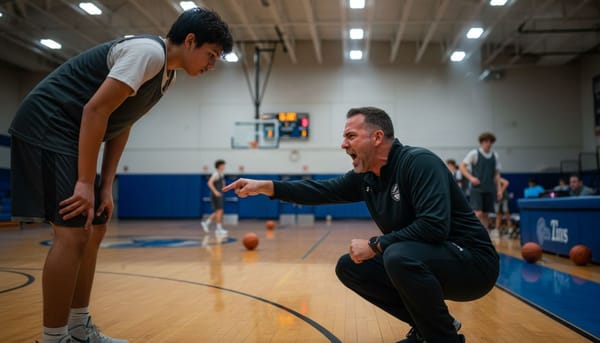
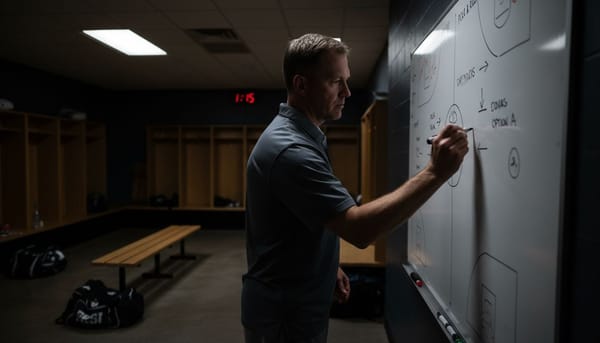
We've all been there as coaches or organizers. We run film sessions. We diagram plays on whiteboards. We explain reads and options until we're blue in the face. And then the players get on the court and... they still hesitate.
Why?
Because we're training their conscious mind when we need to be training their subconscious. Modern basketball demands a different approach than the traditional "learn the play, execute the play" methodology.
Think about when you learned to drive a car. At first, every single action required conscious thought. Check mirror. Press brake. Turn wheel. Signal. Check blind spot. It was exhausting, right? But now? You drive home from work and barely remember the trip because your subconscious handles 95% of the decisions.
Basketball works the same way. The goal isn't to make players think faster — it's to make them think less. Their bodies should know what to do before their brain fully processes the situation.
Here at CourtClok, we've built tools specifically for tracking game situations and player development over time, and one pattern has become crystal clear: players who get stuck in their heads during games are usually the ones who spent too much time in structured drills and not enough time in chaotic, live situations. They can execute when they know what's coming. But when the defense does something unexpected? Paralysis.
Creating Chaos: The Real Path to Zero Second Decisions
So how do you actually develop this kind of instinctive play? You can't drill your way there with perfect repetitions. You need controlled chaos.
The key is putting players in situations where they have to make rapid-fire decisions under pressure, where the "correct" answer isn't always obvious, where they have to trust their instincts. Players develop basketball IQ through experience, not just instruction.
Some practical ways we've seen coaches implement this:
- Small-sided games with constraints: 3-on-3 where offensive players can only take one dribble forces immediate decision-making
- Advantage-disadvantage scenarios: Start possessions with 3-on-2 that quickly becomes 3-on-3, requiring players to exploit windows before they close
- Random defense calls: Offense doesn't know if they're facing zone, man, or trap until the play starts
- Timed possessions: 10-second offense in half court creates urgency that mimics end-of-game situations
Notice what all of these have in common? Unpredictability. Variable defense. Time pressure. The opposite of running the same set play against the same defense twenty times in a row.
Your players need to fail. A lot. They need to make the wrong read, throw the bad pass, take the contested shot. Because that's how pattern recognition develops. The brain learns what doesn't work just as much as what does, and over time, those patterns become automatic.
Making Constraints Work in Your Favor
We heard this concept discussed recently and it really resonated with us because it mirrors what we see happening in the best youth leagues. The "floor is lava" constraint — where players can only pass when they're in specific situations — forces decision-making under pressure. It's artificial, sure. But it works.
Here's the thing: constraints aren't limitations. They're accelerators.
When you remove options, players stop overthinking. They start reacting. And that's exactly what happens in real games when the shot clock is winding down or the defense collapses. You don't have time to consider every possibility. You need to read and react.
This is exactly what we see with leagues using CourtClok — coaches who build constraints into their practice games see faster player development. Why? Because players get more meaningful repetitions. Instead of running the same set play twenty times, they're forced to solve new problems each possession.
The beauty of constraint-based games is that they don't feel like drills. Players are competing. They're engaged. And most importantly, they're learning to think for themselves rather than waiting for the next instruction from the sideline.
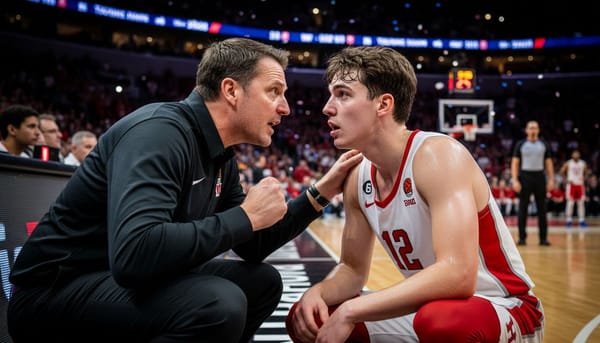
We've always believed that coaches should listen to players during timeouts because it reveals how they're processing the game. Well, constraint-based training does something similar — it forces that processing to happen in real-time.
From Controlled Chaos to Game-Ready Skills
There's a progression here that matters. You can't just throw constraints at players randomly and expect magic.
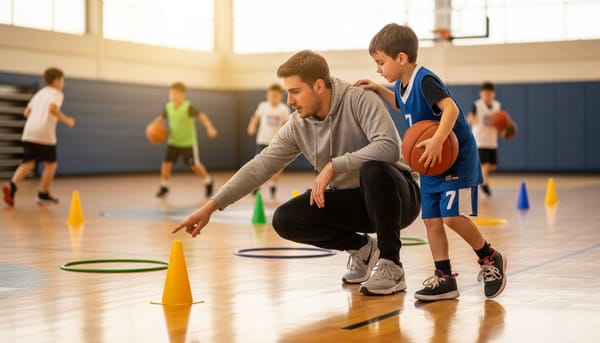
Start simple. Maybe it's "no dribbles in the paint" or "every possession must include a screen." Then layer complexity as players master the basics. The constraint becomes invisible — just part of how they play.
What we love about this approach is how it naturally builds basketball IQ without requiring players to sit through film sessions or whiteboard lectures. They're learning by doing. Making mistakes. Adjusting. Trying again.
And here's something we've noticed: the leagues that embrace player development over set plays tend to have more engaged players and fewer blowouts. When everyone's learning to read the game instead of just executing plays, the skill gap closes faster.
Think about it. Traditional drills teach technique. Constraint-based games teach application. You need both, but most youth programs are heavy on the former and light on the latter.
At CourtClok, we've built tools specifically for tracking these kinds of developmental games. Not just final scores, but the process metrics that matter — how many different actions did each player attempt? How did they respond to defensive pressure? Did they improve from week one to week eight?
Making Practice Games Actually Matter
Here's the thing about games like this — they only work if players actually care about the outcome. We've seen this firsthand with leagues using CourtClok. When there's a clear winner and loser, when someone's tracking the score properly, players compete harder. It's that simple.
Too many coaches run these beautiful skill development games but forget to make them competitive. No stakes? No intensity. And without intensity, you're not really preparing players for game situations.
This is exactly why we built our scoreboard features the way we did. Even in practice settings, being able to quickly track scores for small-sided games changes everything. Players know what the score is. They know who's winning. They care more.
The game Isa demonstrated wraps everything together — shooting, cutting, screening, decision-making under pressure. But it's the competitive element that makes it stick. When players are going hard because they want to win that specific rep, that's when real player development happens.
The Communication Advantage Nobody Talks About
There's another layer here that often gets overlooked. Games like these force communication. Constantly.
When you're playing two-on-two with this many options — slip screens, fade screens, flare screens, straight cuts — you have to talk. You have to read your teammate. You can't just run a set play and turn your brain off.
We think this is huge. Modern basketball demands players who can think and communicate on the fly. This game builds that naturally because the structure requires it. Should I cut? Should I fade? What's my defender doing? What's my teammate seeing?
And honestly? That communication between players during these competitive drills often teaches them more than anything a coach could diagram.
Building This Into Your Program
So how do you actually implement this? Start small. Don't overthink it.
Run it for ten minutes at the end of practice. Keep score properly. Rotate pairs. Let players figure out what works through competition rather than stopping every possession to coach.
Here at CourtClok, we've built tools specifically for tracking these kinds of practice competitions. Our quick scoreboard setup means you can have multiple courts running different games simultaneously, all tracked properly, all creating that competitive environment that drives improvement.
The beauty of games that generate more scoring opportunities like this one is they're self-correcting. Players discover what works. They figure out timing. They learn to read situations. Your job is just to create the framework and let competition do the teaching.
Because at the end of the day, basketball is a game. And the best way to get better at games? Play more games. Even if they're small ones. Especially if they're small ones.
We'd love to hear how you structure your practice games. Are you tracking scores? Creating competition? Or are you letting valuable development opportunities slip away because the drill didn't feel "official" enough? Drop your thoughts in the comments or reach out to us directly — we're always learning from coaches who are doing this work every day.