What Are Affordances in Basketball? A Coach's Guide to Designing Better Practice Environments
Most coaches have never heard the word "affordance." And honestly? Neither had I, not in any meaningful way, until I sat down with this podcast episode. But within the first few minutes, I realized this might be one of the most important concepts I'd never been taught. The idea is deceptively simple on the surface — an affordance is just an opportunity for action — but the implications for how we coach, how we design practice, and how we think about player development are genuinely profound. Let me walk you through what was discussed and share my real reaction to it.
So What Actually Is an Affordance?
The podcast opens with a quote from JJ Gibson, the ecological psychologist who literally invented the word "affordance." And I'll be honest — when the host read it out loud, my first reaction was confusion. It's dense academic language. Gibson wrote about "the complementarity of the animal and the environment," and the host openly laughed and asked his guest, a high school coach from Kentucky, what on earth it actually meant.
That was a smart move. Because the answer the guest gave was so clean and so useful.
An affordance is an opportunity for action. Three words. That's it.
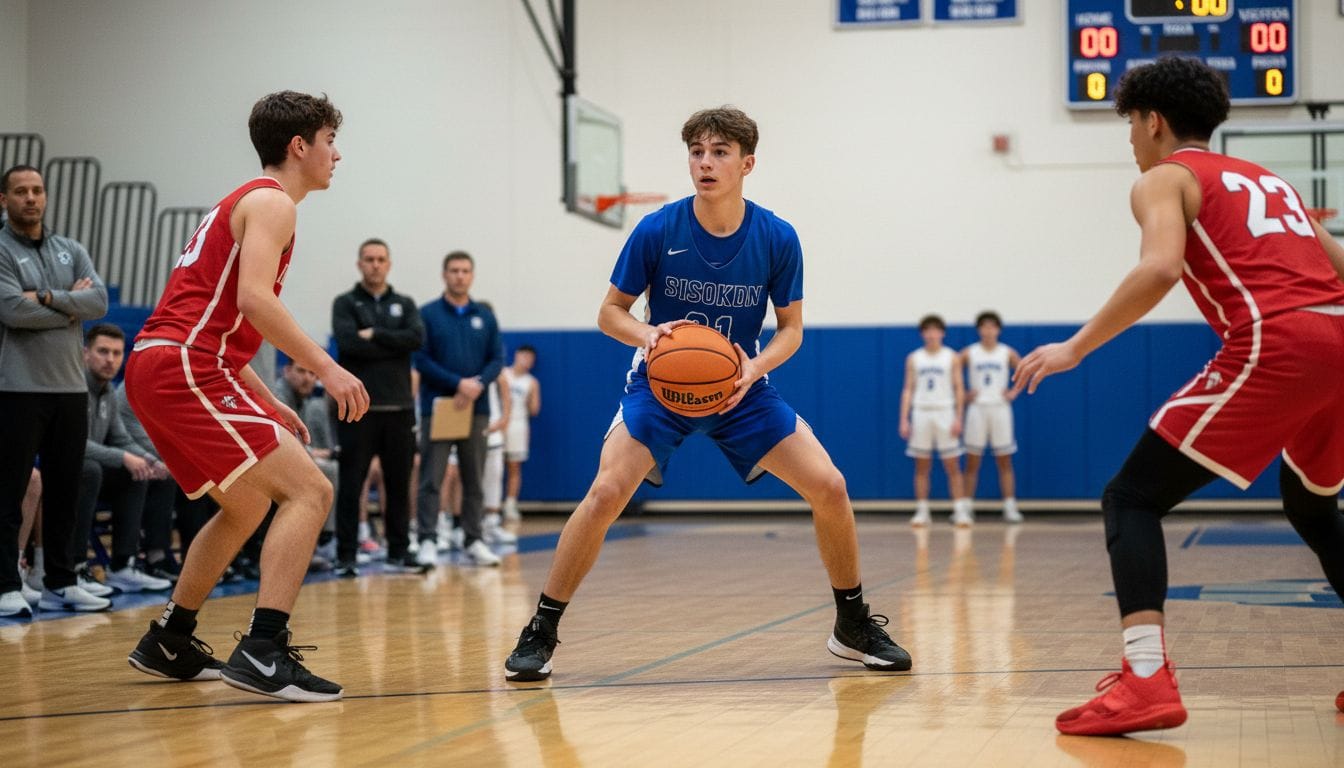
When I heard this, I immediately thought — okay, this is something basketball coaches deal with every single possession, we just never had a word for it. A gap between two defenders affords a drive. A defender caught flat-footed affords a pull-up jumper. A teammate cutting hard to the basket affords a skip pass. These aren't just tactical reads — they're affordances. They're opportunities the environment is literally offering to the player in that moment.
The example in the podcast was a laptop. The guest said his laptop affords him the ability to speak to someone six hours away. Without the laptop, that opportunity doesn't exist. It's the same on a basketball court. A gap exists in the environment. Whether a player sees it and acts on it — that's the whole game. This is something I think about a lot, especially when watching youth players who clearly have the physical tools but seem to play a half-second behind the action.
Why Affordances Are Different for Every Single Player
Here's where it gets really interesting — and honestly, a little uncomfortable if you're the kind of coach who runs the same drills the same way for every player on your roster.
Gibson's core argument is that affordances aren't universal. They're relational. The opportunity a gap presents to a 6'4" point guard with elite court vision is completely different from the opportunity that same gap presents to a 5'8" freshman who's still learning to keep her dribble alive under pressure. The environment is the same. The affordance is not.
The guest on the podcast expanded this idea beautifully. He said affordances scale to both physical features and skill level — and crucially, skill here doesn't just mean shooting ability or athleticism. It means perceptual skill. How quickly can a player pick up information from the environment? How well can they actually read what's being offered to them?
I've seen this play out personally coaching younger players. You can put two kids in the exact same 1v1 situation and one sees a drive immediately, the other dribbles in place for three seconds and forces a bad shot. They're looking at the same environment. They're not seeing the same affordances. That gap isn't just physical — it's perceptual. And that distinction matters enormously for how we train. If you want to understand how players make quicker decisions in basketball, affordances might be the most honest lens available.
What struck me most was the implication buried in this idea: the information players need to make the right decision is already there in the environment. They don't need a coach screaming instructions. They don't need to interpret a signal or remember a play. The court is telling them what to do — if they've been trained to listen to it.
The Coaching Implication Nobody Talks About
This is where the podcast shifted from theory to practice, and where I started scribbling notes fast.
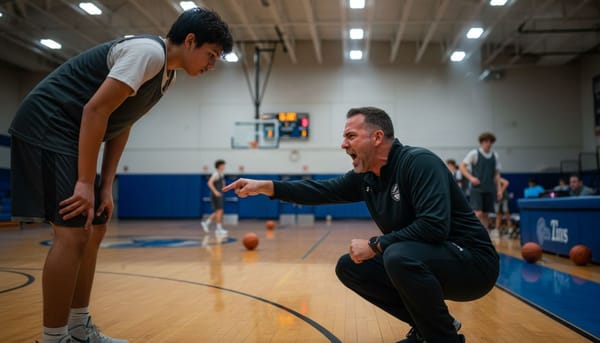
The host made a point that I think deserves to be said loudly: when we run drills where every player is taught the same move, given the same feedback, and pushed toward the same solution, we are completely ignoring the affordance landscape. We're pretending every player perceives and interacts with the environment the same way. They don't. They never have.
Think about the standard youth basketball drill. Five players line up, coach demonstrates a crossover move, everyone practices it the same way, coach gives the same cue to each kid. What's wrong with that picture? Each of those five players has different body dimensions, different perceptual abilities, different instincts. The crossover that affords one player an open driving lane might do absolutely nothing for the next kid in line. This connects directly to the conversation around why teaching perfect form can actually make your players worse — it's the same root problem. Cookie-cutter instruction ignores individual variation.
The podcast also references a Rob Gray quote that I think is the cleanest summary I've heard on this topic: "Effective coaching is all about manipulating affordances — changing the invitations an athlete receives from the environment."
Read that again. Changing the invitations. Not scripting solutions. Not drilling responses. Changing what the environment offers — and letting the player figure out how to respond. That's a fundamentally different philosophy from how most practices are designed. It's also why modern basketball increasingly demands we move away from set play thinking and toward genuine player development.
And look, I don't fully agree that you can abandon all structure entirely — I think there's still a role for deliberate instruction, especially with very young or inexperienced players who don't yet have the perceptual vocabulary to read the game. But the point stands. If your practice looks the same for every player, you're not coaching affordances. You're ignoring them.
The idea of designing environments rather than scripting behaviors is a shift that some coaches find threatening. I get it. It feels like giving up control. But what it actually does is create players who can think — players who don't freeze when the play breaks down because they've been trained to read the environment and respond to what it's offering. If you've ever coached a team that plays faster and more fluidly than their physical talent suggests, there's a good chance their coach — knowingly or not — was working with affordances all along.
You Can't Just Tell Them — You Have to Engineer the Environment
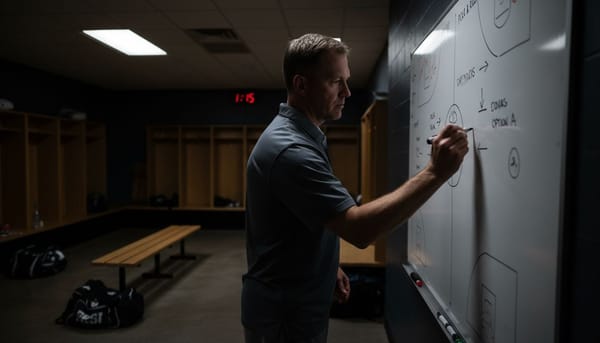
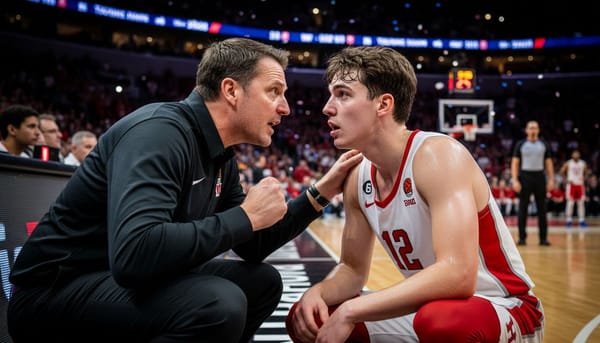
There's a line from this conversation that I haven't been able to stop thinking about: "We can't tell an athlete what to do — we can change the practice environment such that some invitations never arrive while others come in bright pink envelopes." When I heard this, I immediately thought about how many coaches — myself included at times — spend entire practices just talking. Explaining. Repeating themselves. And getting nowhere.
Because here's the thing. Telling a player what to do feels productive. It feels like coaching. But if it doesn't transfer to the game, what's the point? The podcast guest Adam hits on something that I think most coaches intellectually understand but emotionally resist — instruction has limits. Real limits. And the sooner you accept that, the sooner you start actually developing players.
What struck me most was the pick-and-roll switch example. When players keep attacking the same option over and over — even when it's not working — the instinct is to say something. Call a timeout. Pull them aside. Explain it again. But Adam's point is that you're fighting history, habit, and perception all at once when you do that. You can't talk someone into seeing a different affordance. You have to make the current option hurt.
That's such a sharp insight. And it connects directly to something I've seen explored in the context of making quicker decisions in basketball — the idea that decision-making isn't really a mental exercise you can coach verbally. It's a perceptual skill. Players learn to read situations faster by being in those situations, not by being lectured about them.
The Reject Story — This Is What Good Coaching Actually Looks Like
Okay. The story the head coach tells here is genuinely one of my favorite moments of the whole episode.
He's watching practice back on film and realizing he's spent an entire week telling his guards the same thing — don't allow a reject in pick-and-roll coverage — and nothing has changed. Nothing. And instead of doubling down, instead of raising his voice or running more film sessions, he stops and asks himself: why isn't this working?
That kind of self-awareness is rare. And honestly kind of painful to admit. I've been there. Most coaches have. You go blue in the face and the behavior doesn't change, and somehow the conclusion becomes "I need to say it louder" or "I need a different drill." But the real answer here was simpler and more elegant — he changed the rules of the game itself.
Two rejects and you lose. Full stop.
Problem resolved in two days. Two days, after a full week of explanation had done nothing. That's not a minor coaching adjustment — that's a completely different philosophy of how learning works. If you're still relying on verbal correction as your primary tool, this should genuinely make you reconsider everything. It reminds me of the training switch that changed one coach's career entirely — sometimes the breakthrough isn't a new drill or a new system. It's realizing the environment itself was broken.
And what I love most about the reject example is that it's not punitive in a negative sense. The coach isn't running players or screaming. He's just designing a game where the natural consequence of the bad habit is losing. The environment teaches the lesson. He doesn't have to.
Making Options "Less Appetizing" — A Smarter Way to Think About Constraints
Adam frames it as making certain options less appetizing, and I think that phrase deserves way more attention than it gets in coaching circles. Because there are really two levers here. You can make the right option brighter and more obvious — the pink envelope. Or you can make the wrong option painful enough that players naturally stop choosing it.
Both work. But Adam's point — and I agree with this completely — is that the second one is often faster. Removing comfort forces adaptation. That's not cruelty, it's just how learning under pressure actually operates. And it's a completely different mindset than trying to construct the perfect drill that walks players through a choreographed solution.
This is something I think about a lot when it comes to the shift from set plays to genuine player development — because set plays are essentially the ultimate form of telling players what to do. They remove the need to perceive and decide. And when the play breaks down, players freeze because they've never been trained to read the situation, only to execute a script.
What the coaches in this podcast are describing is basically the opposite approach. Build the environment. Let the game ask the question. Trust that players, when given real consequences and real freedom, will start to find real answers. Is it messier in the short term? Absolutely. But the transfer to game situations is incomparably better — and that's the only metric that should matter.
Constraints That Actually Teach — The Pick and Roll Breakdown
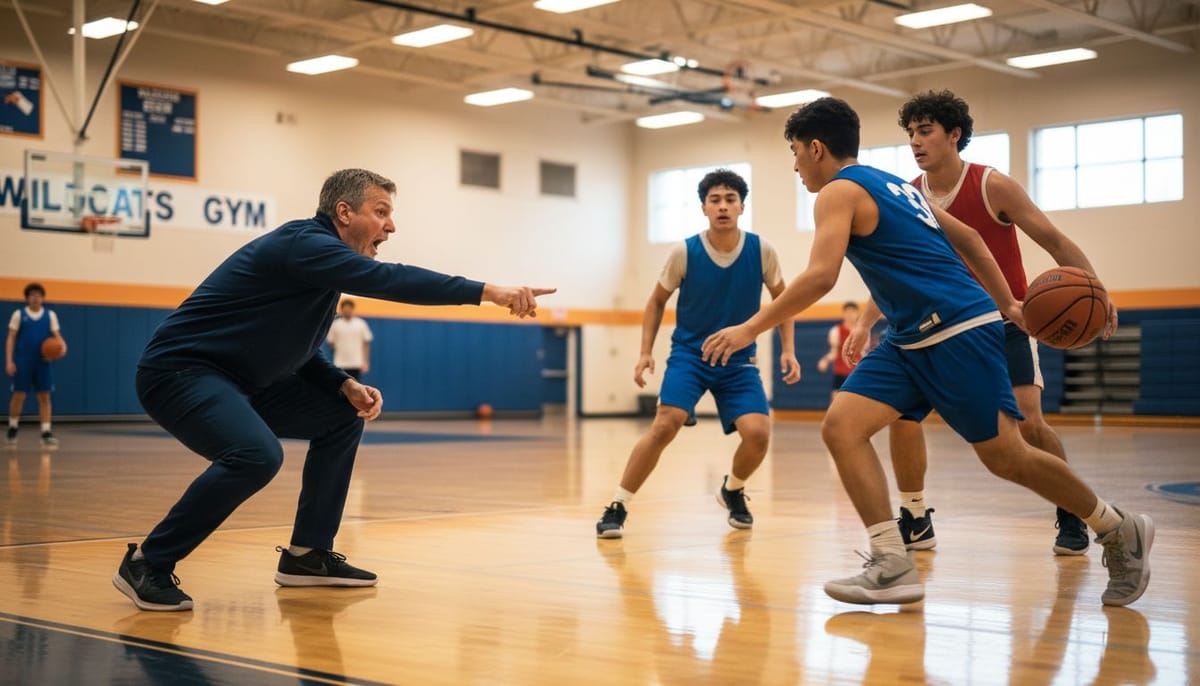
The pick and roll example they walked through near the end of this episode completely stopped me in my tracks. Because I've watched countless youth coaches — good coaches, well-intentioned coaches — run pick and roll drills that produce absolutely nothing. Players go through the motions. The screener sets a lazy angle, lingers too long, pops at random. No advantage is ever created. And the coach yells. And nothing changes.
Why? Because yelling isn't a consequence. That line landed hard for me. The player's body doesn't care if you're raising your voice. There's no real information in it. But a 4-second shot clock in a narrow two-on-two space with only a three or a finish available? That's consequence. That's information the body can actually process and respond to.
What I found brilliant about the wall pick and roll setup they described is how much emerged from such a simple constraint. Slips. Hard rolls. Rejection reads from the ball handler. None of that was coached explicitly — it surfaced because the environment demanded it. And that's the whole point, isn't it? becoming elite in the pick and roll isn't about memorizing a sequence — it's about reading what's available in the moment and acting on it faster than the defense can adjust.
I've seen this play out personally. You constrain the right things, and players start solving problems you never explicitly taught. That's not magic. That's good design.
A Message for Youth Coaches — Keep It Simple, But Keep It Real
I really appreciated that they ended with something for youth coaches specifically. Because it's easy to hear terms like "affordance landscape" and assume this framework only applies to sophisticated, high-level players running complex offense. It doesn't. Not even close.
Their suggestion for under-12 or under-14 teams was refreshingly simple. A one-on-one race to the rim. A back-to-basket situation where the action goes live as soon as the defender moves. No script, no preset trigger, just a small initial advantage that the player has to recognize and act on. That's amplifying an affordance without turning kids into robots running a pass-and-cut pattern they don't actually understand.
This is something I think about a lot when it comes to youth development. We over-program young players. We give them answers before they've even experienced the question. And then we wonder why they freeze under pressure, why they can't make quicker decisions in real game situations when the defense doesn't cooperate with what we drew up in practice. The constraints-led approach they're describing here isn't some elite-level concept — it might actually be more important at the youth level, where habits are still forming and the brain is most ready to learn through experience.
Don't overcomplicate it. Find a small-sided game. Add one meaningful constraint. Let the affordances appear. Watch what your players do. Adjust from there.
My Final Takeaway
What struck me most about this entire conversation is how much it reframes the coach's role. You're not the answer-giver. You're the environment designer. Your job is to construct situations where the right information becomes available — where the consequences are real, where the advantages are there to be spotted, and where players develop the sensitivity to act on what they see. That shift in thinking is genuinely significant. And the coaches who get this — the ones who stop defaulting to set plays and scripted patterns and start building smarter practice environments — those are the coaches whose players actually grow. I walked away from this episode with a clearer picture of what "the affordance landscape" really means, and honestly, a renewed excitement for how much better basketball practices can be when you stop trying to control every outcome and start trusting the game itself to do the teaching.
Want the complete picture? Read our full guide: The Complete Guide to Ecological Learning Approach in Basketball Coaching