This ONE Rule will make your team play FASTER
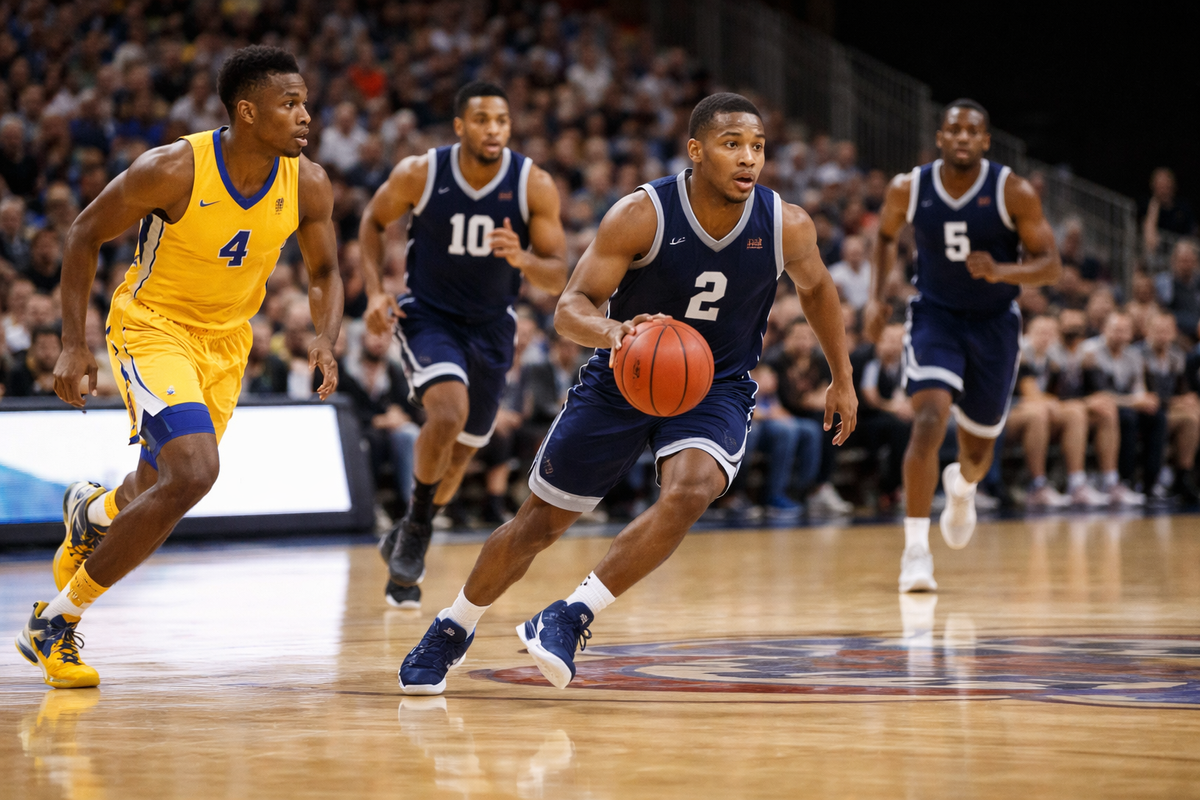
Stop the next game you're watching and count. Count how many seconds tick off the clock after your team gets the ball before anyone actually attacks. Three seconds? Four? Five?
That delay is costing you games.
We heard this observation recently and it stopped us in our tracks: if you watch 99% of basketball teams, they get the ball on a make or a miss and every player will wait. They wait for the point guard to cross half court. They wait for someone to call out a play. They wait for the offense to "set up."
And while they're waiting, the defense is doing exactly what it wants — getting organized, matching up, and settling into position.
And this pattern shows up everywhere. Youth leagues. Adult rec leagues. Competitive travel teams. It doesn't matter the level — teams are giving away their single biggest advantage on every possession.
The advantage of chaos.
The Three-Second Window That Changes Everything
There's a moment right after your team gains possession when the defense is vulnerable. Scrambling back. Not matched up yet. Still thinking about what just happened rather than what's about to happen.
That window lasts about three seconds.
Maybe four if you're lucky. And then it closes. Defenders find their assignments. The help-side rotates into position. Your numerical advantage — even if it's just a half-second head start — evaporates completely.
So why do teams waste it?
Because we've trained them to. We've coached them to wait for permission to attack. To look for the play call. To make sure everyone's in the right spot before anything happens. We've prioritized structure over opportunity, and it's killing offensive efficiency.
Think about how to improve your team's shot selection — it's not just about taking better shots, it's about creating better shot opportunities. And the easiest way to create better opportunities is to attack before the defense is ready to defend.
What "Organized Chaos" Actually Means
This isn't about running wild. It's not about abandoning your offensive system or telling players to just chuck it up the court and hope for the best.
It's about training your players to recognize and exploit transition opportunities within structure. To have the decision-making skills to know when to push and when to pull back. To understand that sometimes the best offense isn't your beautiful set play — it's getting to the rim before the defense even knows what happened.
We're talking about organized chaos.
Your players need to know what they're looking for in that critical three-second window. Are we numbers up? Is their best rim protector still back? Did their point guard fall after the shot and we've got an instant 5-on-4? These reads happen fast, and they can't happen at all if players are conditioned to wait.
This is exactly what we see with leagues using CourtClok — the teams that score most efficiently aren't always running the most sophisticated plays. They're the ones who punish defensive breakdowns immediately. They understand that decision making under pressure is a skill that needs constant development, and transition offense is where that skill matters most.
The Problem With "Setting Up"
Let's be honest about what "setting up" really means in most offenses. It means killing momentum. It means allowing the defense to dictate terms. It means turning a potential advantage into a neutral situation at best.
When your point guard catches the outlet pass and immediately slows down to survey the floor, what message does that send? That we're not ready to attack yet. That we need everyone in position first. That we're going to wait for you to get organized before we try to score.
That's insane when you think about it.
The defense just gave up a basket or turned the ball over. They're deflated, disorganized, or both. And we're giving them a timeout to regroup? For free?
Now, we're not saying structure doesn't matter. Of course it does. Modern basketball demands both structure and creativity. But the structure should enhance your ability to attack quickly, not prevent it. Your offensive system should have answers for transition, not just half-court sets.
The Natural Rhythm Problem That's Killing Your Offense
We've been thinking about this a lot lately. Why do so many youth and rec league games look sluggish? Players stand around. The ball sticks. Nobody moves without it.
Here's what we've noticed: it's a rhythm problem.
Think about how most practices run. Players line up. They wait. They get their turn. They go hard for five seconds, then walk back to the line. Repeat fifty times. What are we actually teaching them? We're teaching them that basketball is a start-stop sport.
But it's not.
Real basketball flows. One action leads directly into another. When a pick-and-roll doesn't work, good teams immediately flow into their next action. They don't reset and walk it back. This is exactly what we see missing in leagues using CourtClok — teams that practice in lines struggle to maintain any offensive rhythm during actual games.
The transcript mentions something crucial: players naturally escalate from walking to jogging to running. But if your practice structure has them constantly stopping and resetting, they never build that natural acceleration. They never learn to create advantages from movement itself. Every possession feels like it's starting from zero.
And you can't get advantages from a standstill against decent defense. You just can't.
Why Traditional Drills Create Passive Decision-Makers
Let's be honest about something uncomfortable: most traditional basketball drills don't require players to make real decisions.
Coach says shoot, you shoot. Coach says drive left, you drive left. Coach says pass, you pass. Where's the decision? Where's the read? Where's the basketball?
We heard this discussed recently and it really resonated with us. When players spend practice waiting in lines and following instructions with no defensive pressure, they're learning to be passive. They're learning to wait for coaching instructions rather than train with a defender and read what's actually happening.
Then game time comes. Suddenly there's a defender making decisions against them. Suddenly coach can't call out every move. And those players freeze.
Teams with great practice attendance but terrible shot selection. Players who can execute drills perfectly but can't seem to make simple reads during games. It's frustrating for everyone involved — coaches, players, parents watching from the sidelines.
The issue isn't effort. It's not talent either. It's that we've trained them in an environment that doesn't transfer. We've built elaborate practice plans that look organized and productive but don't actually prepare players for the chaos and decision-making that real basketball demands.
What's the alternative? Games. Constraints. Competition. Put them in situations where decision making is required, not optional.
Running the Floor Like You Mean It
Here's the thing that separates good transition teams from great ones: every single player runs. Not just your guards. Not just when they feel like it. Every possession.
We heard this idea discussed recently and it really resonated with us — the concept that transition should be lag-free. Zero hesitation. The moment possession changes, you bolt. Like Usain Bolt was mentioned, and honestly? That's the energy level we're talking about.
Most teams have one or two players who sprint the floor consistently. But imagine all five running hard every single time. That's when defenses start breaking down. That's when you create those easy buckets that change the complexion of a game.
The teams that emphasize transition as a core identity tend to dominate their competition. It's not complicated. It doesn't require fancy plays or elite talent. It just requires commitment.
And here's something we've noticed: when teams prioritize transition, it often forces them to improve their shot selection naturally. Why? Because players who are running hard and creating advantages don't settle for contested jumpers. They get better looks.
Making Transition Your Identity
So how do you actually build this into your team's DNA?
First, you have to decide it's non-negotiable. Not a suggestion. Not a "let's try to run when we can" situation. It's who you are.
Second, you need to coach it relentlessly. That means praising effort in transition even when it doesn't result in a score. It means holding players accountable when they jog back after a missed shot instead of sprinting to defense or leaking out for offense.
Third, track it. When players can see their transition opportunities, their fast break points, their defensive stops that lead to offense — it reinforces the behavior you want.
The beautiful part? Transition basketball is the great equalizer. You don't need the most skilled team to run effectively. You just need the most committed one.
Final Thoughts
Transition offense isn't some advanced concept reserved for elite programs. It's fundamental basketball executed with intensity and intelligence. Get stops. Run hard. Make quick decisions. Attack before the defense is set.
That's it.
The teams that master this — that make it part of their identity rather than an occasional bonus — create a massive competitive advantage. They wear down opponents. They generate higher percentage shots. They make the game simpler for their players.
Transition basketball is one of those things that works at every level, from youth leagues to elite competition. It just requires commitment and consistency.
So ask yourself: Is your team really running? Every player, every possession? If not, you're leaving points on the table. And in competitive basketball, those points matter more than you think.