The San Antonio Spurs mastered this 1 concept👀
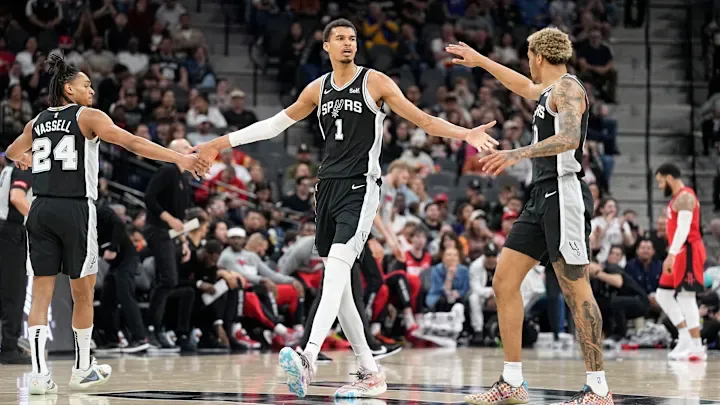
Your best player catches the ball on the wing with space. What happens next? If you're like most youth and recreational teams, they take two dribbles to "set up," pivot a few times scanning the floor, maybe call out a play. Three seconds have passed. The defense has recovered. The advantage is gone.
We heard this discussed recently and it really resonated with us: whenever you have an advantage, you should shoot, pass, or drive in zero seconds. Not one second. Not "quickly." Zero.
Sound impossible? It's not. But it requires a complete mindset shift for how we organize practices, call plays, and manage games. Here at CourtClok, we've watched thousands of recreational and youth league games, and the pattern is unmistakable—teams that recognize and exploit advantages faster win more games. Period.
The Problem With "Running the Offense"
Most coaches inherit a basketball philosophy built on set plays and structured offense. You call a number. Players run to their spots. The point guard initiates. Everyone executes their role. It feels organized. It looks like real basketball.
But here's what's actually happening: you're teaching your players to wait. To hesitate. To look for permission before attacking.
Think about it. When a defender gets screened and your shooter has a clean look from three, what do they do? In a structured system, they might think: "Wait, am I supposed to shoot here? Is this my spot in the play? Did we finish the action?" By the time they've processed all that, the help defender has rotated over. Advantage gone.
We see this constantly with leagues using CourtClok. A team will dominate the first quarter with aggressive, fast play. Then the coach calls timeout, draws up something elaborate, and suddenly that same team looks slower. More tentative. The scoreboard tells the story—scoring drops when teams start overthinking.
The zero second rule flips this entirely. If you have an advantage right now, you exploit it right now. No hesitation. No waiting for the play to develop. The advantage is the play.
What Actually Counts as an Advantage?
This is where most coaches get stuck. They understand the concept but can't define what they're looking for. So let's be specific.
An advantage exists whenever the defense is compromised in some way. Could be positional. Could be numerical. Could be momentum-based. The key is recognizing it instantly.
Open shots. This one's obvious but worth stating: if you're open and in your range, shoot. Don't think about whether you're "supposed" to shoot. Don't wait for a better look. The best look is the one you have right now before the defense adjusts.
Defensive scrambles. When the defense rotates late, someone is always open for a split second. That's your window. A quick extra pass finds them. But only if you're already looking, already anticipating. Simple offensive actions that generate defensive rotations become deadly when players attack those scrambles immediately.
Closeout situations. Any time a defender has to sprint at you to contest, you have options. They're off-balance. Drive past them or shoot if they're too aggressive. But the advantage only exists for that first step. Wait, and they're set.
Mismatches. Big on small? Attack. Small on big? Attack differently, but attack. These don't last—defenses switch and adjust. You have maybe one possession to exploit it before they make a change.
Numbers advantages. Three-on-two. Two-on-one. Even four-on-three if the defense is scrambling back in transition. These are gift-wrapped opportunities, yet we've all seen teams slow down, call a play, and let the defense get set. Criminal.
Why Zero Seconds Feels Impossible (But Isn't)
When we first share this concept with coaches, the pushback is immediate. "My players aren't skilled enough for that." "They'll just make bad decisions." "We need structure or it's chaos."
We get it. Really. The idea of telling a 12-year-old to make instant decisions sounds like a recipe for disaster. But that's because we're looking at it wrong.
The zero second rule doesn't mean zero preparation. It means zero delay between recognizing advantage and acting on it. The recognition part? That's where coaching happens.
Think about how players actually process the game during timeouts. They're not thinking about complex X's and O's. They're thinking about what's working, what they're seeing, what feels open. That real-time basketball intelligence is exactly what the zero second rule leverages.
Your practices need to train recognition as much as execution. Players need thousands of reps identifying advantages before they can exploit them at game speed. Can't happen in a traditional practice structure where everything runs through designed plays.
Here's the truth: your players are probably more ready for this than you think. They're just waiting for permission to play freely. To trust what they see. To attack without overthinking it.
Triple Threat Position: Friend or Foe?
We heard this discussed recently and it really resonated with us. When players catch the ball and immediately go into that textbook triple threat position — knees bent, ball on the hip, holding still — what are they actually doing? They're giving the defense a gift.
Think about it.
The moment a player stops moving and sets up in triple threat, the defender gets to rest, read, and prepare. Every fake from that static position is telegraphed. The defense knows exactly what's coming because the player has already eliminated their most dangerous weapon: momentum.
Here at CourtClok, we've seen this pattern play out countless times in games we track. Players catch, stop, triple threat, fake, and then wonder why they can't get by their defender. It's not because the fake wasn't good enough. It's because they gave away their advantage before they even tried to attack.
This connects directly to why modern basketball demands a new approach focused on reading and reacting rather than executing predetermined moves.
Attack On the Catch Instead
So what's the alternative?
Movement. Aggression. Decision-making on the move.
The best players don't catch and pose. They catch and go. They're reading the defense before the ball even arrives, and their feet are already moving toward an advantage the moment the ball hits their hands. Sometimes that's a drive. Sometimes it's a shot. Sometimes it's a quick pass to an open teammate.
But they're not standing still, giving the defense time to organize.
This is exactly what we see with leagues using CourtClok — the teams that win consistently aren't running elaborate set plays from static positions. They're teaching players to generate more scoring opportunities by attacking gaps immediately and making reads in real time. The scoreboard doesn't lie, and neither does the film.
When you review game footage (which our app makes incredibly easy to organize alongside stats), you'll notice something. The plays that lead to easy buckets rarely start from a perfect triple threat stance. They start with players who are already in motion, forcing defenders to react rather than dictate.
Does this mean triple threat has no place in basketball? Not exactly. But it means we need to rethink when and how we teach it. As a checkpoint position to teach footwork fundamentals? Sure. As the default position every time a player catches the ball? That's where we're creating problems.
The Momentum Tax: What Stopping Play Really Costs
Here's what we've noticed managing thousands of games through CourtClok: the best offensive possessions don't look like perfectly executed plays. They look like chaos that the offense controls.
When a team gains an advantage and then stops to set up, they're not just pausing the action. They're paying what we call the "momentum tax" — giving the defense time to communicate, rotate, and reset their structure. That four-second window while a player holds the ball at the top of the key? That's not preparation time. It's donation time.
Think about the youth and rec leagues using our app. The teams that consistently win aren't running the most complex plays. They're the ones who understand that player development demands recognizing and exploiting advantages before they disappear.
The defense is scrambling. Someone's help position is compromised. A rotation is late. And then... dribble, dribble, dribble. Reset. The advantage evaporates.
We're not saying never slow down. Sometimes you need to. But there's a massive difference between strategic patience and accidentally giving away your edge because players don't recognize what they have.
Training Recognition Over Perfection
So how do you actually teach this? How do you get players to see advantages and attack them immediately?
It starts with understanding that players need to process the game themselves, not just execute coach commands. They need reps recognizing what "advantage" actually looks like in real time.
What constitutes an advantage? A defender turned. A help defender one step late. A numbers situation even for two seconds. These aren't obvious to young players who've been trained to wait for the perfect play setup.
We've seen coaches use our scoreboard during practice specifically to run advantage-recognition drills. Short possessions. Emphasis on quick decisions. Points awarded for attacking advantages, not just makes. The scoring system itself becomes a teaching tool.
The key insight? Advantages are temporary. Always. That's what makes them advantages. If they lasted forever, they wouldn't be advantages — they'd just be the normal state of play.
Your job as a coach isn't to diagram the perfect response to every advantage. It's to develop players who recognize them immediately and have the confidence to attack. Some possessions will look messy. That's fine. Messy with advantage beats beautiful without it.
Building the Habit
This isn't just a strategic shift. It's a cultural one. Players have been conditioned to wait for permission, to look for the coach's signal, to run the play as drawn. Breaking that habit requires intentional practice design.
We recommend dedicated time — even just ten minutes per practice — where the only rule is: when you see an advantage, attack it. No plays called. No waiting. Just read and react. Track these possessions separately in your practice planning. Celebrate the attempts, not just the makes.
And honestly? Games that emphasize aggressive play develop this instinct faster than any drill. Put players in situations where hesitation costs them, and they'll learn quickly.
The bottom line: basketball is a game of temporary advantages. The team that recognizes them fastest and attacks them most aggressively will dominate, regardless of talent level. Stop teaching your players to be polite with their opportunities. The defense isn't waiting for you to be ready — why should you wait for them?