The Real Reason Confidence Breaks Down When Developing Female Basketball Players
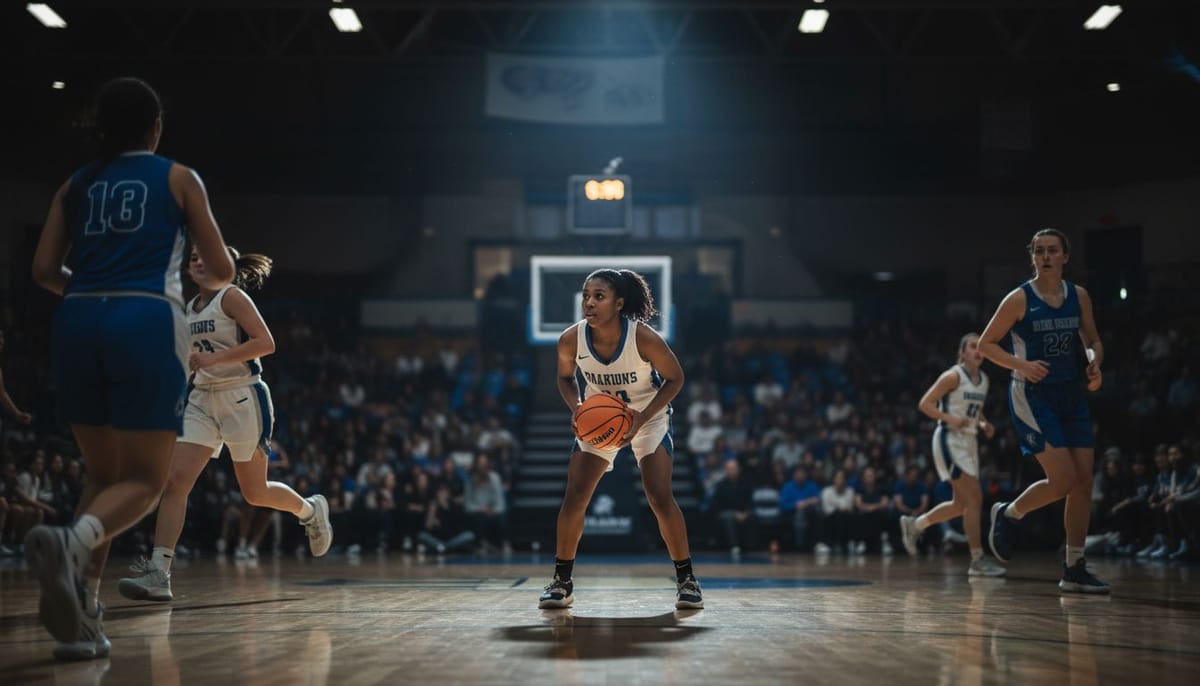
Here's something I hear constantly, and it never stops being striking: a young female basketball player who looks unstoppable in practice — sharp, decisive, fluid — and then the game starts and she disappears. Not physically. Mentally. The confidence just evaporates. I've watched it happen, I've talked to coaches who've agonized over it, and I've read enough on the topic to know this isn't a coincidence or a personality flaw. It's a pattern. And when you look closely at what's actually happening with developing female basketball players, the root cause is almost always the same thing — their voice was taken away, often very early, often without anyone realizing it.
Why "I Can Do It in Practice But Not in a Game" Is More Than a Mental Block
When I think about this, I immediately push back on the idea that it's just nerves or a lack of mental toughness. That framing is too simple and honestly does a disservice to what these athletes are actually experiencing.
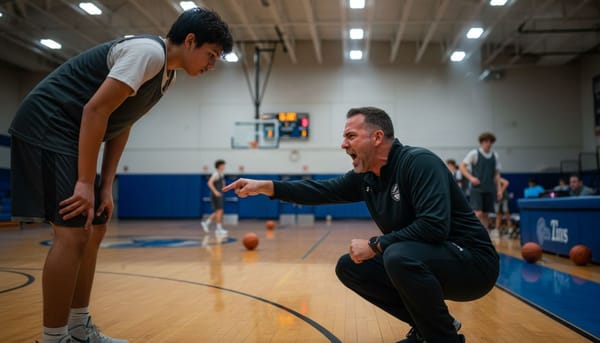
Think about what traditional coaching has looked like for decades. A coach — often with the best intentions — tells players exactly what to do, when to do it, how to position their bodies, when to shoot, when to pass. Every rep is evaluated against a fixed standard. Every mistake gets corrected immediately. On the surface that looks like good coaching. In reality, it's been quietly stripping away something essential: the athlete's ability to solve problems on her own.
The game doesn't wait for instructions. There's no pause button, no voice in your ear telling you what's coming next. And if a player has been trained to look outward for answers — to wait for guidance rather than trust her own instincts — she's going to feel completely exposed the moment she steps between those lines without a script.
That's not a confidence problem. That's a design problem. The training environment created it.
The Confidence Gap in Female Athletes Isn't Random
I don't think it's controversial to say that confidence issues show up more frequently when we talk about female athletes. What I do think is controversial — or at least underexplored — is why.
The easy answer is societal pressure, and sure, that plays a role. But what I keep coming back to is something more specific: the way female athletes have historically been coached. There's a long tradition of male coaches working with female players, and I want to be careful here because I'm not making this about gender in a simplistic way. Whether a coach is male or female matters far less than whether they can actually relate to, communicate with, and truly understand the athlete in front of them.
But here's where it gets real. There is something that a female coach can offer a female athlete — a kind of relatability, a lived understanding — that simply cannot be replicated regardless of how skilled or well-intentioned a male coach is. That's not a criticism. It's just honest. And for a long time, that gap in relatability combined with traditional, top-down coaching approaches meant female athletes were constantly being told what to do without ever being invited to think, feel, or contribute to their own development.
Their voice was absent. And when your voice is absent long enough, you stop believing you have one.
That directly connects to how confidence collapses under competitive pressure. It's not that these athletes suddenly forgot how to play. It's that they never fully owned their game to begin with. For a broader look at how these dynamics shape the female basketball experience across all levels, the female basketball complete guide covers the full picture in a way I think is genuinely worth reading.
Traditional Coaching Left a Mark That Still Shows Up Today
What frustrates me is that we're not really talking about ancient history here. This is still happening. The coaching philosophies that prioritize compliance over curiosity, repetition over exploration, and authority over autonomy — they're still very much alive.
And I get why. Systems are hard to change. When the entire structure of how information gets passed down — from coaching education to practice design to game-day culture — is built around a certain model, it takes real courage and real effort to do something different. Most coaches were coached a certain way. They teach what they know. That's not malice. It's inertia.
But the cost is real. I've seen this play out personally in conversations with players who are technically skilled but emotionally disconnected from their own game. They play cautiously. They second-guess good decisions. They look to the sideline not because they need tactical information but because they've been conditioned to need permission.
There's actually a concept called path dependency that describes this perfectly — the idea that systems keep doing what they've always done simply because that's the path that exists, even when better alternatives are available. Our coaching culture is deep in that pattern. Road signs, school systems, organizational structures — we've built most of our world around a model of top-down information flow, and youth sports coaching is no exception.
The result? We've numbed out the variability, the messiness, the problem-solving that actually builds real basketball intelligence. And female athletes, who were already navigating a system that didn't fully see them, absorbed the worst of it.
What would it look like to build something different from the ground up? That's exactly where this conversation needs to go next.
When Athletes Teach You More Than You Teach Them
There's a moment I think every good coach eventually experiences — you're standing on the sideline, watching a player do something you never told her to do, and your first reaction isn't pride. It's envy. Pure, delighted envy. That moment where you think, I wish I had thought of that. And honestly? That feeling is a sign you're doing something right.
This is something I think about a lot when it comes to developing female basketball players. We tend to frame coaching as a one-directional relationship — knowledge flows from coach to athlete, and the athlete's job is to receive it cleanly and reproduce it accurately. But that framing misses something huge. Athletes, especially when you give them genuine freedom to explore, are constantly generating information. Creative information. Biomechanical solutions you haven't considered. Movement combinations that your own experience simply hasn't produced yet.
I've seen this play out personally. You set up an environment, you give the problem, and then — if you're actually watching and not just waiting to correct — the athlete shows you something. Something small, maybe. A different angle on a finish, an unexpected weight shift, a timing adjustment that shouldn't work but somehow does. And the worst thing you can do in that moment is ignore it because it doesn't match the model in your head.
What I try to do instead is name it. Credit it. Say out loud: hey, you remember when you moved like that just now? I'd never tried that before you showed me. That's fun. We're using that. Because here's what that does — it tells her that her instincts are valid. That her body's natural problem-solving is not something to suppress in favor of a coach's preferred template. It gives her ownership over her own development in a way that most traditional environments never do.
And that ownership matters enormously. Young women especially are so often stripped of their voice — in school, in sport, in culture broadly. They're handed systems and told to fit themselves into them. So when you flip that, even slightly, and say what do you want to work on today, and how do we hit this objective in a way that actually engages you — the response is different. The investment is different. The learning sticks in a way it just doesn't when it's purely top-down.
I don't fully agree with the idea that structure and autonomy are opposites. You can absolutely have outcomes you need to hit as a coach — skill targets, tactical concepts, physical benchmarks — and still leave enormous room for the athlete to find her own path toward them. The outcome is the destination. The route is hers.
What Rigid Movement Really Costs a Player
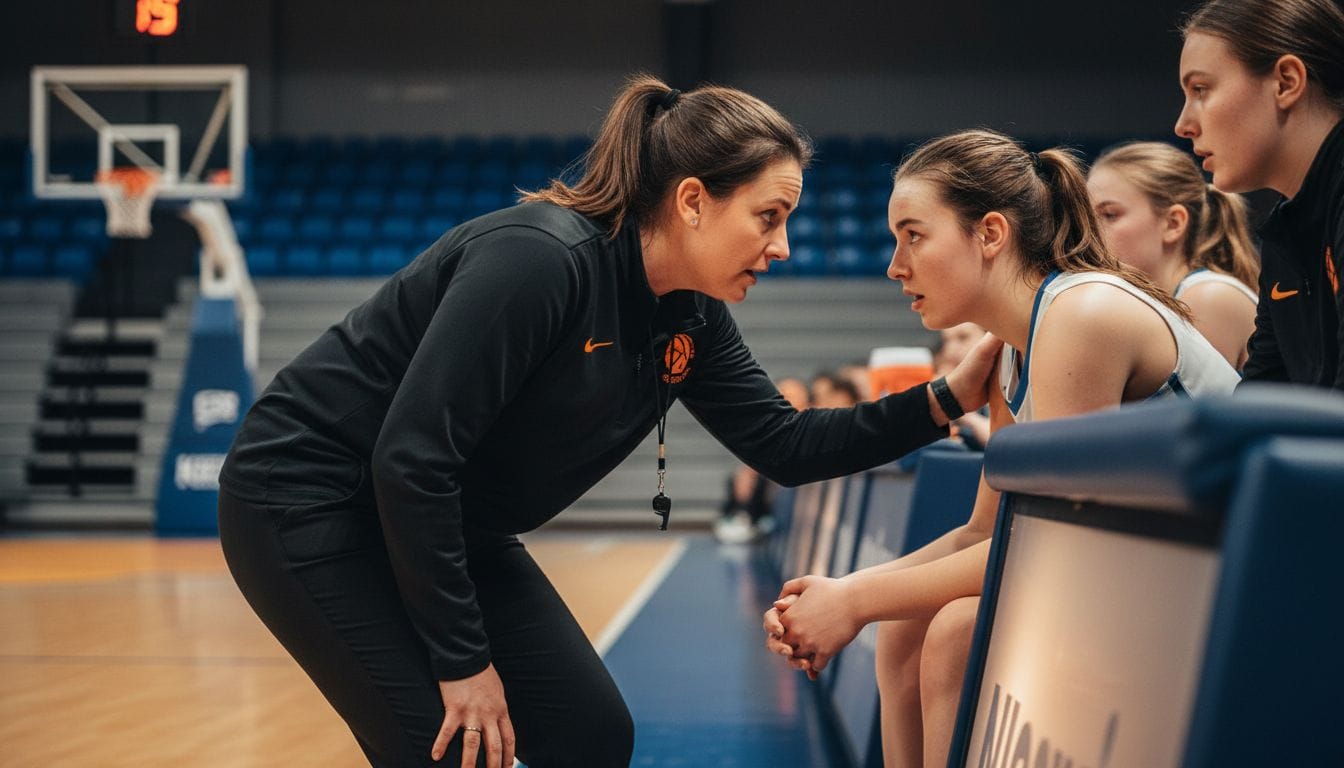
I want to be honest about something that doesn't get talked about enough in player development circles: you can be a genuinely talented athlete and still be profoundly limited by the way you were trained. Not limited in effort. Not limited in work ethic. Limited in adaptability — and that's a different problem entirely, and a harder one to diagnose from the outside.
Think about what it looks like to put in 10,000 repetitions of the same shot, from the same spot, with the same footwork, using a ball machine set to the same speed and height, every single morning for months. On paper that sounds like elite dedication. And in one narrow sense — pure shooting mechanics from a static position — it probably produces results. But what it doesn't produce is a player who can function when the environment stops cooperating.
When I think about this, I immediately picture what happens the moment that player gets destabilized. The defense does something unexpected. The ball comes off the rim at an odd angle. She catches off-balance. And suddenly all those thousands of reps — all that muscle memory built in a perfectly controlled, perfectly predictable environment — can't help her. Her body searches for the solution and comes up empty, or it finds something clunky and recoverable but not functional. She regains control, sure. But she can't operate from that position. She can't turn chaos into opportunity.
That's rigidity. And it doesn't announce itself as a problem until competition punishes it.
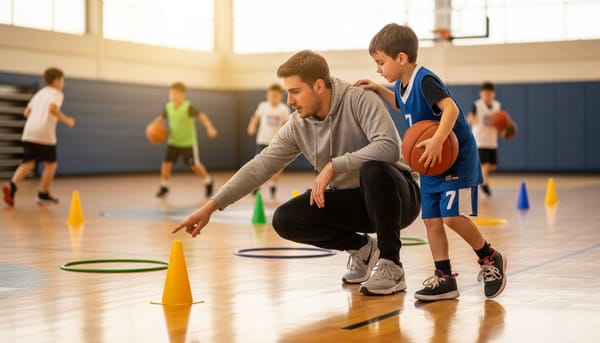
What variability training does — and this is the core of the ecological and constraints-led approach — is it builds a player who has options. She can grab a ball coming from a different face. She can manipulate her hand position mid-movement. She can finish off either foot, in awkward body shapes, from destabilized positions. She's comfortable being uncomfortable because she's been asked to solve novel problems hundreds of times before. Her movement vocabulary is wide. Her coordination patterns stack on each other in combinations rather than sitting in a single, well-worn groove.
What stands out to me is how often the athletes who look the most polished in practice — the ones with the cleanest mechanics under zero pressure — are sometimes the ones who struggle most when real variability enters the picture. And the inverse is also true. Some players who look a little rough in blocked practice settings, who move with what coaches might call "bad habits," turn out to be remarkably adaptive in game situations because their bodies are already used to improvising.
I'm not saying mechanics don't matter. They do. But mechanics that can only survive in a controlled environment aren't really basketball skills — they're practice skills. And there's a real difference.
You Had the Gold All Along — You Just Needed the Right Environment
This might be the idea I find most compelling, and also the most quietly devastating: that so many athletes have been carrying enormous physical and athletic potential their entire careers, and it was never unlocked — not because they didn't work hard enough, but because no one ever put them in an environment that asked their body to use it.
That's not a small thing. That's years. Careers, sometimes.
I've heard it described this way: imagine you've been saving money your entire life, and it's just sitting in a bank account. Growing a little. But essentially dormant. You have genuine wealth — the capacity is real — and yet nothing is being built with it. That's what blocked, repetitive, low-variability training does to an athlete's self-organizing potential. The coordination is in there. The adaptability is in there. The athleticism is absolutely in there. But the training environment never issued a request for it. So it stays banked.
For anyone who wants to understand the broader landscape of how this connects to female athletic development specifically, I'd point you toward this complete guide to female basketball, which covers a lot of the foundational context around how women's basketball has evolved and what genuinely effective development looks like across skill levels.
What the constraints-led approach does — what good ecological design does — is it makes a withdrawal. It says: here's a problem your body has never seen before. Solve it. And the first few times, a player might look uncertain, might move awkwardly, might not have a clean answer. But over time? The self-organization that was always there starts to activate. Movement patterns that were dormant start connecting. And the player that emerges on the other side isn't just better at basketball — she moves differently. More fluidly. More confidently. Like someone who's discovered that she had options she didn't know existed.
That transformation is deeply personal for the coaches and trainers who witness it up close. It's why, when someone says thank you after a session, the honest response is: no, thank you. Because you didn't install something that wasn't there. You just finally created the conditions for what was already there to come out.
What the Female Game Can Learn From the Men — And Vice Versa
This is something I think about a lot, and honestly it's one of the more nuanced conversations in basketball development. The instinct is usually to treat this as a one-way street — like the women's game just needs to catch up to the men's. I don't fully agree with that, because both sides have real things to offer each other.
When I think about what the female game could genuinely borrow from the men's side, it comes down to one thing: unapologetic competitiveness. Not arrogance. Not disrespect. That specific brand of relentless, confident aggression where a player looks at her opponent and communicates — without saying a word — I've got you. That kind of cockiness, when it's earned and grounded in real preparation, is electric to watch. And it's not exclusive to men. When you see it in a female player? It's just as compelling. Maybe more so, because it's rarer.
What I've noticed is that this competitive edge tends to emerge naturally when training has been honest. When a player has actually been put in uncomfortable, variable situations — not just rehearsed the same five-spot shooting drill a thousand times — she knows what she can do. That internal certainty is where real confidence comes from. It's not manufactured. You can't fake it in a game, and you can't build it through carbon-copy repetition.
Now flip it around. What can male players take from the female game? Intentionality and the willingness to be vulnerable faster. I've seen this play out personally watching how differently male and female athletes respond to being challenged or corrected. Male athletes, especially at competitive levels, often burn a lot of time protecting an image before they actually get to work. The ego armor goes up. The posturing starts. And it slows everything down.
Female athletes, generally speaking, tend to be more willing to acknowledge they're struggling with something and just get into it. That's not a weakness. That's actually a massive accelerator for skill development. The athletes — male or female — who reach the highest levels all share one trait: they drop the ego fast and lean into the uncomfortable parts of learning. They want to get better more than they want to look good in the gym.
Teaching Early What Most Athletes Learn Late
Here's what really sticks with me from everything I've thought through on developing female basketball players: the most valuable lessons tend to arrive too late. A player spends years grinding through outcome-focused training, rigid repetition, single-sport specialization — and eventually, maybe, she figures out there's a better way. But she figures it out at 24, 25, 26. After she's already formed habits that take real effort to undo.
The whole point of thoughtful development is to compress that timeline. To give younger players access to the insights that used to only come through years of trial and error. If you understand early on that making 600 identical shots doesn't build a real shooter — it builds a robot who breaks down the moment the environment changes — you can train differently from the start. You can embrace variability. You can see struggling in practice as the signal that real learning is happening, not as something to be embarrassed about.
The multi-sport piece matters here too. Athleticism, body robustness, movement variability — these aren't bonuses. They're the foundation. A player who grew up swimming, playing soccer, running track, comes to basketball with a body and nervous system that's already been asked to adapt to a thousand different situations. That's protective against injury. It's also protective against the kind of movement rigidity that limits a player's ceiling. For anyone wanting the broader context on how all these pieces connect within women's basketball development from foundations to elite competition, that full picture matters enormously when you're thinking long-term.
What I keep coming back to is this: the goal was never just better basketball players. It's more complete athletes, more self-aware competitors, and honestly — more people who genuinely enjoy the game they're playing. When training is honest, when the environment demands real adaptability, when confidence is built on something solid rather than rehearsed routine — basketball becomes fun in a different, deeper way. That's worth chasing. For every player, at every level.