The 4 on 3 Youth Basketball Drill That's Changing How Kids Learn the Game
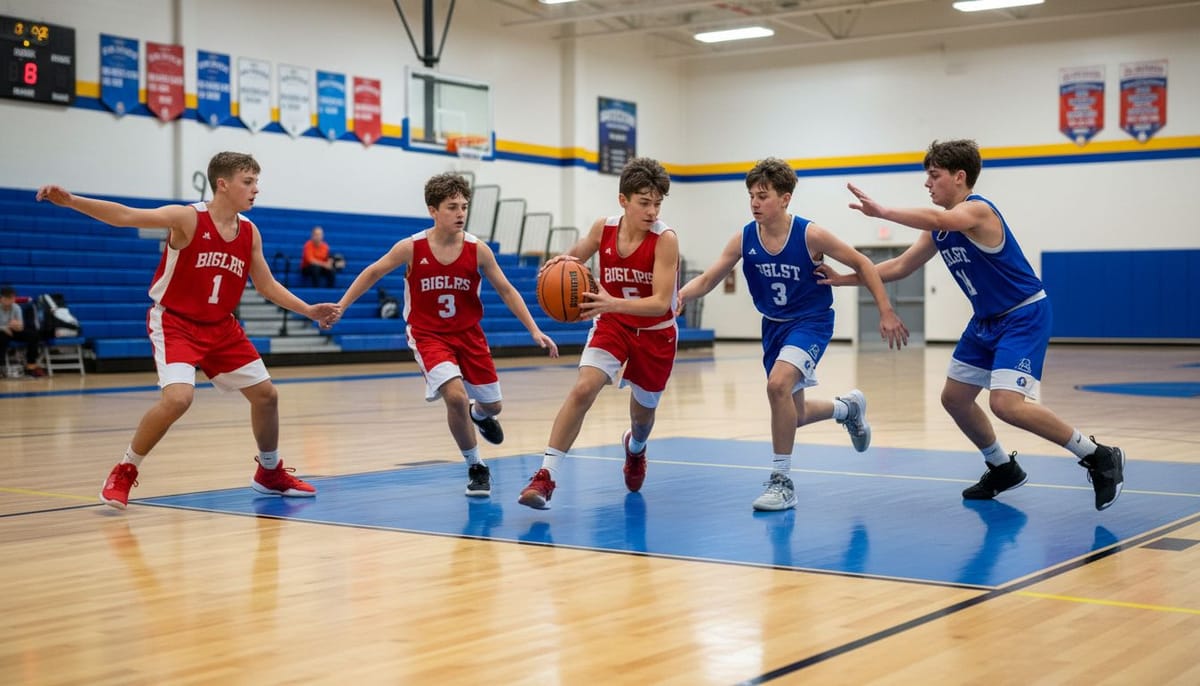
Most third and fourth grade basketball games look the same: constant whistles, jump balls every thirty seconds, kids standing around confused, and parents in the bleachers watching what amounts to organized chaos. I've seen it more times than I can count. It's frustrating for everyone — the kids, the coaches, the parents. But there's a format that flips the whole experience on its head, and once I learned about it, I couldn't stop thinking about how different youth basketball could feel. It's called the 4 on 3 youth basketball drill — or more specifically, a continuous 4-on-3 into 3-on-2 fast break league format — and it might be the most sensible structural change I've ever come across for teaching young players how to actually play the game.
Where This Idea Actually Came From
The origin story here matters, because this isn't some theoretical concept cooked up in a coaching clinic. It started with a veteran high school coach named Jeff Boo, who spent over 30 years as a head coach at Sun Prairie, a large school outside of Madison, Wisconsin. He and a coaching friend were trying to solve a very real, very practical problem: traditional five-on-five basketball just doesn't work well for young kids. So they experimented. They tried different formats, different rules, different constraints. And eventually they landed on this continuous fast break structure that's now being picked up by youth programs across the Midwest.
Sean Kading, a 12-year varsity head coach at a public school in St. Peter, Minnesota, heard about it from Boo and brought it to his own community. Sean's got twin boys in third grade — so he's not just thinking about this as a coach, he's thinking about it as a parent. That combination gives him a perspective that I find genuinely compelling. He posted a clip of the format on Twitter and the response from coaches was immediate and enthusiastic. That tells you something. When experienced coaches see something and immediately think "why aren't we all doing this?" — that's worth paying attention to.
How the Format Actually Works
Let me break this down clearly, because the structure is specific and the details matter.
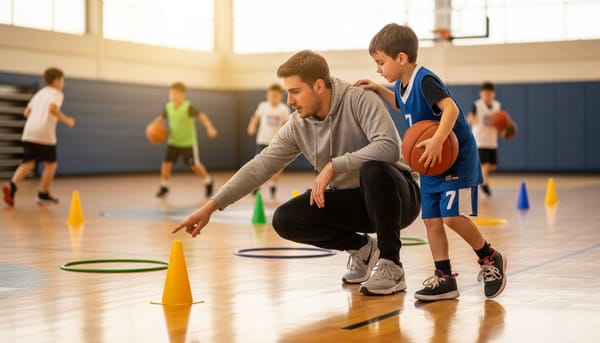
The game is played in four 10-minute quarters. One team brings the ball down four-against-three. While that's happening, the other team is waiting on the side. Once the possession ends — whether it's a score, a turnover, or a rebound — that second group comes down three-against-two. Then those players rotate off, and it keeps going. Continuous. No standing around. No waiting for a full reset. The pace is constant.
But the format alone isn't what makes it special. There are two specific rule constraints that Sean mentioned, and I think they're brilliant.
First: defenders cannot pick up ball-handlers past the three-point arc. That single rule changes everything for younger players. One of the biggest problems in youth basketball is that kids with weaker handles — which is most of them at that age — get trapped and stripped before they even cross half court. It kills the game before it starts. By creating that "safe zone" for ball-handlers, every kid can bring the ball up with some confidence. Skill level stops being the gatekeeper to participation.
Second: defenders cannot reach in to steal the ball directly from a dribbler. They can steal passes — that's still live — but no going in for the poke or the lunge. Jump balls basically disappear. This is a bigger deal than it sounds. In traditional youth basketball, the jump ball is the great equalizer in the worst way: it stops rhythm, it rewards grabbing over skill, and it teaches kids to play through contact rather than through spacing. Remove the reach-in, and suddenly kids have to actually play defense with their feet. And on offense, they have to actually make reads instead of just protecting the ball and hoping to survive.
Why Traditional Five-on-Five Fails Young Kids
I want to spend some time here because I think this is where most youth basketball programs get it wrong — and they get it wrong with good intentions.
The assumption is that kids should play the real game as early as possible. Five-on-five, full court, standard rules. The logic is that exposure equals development. But when I think about this, I immediately push back. Exposure without readiness isn't development. It's just noise.
Here's what actually happens in most third and fourth grade five-on-five games. The two or three most athletic kids dominate. Everyone else either stands still or chases the ball in a cluster. There are traveling calls every possession. Half the game is consumed by jump balls. Parents watch from the stands trying to stay engaged but mostly waiting for something interesting to happen. And the kids who aren't naturally skilled yet? They learn very quickly that basketball isn't for them.
What's the real issue? Constraints. Or the lack of them.
When you give young kids a full court, five defenders, and adult-level rules, you've created an environment that's too complex for the cognitive and physical stage they're at. They can't process the spacing. They can't read defenders. They can't execute passing sequences under pressure. So they default to survival mode — hold the ball, get it to the best player, hope for the best.
The fast break league format solves this by shrinking the decision tree. Three offensive players against two defenders. Four against three. There's always an open person. The math forces it. So instead of learning to play through chaos, kids are actually learning to find the open player — which is, when you strip away all the complexity, what basketball is fundamentally about. If you want to understand why this matters in the context of player development at every level, this fits squarely within the principles behind youth basketball drills that are designed to build real skills progressively.
Sean made a comparison to soccer that stuck with me. In soccer, kids grow up learning to play in space. They learn early that movement creates opportunity, that spreading the field matters, that finding a teammate who's free is the whole point. American youth basketball rarely teaches that. We teach kids to dribble, and then we surround them with defenders and wonder why they can't see the floor.
The fast break format introduces space as a permanent feature of the game. There's always a numbers advantage. There's always someone open. The only question is whether the player with the ball can see it and make the right decision. That's exactly the basketball IQ muscle you want to develop at age eight or nine.
The Constraints That Make This Drill Actually Work
Not all of the rules in the 4 on 3 youth basketball drill were there from day one. That's something I find genuinely fascinating about how this format evolved. Some of the most important constraints came from watching things break down in real time — a coach noticing a problem, an assistant pushing back, and eventually landing on a rule that turned out to be more valuable than anyone expected.
Take the no-reaching rule. I'll be honest — my first instinct when I heard about it was the same hesitation a lot of coaches have. Doesn't that just make kids passive on defense? Doesn't it take away their aggression? But here's what I've come to understand: reaching isn't aggression. It's a reflex born out of not knowing what else to do. When you remove that option entirely, kids are forced to figure out positioning, footwork, and staying in front of their man. That's real defense. And the byproduct on the offensive end? Huge.
Because now the kid who picks up their dribble on the right wing — every team has that kid — doesn't just get swarmed and panicked into a turnover or a held-ball call. They actually get a moment. A real moment to feel their pivot foot, find their balance, and make a decision. That's the whole game right there. That's basketball in its most fundamental form. And for a seven or eight year old who's basically trying to control a ball that's nearly the size of their torso, that moment is everything.
The other constraint I think is criminally underrated is lowering the hoops. I know there are purists who will argue kids should always play at ten feet to "get used to it." I don't fully agree with that because what good is getting used to ten feet if you never actually score, never feel the joy of making a basket, and never want to come back to practice on Tuesday? Scoring matters. Success matters. At eight feet, more kids get that experience, and that positive feedback loop keeps them engaged long enough to actually develop.
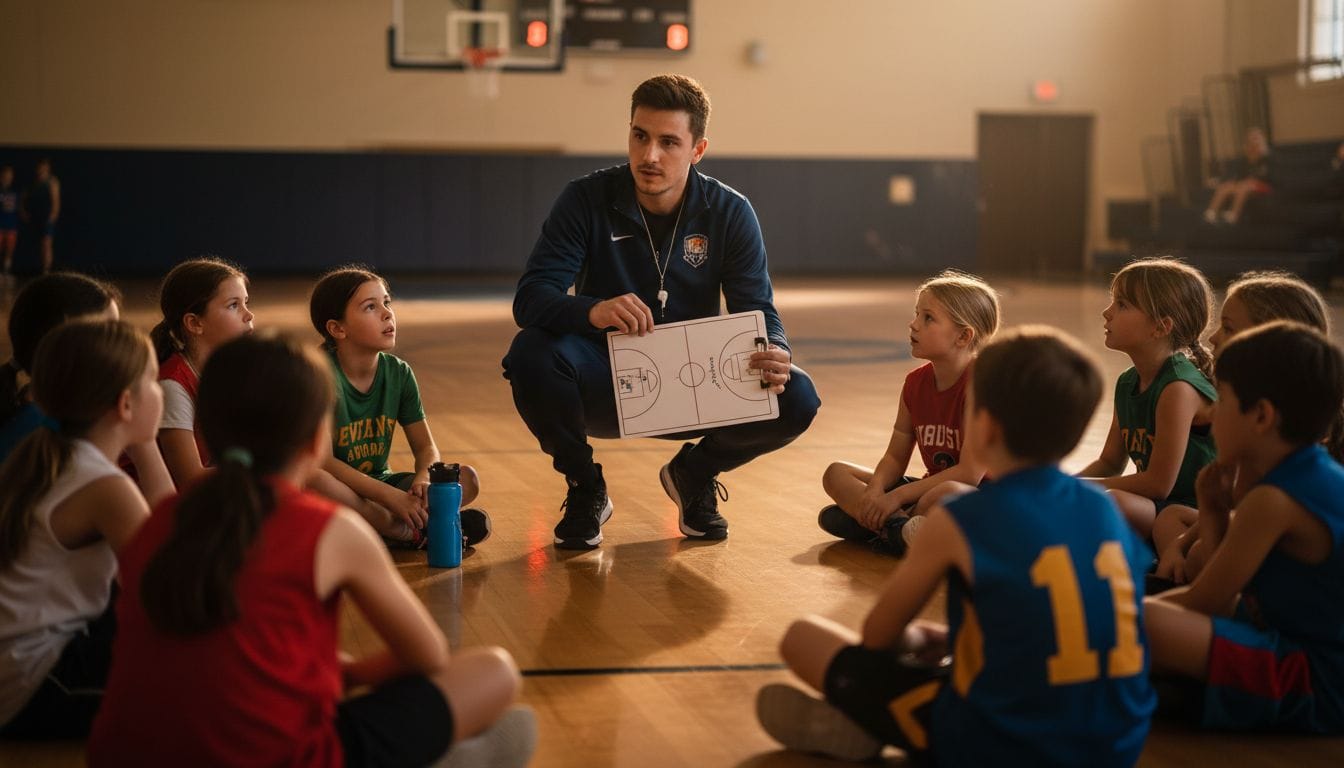
And then there's the "no rainbow passes" rule — which I love. A loose, sky-high chuck from one end of the court to the other is not a real pass. Calling it a turnover immediately teaches kids that passing has standards. It has to have purpose and accuracy. That's a lesson that carries directly into five-on-five play.
What Happens When You Watch Kids Actually Apply This in a Real Game
This is the part that gets me. When a drill format genuinely transfers — when you see the behavior show up in a real game without prompting — that's when you know something worked.
The feedback from parents during actual tournaments says it all. Kids who had been playing this format for just four weeks showed up to their first five-on-five game moving the ball, passing ahead in transition, and using their pivots under pressure. Parents were texting coaches mid-game. That's not a coincidence. That's a direct result of the environment those kids had been trained in.
What stands out to me is the scoring piece. In a traditional youth game, you might see a final score of 12-8. In this format, kids are scoring in the 50s. Fifty points. For a second grader, that's not just fun — it rewires what they think is possible on a basketball court. They start to believe they can score. They start to believe passing leads to better shots. They start to trust their teammates because they've seen it work over and over in practice. That belief doesn't go away when the format changes to five-on-five. It comes with them.
I've seen this play out personally with how kids handle pressure situations. The kid who used to panic the moment a defender got close — the one who'd just hold the ball and freeze — becomes a kid who pivots, surveys, and finds someone. Not because a coach screamed it from the sideline. Because they practiced it a hundred times in a safe, structured environment where the rules protected their ability to learn. If you want a deeper foundation for thinking about how drills like this fit into a broader player development philosophy, this complete guide to youth basketball drills does a great job laying out the full picture.
There's also something worth naming about what this does for kids who aren't naturally confident with the ball. In a standard five-on-five practice, those kids often just survive. They avoid the ball. They stand in the corner. This format doesn't let them disappear. Three-on-three on one end, four-on-three on the other — everyone is involved. Everyone touches the ball. Everyone has to make decisions. That's not small. For a lot of kids, that's the difference between staying in the sport and quitting by fifth grade.
How Coaching This Changes the Way You Think About Development
Something I think about a lot is how much coaching a constraint-based game like this actually changes the coach, not just the players. When you strip the game down to four-on-three and install specific rules around reaching, passing quality, and pivot opportunities, you stop coaching outcomes and start coaching moments.
You're not yelling "pass the ball!" You're watching a kid try to reverse pivot for the first time and just... letting it happen. Five seconds, six seconds, seven seconds — and then they find it. They step through, they get their hips around, and they throw a bounce pass to a cutter. In a normal game that sequence never plays out because someone reaches in, a whistle blows, or the coach subs them out out of frustration. Here, the environment protects the learning. The coach's job becomes observation and reinforcement rather than constant intervention.
That's a genuine shift in mindset. And I think it makes better coaches. When you watch a drill like this run properly, you start noticing things — who's uncomfortable with their left hand, who always passes backward out of fear, who's starting to read the defense before they even receive the ball. You collect that information, and then your individual coaching conversations become much sharper and more specific.
The kids who struggle with pivoting in this drill aren't failing. They're showing you exactly what they need to work on next. That's valuable information you'd never get in a five-on-five scrimmage because the chaos hides all of it. This format is almost like slowing the film down while the game is still happening live.
What Varsity Coaches Can Learn From a Third-Grade Drill
Here's something that stopped me in my tracks when I first heard it: a varsity coach said that running odd-man drills with his third graders actually changed how he coaches at the high school level. Not the other way around. That detail really stuck with me, because we tend to assume the learning flows downward — from the varsity level to the youth level. But when I think about this, I immediately see why it works in reverse too.
The core insight is this: scrambled, uneven situations are everywhere in real basketball. The analytics back it up. A massive percentage of actual game possessions aren't clean five-on-five sets. They're broken plays, transition chaos, one defender caught out of position, two guys trying to guard three. Shell drill doesn't teach you how to survive that moment. A 4 on 3 youth basketball drill does — and according to coaches who've used it across age groups, it does so better than almost anything else.
What stands out to me is the defensive development angle, which I think gets massively overlooked when people talk about these drills. Everyone focuses on the offensive benefits — more touches, better decision-making, open lanes. But the defender who's outnumbered is learning something deeply valuable: how to read gaps, how to stall, how to buy a second for a teammate to recover. At the varsity level, that's a game-changing play. Getting a stop when you're down a defender doesn't just prevent points — it shifts momentum entirely.
I've seen this play out personally in pickup runs. The players who scramble best, who can buy a half-second and force a worse shot even when they're beat — those aren't the players who ran the most structured drills. They're the ones who played in chaotic, mismatched situations over and over until their instincts just kicked in. That's what these drills are building. Not a play. Not a system. Instinct.
Should You Run This at Every Age Level? Here's My Take
There's real pushback in youth basketball culture against anything that isn't "real basketball." Five-on-five, full court, structured sets. I understand the impulse — coaches and parents want kids to look like they're playing the actual game. But I don't fully agree with this instinct, because it confuses the appearance of basketball with the development of basketball players.
Odd-man drills — run well, at any age — are actually more representative of real game situations than a lot of tightly scripted five-on-five practice time. And if you're thinking about where these drills fit within your broader practice design, the youth drills complete guide breaks down how to sequence and layer different drill types across a full practice plan, which is genuinely useful context here.
My honest opinion on age ranges: I think the resistance to using these drills past fourth or fifth grade is mostly cultural, not developmental. The instincts you're training — reading gaps, making decisions under pressure, proactive help defense — don't expire at age ten. They become more relevant as the game gets faster and opponents get smarter. If anything, a seventh or eighth grader running a constrained four-on-three with a dribble limit is going to get more out of it than a third grader will, precisely because they can process what's happening and make conscious decisions about it.
That said, I think the right approach is to show coaches and program directors the benefits and let them decide. Forcing it never works. But if someone runs this drill with genuine intention — not just as a filler activity but as a deliberate teaching tool — I'd be genuinely surprised if they wanted to go back to running even-man drills exclusively.
The bottom line for me is straightforward. Basketball is full of chaos. The best players aren't the ones who only know what to do when everything is clean and organized. They're the ones who've been thrown into uneven, scrambled situations so many times that their body just knows what to do. A drill as simple as four-on-three, run consistently from early youth all the way through high school, builds exactly that. It's not a shortcut. It's the long game — and it's one worth playing.