Test your 1v1 game with this simple drill

What if the secret to better finishing wasn't more reps, but fewer dribbles?
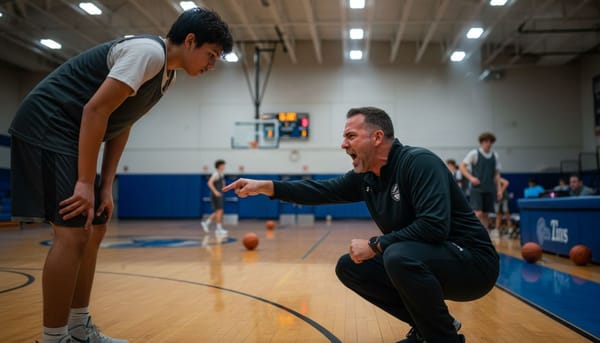
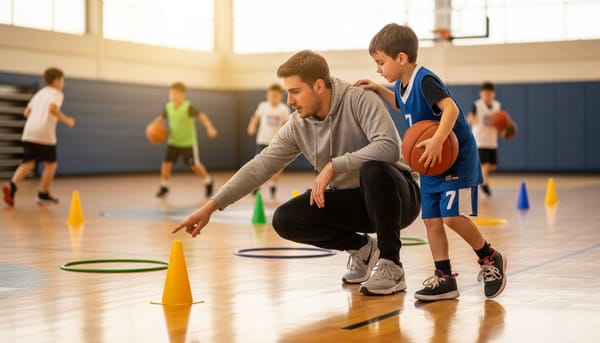
We recently came across a finishing drill that stopped us in our tracks. Not because it was flashy or complex, but because it was brilliantly simple. A coach sets up a ball behind a defender. The offensive player grabs it, and the moment they do, it's live. The catch? They only get two dribbles to finish.
Two dribbles. That's it.
Most focus on repetition. Get to the rim. Again. And again. But this one's different. It forces players into an uncomfortable reality: you don't always have time to think, set up your move, or take that extra gather step. The game happens fast, and decision making under pressure separates good finishers from great ones.
The Power of the Two-Dribble Constraint
Constraints aren't limitations. They're accelerators.
When you tell a player they can only use two dribbles to score, something fascinating happens. They can't waste movement. Every dribble has to count. That first touch out of the catch becomes critical—is it aggressive? Is it setting up an angle? Is it protecting the ball?
We've watched leagues using CourtClok track player development over entire seasons, and the pattern is clear: players who train with constraints develop faster. Why? Because constraints force decisions. Real-time, instinctive, pressure-tested decisions. The kind you need when you're driving baseline with three seconds on the clock and a defender closing out hard.
Think about the drill setup again. The ball starts behind the defender. The offensive player has to secure it first, then immediately process: Which way is open? Where's the help? What finish gives me the best chance? And they have to do all of this with just two dribbles.
That's not just a finishing drill. That's a cognition drill.
Why Defense Needs to Be Part of Every Finishing Game
Here's where most finishing drills fall apart: they're sterile. No defender. No pressure. No chaos.
The drill we're breaking down gets this right. The defensive player isn't just standing there—they're actively turning, finding the ball, and closing out. It's reactive. It's competitive. It's real. This is exactly what we see missing in so many practice plans: the game-speed pressure that only a live defender can provide.
When you train finishes without defense, you're teaching players to execute moves in a vacuum. Sure, their footwork might look pretty. Their form might be textbook. But what happens when a hand contests their layup? What happens when they get bumped mid-air? What happens when the help defender rotates over and cuts off their angle?
They panic. Because they've never had to finish under actual pressure.
The beauty of this two-dribble game is that it builds pressure into the design. The defender is live. The offensive player has limited resources. Every rep becomes a test: Can you problem-solve on the fly? Can you adjust your finish based on what the defense gives you?
Alternating Sides Changes Everything
One detail from the drill stood out to us: "Make sure you alternate your sides."
Simple instruction. Massive implications.
Most players have a comfort zone. They love attacking right. Or they always finish left-handed going baseline. By forcing side alternation, you're systematically eliminating predictability. You're building ambidextrous finishers who don't telegraph their moves before they even start.
We've built CourtClok's practice planning tools specifically for this kind of intentionality. Coaches can set up drills, track which variations they've run, and ensure they're hitting both sides, both hands, both angles. Because if you're not tracking it, you're probably defaulting to comfort—yours and your players'.
The Speed Advantage: When Offense Has the Upper Hand
Here's what gets overlooked in most league play: the out of bounds situation isn't neutral. It's already tilted.
The offensive team is facing the court. They can see everything. Their defenders? They're turned, compromised, scrambling to get back into position. That split second matters more than most coaches realize.
We've watched hundreds of games through CourtClok, and the teams that consistently capitalize on these moments are the ones tracking them. They know which players excel in transition. They know who can push that speed advantage before the defense sets. It's not luck—it's awareness.
Speed advantage isn't just about having fast players. It's about recognizing when you have it and actually using it. How many times have you seen a team with a clear numbers advantage slow down and set up a half-court offense? It happens constantly. And honestly, it drives us crazy because that advantage evaporates in about three seconds.
This is exactly the kind of situational awareness that coaches should listen to players during timeouts about. Your players feel these advantages on the court. They know when they had an opening that disappeared because the system said to wait.
The Two Types of Advantages Every Coach Needs to Recognize
So what are we really looking for here? Two distinct advantages that change everything about how a possession should unfold.
First, there's the speed advantage. Pure and simple. Your team gets the ball, the defense is still rotating, and you have open floor ahead. This is your window. Push it. Attack it. Don't overthink it.
Second—and this one's more subtle—there's the positional advantage. Maybe you don't have numbers. Maybe the defense got back. But they're facing the wrong way, their rotations are off, or someone's defending the wrong assignment. That's still an advantage worth exploiting.
The problem? Most youth and rec league coaches don't have time to break down film and identify these patterns. They're volunteers juggling full-time jobs and trying to keep twelve kids engaged during practice. We get it. That's exactly why we built tracking features into CourtClok that help you see these patterns without spending hours with video.
When you can quickly identify which players consistently convert these advantages versus which ones hesitate, you're coaching with actual data instead of gut feel. And let's be honest—in a volunteer coaching situation where practice time is limited, that efficiency matters tremendously.
Think about how modern basketball demands a new approach to these situations. The old model was run the play. The new model is read the advantage. Big difference.
From Theory to Game Time
Understanding advantages in theory is one thing. Actually capitalizing on them during a chaotic Saturday morning game? That's different entirely.
Your players need to recognize these situations instinctively. That means repping them in practice, yes. But it also means giving them permission to push when they see an opening—even if it's not "the play" you called.
We've seen coaches using CourtClok to track exactly these scenarios: when did we push our advantage? When did we waste it? Over the course of a season, the teams that identify and exploit these moments consistently are the ones winning close games. Not because they're more talented. Because they're more aware.
And awareness, unlike athleticism, can be taught. It just needs to be measured first.
Speed or Spacing: Letting Players Choose Their Weapon
Here's where things get really interesting.
The coach breaks ball screen reads into two clear paths: either you have a speed advantage going downhill, or you don't — and if you don't, you need to be quick to hit the roll man or pop. That's it. No eighteen-page playbook. No memorizing every possible coverage and counter. Just two options based on what the defense gives you and what you're good at.
We heard this framework and immediately thought about the leagues using CourtClok. How many coaches are overcomplicating the pick and roll with too many options, too many calls, too many reads? Players end up paralyzed by information instead of empowered by clarity.
This approach does something brilliant: it gives players agency within structure. If you're quick like De'Aaron Fox, you know your primary weapon is attacking downhill. If you're crafty like Luka, you know your game is about patience and hitting your screener. Same action, different execution based on individual strengths.
It's the opposite of punishing players for making mistakes — it's setting them up to make confident decisions based on clear principles. And when players understand the "why" behind their choices, they don't just execute better in games. They develop better basketball IQ.
The beauty of this framework? It scales. Youth players can start with these two simple reads. Advanced players can layer in more nuance — but they're building on a foundation that makes sense, not memorizing disconnected plays that fall apart under pressure.
Why This Matters for Your League
If you're running a league or coaching a team, here's what we'd challenge you to think about: Are your players learning basketball, or are they just running plays?
There's a massive difference. Plays are fragile. They require everyone to be in exactly the right spot doing exactly the right thing. One mistake and the whole thing crumbles. Principles are adaptable. They work in transition, in half-court, when your point guard is out sick and the backup is running the show.
Teaching how to become elite in the pick and roll using concepts like these creates players who can think, not just execute. And honestly? That's what keeps kids playing basketball. The sport is more fun when you understand it, when you can see the game developing and make real decisions.
We've built CourtClok specifically for coaches and league organizers who want to focus on what matters — teaching basketball, developing players, and creating competitive environments where kids actually improve. When you're not drowning in administrative chaos or manually tracking stats on paper, you can spend time on stuff like this. Breaking down film. Teaching concepts. Having real conversations about improving decision-making.
The pick and roll might be basketball's most common action, but it's also one of the most revealing. How you teach it says everything about your coaching philosophy. Are you creating robots or basketball players? Are you demanding perfection or teaching principles?
The best coaches we see aren't the ones with the thickest playbooks. They're the ones whose players can adapt, think, and execute under pressure because they understand the game at a deeper level. They're teaching basketball that transfers — from youth leagues to high school to beyond.
So whether you're coaching a rec league team or running a competitive travel program, take a page from this approach. Simplify your teaching. Give players clear frameworks they can build on. Trust them to make decisions based on what they see and what they're good at. And watch what happens when you stop overcomplicating basketball and start empowering players to actually play.