Inside Transforming Basketball’s Camp in Norway

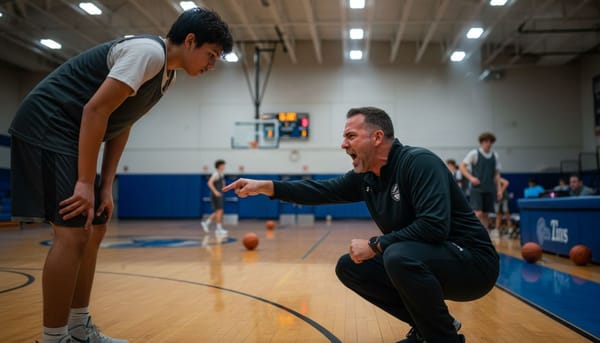
Here's something that's going to flip everything you know about basketball training on its head: What if I told you that barking "Get lower!" and "Move your feet!" at your players is actually holding them back? Yeah, I know. We've all been there — either as the coach losing our voice on the sideline or as the player getting those instructions drilled into our heads. But here's the truth that's transforming how elite programs develop their athletes: You can't command someone into becoming a better basketball player. You have to design the problems that force them to figure it out themselves.
Carrie Kbbit, the player development and skill acquisition specialist for the Scottish Basketball Federation, put it perfectly: "It's all about coordination and putting those athletes in those positions versus yelling at them saying, 'Hey, go lower, do this, do that.' No, you just put them in that position. You design a problem for them to figure it out." This isn't just some trendy coaching philosophy. This is real-world application that's changing how we develop basketball players at the highest levels. And honestly? It's about time we started thinking differently about how we teach this beautiful game.
The Problem With Traditional Basketball Training
Let's be real for a second. How many times have you seen a player look absolutely perfect in a drill — smooth footwork, textbook form, everything by the book — and then completely fall apart when the game starts? All the time, right?
That's because traditional training methods focus on the wrong things. We line players up. We have them do the same movement over and over. We correct their form with verbal cues. "Bend your knees more!" "Keep your hands up!" "Stay in front of your man!" And sure, maybe they start doing it correctly in that controlled drill environment. But what happens when they're in a real game situation with defenders flying at them, teammates cutting, the shot clock winding down, and the crowd going absolutely nuts?
They freeze. Or worse, they revert back to their old habits because they never actually learned how to solve the problem — they just learned how to follow instructions in a comfortable, predictable setting.
The Norwegian Federation identified this exact issue with their players. They had an "inability to operate and make decisions in smaller spaces." Think about that. These are skilled athletes who could probably execute drills beautifully, but when the game compressed and they needed to think and move simultaneously in tight spaces? They struggled. And here's the kicker — you can't drill your way out of that problem using traditional methods. You have to expose players to those situations and let them develop solutions.
What Is Constraints-Led Approach and Why Should You Care?
Okay, so there's this methodology that's been gaining serious traction in basketball development circles. It's called the Constraints-Led Approach, or CLA for short. Now, before your eyes glaze over thinking this is some academic mumbo-jumbo, stick with me. This approach is genuinely changing the game.
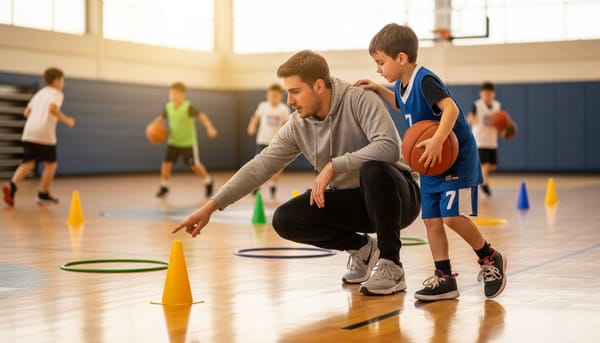
The basic idea? Instead of telling players what to do, you design practice environments that constrain them in specific ways, forcing them to discover solutions on their own. You're not removing coaching from the equation. You're just coaching smarter.
Here's what Kbbit emphasized: "Their movements will determine their intentionality. And we need intentionality when we want functionality." That's powerful stuff right there. When a player discovers a solution through movement and problem-solving rather than verbal instruction, that solution becomes intentional. It becomes theirs. And when game time comes around and everything's on the line? That's the stuff that actually transfers.
Think about it this way. When you learned to ride a bike, did someone stand there and say, "Okay, now engage your core muscles, shift your weight 47 degrees to the left, and pedal at exactly this cadence"? No! Someone probably gave you a push and you figured it out through trial and error. You learned to feel the balance, to make micro-adjustments, to solve the problem of staying upright while moving forward.
Basketball is infinitely more complex than riding a bike, but the learning principle is the same. Players need to be put in situations where they have to figure things out.
Moving Beyond Repetition
As Kbbit mentioned, "It's not going to be a repetition of the basic idea of CLA or transforming. It's going to be you within the mythology, but it's going to be basketball." This is crucial. We're not abandoning basketball-specific skills. We're not doing weird exercises that have nothing to do with the game. We're teaching basketball through basketball — but in a way that develops problem-solvers, not robots.
The traditional model says: Do this specific move 100 times until it's perfect. The constraints-led model says: Here's a problem that requires this type of movement to solve. Now figure it out. And do it again in a slightly different context. And again with different constraints. The movement pattern emerges through exploration, not prescription.
Problem-Solving and Cognition in Real Time
Here's where it gets really exciting. When you watch players working within a constraints-led framework, you're literally watching their brains and bodies coordinate in real time. "This is you seeing problem solving and cognition in real time," Kbbit explains. It's not neat and tidy. It's messy. Players will fail. They'll look awkward. They'll struggle.
Good. That's exactly what we want.
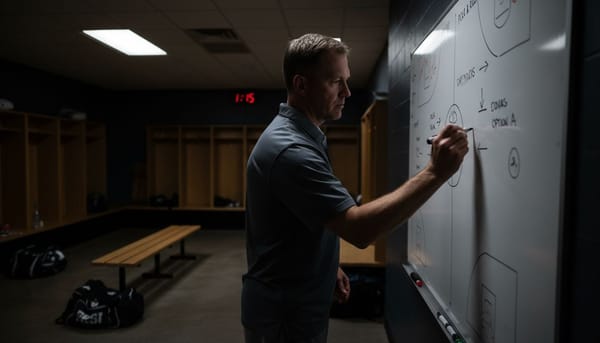
Because here's what's happening in those moments of struggle: The athlete is learning to command their space, to hold it, to find it. These aren't things you can teach with a diagram on a whiteboard. These are skills that emerge through direct exposure to challenging situations. When we challenge players' "abilities to command their space to hold it, but also to find it," we're developing the kind of spatial awareness and decision-making that separates good players from great ones.
And look, I'm not going to lie — this approach requires patience. It requires us as coaches, parents, and trainers to be comfortable with our players looking uncomfortable. We have to resist the urge to jump in and correct every little thing. We have to trust the process and understand that the struggle is the process.
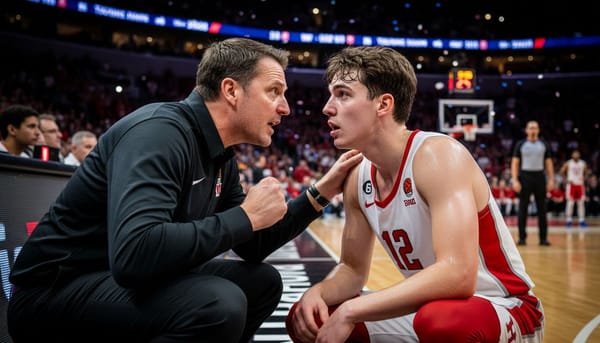
When a coach says "Find a way" instead of "Do it this way," something magical happens. The player takes ownership. They become invested in the solution because it's their solution. And that intentionality, that ownership? That's what shows up in the fourth quarter of a close game when everything matters.
Why Coach Development Changes Everything on the Court
Here's the truth that nobody wants to say out loud: we can't blame our players for not knowing what they haven't been taught.
Look, I've watched countless games where teams just aren't executing fundamentals. And yeah, it's easy to point fingers at the athletes. But hold up. Who's teaching them? Coach development isn't some luxury or nice-to-have — it's literally everything. When we invest in educating our coaches, we're investing in every single player they'll ever touch. That's hundreds of athletes over a coaching career. Maybe thousands.
The methodology matters because basketball IQ doesn't just appear magically. It's taught. It's practiced. It's reinforced through the right drills and the right coaching philosophy. When coaches understand not just the what but the why behind every drill, every movement pattern, every decision — that's when real development happens.
And here's what gets me excited: when coaches learn to create environments where athletes can explore and discover solutions themselves, that's next-level stuff. We're not just programming robots to run plays. We're developing basketball players who can think, adapt, and solve problems in real-time.
Ball Handling That Actually Translates to Game Situations
Can we talk about functional ball handling for a second? Because there's a massive difference between dribbling in a straight line and actually handling the rock in live game situations.
Between-the-legs moves from different angles. Different positions on the court. Going through the front door when it's open, but having the vision and skill to attack through the back door when the defense takes something away. This is what separates players who look good in warm-ups from players who can actually create offense when the game's on the line.
The best drills let athletes explore these options naturally. Not just memorizing one move, but understanding when to use each tool in their bag. That perception-action coupling — seeing what the defense gives you and immediately responding with the right move — that's pure basketball.
I love watching young players have those lightbulb moments when they realize they've got more than one option. Their eyes light up. Suddenly the game opens up for them because they're not locked into one predetermined move. They're reading and reacting like real hoopers.
Building Basketball IQ Through Smart Training
Meeting new coaches and players while working on these skills? That's the complete package right there. The social aspect of basketball development is underrated. When athletes train alongside different people, they're exposed to different styles, different approaches, different ways of solving the same problem on the court.
And that diversity of experience? That's what builds well-rounded players who can adapt to any situation, any opponent, any system.
Becoming Problem Setters, Not Just Problem Solvers
Here's the challenge that really hit home for me: we need to stop being the coaches who have all the answers. Instead, we should be setting up problems that force our players to think.
Think about it. When do our players actually grow? It's not when we're spoon-feeding them every single move, every single cut, every single rotation. They grow when they're figuring things out themselves. When they're reading the defense in real-time. When they're making split-second decisions we never explicitly taught them.
The Norwegian approach isn't some magic formula — and they'll tell you that themselves. But here's what they did differently: they started talking about it. They opened up conversations about how practice should look, how player development actually works, and whether the traditional ways were really getting results.
And you know what? It worked.
Organized Chaos: Unlocking Your Players' Potential
I love this phrase: "organized chaos." That's exactly what effective practices should feel like.
We're not talking about running a circus here. We're talking about deliberately exposing players to unusual positions, weird angles, and uncomfortable situations. Why? Because that's where the magic happens. That's where coordination develops. That's where basketball IQ actually gets built.
When we unlock the body through varied movement patterns and unpredictable scenarios, skills don't just get taught — they emerge. They come out naturally because the player's brain and body have been trained to adapt, not just to memorize.
The goal? Creating decision-makers who can process the game in fractions of a second. Not robots running plays. Not players looking to the bench every possession. Real basketball players who can see the game.
The Future Is Collaborative
Here's what really excites me about all this: Norway is working to make constraint-based coaching part of their national coaching education. This isn't just one innovative coach doing their own thing. This is systemic change. This is an entire basketball community saying "we can do better for our players."
And honestly? That's the kind of thinking that transforms programs, leagues, and entire basketball cultures.
Whether you're coaching youth basketball, running a competitive league, or just trying to get better at developing your team, these principles apply. Set problems. Create chaos (the organized kind). Let skills emerge. Trust your players to figure things out. And for the love of the game, let them actually play basketball.
At CourtClok, we're all about supporting coaches and leagues who are pushing the boundaries of how the game is taught and played. Because at the end of the day, basketball isn't about perfect execution of rigid systems — it's about players making beautiful decisions in real time. It's about creativity, adaptability, and basketball IQ. And that's exactly the kind of game we all fell in love with in the first place.