If you strugle with decision making, try this 1v1 game

Seventy percent of kids quit organized sports by age thirteen. That's not a typo. Seven out of ten players who love basketball enough to join a league will walk away before high school. We heard this statistic discussed recently and it absolutely stopped us in our tracks. Not because we didn't know player retention was a problem — we see it every season with leagues using CourtClok — but because the number is so staggering it demands we ask: what are we doing wrong?
Here's the uncomfortable truth: it's not just about losing. Kids can handle losing. They lose video games a thousand times and keep playing. They miss shots in pickup games and come back the next day. What they can't handle is feeling invisible, confused, or like they're wasting their time. And too often, that's exactly what our youth basketball leagues accidentally create.
The Real Reason Players Walk Away
When we talk to league organizers and coaches who've been running programs for years, there's a pattern. They'll mention declining registration numbers. Fewer teams returning each season. Parents who sign their kids up once and never come back. The assumption is always external: kids are too busy, there's too much competition from other sports, everyone's glued to their phones.
But dig a little deeper and you'll find something else. Players quit because the experience isn't meeting their expectations. Not their parents' expectations — theirs. They show up hoping to get better, to play meaningful minutes, to understand what they're supposed to be doing. Instead, they spend most of their time on the bench watching plays they don't understand, getting yelled at for mistakes no one explained how to avoid.
Sound harsh? Maybe. But it's real.
The leagues that retain players year after year aren't necessarily the ones with the best facilities or the most experienced coaches. They're the ones that make every player feel like they matter. Where communication flows both ways and kids actually understand what's being asked of them. Where development isn't just a buzzword in the league description — it's visible in how practices are structured and how playing time is distributed.
The Communication Gap That's Killing Engagement
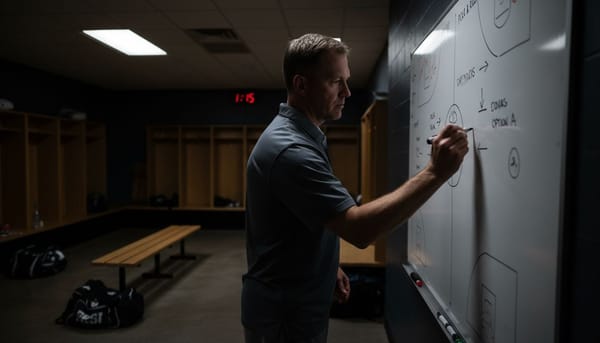
Let's talk about what happens in a typical youth basketball game. Coach calls a timeout. Gathers the team. Draws up something on a whiteboard or just shouts instructions over the noise. Players nod. They go back out. And half of them have no idea what just happened.
We're not exaggerating. Ask any youth player after a timeout what the coach just said, and you'll get blank stares from at least a few of them. It's not that they weren't listening. It's that the communication method doesn't match how they actually learn and process information in high-pressure moments.
Think about how overwhelming a game environment is for a young player. The score's close. Parents are yelling. The other team is pressing. Now the coach is explaining a complex rotation adjustment using terms the player heard once two weeks ago in practice. What happens? Panic. Confusion. Another mistake. More frustration on both sides.
Here at CourtClok, we've built tools specifically for this communication gap. Our digital scoreboard isn't just about displaying numbers — it's about creating clarity in chaotic moments. When everyone in the gym can see the same information clearly, when stats are tracked automatically so coaches can focus on coaching instead of clipboard management, the entire game experience changes. Players feel more connected to what's happening. They can track their own progress. They understand their role.
Why "Just Play Harder" Isn't Coaching
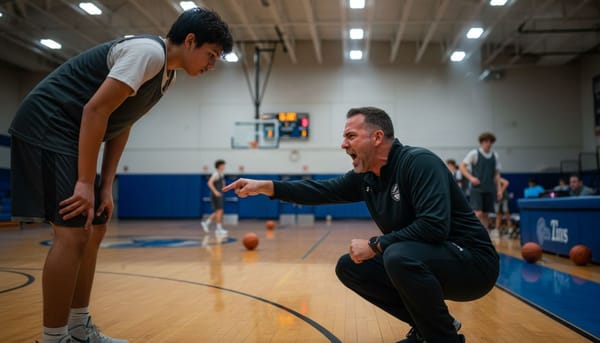
There's a type of coaching that's still disturbingly common in youth leagues. You know the one. Lots of volume. Lots of general instructions. "Box out!" "Move the ball!" "Play defense!" These aren't strategies. They're just noise.
Real coaching is specific. It's showing a player exactly where to be on a ball screen. It's explaining why we rotate a certain way. It's breaking down how one simple adjustment can transform their effectiveness. But here's the problem: doing that kind of coaching requires time, organization, and systems that most volunteer coaches simply don't have.
This is exactly what we see with leagues using CourtClok. When coaches have reliable tools that handle the administrative burden — tracking substitutions, monitoring playing time, managing the clock — they can actually coach. They're not frantically trying to remember who's been in longest or manually calculating stats. They're watching the game, identifying teaching moments, and communicating clearly with their players.
Does every volunteer coach need to be a tactical genius? Of course not. But every coach should be equipped to give their players a clear, organized experience where improvement is possible and visible. Where players aren't constantly forgetting what they're supposed to do because the system is too chaotic to remember anything.
The Hidden Cost of Trying to Do Everything
Here's what kills most leagues: the admin work.
We heard this discussed recently and it really resonated with us because we see it constantly. League organizers start with pure intentions — they love basketball, they want to create opportunities for players, they're passionate about building something. But then they're drowning in spreadsheets at 11 PM on a Tuesday night, manually updating standings because someone forgot to text in a final score.
The cognitive load is brutal. You're trying to remember which team paid their league fees, who needs a makeup game scheduled, whether Court 2 is available next Thursday, and oh yeah — did anyone actually record the stats from last night's championship game?
This is exactly what we see with leagues using CourtClok before they find us. They're spending 70% of their time on administrative tasks and maybe 30% actually improving the basketball experience. That ratio should be flipped.
When coaches and organizers are stretched too thin, everyone suffers. Games start late. Scores get lost. Parents complain because they can't find the schedule. Players show up to the wrong court. It's death by a thousand tiny failures.
And here's the thing — none of these problems are actually about basketball. They're about infrastructure. They're about having systems that work automatically in the background so you can focus on what matters: player development, competitive balance, creating memorable experiences.
What Automation Actually Looks Like in Practice
Let's get specific. Because "automation" sounds like corporate buzzword nonsense, but in reality it's just removing unnecessary friction.
Imagine this scenario: A game ends. The referee or scorekeeper taps "Finalize Game" in the CourtClok app. Instantly — and we mean instantly — the final score posts to your league page. Standings update automatically. Player stats are recorded. Parents who follow the team get a notification. The schedule adjusts if playoff seeding changed.
No group texts. No spreadsheet formulas. No waiting for someone to "get around to it."
Here at CourtClok, we've built tools specifically for this because we got tired of watching passionate organizers burn out over solvable problems. The technology exists to make this seamless. Why are we still doing it the hard way?
Or take scheduling — something that sounds simple until you actually try to coordinate eight teams across four time slots with court availability conflicts and referee assignments. You can spend hours playing Tetris with your calendar, or you can use tools that handle the logic for you and flag conflicts automatically.
The same principle applies to player development. When you shift from rigid set plays to skill-focused training, you're essentially automating basketball IQ. You're teaching principles that work in multiple situations rather than memorizing seventeen different plays that only work when everyone's in exactly the right spot.
That's leverage. That's working smarter.
The Communication Problem Nobody Talks About
You know what causes more league drama than anything else? Information gaps.
Someone didn't know the game time changed. A parent missed the email about tournament fees. A player thought practice was cancelled but it wasn't. Half your coaches are checking GroupMe, the other half only respond to texts, and that one dad only checks Facebook.
It's chaos masquerading as communication.
We've seen leagues split apart not because of competition or personality conflicts, but because nobody could agree on a single source of truth. When information lives in twelve different places, nobody actually knows what's happening. And when people don't know what's happening, they make assumptions. And assumptions breed frustration.
This is where centralized platforms become invaluable. Not because they're fancy or high-tech, but because they solve the fundamental problem: everyone looks at the same information in the same place. The schedule isn't a PDF someone emailed three weeks ago. It's live, it updates in real-time, and everyone can access it from their phone.
When players need to perform under pressure, they need clarity. Same goes for parents, coaches, and organizers. Clarity reduces stress. Stress reduction improves everything else.
The question isn't whether better systems would help. Of course they would. The question is: why are we still tolerating the chaos?
The Two-Minute Window That Changes Everything
Two minutes.
That's the critical timeframe we need to be thinking about when it comes to player communication and feedback. We heard this principle discussed recently and it struck us how rarely league organizers and coaches actually think about communication in these terms.
Why two minutes? Because that's roughly the window where feedback and information is still fresh, still visceral, still connected to the action that just happened. Wait longer than that and you're no longer coaching in the moment — you're reconstructing memory.
Here at CourtClok, we've watched thousands of games across youth leagues, rec leagues, and competitive tournaments. And here's what we see happen constantly: A player makes a defensive mistake in the second quarter. The coach notices it. Makes a mental note. Plans to address it at halftime. By the time halftime rolls around fifteen minutes later, three other things have happened, the coach is focused on adjusting the offensive scheme, and that specific defensive breakdown? It gets lost.
The player never gets the feedback. The mistake becomes a pattern.
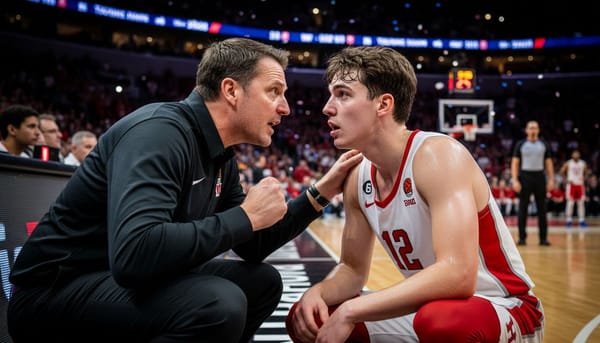
This is exactly why listening to players during timeouts is so critical — those brief windows are your two-minute opportunities. But it's not just about listening. It's about capturing what matters when it happens.
Think about professional teams. They have assistant coaches charting everything in real-time. They have tablets on the bench with instant video replay. They have entire analytics departments breaking down possessions as they happen. They've built systems specifically to keep feedback within that two-minute window.
Youth and rec leagues? Most coaches are doing everything themselves while also managing playing time, dealing with parents, and trying to keep track of the score.
Building Systems That Support Real-Time Coaching
We built CourtClok because we kept seeing this pattern: great coaches with solid basketball knowledge who simply couldn't implement what they knew because they were drowning in logistics.
The scorekeeping. The stat tracking. The schedule management. The lineup rotations. All of it pulls attention away from what actually develops players — timely, specific, actionable feedback delivered when it matters most.
When coaches use our app to handle the administrative load, something interesting happens. They get those two-minute windows back. They can actually observe the game. Notice the patterns. Catch the little things that become big things if you address them immediately.
It's not about technology for technology's sake. It's about removing the friction that prevents good coaching from happening. Because here's the reality: if you're spending mental energy trying to remember which players have been in for how long, you're not noticing that your point guard keeps getting beat on the same backdoor cut.
And if you don't notice it in that two-minute window? The opportunity to coach it effectively just evaporated.
This connects directly to why modern basketball demands a new approach to development. It's not enough to know what to teach. You need systems that let you teach it at the right moment, in the right way, when players are actually ready to absorb it.
The Compound Effect of Immediate Feedback
Here's what we've learned from working with hundreds of leagues: small improvements in communication timing create massive improvements in player development over a season.
One piece of feedback delivered two minutes after a play is worth ten pieces delivered the next practice. Why? Because the player remembers the situation. They can feel it. The defender's positioning, the angle they should have taken, the read they missed — it's all still there.
Wait until next practice and you're essentially starting from scratch. You have to recreate the scenario, re-explain the context, hope the player can connect your instruction back to that moment from three days ago.
It's inefficient. And in youth basketball especially, where you might only have two practices a week and limited gym time, efficiency isn't optional.
We've seen coaches transform their programs not