If you struggle with contact in basketball, this drill is for you!

Here's something that'll blow your mind: most pickup games and rec leagues are won or lost within fifteen feet of the basket, and it's not because of layups. It's the free throw line extended—that invisible line stretching across the court—that separates teams who just play basketball from teams who actually understand basketball. I've watched countless games where one squad figures this out and the other team just... doesn't. And man, it's painful to watch when you're on the wrong side of that equation.
The free throw line isn't just where you shoot your free throws. It's a strategic landmark, a defensive checkpoint, and honestly? It's where smart basketball happens. When a coach yells "get rid of me by the free throw line," they're not just talking. They're revealing one of the game's fundamental truths that too many players ignore until it's too late.
The Free Throw Line Extended: Your Court's Invisible Battlefield
Let's talk about what we're really dealing with here. The free throw line sits fifteen feet from the basket. Obvious, right? But here's what most players miss—when you extend that line across the entire width of the court, you create the single most important defensive zone in basketball.
Why?
Because this is where offense lives or dies. This is where pick-and-rolls become dangerous. Where mid-range games come alive. Where defensive rotations either click into place or fall apart completely. I've run leagues with CourtClok where we track shot charts, and you know what the data shows? Teams that control the free throw line area dominate possession after possession. It's not even close.
Think about your favorite NBA players for a second. The ones who make the game look easy. They're not just talented—they're using the free throw line as their compass. They know exactly when they've crossed it on offense. They feel it on defense. It's like having court vision, but it's really just understanding geometry.
When you're on offense and a defender is pressuring you before you reach the free throw line, that's actually a win for the defense. They're pushing you back, making you work harder, eating up shot clock. But once you get established at or beyond that line? Now the defense has a problem. Now they've got to help. Now rotations start breaking down. The whole defensive structure changes once you plant your flag at that fifteen-foot mark.
The "Get Rid of Me" Philosophy: Understanding Defensive Pressure Points
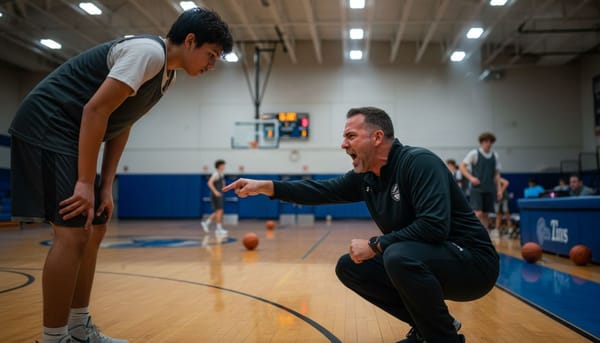
That phrase—"get rid of me by the free throw line"—is pure coaching gold. What does it actually mean? It means the defender's job is to force the offensive player to make a decision, to pass, to pick up their dribble, to do something before they reach that critical fifteen-foot area.
I love this concept because it flips how most casual players think about defense.
Too many defenders just chase the ball. They react. They're always one step behind, trying to catch up to what the offense is doing. But when you adopt this "get rid of me" mentality, you're being proactive. You're not trying to steal the ball necessarily—you're trying to control where the offensive player can be effective.
Here's what happens when defense applies this pressure correctly: The ball handler picks up their dribble too early. They make a pass they didn't want to make. They settle for a shot from a spot they didn't want to shoot from. Suddenly, your defense isn't just reacting—it's dictating. That's the difference between okay defense and defense that actually wins games.
And from the offensive perspective? Understanding this pressure point changes everything about how you attack. You start recognizing when defenders are trying to push you back. You learn to use screens and cuts to reach your spots. You develop counter-moves specifically designed to get you to that free throw line area where you become dangerous.
Reading the Pull: When Defense Commits
There's a beautiful moment that happens in basketball—you probably saw it in that coaching exchange. "See, he pulled them." Three words that represent one of the game's most satisfying feelings when you're running offense.
The pull.
This is when your movement or threat forces the defense to commit. To shift. To help. To leave their assignment and react to you. And once they pull? That's when basketball becomes art instead of just athletics.
The free throw line is where pulls happen most effectively. When you're at that fifteen-foot mark with the ball, defenders have to make impossible choices. Do they step up and challenge you? Do they stay home on their man? Do they split the difference and commit to neither? Every option has consequences, and a smart offensive player exploits whichever choice they make.
We see this all the time in the leagues we manage through CourtClok. The teams that win consistently aren't always the most athletic. They're the teams that recognize these pulls. They're patient. They probe. They work the ball until someone at that free throw line area creates a defensive pull, and then—boom—they attack the opening. It's systematic. It's beautiful. And honestly, it's not that complicated once you know what to look for.
Breaking Down Game Film Like the Pros Do
Here's the thing about watching film — and I mean really watching it, not just replaying highlights — it changes everything about how you see basketball. The pros spend hours on this stuff. Hours.
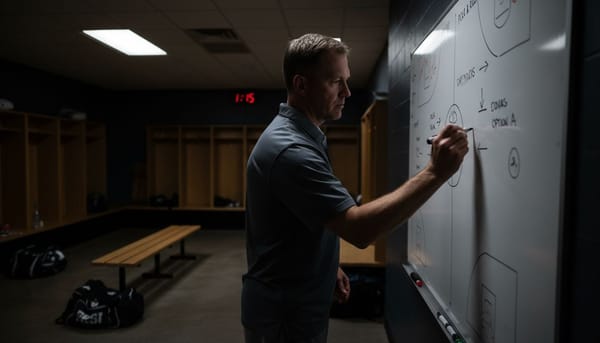
When you're reviewing footage with your team, you're looking for patterns. Did their point guard always drive right when pressured? Was their big man cheating toward the paint on every possession? These little details? They win games.
We've found that the best film sessions focus on specific questions. Can they handle full-court pressure? Can they defend the pick-and-roll without switching? Can they hit threes when we go under on screens? You're not just watching — you're problem-solving together.
And look, I know what you're thinking. "We're not the Lakers. We don't have a video coordinator." True! But with the right tools, you don't need one. Modern scoreboard apps can track everything from shot locations to defensive rotations. The data's all there, sitting in your pocket.
The key is making it a habit. Watch film within 24 hours of every game while it's fresh. Keep sessions short and focused — nobody wants to sit through a 90-minute breakdown. Pick three things to work on. That's it.
Communication: The Skill Nobody Practices Enough
This drives me crazy.
We spend endless hours on ball-handling drills and shooting form, but how much time do we actually dedicate to communication? To talking on defense? To calling out screens before they happen?
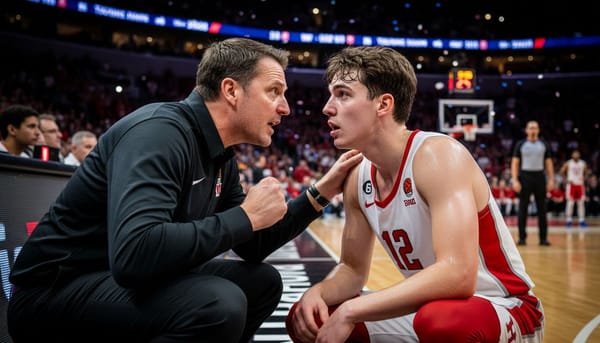
The best teams I've ever played on weren't always the most talented. They were the loudest. They were constantly talking — "Ball! Ball! Ball!" on defense, "Screen left!" on offense, "I got help!" when someone got beat. It's like having a sixth player on the court who can see everything.
But here's what nobody tells you: good communication starts before the game even begins. It starts in practice when you're building that common language. It starts when you're reviewing stats together and saying "okay, when this happens, here's what we call out." It starts with trust.
Because when the game's on the line and you're down two with thirty seconds left? You need to know your teammates will tell you what they see. You need to trust that when someone says "I got your help," they actually do. That confidence only comes from repetition and accountability.
Track it. Seriously. Some teams even track communication stats in practice — who's calling out screens, who's quiet. Make it competitive. Make it matter. Your defense will transform overnight.
Building Problem Solvers Through Basketball
Here's what gets me fired up about this approach — we're not just teaching kids to make layups or run plays. We're building problem solvers. And honestly? That's what basketball has always been at its core.
Think about it.
Every possession is a puzzle. Every defensive scheme is a riddle your offense needs to crack. When you're down by five with three minutes left, you're not just playing basketball — you're solving problems under pressure with your teammates.
The coaches who get this don't just drill skills in isolation. They create situations where players have to think, adapt, and figure things out. Maybe it's a 3-on-2 fast break where there's no "right" answer, just better decisions. Or a scrimmage where the defense can only play zone, forcing the offense to problem-solve in real time.
This is where the magic happens. Not in running the same play twenty times until it's robotic. But in those messy, chaotic moments where players have to read, react, and trust their instincts.
And when those problem-solving abilities start to emerge? Man, you can see it. The player who suddenly makes the extra pass because they recognize the help defender. The kid who changes their shot trajectory mid-air because they saw the shot blocker coming. These aren't coached moments — they're developed moments.
Make It Easier On Yourself (So You Can Focus On What Matters)
Look, we all know the reality of coaching and running leagues. There's the basketball part — the part we love, the reason we're here — and then there's everything else. The scheduling headaches. The score tracking. The standings that somehow always have a typo. The parent who swears their team played an extra game and the math doesn't add up.
It's exhausting.
This is exactly why we built CourtClok the way we did. Because every minute you spend fighting with a spreadsheet or manually updating brackets is a minute you're not coaching. It's a minute you're not watching film with your players. It's a minute you're not figuring out how to help that struggling kid finally get their defensive footwork right.
Our team designed CourtClok to handle all the administrative stuff that drains your energy. Real-time scoreboards that parents and players can follow from anywhere. Automatic standings calculations. Schedule management that actually makes sense. League brackets that update themselves. It just works.
So you can get back to the problem-solving. The player development. The actual coaching that made you fall in love with this game in the first place.
Because at the end of the day, that's what matters. Not whether your spreadsheet formula is correct. But whether your players are growing, learning, and discovering what they're capable of on the court. That's the real win.
Ready to spend less time on admin and more time on basketball? That's what CourtClok is all about. Let's make running your league or tracking your games as smooth as a well-executed pick and roll — check out CourtClok and see how much easier basketball management can be.