How to improve your teams shot selection

You can run the most sophisticated offensive system in the world. Your players can execute every set play perfectly. But if they're taking terrible shots at the end of those possessions, you're still going to lose.
The easiest thing coaches can do to make their teams more effective isn't installing a new offensive scheme or drilling perfect shooting form. It's teaching shot selection.
Think about it. How much time do you spend teaching your players what shots to take versus how to take them?
At the professional level, there's a revolution happening around shot selection. Teams are actively eliminating mid-range shots and contested attempts. They're pursuing the most efficient looks: layups, open threes, and free throws. Yet at the youth, high school, and recreational levels, we see the opposite. Players pull up from 15 feet with a defender draped all over them. They settle for contested mid-rangers instead of attacking the rim or swinging the ball for a better look.
That's not efficient basketball. And honestly? It's costing games.
The Shot Selection Problem Nobody Talks About
Teams will run beautiful offensive actions. The ball moves. Players cut. Screens are set properly. Then someone launches a contested 18-footer with 20 seconds left on the shot clock. Possession over. Opportunity wasted.
Why does this happen?
Because most players — especially younger ones — don't have a framework for understanding shot quality. They know they're supposed to get open. But they don't really understand what makes a good shot beyond "nobody's guarding me." They don't grasp the mathematical difference between a contested mid-range jumper (maybe 35% conversion) and an open layup or corner three (60% and 40% respectively).
The math is brutal. If your team takes ten contested mid-rangers at 35% efficiency versus ten layups or open threes at 50% efficiency, you're giving up 3-4 points per ten possessions. Over a full game, that's potentially 12-16 points left on the table. That's the difference between winning and losing in most competitive games.
And here's the thing: teaching shot selection is easier than teaching perfect shooting form. It's a decision-making skill, not a motor skill. You can teach it conceptually. Players can understand it intellectually and then practice applying it in game situations.
What Efficient Basketball Actually Looks Like
Let's get specific. What should your team be hunting for on offense?
First, shots at the rim. This is basketball's highest-percentage shot. Period. Whether it's layups, floaters in the paint, or dunks — if you can get to the restricted area, that's almost always your best option. Even contested shots at the rim convert at higher rates than open mid-rangers.
Second, open three-pointers. Notice we said open. A contested three from a player shooting 30% from deep isn't efficient. But an open three from your best shooter? That's worth more mathematically than most two-point attempts. The key is understanding your personnel and their actual shooting percentages.
Third, free throws. Getting to the line is incredibly valuable. It stops the clock, puts pressure on opponents' foul situations, and gives you uncontested points. Teams that aggressively attack the basket force defenses into difficult decisions.

Everything else? It needs serious justification.
That contested pull-up from 17 feet? Unless you're running a specific play where that's the counter to how the defense is guarding you, it's probably not a good shot. That early shot-clock three when you haven't even run your offense yet? Questionable at best.
This is exactly what we see with leagues using CourtClok. The teams that win consistently aren't necessarily the ones with the most talent. They're the ones that take better shots. They understand spacing. They recognize when a possession has broken down and they need to reset rather than force something. They know their shooters' percentages from different spots and they design their offense accordingly.
How to Teach Shot Selection to Your Team
So how do you actually implement this? How do you get your players — especially young ones who just want to shoot — to buy into shot selection principles?
Start with education. Show them the numbers. Break down game film (your own or professional) and categorize shots. Which attempts went in? Which didn't? Were the makes good shots or just lucky? Were the misses bad shots or good looks that didn't fall?
This analytical approach helps players understand that making a shot doesn't mean it was a good shot. Sometimes you hit a contested fadeaway. That doesn't mean you should take it next time. The goal is to maximize the probability of success over many possessions, not to justify individual makes.
Then create a shot hierarchy specific to your team. Literally write it down. Put it on the wall in your practice facility or include it in your team handbook.
For example: "First, we attack the rim. Second, we swing to open shooters on the perimeter. Third, we run our secondary actions. Only after exploring these options do we consider mid-range shots — and only from specific players in specific situations."
Make it clear. Make it simple. Make it non-negotiable.
Next, shift your practice approach from set plays to decision-making. Run drills where players must make shot selection decisions under pressure. Use small-sided games where you reward good shots regardless of whether they go in. Track not just makes and misses, but shot quality.
Efficiency Starts With Intent, Not Outcome
We heard this discussed recently and it really resonated with us — even with young players, you should want them to understand the intent behind attacking the rim versus settling for mid-range shots. This isn't about forcing every kid to play like a robot. It's about developing intelligent habits early.
Think about it. What happens when young players don't learn to be aggressive at the rim? They develop settling tendencies that are incredibly hard to break later. They pull up from fifteen feet not because it's a good shot, but because they're uncomfortable with contact. Because no one taught them to finish through pressure.
This is exactly what we see with leagues using CourtClok — coaches track shot locations and patterns, and the data tells a clear story. Teams that emphasize rim attacks from an early age develop players who are more confident, more aggressive, and yes, more efficient.
It's not about perfection. It's about direction.
The Real Problem: Passive Driving
What do most youth players do when they drive? They hesitate. They pull back. They look for the easy way out instead of learning to embrace contact and finish strong.
And honestly? We can't blame them. No one's teaching them otherwise.
The pattern repeats itself across thousands of games: a player gets a decent drive, reaches the paint, feels a defender nearby, and immediately retreats or throws up a floater they haven't practiced. They're not being aggressive. They're being reactive. There's a massive difference.
This ties directly into how we think about player development here at CourtClok. When coaches have tools to track not just points but how those points were scored, they start noticing these patterns. They see which players are hunting contact and which ones are avoiding it. They can identify teaching moments instead of just punishing mistakes.
The goal isn't to shame players for taking a mid-range shot. The goal is to build a culture where the first instinct is to attack. To be aggressive. To believe you can finish at the rim even when it's hard.
Because here's the truth: players who learn to finish through contact early don't just become better scorers. They become tougher, more confident, and more valuable teammates. They set the tone for how your entire team plays.
Building Aggressive Finishers Takes Intentional Practice
So how do you actually develop this? It starts with training with defenders, not just doing perfect layup lines. It requires creating game situations where players have to make decisions under pressure.
We've built tools specifically for this at CourtClok. Track finishing percentages by location. Monitor who's attacking the rim versus who's settling. Use that data not to criticize, but to guide your practice design.
The best part? When you start emphasizing efficient shot selection early, players naturally become better finishers. They get more reps at the rim. They learn angles and touch. They develop the mental toughness to handle aggressive contact.
It's a virtuous cycle. But it only starts when you make the intentional choice to prioritize it.
The ROB Framework: Teaching Smart Shot Selection Beyond the Scoreboard
We heard this framework discussed recently and it completely changed how we think about what happens after the final buzzer. Range. Open. Balanced.
ROB.
It's brilliantly simple. But here's what struck us: most league organizers and coaches spend enormous energy tracking if a shot went in, but almost no time understanding why players took the shots they did. We're obsessed with the scoreboard result. We forget the decision that led to it.
This is exactly what we see with leagues using CourtClok. Coaches pull up stats after games—points, percentages, all the traditional numbers. Those matter, of course. But what if we also tracked decision-making quality? What if players started evaluating not just "Did I score?" but "Was that shot in my range, was I actually open, and was I balanced enough to make it?"
The mid-range example hits home. How many times have you watched a player drive confidently toward the basket, only to pull up short for a contested 15-footer when the lane was wide open? They weren't thinking about shot quality in that moment. They were thinking about finishing under pressure and bailed out early.
Range means knowing your actual effective shooting distance—not where you think you can shoot from, but where the numbers prove you're effective. Open means understanding defensive pressure, not just taking any available shot. Balanced means your body is under control, your footwork is set, your shot has a real chance.
When players stop short and settle, they're usually failing one of these three criteria. Maybe they're out of their range and don't trust a closer finish. Maybe they're not actually as open as they thought. Or maybe—and this is the big one—they're off-balance from the drive and the mid-range feels safer than trying to regain control near the rim.
Teaching ROB changes the entire conversation in practice. Instead of punishing missed shots, you're evaluating the decision behind the shot. "Was that in your range?" becomes more important than "Why didn't that go in?" You're building basketball IQ, not just basketball skill.
But even the best app can't capture decision-making quality if coaches and players aren't thinking about it. That's why frameworks like ROB matter so much. They give everyone a shared language for what a good shot actually means.
Building a League Culture Around High-Value Decisions
So how do you actually implement this in your league or program?
Start with film. Not just highlights, but possessions where players made choices—good and bad. Freeze the frame right before a shot and ask: "Range? Open? Balanced?" Make it a game. Make it normal. Get players diagnosing their own decisions before you tell them what went wrong.
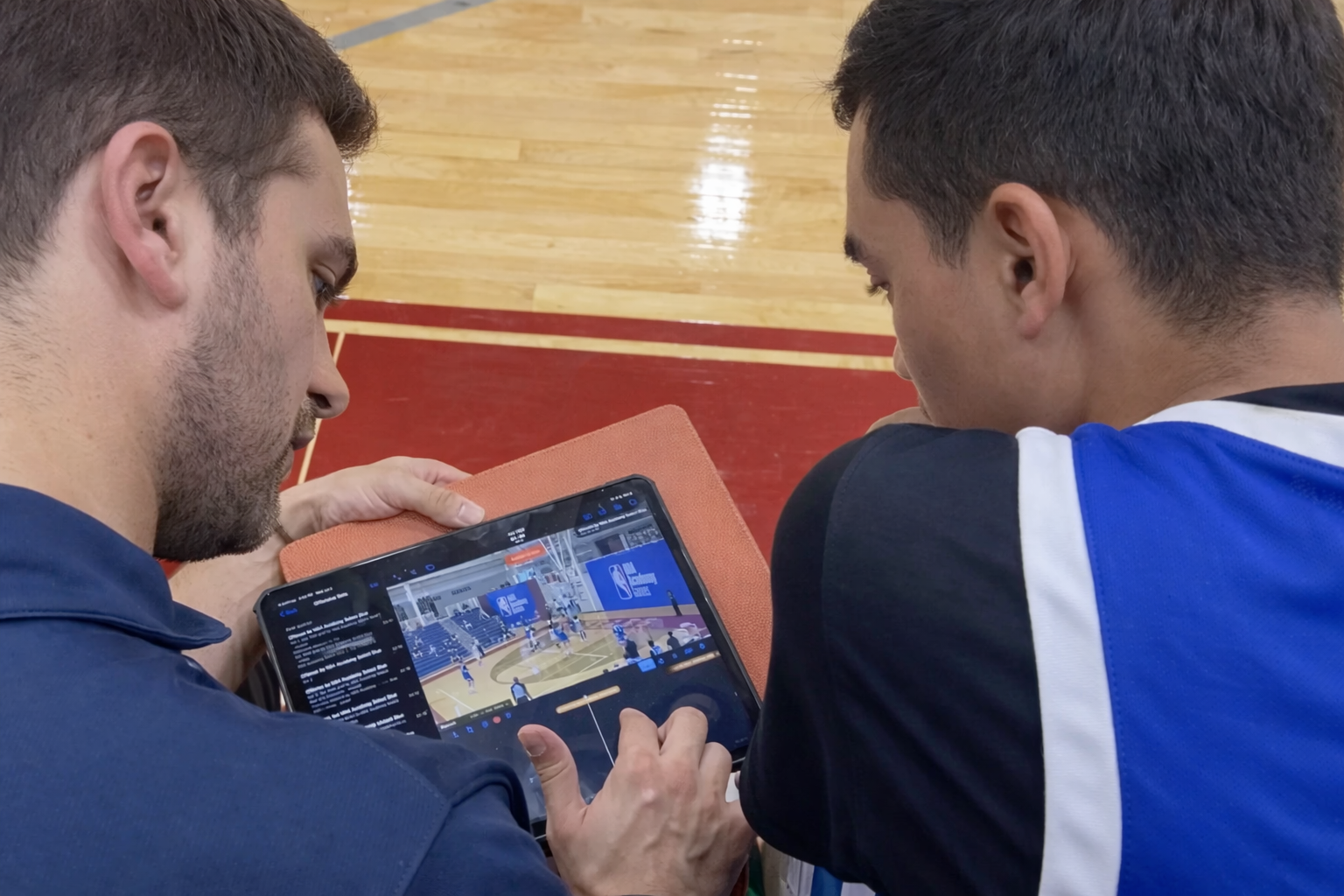
Then bring it into practice. Run competitive drills where shot quality matters more than shot results. Award points for ROB shots even if they miss. Penalize terrible shot selection even when it miraculously goes in. You're rewiring the reward system in players' brains.
And finally, track it. Keep a simple tally during games or scrimmages. You don't need fancy analytics software—just awareness. How many possessions ended in genuinely good shots versus settled attempts? The ratio tells you everything about your team's offensive maturity.
We've seen leagues transform their culture by focusing on these high-value decisions. It changes how players talk to each other on the court. It changes what gets celebrated. Instead of the hero-ball highlight, you start hearing teammates say, "Great look, keep taking those." Even when the shot misses.
That's the shift. From outcome obsession to process trust.