how does Luka play so slow, yet still destroy everyone
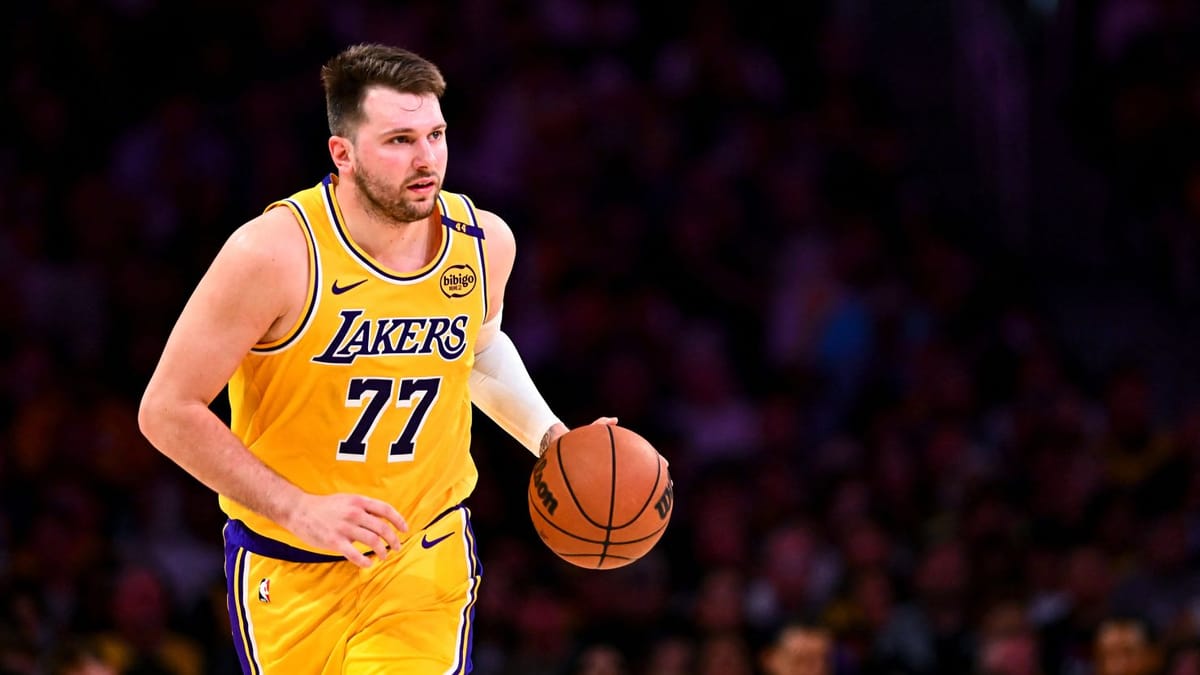
Watch Luka Dončić for five minutes and you'll notice something that breaks every rule we were taught about basketball. He's not the fastest player on the court. He's not the most explosive. Half the time, he looks like he's playing in slow motion while everyone else is sprinting.
Yet he absolutely destroys defenders.
We heard this discussed recently and it really resonated with us, because it exposes one of the biggest problems in how we develop players. Luka demonstrates elite awareness and the ability to change speed rapidly—not just move fast, but control his pace. This mastery of tempo is what separates good guards from great ones. But here's the issue: we can't teach change of pace through cone drills.
You just can't.
Players look great going through cones. They're quick, their footwork is clean, everything looks textbook. Then the game starts and they play at one speed. They can't manipulate defenders. They don't understand when to explode and when to decelerate.
So what's missing?
Why Cone Drills Don't Translate to Game Speed Control
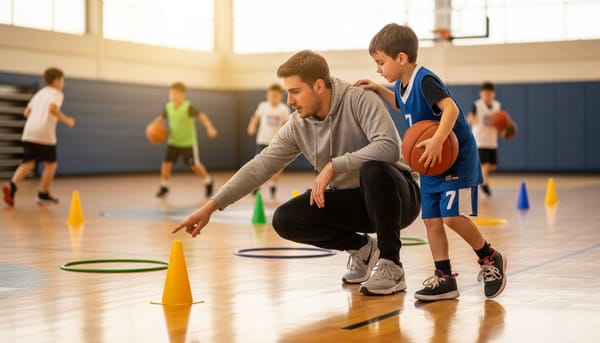
Cone drills have their place. We're not here to completely trash them. They can help with footwork fundamentals and conditioning. But when it comes to teaching the change of pace that makes Luka so devastating? They're practically useless.
Think about it. When you're running through cones, what's the objective? Get through them as fast as possible. Every single time. There's no decision-making involved. No defender reacting to your movements. No consequence for going full speed when you should be decelerating. It's just a pre-determined pattern you execute at maximum velocity.
That's nothing like basketball.
In a real game, the magic happens in the transitions. The moment you shift from a casual dribble into an explosive first step. The subtle deceleration that gets your defender leaning forward right before you blow past them. Luka lives in these moments. He's constantly manipulating what defenders expect, and that requires decision-making under pressure—something cones can never provide.
Coaches tell us their biggest frustration isn't that players lack speed or athleticism. It's that players don't know when to use it. They're always in one gear. Usually fourth or fifth gear, running around frantically without purpose.
The Awareness Component Everyone Ignores
Let's talk about what actually makes Luka special. It's not a secret. He has exceptional court awareness. He processes information faster than his opponents can react. He knows where help defense is coming from. He recognizes defensive schemes two passes before they materialize.
But awareness isn't something you're just born with—it's developed through specific types of training.
Luka didn't develop this awareness by running through cones. He developed it by playing against live defenders from a young age in Europe. Real competition. Real decisions. Real consequences for bad reads. The European development system emphasizes training with defenders constantly, even in skill work, because they understand something fundamental: basketball is a reactive sport.
Your next move should depend on what the defense gives you. Not what a preset cone pattern dictates.
As coaches, we wanted to facilitate the kind of environment where players develop basketball IQ. Where coaches can run competitive games and track progress in ways that actually matter. Because here's what we've learned: the best player development happens when you create constraints that force decision-making.
Teaching Change of Pace: What Actually Works
So if cone drills don't work, what does?
The answer is simpler than you think, but it requires a shift in how you structure practice. You need to create situations where players are forced to change speeds based on what a defender does. That means incorporating live defenders early and often. It means rewarding players not just for speed, but for effective manipulation of tempo.
Here's what this looks like practically. Instead of having players sprint through a predetermined pattern, set up constraints that require them to read a defender. Maybe it's a simple game where they need to beat their defender to a spot, but they only get two dribbles. Now suddenly speed isn't enough. They need to sell a direction, change pace, and attack efficiently.
Or try games that specifically reward changes of speed rather than just maximum speed. Award points for successful hesitation moves that freeze a defender. Give credit when a player decelerates to draw contact and create space. These constraints improve shot selection and decision-making simultaneously.
We've seen coaches transform their practices by making this one adjustment. Instead of spending 20 minutes on stationary cone work, they spend that time on competitive games with specific rules designed to develop the skills that actually matter in games. The players are more engaged because competition is inherently more interesting than running through cones. And the skill development is exponentially better because it's happening in context.
The One Arm's Distance Game: Pure Spacing Under Pressure
We heard this game described recently and it immediately clicked with us. The offensive player dribbles the basketball and earns a point every time they create more than one arm's distance between themselves and their defender. That's it.
Simple? Yes. Effective? Absolutely.
You'll naturally see fakes, hesitations, change of pace moves—all the things that actually matter in real games. Not choreographed footwork patterns. Not cone drills that don't transfer to live competition. Just pure reaction and spacing creation.
We've all seen league organizers struggle with keeping practice games competitive and engaging. This type of constraint-based game solves that problem beautifully. Players aren't just going through motions—they're problem-solving in real time. The defender can't just stand there either. They have to stay within arm's distance or the offensive player scores.
It's a beautiful feedback loop.
Why Constraint-Based Games Beat Traditional Drills
This is exactly what we see missing in so many youth programs using CourtClok. Coaches load up their practice plans with structured drills, but forget to include games that teach decision-making under pressure.
Traditional drills teach technique in isolation. That has value, sure. But basketball isn't played in isolation. It's played against defenders who are actively trying to stop you. The one arm's distance game forces players to read and react constantly. When do I hesitate? When do I explode? When do I fake?
Those decisions can't be scripted.
We love how this game naturally encourages better decision-making in 1v1 situations without overcomplicated coaching points. The constraint is the teacher. Get your defender more than an arm's length away. Everything else flows from that single objective.
And honestly? It's way more fun than running lines or doing stationary ball-handling. Players compete, they get immediate feedback, and they actually want to keep going. That's the kind of engagement that builds real skill over time.
How to Run This in Your Next Practice
The beauty of this game is its simplicity. You don't need special equipment or a full court. Just a ball, two players, and a small area—half court, even a driveway works.
Set a time limit. Thirty seconds to a minute works well. Offensive player tries to create separation as many times as possible. Count the scores. Switch roles. Done.
Want to make it more game-like? Add a second offensive player and run it 2v2. Now you're teaching spacing and how to operate with a live defender while considering a teammate's positioning. The principles stay the same, but the complexity increases naturally.
We've built CourtClok specifically to help coaches and league organizers track these kinds of competitive games. Keep score easily. Run tournaments. Let players see their progress. When kids know their scores are being tracked—even in practice games—the intensity goes up dramatically.
Deception and Pace Changes: The Real Keys to Breaking Down Defenders
Here's where this drill gets really smart. It's not just about dribbling speed — it's about changing speed. That shift from slow to explosive is what freezes defenders. We see coaches all the time focusing on top-end speed, but the best ball handlers aren't necessarily the fastest. They're the ones who can manipulate tempo.
The beauty of this approach? You can transition it seamlessly into live play. Once a player hits that burst of acceleration, let it become a real one-on-one situation. Now you're training pace changes with immediate application. The game recognizes the change, the defender has to react, and suddenly you're testing your 1v1 game with this simple drill in the most realistic way possible.
This is exactly what we see missing in so many traditional ball-handling workouts. Players do cone drills at one speed. They practice moves in isolation. But games aren't played at a metronome pace. The ability to shift gears — to make defenders uncomfortable with rhythm changes — that's what creates advantages.
Why League Organizers and Coaches Need to Embrace Development-First Thinking
We heard this discussed recently and it really resonated with us: the shift from rigid, coach-controlled environments to player-led development isn't just a trend. It's a necessity.
When you create space for players to experiment with pace, make decisions, and learn through genuine competition, you're preparing them for real basketball. Not clipboard basketball. Not perfectly executed against air. Real, messy, reactive basketball where decision making happens in milliseconds.
Here at CourtClok, we've built tools specifically for this modern approach to the game. Whether you're running a youth league that prioritizes development over standings or coaching a team that needs better ways to track individual progress during open-ended drills, the infrastructure matters. You can't run a development-focused program with outdated management tools that only track wins and losses.
The best programs we work with understand something fundamental: player development is the program. Everything else — the scheduling, the standings, the statistics — should serve that goal, not distract from it. When you're running player development-focused programs, you need systems that can adapt to how you actually coach, not force you into outdated structures.
Final Thoughts: Small Changes, Massive Impact
Adding speed variation to your ball-handling work isn't revolutionary. But it's exactly the kind of simple, implementable change that separates good development programs from great ones. You don't need fancy equipment. You don't need a complete overhaul of your practice plan.
You just need to be intentional about teaching pace changes alongside the moves themselves.
Start with your next practice. Pick one ball-handling drill you already run. Add the constraint: vary your speed. Let players accelerate into live situations. Watch what happens when they start understanding that the change is the weapon, not just the move itself. This kind of insight — combined with league management that actually supports how modern coaches work — is what transforms programs. We're here to help with the second part. You've got the first part covered.