FOUR SHOOTING DRILLS to help you make tougher shots!!!!

Here's a stat that'll make you wince: the average youth basketball practice spends 73% of its time with players standing in lines waiting for their turn. Seventy-three percent. And we wonder why kids get bored, why fundamentals don't transfer to games, why engagement drops off after age twelve.
I recently came across a podcast episode that absolutely nailed what's broken in traditional basketball coaching — and more importantly, what we can actually do about it. The conversation focused on the massive gap between how we've always run practices and what actually develops players who can think and perform under pressure. Let me walk you through the key points they made, and I'll add what we're seeing from our side of things.
The Line Drill Problem Isn't Just About Efficiency — It's About Building the Wrong Players
The podcast spent serious time breaking down why traditional line drills are fundamentally flawed. Not just boring. Not just inefficient. Actually counterproductive.
Their argument? When you have twelve kids in a line taking turns doing a cone drill, you're teaching them to perform a movement pattern in a sterile environment with zero decision-making required. Then we throw them into a game — chaos, defenders, time pressure, exhaustion — and expect that perfect form-shooting or footwork pattern to magically appear.
This is spot on because it explains why players look great in warmups and fall apart in competition. We've seen this pattern in literally hundreds of leagues using our platform. Coaches track stats through CourtClok, see their players shooting 78% in practice and 31% in games, and can't figure out what's happening. The gap isn't mysterious. It's predictable.
The issue isn't the movements themselves — it's the context. Skills learned in isolation don't transfer to chaotic environments. Period. Your players need to train with a defender applying pressure, making decisions matter, forcing adaptations in real time.
Coaches who ditch most of their cone work and replace it with constrained games see player development accelerate noticeably. Not over years. Over weeks.
Games-Based Training Isn't "Fun and Games" — It's How You Build Basketball IQ
Here's where the podcast really delivered value. They outlined why small-sided games with specific constraints are the superior development tool for most of practice time.
The key insight? Games force decisions. Every single possession, players are reading a situation, processing options, selecting an action, executing under pressure, then getting immediate feedback through success or failure. That decision-making loop is what builds basketball IQ.
Compare that to a shooting line. You wait. You catch. You shoot the same shot from the same spot with no defender. You get back in line. Zero decisions made. Zero adaptation required.
We'd add to this that games-based training also solves your engagement problem without even trying. When we talk to youth league directors, player retention is always a top-three concern. Kids quit because practice is boring, because they don't feel like they're improving, because standing in lines for forty minutes isn't fun for anyone.
Run a 3v3 game with a constraint — say, you have to make three passes before shooting — and suddenly every kid is involved every possession. They're moving, thinking, competing. The energy in the gym completely changes.
The part that really stood out to us was their point about constraints being the key to making games developmental rather than just recreational. You can't just roll out the balls and say "play 5v5" for an hour. That's chaos without purpose. But a 4v4 game where you can only score off drives, or where every possession must involve a screen? Now you're deliberately working on shot selection and decision-making within a specific tactical framework.
The "Transfer" Question Should Guide Everything You Do
This point deserves its own section because it's the filter every coach should use when planning practice.
The podcast asked a simple question: Will this drill transfer to game performance? If you can't confidently answer yes, why are you running it?
Brutal. Necessary.
Think about how much practice time gets wasted on activities that look like basketball but don't actually build game-applicable skills. The classic three-man weave. Dribbling through cones in patterns no player would ever use in competition. Defensive slide drills with no offensive player to react to.
These drills exist because they look like coaching. They're organized. They're controlled. Parents watching think "wow, very structured." But looking like coaching and actually developing players are two different things.
In our experience working with leagues, the coaches who ruthlessly apply the transfer test end up with much simpler practice plans — but dramatically better results. They might only run six or seven core activities all season, but each one directly builds a skill or decision that appears constantly in games.
Does this mean you never do any technical work? No. Skill development still matters. But the ratio shifts dramatically. Maybe 15-20% of practice time on technical refinement in simplified contexts, and 80% on applying those skills in game-like situations with real decisions required.
Here's a practical example: instead of running a cone drill for ball-handling, run a 1v1 game in a confined space where players must use certain moves to score. The transfer is immediate because they're using the skill to solve a real basketball problem against a real defender.
The Mental Side: Getting Players Ready to Compete
The podcast shifts to something we don't talk about enough—mental preparation. Not the rah-rah motivational speech stuff, but the actual psychological readiness that separates players who perform under pressure from those who crumble.
Here's what caught our attention: the emphasis on creating practice environments that simulate game pressure. Not just running drills faster or adding a defender. We're talking about consequences, scorekeeping, competitive tension.
This is spot on because we see it all the time in the leagues we work with. Teams that practice without real stakes show up to games unprepared for the emotional weight of competition. The intensity is different. The decision-making changes. Everything feels faster.
In our experience working with leagues, the teams that consistently perform well are the ones who've been training with a defender and real game scenarios throughout the week. They've already experienced failure in a controlled environment. They've already had to make tough decisions when tired and frustrated.
The part that really stood out to us was the idea that "Are you ready?" isn't just a question—it's a state of being. Players either show up mentally prepared or they don't. And that preparation happens way before tip-off.
Building Competitive Habits in Practice
The discussion moves into something practical: how do you actually build this readiness? How do you create the competitive habits that transfer to games?
The answer isn't complicated, but it requires commitment. Every drill needs a winner and a loser. Every rep needs to matter. Every mistake needs to have weight.
We'd add to this that it's not about punishing players for failure—it's about making success and failure visible and meaningful. There's a huge difference. One creates fear. The other creates hunger.
Think about it this way: if players can coast through practice, miss shots without consequence, play lazy defense without anyone noticing—why would they suddenly flip a switch in games? They won't. The switch doesn't exist.
In the recreational and youth leagues we support through CourtClok, we've noticed that coaches who keep score during practice—even during seemingly "developmental" drills—get better game performance. Not because their players are more skilled. Because their players are more ready.
The competitive habits you build on Tuesday show up on Saturday. Period.
Creating Pressure Without Creating Fear
Here's the nuance though: there's a line between healthy competitive pressure and toxic fear-based coaching. The podcast touches on this briefly, but it deserves expansion.
Pressure is good. Pressure reveals who's ready and who needs more work. Pressure forces decision-making when tired. Pressure builds resilience.
But fear? Fear makes players tentative. It kills creativity. It makes them play not to lose rather than playing to win. And when it comes to shot selection and aggressive decision-making, fear is your enemy.
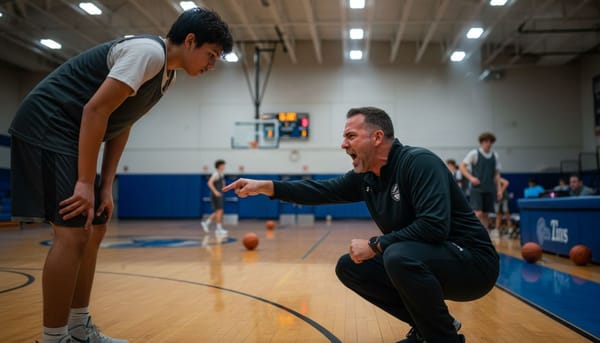
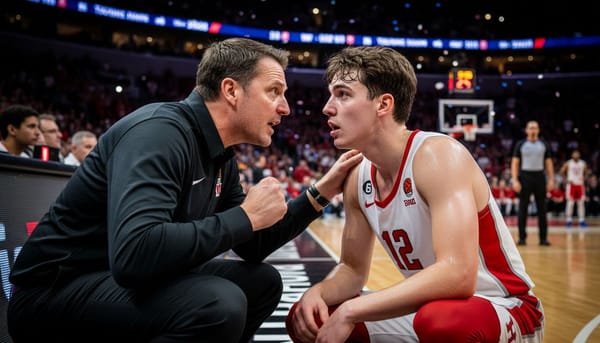
The balance is in the coaching language. "Are you ready?" implies capability—it assumes the player can be ready, they just need to choose it. Compare that to "You better not mess this up" or "If you lose this drill, you're running." Different energy entirely.
We're not suggesting you go soft. Competition needs teeth. But the teeth should bite both ways—rewarding excellence as much as exposing weakness.
Ready, Set... But Are They Actually Ready?
The final point hit us hard: we spend so much time running drills and teaching concepts, but are our players actually ready for the chaos of real games?
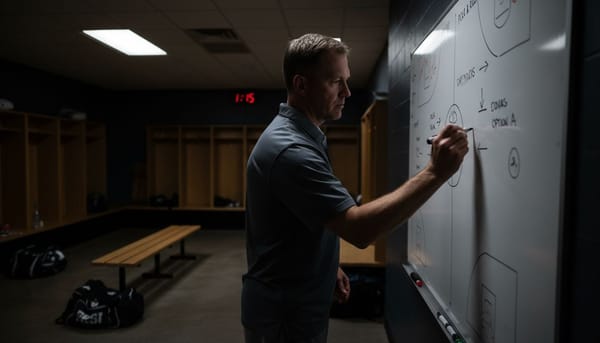
This is the ultimate question every coach needs to ask themselves. You can have the prettiest practice plan in the world. Your whiteboard diagrams can be works of art. But if your players freeze when things get messy in actual competition, what was the point?
We see this disconnect all the time, Teams look great in warmups. Then the ref blows the whistle and everything falls apart. Why? Because most practices don't actually simulate game pressure.
The part that really stood out to us was the emphasis on readiness versus preparation. They're not the same thing. Preparation is doing your layup lines and running your offense against air. Readiness is being able to execute under pressure when nothing goes according to plan.
We'd add to this: readiness comes from constraint-based games where players have to make real decisions. It comes from creating competitive environments in practice. It comes from training with defenders who are actually trying, not standing there like traffic cones.
Think about it. When was the last time a game unfolded exactly like your practice plan?
Never. That's when.
So why do we keep practicing like it will?
The Bottom Line
This entire conversation reinforced something we've been seeing across the basketball world: the old model of coaching is dying. And honestly? Good riddance.
The coaches who are winning—and more importantly, the coaches who are actually developing players—aren't the ones with the fanciest playbooks. They're the ones creating environments where players learn to think, adapt, and make decisions under pressure.
Here's what we're taking away from this episode:
- Stop overcoaching every moment—trust your players to figure things out
- Create realistic game scenarios in practice, not sterile drill lines
- Focus on principles and concepts, not memorizing 47 different plays
- Ask yourself constantly: "Are my players actually ready for this?"
We built our platform because we believe in empowering both coaches and players. We handle the administrative headaches—scheduling, scoring, standings, statistics—so coaches can focus on what actually matters: developing players who can think for themselves on the court.
Because at the end of the day, your job isn't to control everything your players do. Your job is to prepare them for the moments when you can't control anything at all. When the game's on the line and they've got to make a decision in 0.3 seconds, all that matters is whether you've given them the tools to figure it out themselves.
That's real coaching. Everything else is just noise.