Developing Female Basketball Players: Why Multi-Sport Backgrounds and Movement Training Matter More Than You Think
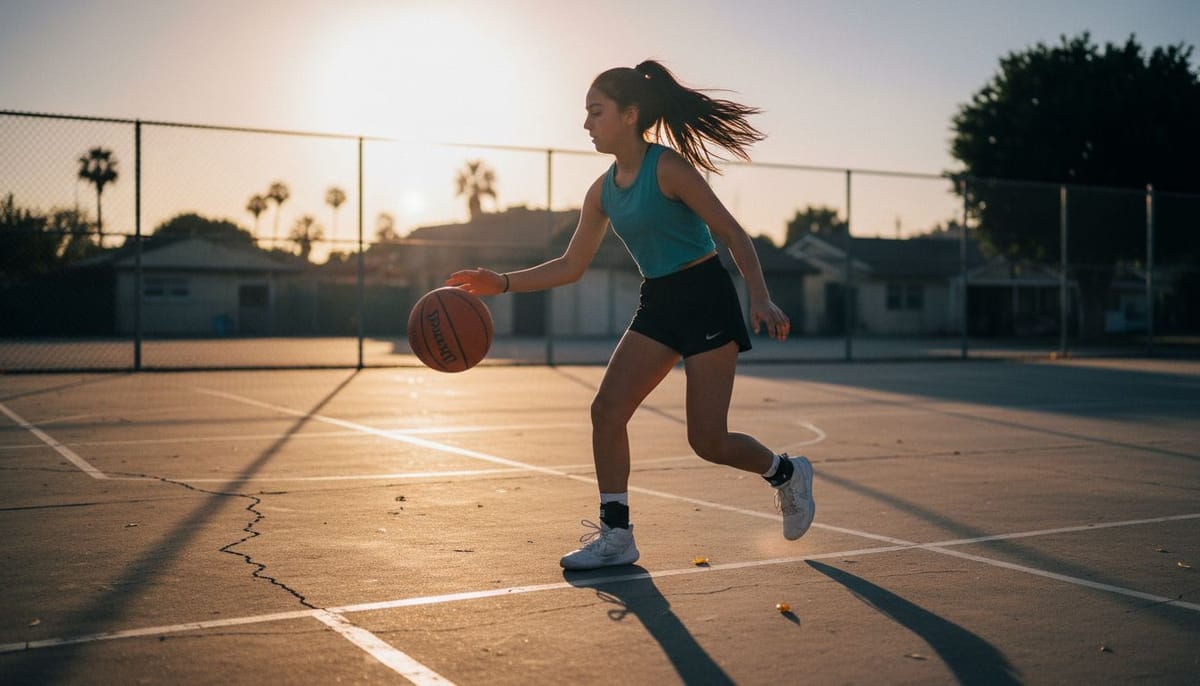
Most coaches I talk to are stunned when they hear this: some of the most skilled female basketball players didn't specialize in basketball until they were 15 or older. Not 8. Not 10. Fifteen. When I think about what that actually means for how we approach developing female basketball players, it flips a lot of conventional wisdom completely on its head — and I think that's a conversation worth having seriously.
The Early Specialization Trap Nobody Wants to Talk About
Here's something I've seen play out personally, and it frustrates me every time. A girl shows real promise at 9 or 10 years old. Coaches notice. Parents get excited. And within a year, she's locked into year-round basketball — one sport, one skill set, one environment. No soccer. No volleyball. No room to be an athlete first and a basketball player second.
We tell ourselves we're investing in her future. But what we're actually doing is narrowing it.
The research on this is pretty clear. Early specialization — committing to a single sport before the mid-teens — is consistently linked to higher injury rates, faster burnout, and paradoxically, slower skill acquisition in the long run. The evidence points toward late specialization, with most studies suggesting athletes shouldn't lock into a primary sport until at least 15. And yet the culture in a lot of youth basketball communities, particularly in North America, is pushing harder in the opposite direction. Travel teams. Showcases. Year-round training. All before a kid has even started high school.
I don't fully agree with the idea that early focus signals commitment or seriousness. I think it often signals anxiety — from parents, from coaches, from organizations that have a financial interest in keeping kids enrolled. That's a hard thing to say, but I think it's true.
What Growing Up Playing Everything Actually Does for an Athlete
Think about what happens when a young female athlete spends her formative years in multiple sports. She's learning to read different kinds of spatial problems. She's developing her peripheral vision in soccer. Her timing and body coordination in volleyball. Her physicality and contact tolerance in football or hockey. Her footwork in tennis. Every single one of those experiences is feeding into a movement vocabulary that she carries with her everywhere — including onto a basketball court.
This is something I think about a lot. Movement isn't sport-specific. Athleticism isn't sport-specific. The ability to react quickly, to absorb contact and stay balanced, to recognize patterns and make fast decisions — those are transferable skills that get built through varied experience, not through repetitive drilling in a single context.
When a player comes to basketball having spent years in multiple sports, she's not starting from zero on any of these dimensions. She's arriving with a rich library of movement patterns that she can now apply and adapt. Compare that to a player who's been doing basketball-only training since age 8. She might have a technically sound jump shot. But can she move efficiently in multiple directions under pressure? Can she read a defense intuitively without having it drilled into her? Can she compete in a chaotic, high-stakes moment without freezing?
Sometimes yes. Often, not as well as you'd hope.
What stands out to me is how this connects to the broader conversation about the state of women's basketball as a whole. If you want a fuller picture of that landscape — the history, the culture, the trajectory — the female basketball complete guide covers it with real depth and is genuinely worth your time.
The "Athlete First" Philosophy and Why Coaches Resist It
Here's the thing. Most coaches know, at some level, that athletic diversity is good. They've read something about it, or they've seen it with their own eyes. But then a kid comes in and says she has a hockey game on the same night as practice, and the coach's gut reaction is: that's a problem.
Why? Because we've built youth sports around attendance, loyalty, and singular focus. Missing practice feels like a betrayal of the team. It feels like the athlete isn't serious. It triggers this competitive anxiety — what if she's better at hockey? What if she leaves?
I think that's exactly backwards. When I hear about a coach who actively encourages her athletes to go play their volleyball game, go to soccer practice, go experience something different — and means it, without guilt-tripping them later — that coach understands something profound about long-term development.
She understands that the basketball player in front of her isn't just a basketball player. She's an athlete. A mover. A person building a physical intelligence that will serve her far beyond any single season or single sport.
And the athletes who get that message early? They come back to the gym different. More confident. More adaptable. Less brittle under pressure. There's a reason elite female players often look back on their multi-sport childhoods not as a distraction from basketball, but as the foundation of everything they became.
It also matters who's in the room during those early years. One of the most underrated things a young female athlete can experience is training alongside older, more physically advanced athletes — particularly in environments where movement standards are high and competition is real. That exposure shapes how she understands effort, physicality, and what her own body is capable of. You can't replicate that in an age-segregated, skill-siloed environment. You just can't.
The Environment That Shapes How Female Athletes Move and Compete
Something I've noticed watching elite female players over the years is that the ones who move differently — who have that unpredictability, that physicality, that almost instinctive problem-solving — almost always have a story that involves playing with boys. An older brother. Recess pickup games. Summer park runs where you had to earn your spot or sit down. It's not a coincidence. Not even close.
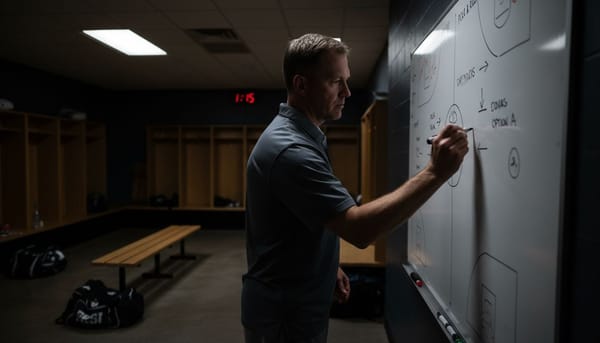
When I think about this, I immediately come back to the idea of environment as the real teacher. Skill coaches matter. Film sessions matter. But the environment you're thrown into — especially as a young player — is doing something that no structured drill can fully replicate. It's forcing adaptation. You're not learning a move because your coach drew it up on a whiteboard. You're learning it because if you don't figure it out in the next two seconds, you're getting the ball taken from you by someone bigger and faster than you.
That's a different kind of learning. And honestly? It's a more powerful one.
But here's what I think is the more important conversation: does that mean female players need older brothers or need to grow up playing with boys to reach elite levels? No. Absolutely not. What it means is that the stimulus those environments provided — the chaos, the physical problem-solving, the need to hold your own — that stimulus can and should exist within the female game itself. We don't need to go outside the culture to find it. We need to bring it in.
The real question is why that stimulus is rarer in traditional female basketball environments. And I think the honest answer goes deeper than basketball. Evolutionarily, behaviorally — females are socialized differently. That's not a weakness. It's just a fact. The same caring, community-oriented instincts that make female players incredible teammates and communicators are the same instincts that can, if left unchallenged, soften the edge of competitive aggression that high-level basketball demands.
I've seen it play out personally — watching a group of teenage girls in a training session finally get after it, finally flex on each other a little after a big play, and then look around like they're waiting for someone to tell them that was wrong. That moment right there? That's the culture doing its thing. And that's exactly what coaches working on developing female basketball players need to actively push against.
The fix isn't complicated, but it does require intention. When a player gets a great bucket in a drill, celebrate it loudly. Make it normal. Let them trash talk a little. Let them celebrate. The WNBA has been doing this more visibly in recent years — that unapologetic confidence, that swagger — and it's one of the best things happening in the women's game right now. Because if you don't have that edge, the competition will smell it.
How Competition Actually Shows Up in Female Practice Environments
Let me be honest about something I find genuinely fascinating here. The dynamic around competition and status in female practice environments is real, it's specific, and if you're a coach walking into that space without understanding it, you're going to misread almost everything you see.
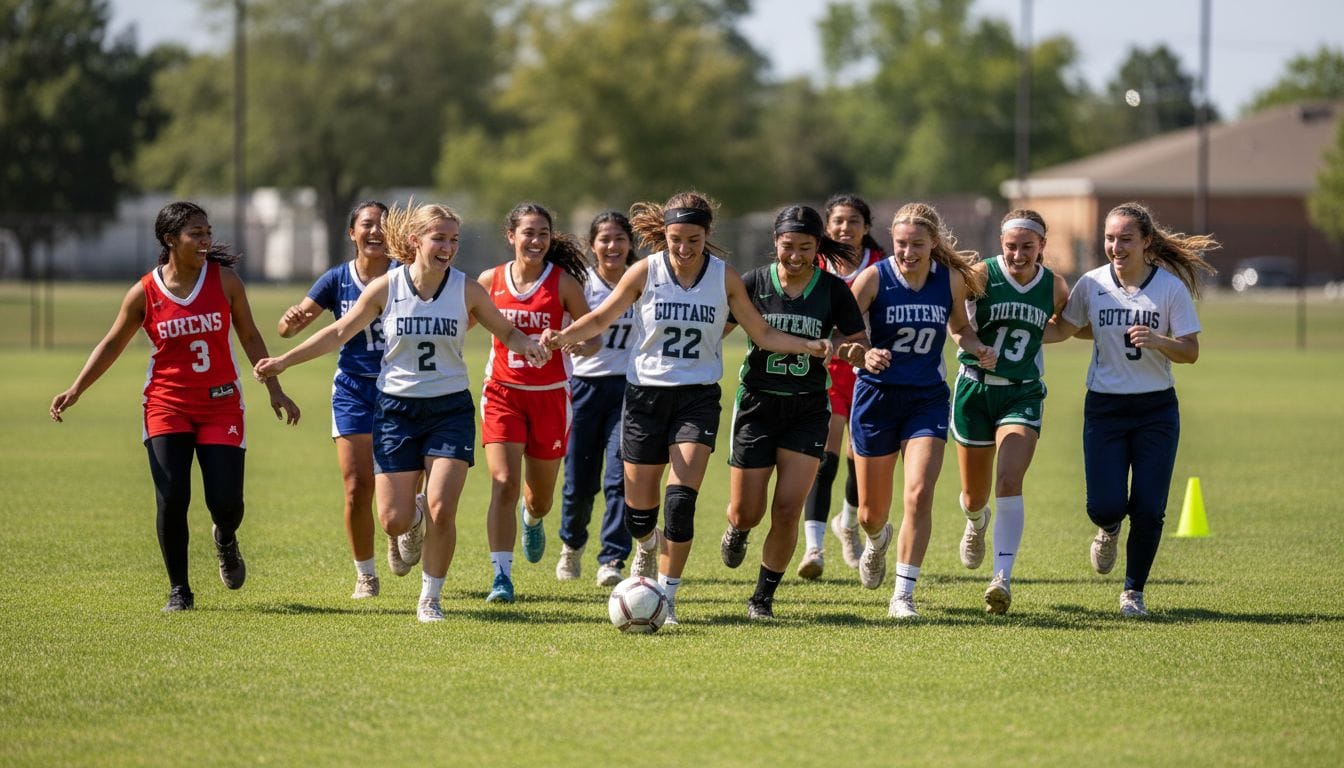
In male environments — and this is something I think about a lot — status is largely established through competition. You go hard. You win the play. You hold your own. That's the hierarchy. It's almost biological in how directly it operates. You go to any pickup game and within about fifteen minutes you know exactly where everyone stands without anyone saying a word.
Female environments tend to work differently. Status is often built through relatability, social connection, who you're aligned with, and how well you read and navigate the group dynamic. That's not a flaw. But in a competitive sports context, it creates a specific challenge: players can unconsciously pull back from full competitive aggression because going too hard at someone socially valuable to them feels like a threat to the group harmony — not just to the individual.
What stands out to me is how much this is a spectrum, not a rule. I've seen highly competitive female players go at each other in drills — full physicality, genuine edge, shoving match levels of intensity — and then be completely fine five minutes later. No drama. No lasting tension. Because they understood that the competitive space and the relational space were separate things. That's a mature athletic understanding that some players develop naturally and others need to be taught explicitly.
The players who get there fastest are usually the ones who, again, grew up in mixed competitive environments or had specific people in their lives — coaches, siblings, training partners — who made it normal to compete hard without it meaning anything about the relationship. As part of understanding the broader landscape here, it's worth looking at the full picture of what shapes female basketball culture from youth through elite levels, because this competitive socialization piece doesn't exist in isolation — it connects to everything from how leagues are structured to how coaches give feedback.
In practice terms, what does this actually look like when it goes wrong? You'll see players pull up on defense when they could make it genuinely difficult for a teammate. You'll see offensive players settle for a pass instead of attacking because going hard at someone feels aggressive in the wrong way. You'll see drills that are technically correct but lack the intensity that makes them transfer to game situations. The skill is there. The will to impose it is muted.
And when it goes right? It looks like a Division I program where the scout team goes at the starters so hard that practice is harder than the game. It looks like players calling each other out in real time. It looks like the grade eight girl who just scored on her teammate throwing her hands up and absolutely letting her know about it — and her teammate laughing and getting ready to go again. That's healthy. That's what you're building toward.
Building Competitive Culture From the Ground Up
So how do you actually install this? Because I don't think it happens just by telling players to "compete harder." That instruction lands differently depending on what a player has internalized about what competing hard even means in this space.
The first thing I'd say is: normalize the celebration. Loudly. Repeatedly. This sounds minor but it isn't. When a young female athlete scores in traffic and looks around unsure whether to react — that's your moment. That's where you set the tone for everything that follows. If the coach and the environment respond with energy, she files that away. If nobody reacts, she learns to suppress it. Over hundreds of reps across years of development, that adds up to either a player who competes with full expression or one who's perpetually playing one gear below her ceiling.
Second — and I feel strongly about this — the competitive culture has to be framed around the game, not around the individual. The language matters. "Show her you can score on her" hits differently than "beat her." The first one is about expressing your skill. The second can feel socially aggressive in a way that triggers exactly the pull-back behavior you're trying to eliminate. It's a subtle distinction but it changes how players receive the challenge.
Third, create repetitive situations where players have no choice but to solve a competitive problem. Constraint drills. Live one-on-one. Competitive small-sided games with real stakes — sprints, extra reps, public accountability for the result. The point isn't punishment. The point is consequence. Because one thing elite competitive environments do that casual ones don't is make the moment matter. When something's on the line, a different part of a player's psychology activates.
I don't fully agree with the idea that you just need to "find the competitive players and build around them." That frames competition as a fixed personality trait rather than a learnable behavior shaped by environment. I've seen players who came in soft and became genuinely fierce competitors over two or three years — not because they changed who they were, but because they were placed in an environment that consistently drew something out of them that was already there.
That's the whole job, really. Not manufacturing competitiveness from nothing. Drawing it out, making it safe to express, and making it normal enough that it stops being remarkable when a young female player just goes — full confidence, full aggression, no apology. Because there is nothing better in this sport than watching that happen.
Building a Culture Where Failure Is the Point
One of the most counterintuitive things I've come to believe about developing female basketball players is this: the goal isn't to help them succeed. It's to help them fail — well, and often, and without flinching. That sounds harsh. It's not. It's actually the most respectful thing a coach can do.
When I think about this, I immediately picture the difference between a practice where everyone's comfortable and one where the gym has that low hum of productive chaos. Players trying things that don't work. Getting frustrated. Trying again. That second environment? That's where development actually lives. The first one is just motion.
What stands out to me in everything I've learned about building competitive environments is that the frustration isn't the obstacle — it's the mechanism. Manageable frustration is the whole product. When you set up training scenarios with real problems, no obvious solutions, and someone right next to you who's also figuring it out, something shifts. Players stop waiting to be told what to do. They start reading, adjusting, competing. They start thinking.
And that's the thing about competition that I think gets missed when coaches talk about "creating a positive environment." Positive doesn't mean easy. Positive means growth-producing. Watching someone next to you solve a problem you haven't solved yet isn't demoralizing — not if you've been taught to see it right. It's a free lesson. It's acceleration. The player who's a step ahead of you right now is dragging your ceiling upward whether you realize it or not.
I've seen this play out personally, and it genuinely changes how I think about praise. Applauding a miss isn't sarcasm — it's accuracy. The decision to attempt something difficult, to go after a rep that might fail, is the right decision. The outcome follows the behavior, not the other way around. If we only celebrate makes, we're accidentally training players to only attempt things they're already sure about. That's not skill development. That's just confirmation of what they already have.
So when a player looks frustrated after missing, my job isn't to comfort them away from that feeling. It's to redirect their attention. What did that rep tell you? Not me — you. What did your body just learn? Because there is information in every miss, and the players who learn to attune to that information — really listen to it — are the ones who eventually stop looking to the bench or the stands every time something goes wrong. They develop this internal compass. A resilience that isn't fragile because it was never built on easy conditions.
This is something I think about a lot: autonomy in athletes doesn't come from being protected from failure. It comes from being guided through it enough times that they trust themselves to survive it. And eventually, to seek it out.
The Mental Edge — Teaching Female Athletes to Compete Like They Mean It
There's a cultural script that gets handed to a lot of young female athletes without anyone really meaning to hand it over. It sounds like: be competitive, but not too competitive. Speak up, but not too loudly. Want to win, but make sure everyone still likes you afterward. I don't fully agree with the idea that this is purely socialized — there are real social dynamics at play, and pretending otherwise doesn't help anyone. But I also think coaches have enormous power to rewrite that script inside the gym.
The practical version of that looks like cutting through the interpersonal noise before it takes root. Conflict between athletes is normal. It's human. But when it seeps into training sessions, when it becomes whispered drama instead of direct conversation, it eats into the one resource no coach can manufacture: time. The fix isn't to manage the feelings endlessly. It's to set the expectation clearly — settle it face to face, then get back to work. That directness is a gift, not a demand. It models something a lot of young women never get modeled for them: that confrontation doesn't have to be catastrophic, and that dealing with something head-on is almost always faster and cleaner than letting it fester.
And beyond conflict resolution, there's something bigger I want to say here, because I think it matters. Telling a young female athlete to go be a killer — to fully inhabit her competitive drive without apologizing for it — is one of the most developmentally important things a coach can do. Not because aggression is the goal. But because so many talented players have been quietly trained to dim that part of themselves, and it costs them. On the court, yes. But also in terms of who they become as competitors and people.
The same competitive fire that makes you fight for a rebound, pressure the ball, demand the ball in a big moment — that energy doesn't disappear when the season ends. It translates. Into work ethic, into problem-solving, into the refusal to accept the first answer as the only answer. For a thorough grounding in how these principles connect to the broader game and what it means to build female athletes the right way, the complete guide to female basketball is genuinely worth your time — it covers the full picture in a way that connects the dots between development philosophy and real-world application.
What I keep coming back to is this: the environment a coach builds isn't just a backdrop. It's a curriculum. Every drill design, every reaction to a missed shot, every decision about how to handle tension in the locker room — it all teaches something. The question isn't whether you're shaping your athletes' relationship to competition and failure. You are, regardless. The question is whether you're doing it intentionally. The coaches who understand that, who build cultures where girls are expected to compete hard, fail openly, and grow without permission — those are the coaches producing players who are genuinely different. Tougher. Smarter. More self-directed. And honestly? More fun to watch.